If you’re traveling Bangkok to Phuket for business, the simplest practical plan is to pick a flight that matches your day’s meeting schedule, limit checked luggage to one small bag if possible, and leave explicit buffer time for Bangkok airport procedures. Business trips hinge on predictability: a slightly higher fare for a direct or better-timed flight often beats a low-cost option that forces early departures, late arrivals, or a tight connection. Before you compare fares, gather exact travel dates, expected meeting end times, and the number and size of bags you must carry. Once you have these details, compare direct versus connecting itineraries, verify baggage rules on the airline’s final booking page, and build a timeline for travel to and from both airports that includes security, check-in, and potential traffic delays.

See live routes for your exact travel day
Compare direct and connecting choices with the same baggage and traveler details.
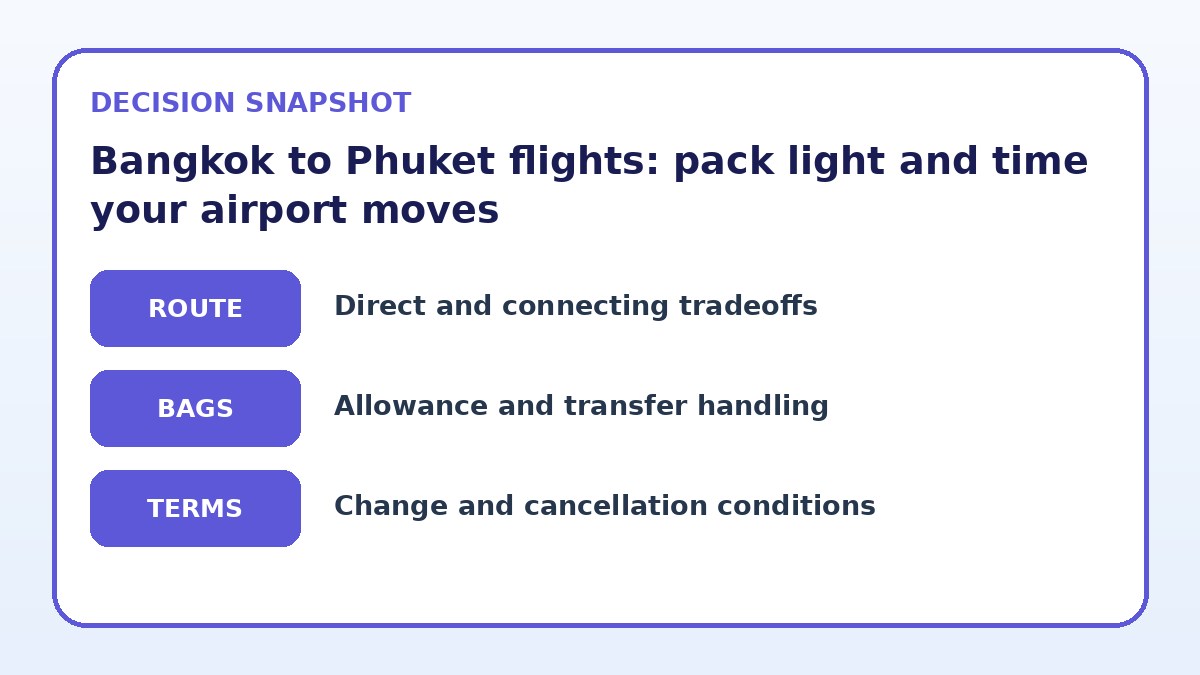
Routing: direct versus connecting options
On the Bangkok–Phuket route you will commonly find both direct services and itineraries that include a connection. For business travel, the core decision is whether saving money by accepting an indirect routing is worth the additional time and risk. Direct flights reduce touchpoints—no transfer between aircraft and fewer chances for delay—but they may have less flexible change options depending on the fare. When comparing routes, map your full door-to-door time: include transit to the airport, recommended check-in time, flight duration, baggage reclaim, and onward travel in Phuket.
If you must consider connections, build cushion into the schedule. Know whether connections are on a single ticket (protected by the airline) or separate tickets (you assume the risk for missed connections and must recheck baggage). Also check whether transfers require moving between terminals or repeating security, which adds time. Practical business routing weighs the value of predictability; if an earlier meeting or evening commitment is fixed, favor itineraries with fewer variables even if the fare is higher.
Baggage and connection risk
Baggage choices directly affect connection risk and your speed through airports. Carry-on only avoids checked-bag waits and reduces the chance a bag misses a tight connection. If you must check luggage, pick a fare that allows the correct number and size of bags without large excess fees, and verify the carrier’s checked-bag transfer procedure on the booking page. For itineraries with connections on different tickets, plan to collect and recheck bags; that requires extra time and is a common source of missed onward flights.
Also consider the items you need for the day of travel: laptop in an easy-access carry case, a change of shirt, chargers, and essential documents in your personal item. Security screening rules can slow you based on liquids and electronics, so pack to speed up the process. If you have specialized equipment or samples for meetings, confirm whether these count toward bag weight and whether any special handling or declarations are required on the carrier’s final terms.
Compare flight-selection strategies
| Flight strategy | Best for | Risk to check |
|---|---|---|
| Direct full-service fare with checked baggage included | Travelers prioritizing predictability and minimal transfer risk | Higher base fare but fewer variables and simpler airport movements |
| Carry-on only on a direct low-cost flight | Light packers who want the fastest airport experience | Less flexibility for additional items; strict carry-on size rules apply |
| Cheaper connecting itineraries across carriers | Cost-sensitive travelers who can tolerate transfer risk | Requires longer buffers and potential to collect/recheck baggage |
| Flexible or changeable fare on a routed itinerary | Business travelers whose schedules may shift last minute | Higher fare or added fee for flexibility but reduces rebooking stress |
Recheck the complete itinerary
Confirm airports, connection handling, baggage, and change conditions before deciding.
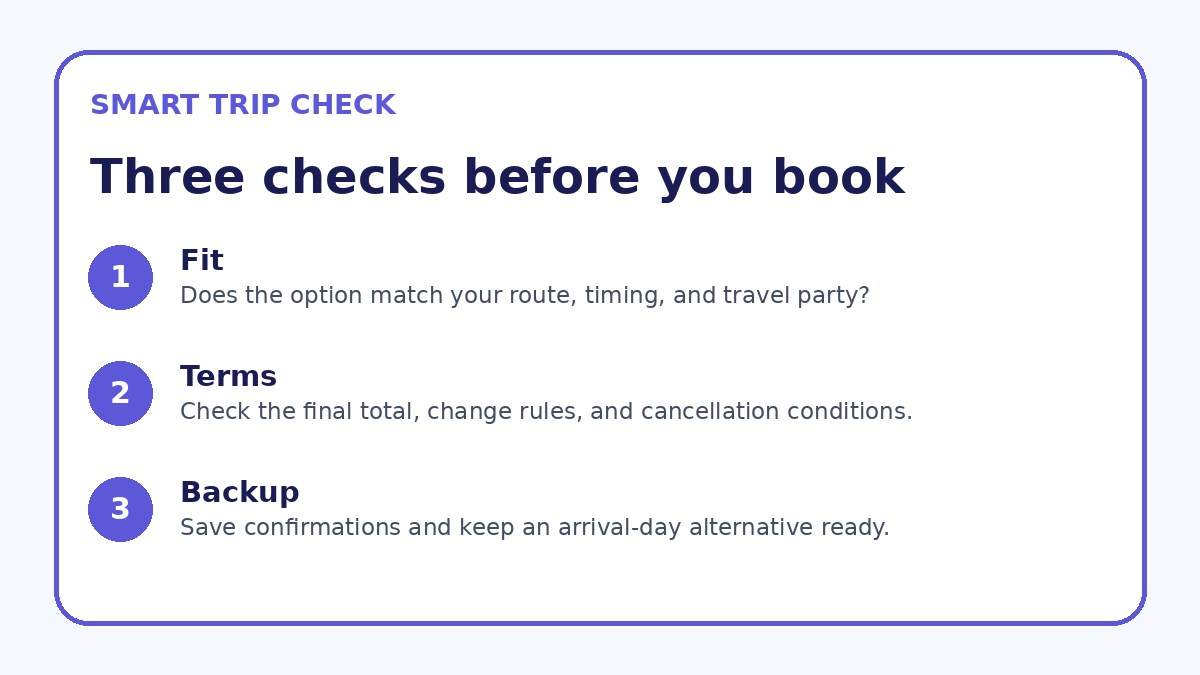
Schedule fit: timing departures and arrivals
Begin by aligning flight times with your meeting schedule and realistic travel times. For departures from Bangkok, estimate the time needed to get from your hotel or office to the chosen airport and add the recommended check-in and security buffer. Morning peak times and evening rush hours can lengthen road travel to the airport; plan conservatively. Aim to arrive in Phuket with sufficient slack to reach your meeting or accommodation without stress, factoring in baggage reclaim and potential local traffic.
When planning return or onward flights, leave extra time after your final commitment in Phuket for travel to the airport, especially if you might be delayed or finish earlier and could use a later flight. If you rely on a same-day connection to an international departure, ensure your inbound arrival allows a comfortable transfer window. Always verify local airport opening hours and any special baggage drop or early check-in options with the airline before you finalize travel times.
Flight details to verify
- Confirm exact travel dates, preferred arrival time in Phuket, and any fixed meeting or event times before searching fares.
- Count necessary baggage items and measure them; decide if carry-on only is feasible to avoid checked-bag delays.
- On the airline’s final booking page, verify baggage allowance, change/cancellation fees, and connection protection explicitly.
- Build a door-to-door timeline including transit to Bangkok airport, recommended check-in buffer, flight time, and local transport in Phuket.
- If your itinerary includes connections on separate tickets, allow extra time to claim and recheck baggage and consider travel insurance for missed connections.
- Save contact details for the carrier and your corporate travel office, and keep digital copies of confirmation and passport/ID accessible.
Fare conditions and what to verify before booking
Fare rules determine change fees, refunds, and included baggage; those rules vary widely between fare classes and carriers. Before you click purchase, read the airline’s final booking page to confirm baggage allowance, change or cancellation fees, and the policy for missed connections when flights are marketed together. Look specifically for whether low-cost fares exclude checked bags, require seat selection fees, or impose strict nonrefundable terms that could cost more if your schedule shifts.
Also verify whether your fare includes protections like rebooking on an earlier or later flight on the same carrier at no extra cost when a delay affects your schedule. If you need flexibility, choose a fare class or add an option that explicitly allows date or time changes with reasonable fees. For corporate travelers, check whether your employer’s travel policy or corporate account offers specific options or waivers and confirm how loyalty status or corporate booking channels affect baggage and change terms.
Flight Guide questions travelers ask
How much time should I allow at Bangkok airport for a domestic flight to Phuket?
Allow more time than you think: factor transit time to the airport plus check-in and security. For domestic flights, many business travelers aim to arrive at least 60–90 minutes before departure to complete check-in, bag drop, and security comfortably. During peak hours or when traveling with checked baggage, add extra buffer. If you have a fixed meeting schedule, plan your departure from the hotel or office to account for unpredictable traffic and any required documentation checks on the carrier’s final booking page.
Is it better to take a direct flight or a cheaper connecting option between Bangkok and Phuket?
It depends on your tolerance for risk versus cost. A direct flight reduces transfer points and the chance of missing connections—valuable when time is tight and meetings are scheduled soon after arrival. Cheaper connecting itineraries can save money but increase the risk of delays, require longer layovers, or force you to collect and recheck baggage. For important business commitments, prioritize reliability; for flexible schedules, a connection with comfortable buffers may be acceptable. Always confirm connection protection and baggage handling on the booking page.
What baggage strategy minimizes delays and disruption on this route?
Pack to minimize what must be checked. Carry-on only is fastest through the airport and removes the risk of your bag missing a connection. If you need checked luggage, select a fare that includes the required allowance and check whether bags transfer automatically on single-ticket itineraries. Keep essential items—laptop, chargers, documents, a spare shirt—in your personal item so you can work on arrival even if checked baggage is delayed. Verify size and weight limits on the airline booking page to avoid surprises at check-in.
Final decision note
For business travel between Bangkok and Phuket, practical decisions reduce stress: choose an itinerary that lines up with your meeting times, minimize checked luggage where possible, and verify fare and baggage rules on the airline’s final booking page. When time is tight, favor direct services or fares that include baggage and offer flexible change options. If you opt for cheaper connections, build meaningful buffers for transfers and baggage reclamation. Prepare exact dates, traveler details, and a door-to-door timeline before you compare live fares; that lets you evaluate tradeoffs—time versus cost—so your trip remains controlled and predictable.
Continue planning
Check current options and final conditions
Use the provider page to confirm live availability, the final total, cancellation terms, and every condition that matters to your trip.
This evergreen planning guide was created with AI-assisted drafting and a structured quality review. It does not display live prices, schedules, availability, visa guidance, or provider rankings. Verify current details before booking. Some links are affiliate links; we may earn a commission at no additional cost to you.