Practical answer first: for families building a multi-city ground-transport plan between Kuala Lumpur and Singapore, pick the approach that balances comfort, total door-to-door time, and luggage ease — usually a mix of daytime scheduled train or high-quality coach for longer legs and short car transfers or local trains inside each city. Start by listing the cities or stops you want en route (Malacca, Johor Bahru, or others), then compare total travel time, number of changes, and how much walking with children each option requires. This article guides families through the decision criteria, tradeoffs between trains, coaches, and driving, and how to build an itinerary that keeps kids comfortable and parents sane. It explains what to verify before booking and offers a checklist for a smoother multi-city ground trip.
Choose your multi-city route and priorities
Before checking schedules or fares, decide what matters most to your family: minimizing total travel hours, avoiding multiple transfers, or visiting intermediate cities en route. A straightforward door-to-door plan between Kuala Lumpur and Singapore suits families focused on getting from A to B quickly, while a multi-city plan lets you add daytime stops like Malacca or explore Johor Bahru. Write down the number of overnight stays you want and how much time you reasonably have to change vehicles, move luggage, and let children rest between legs.
Prioritizing comfort might mean choosing scheduled trains or premium coaches for longer stretches and reserving shorter car transfers within metropolitan areas. If younger children are in tow, prioritize fewer station changes and seats that allow family groups to sit together. Consider the physical layout of stations — some require stairs or long platform walks — and factor that into your route choices. Use your priorities list to eliminate unsuitable options early in planning.
Comparing trains, coaches, and private driving
Trains and intercity coaches each have distinct strengths: trains often provide a smoother ride and the chance for children to move around safely at stops, while coaches can offer more direct station-to-station routing and flexible schedules. For multi-city itineraries, a train can be excellent for the busiest long-distance leg between major hubs, then a short coach or car transfer for the smaller city-to-city hops. Assess whether trains require additional connections or rail-to-coach transfers; those increases in handoffs add complexity for families.
Private driving or hiring a car offers the most control over timing, luggage, and door-to-door pickup, letting you stop whenever a child needs a break. The tradeoff is that parents must handle navigation, local traffic, and fatigue on longer drives. If you choose driving for some legs and public transport for others, plan realistic buffers for border crossings, parking, and finding child-friendly rest stops. Always compare the total travel time and mental load, not just the in-vehicle minutes.
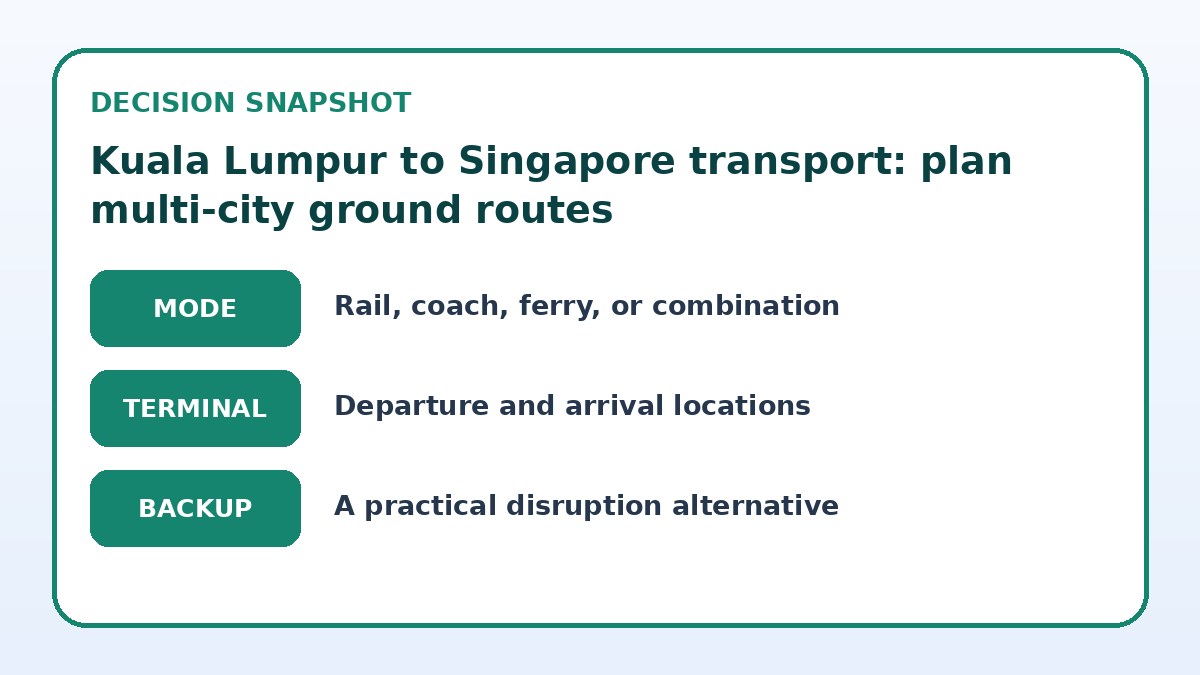
| Approach | Best for | Tradeoff to check |
|---|---|---|
| Scheduled train for main long leg + local transfers | Families wanting a smooth ride and fewer motion hassles | May require extra transfers if stations aren’t centrally located |
| Intercity coach for direct station-to-station travel | Families prioritizing direct routes and flexible departures | Longer on-road time and fewer onboard movement options |
| Private car hire or driver for full door-to-door control | Families needing flexibility, luggage control, and stops on demand | Driver fatigue, route knowledge, and higher responsibility for the driver |
| Mixed-mode plan (drive, train, coach) tailored per leg | Families balancing comfort, sightseeing stops, and time constraints | Requires detailed planning and careful transfer timing |
How to compare options and what to verify before booking
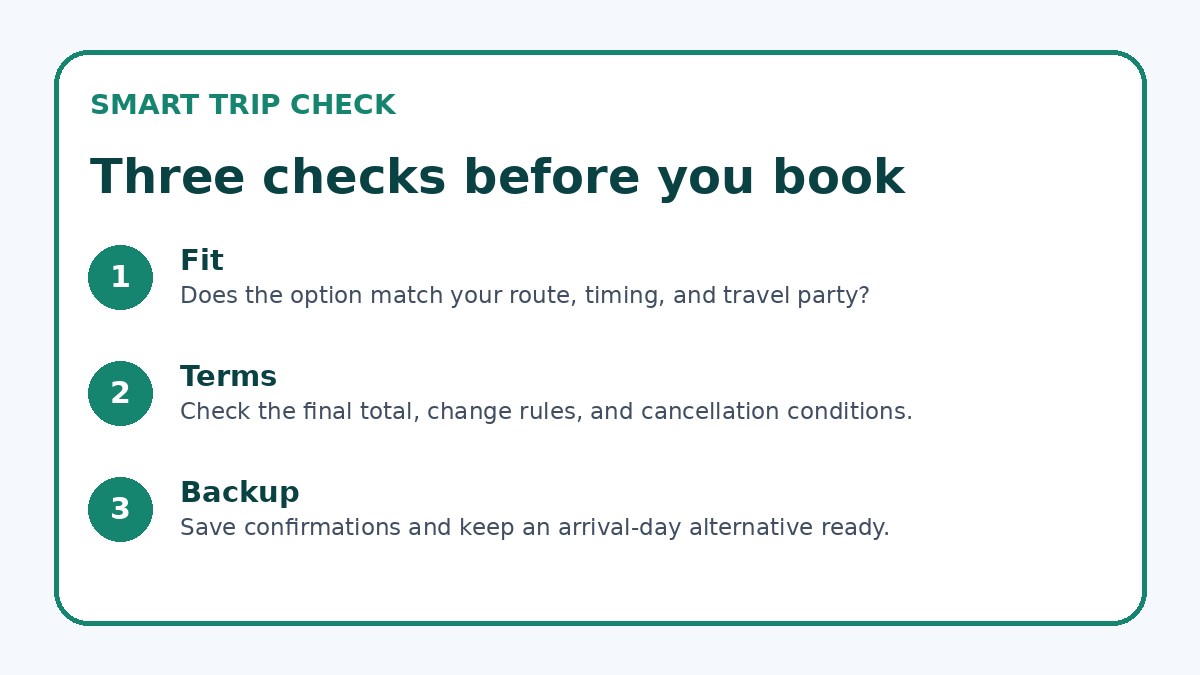
When comparing alternatives, put the total door-to-door duration, number of changes, luggage handling steps, and restroom availability at the top of your spreadsheet. Look for daytime departures with seat reservations and easy station access to minimize stress. On the final booking page for any train, coach, or car hire you consider, verify exact pick-up and drop-off locations, baggage allowances, seat assignment policies, and cancellation or change terms. If you're checking provider pages, confirm times, platform information, and whether child fares or infant seats must be requested.
Don’t forget to check local connections at each stop: the distance between the intercity station and your overnight accommodation, and whether a local taxi or ride-hailing service is reliable at your arrival time. For cross-border legs, confirm immigration procedures and any forms or documents required — consult official government or provider pages, not third-party summaries. If you want a single platform to compare many providers, Trip.com can help show availability, but always finalize the details on the chosen provider’s booking page.
Before you book
- List all stops you want between Kuala Lumpur and Singapore and estimate minimum time for each visit.
- Compare total door-to-door time for each route option, including transfers and local station-to-hotel transfers.
- Verify on the provider’s booking page: pickup/drop locations, baggage rules, and seat assignment policies.
- Confirm child-seat availability for any private car hire and local legal requirements for child restraints.
- Reserve daytime departures where possible and choose seats together or a family row when booking.
- Pack a family travel kit with documents, snacks, medicines, and portable entertainment for longer legs.
Family-friendly comforts and on-the-ground tips
Pack a compact travel kit: snacks, hydration, a lightweight blanket, hand sanitizer, and activity items to occupy children during longer legs. For overnight stays en route, choose accommodation close to the station to reduce late-night transfers. Bring small wheeled luggage or backpacks so family members can share carrying duties, and have a checklist for boarding: tickets or confirmation numbers, passports for cross-border travel, and any medication in carry-on bags.
At stations and terminals, aim to arrive early enough to locate family facilities such as baby rooms and toilets. If reserving seats, request adjacent seats or a family row. For private transfers, confirm child-seat availability in advance and note local laws about child restraints; providers may ask you to request seats when booking. Lastly, keep a simple contingency plan — a backup coach or taxi route — in case connections run late, and share that information with all family members.
Frequently asked questions
Is it better for families to take the train or a coach between Kuala Lumpur and Singapore?
Neither is universally better; it depends on family priorities. Trains often provide a smoother ride and the chance for children to move during stops, which helps on long legs. Coaches can offer more direct routing and potentially more departure times, which is useful if you need flexibility. Compare total door-to-door time, number of transfers, and onboard toilet or seat policies. Always verify seat reservations, baggage allowances, and station locations on the final booking page before committing.
How much time should families allow for transfers and border procedures on a multi-city ground trip?
Allow comfortable buffers rather than tight minimums: factor in luggage handling, unexpected delays, and the time children need for rest or restroom breaks. For cross-border legs, review official guidance and provider notes on immigration procedures to estimate additional time at the border. If your route requires changing stations or modes (train to coach), build extra time to find platforms and move between terminals. The exact allowance varies by route and provider, so check the booking pages and local resources for practical estimates.
Can I mix driving and public transport on a family multi-city plan between Kuala Lumpur and Singapore?
Yes — mixing modes can let you balance comfort, sightseeing, and efficiency. For example, use a private car for short hops or early-morning departures, and take a scheduled train or coach for longer intercity legs. When doing this, ensure transfer points are realistic: confirm parking or drop-off spots, check how close stations are to accommodations, and verify that seat bookings align with your arrival times. On the final provider pages, confirm pickup/drop locations and any additional fees for multi-leg itineraries.
Final planning note
Planning Kuala Lumpur to Singapore transport for a family trip means choosing the balance between fewer handoffs, comfort, and time for the children. Start by deciding whether you want a direct door-to-door transfer or a multi-stop route that includes cities like Malacca or Johor Bahru. Compare trains, coaches, and private driving not just by travel time but also by transfers, luggage handling, and on-the-ground convenience. Verify key details — seat assignments, baggage rules, pick-up/drop-off points, and child-seat availability — on the final booking page for whichever provider you choose. Use the checklist and comparison rows to build a practical, family-tested itinerary that minimizes stress and maximizes enjoyment.
Continue planning
Check current options and final conditions
Use the provider page to confirm live availability, the final total, cancellation terms, and every condition that matters to your trip.
This evergreen planning guide was created with AI-assisted drafting and a structured quality review. It does not display live prices, schedules, availability, visa guidance, or provider rankings. Verify current details before booking. Some links are affiliate links; we may earn a commission at no additional cost to you.