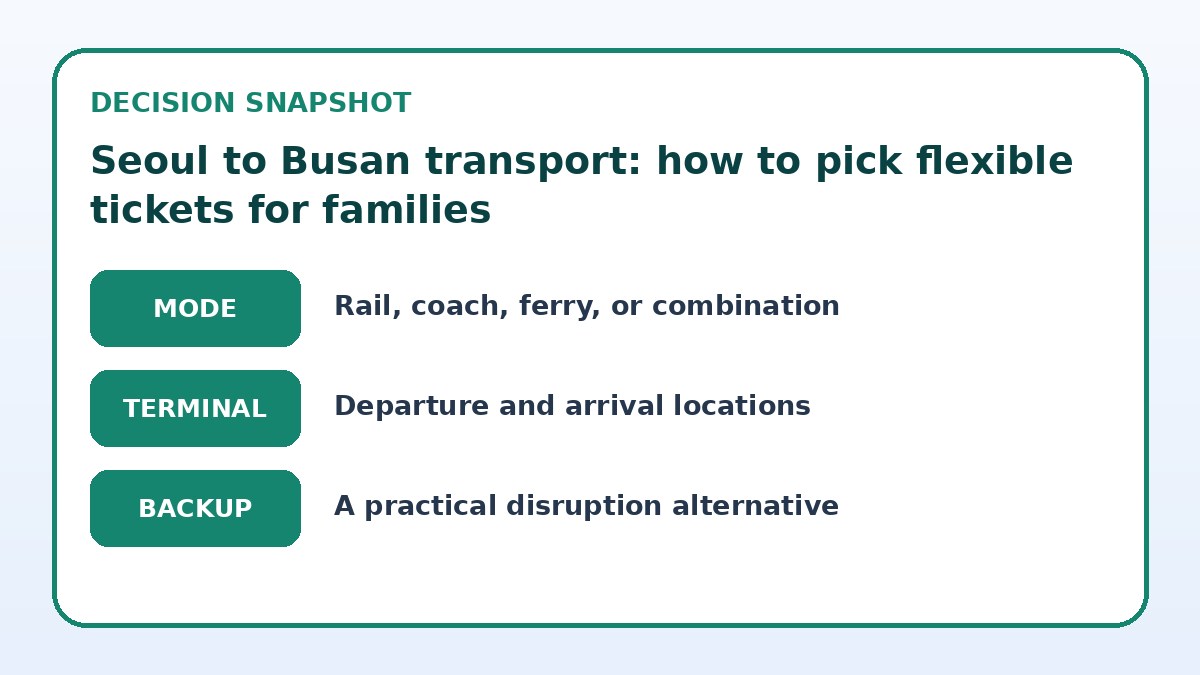
For most families, the practical choice on the Seoul–Busan corridor comes down to balancing flexibility with certainty. If you need to change plans, flexible or refundable tickets reduce stress; if your schedule is fixed, non-changeable fares typically cost less but lock you in. Decide first whether you prioritize guaranteed seats together, the ability to move times without penalty, or simple rebooking rules that work for children and strollers. This article shows the decision steps families should use to compare ticket flexibility for trains and intercity transport options between Seoul and Busan. Read the quick tradeoffs, then use the checklist to verify fare rules and extra-family services before you book.
What ticket flexibility actually means for families
Ticket flexibility covers several related rules: whether you can change the date or time, get a refund, swap passenger names, or move seats without extra cost. Families should consider each of these separately. Changing a trip because a child is unwell is different from wanting a later train because of sightseeing. Refundability deals with complete cancellations, while change policies determine how easy it is to move to a different departure. Name-change rules affect grandparents or caregivers traveling under the same reservation.
For parents, the operational details matter: how late before departure you can make a free change, whether rebooking must be to the same service type (e.g., high-speed vs. slower train), and whether penalties are a flat fee or percentage. Also check whether a change requires cancelling and rebooking—or whether the carrier allows a simple exchange. If you rely on a specific seat grouping or wheelchair space, confirm if those are retained during changes. These nuances determine how useful a flexible fare really is, beyond the headline label.
Comparing family scenarios and which flexibility helps most
Different family needs point to different ticket choices. If you travel with infants, toddlers, or small children who nap on a schedule, the ability to change departure times on short notice is valuable. Families traveling with a multi-generation group often benefit from name-change options and seat-block guarantees so you can rearrange who sits next to whom. For multi-leg journeys or those combining trains with ferries or buses, look for flexible tickets that permit changes across connecting segments without losing any seat reservations.
By contrast, if your family has a fixed itinerary—school holidays, booked accommodation, and timed activities—non-flexible fares may be acceptable and simpler. The tradeoff is the risk and potential cost if plans shift. Consider also how many people are traveling: the more passengers, the higher the chance someone will need to change, making flexible terms comparatively more valuable. Weigh the probability of change against the premium for flexibility to choose what saves stress, not just money.
| Approach | Best for | Tradeoff to check |
|---|---|---|
| Fully refundable & changeable tickets | Families with unpredictable schedules or very young children who may need last-minute adjustments. | Higher upfront cost and sometimes stricter booking windows for the best refund terms. |
| Partially flexible tickets (free changes, limited refunds) | Families who want a middle ground: time changes allowed but limited cash refunds. | May keep seat blocks during changes but often charge fees for certain date ranges or peak services. |
| Non-refundable, changeable-only tickets | Families with likely minor timing shifts but unlikely full cancellations. | Cheaper base fare but penalties for cancellations and restrictions on name or seat swaps. |
| Strict non-change, non-refundable tickets | Families with fixed plans and confirmed accommodations who prioritize ticket cost over flexibility. | Little to no recourse if plans change; might disallow family seating or stroller provisions. |
How to compare flexible fares step-by-step
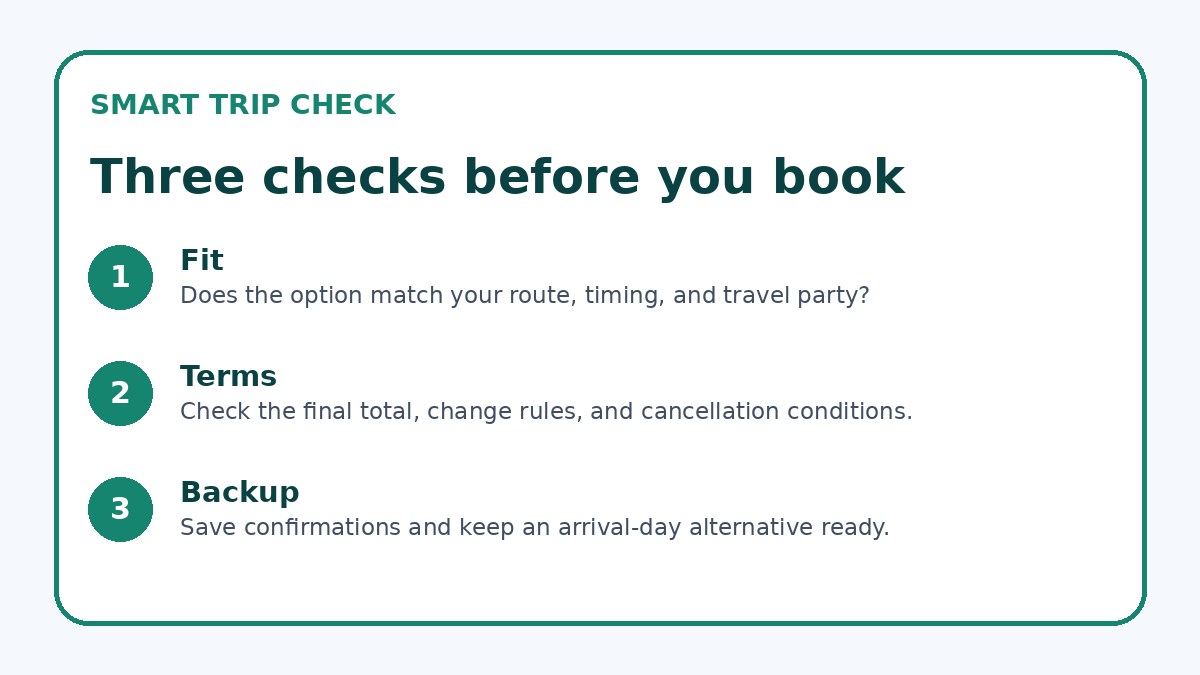
Start by listing what flexibility you actually need: free time changes, refundable cancellations, seat blocking, or name swaps. Then, on each provider’s booking page, verify three concrete items: exact change windows (how many hours before departure you can change), the cost structure for changes (flat fee or percentage), and whether seats remain reserved after a change. If you’re comparing different transport types—high-speed rail, intercity trains, or express buses—check whether flexible tickets on one mode transfer to another when rebooking.
Next, check family-specific services that interact with fare rules: stroller storage, priority boarding, family compartments, and child fares that change eligibility on different ticket types. If a low-cost fare disqualifies you from family seating or stroller allowance, that could outweigh any saving. Finally, read the refund and cancellation policy line-by-line on the provider’s final booking page before paying—providers often have exceptions or time-limited waivers that only appear at checkout.
Before you book
- Confirm exactly when you can change a ticket for free and the latest time to request a refund on the provider’s final booking page.
- Verify whether seat assignments (or family seat blocks) are retained when you change departure times or swap passengers.
- Check the provider’s policy on stroller/buggy storage and whether that policy differs by fare class.
- Make sure child fares and age definitions are clear and that name-change rules allow caregivers or grandparents on the same booking.
- Save screenshots of fare rules and any live chat or email confirmations about changes, refunds, or special family accommodations.
- If booking multi-leg travel, confirm whether flexibility applies to every segment or must be managed separately for each carrier.
Practical tips for booking and managing flexible family tickets
When you buy, register the lead passenger’s contact details carefully and add all travelers’ names if the system allows it; some providers require exact name matches for refunds or reissues. If you expect to change plans, consider adding a small travel credit or voucher option if offered—these sometimes let you move tickets without a cash refund process. Keep digital and printed copies of booking confirmations, and note the last minute you can make changes without penalty.
On travel day, arrive early enough to manage stroller checks, seat exchanges, or to ask staff about last-minute reassignments. If you must rebook en route, use the provider app or official station counters to avoid third-party restrictions. Finally, if you find confusing or conflicting policy text, screenshot it and get a written confirmation from customer service before you accept a change—this is particularly important for large family groups or when coordinating multiple connections.
Frequently asked questions
Can I change seats to sit together if I booked non-flexible tickets?
Seat-change permissions depend on the carrier and fare class. Some non-flexible fares still allow seat swaps at the station or ticket counter for a small fee, while others lock assignments entirely. If booking separately for each person, ask the carrier if they can merge reservations or sell a family block; on some systems that requires buying a flexible or higher-tier fare. Always verify the exact seat-change procedure and any charges on the provider’s final booking page before you complete the purchase.
Are family fares or child discounts affected by choosing a flexible ticket?
Often child fares and family discounts are available across fare types, but some discounted or promotional child fares may be restricted to specific ticket classes. A flexible fare may use a different inventory bucket that still honors child pricing, or it may not; there is no universal rule. Before booking, check whether the flexible option calculates child fares the same way and whether switching to a cheaper class would remove eligibility for the discount. Confirm on the booking page to see how the provider applies child pricing to each fare.
If my group includes elderly relatives, what flexibility elements matter most?
For elderly travelers, prioritize changeable tickets, guaranteed seat reservations, and wheelchair or assistance policies. The ability to change times without penalties reduces stress if health or mobility alters plans. Also check whether assistance services are tied to specific fare types or require advance notice and separate booking. Finally, ensure refunds or reissues allow name changes if a substitute caregiver must travel instead; review these specifics on the provider’s final booking page to avoid surprises.
Final planning note
Choosing the right ticket flexibility for a family on the Seoul to Busan route means balancing the likelihood of changes against how much convenience is worth to you. Flexible and refundable fares reduce stress and handle last-minute shifts well, especially with young children or multi-generation groups. Partially flexible options offer a compromise, keeping costs lower while still permitting some adjustments. Before you buy, compare change windows, fee structures, seat-retention rules, and family services on the provider’s final booking page. If you want a quick place to compare live availability and policy text, you can check Trip.com, but always rely on the carrier’s official terms for the final decision.
Continue planning
Check current options and final conditions
Use the provider page to confirm live availability, the final total, cancellation terms, and every condition that matters to your trip.
This evergreen planning guide was created with AI-assisted drafting and a structured quality review. It does not display live prices, schedules, availability, visa guidance, or provider rankings. Verify current details before booking. Some links are affiliate links; we may earn a commission at no additional cost to you.