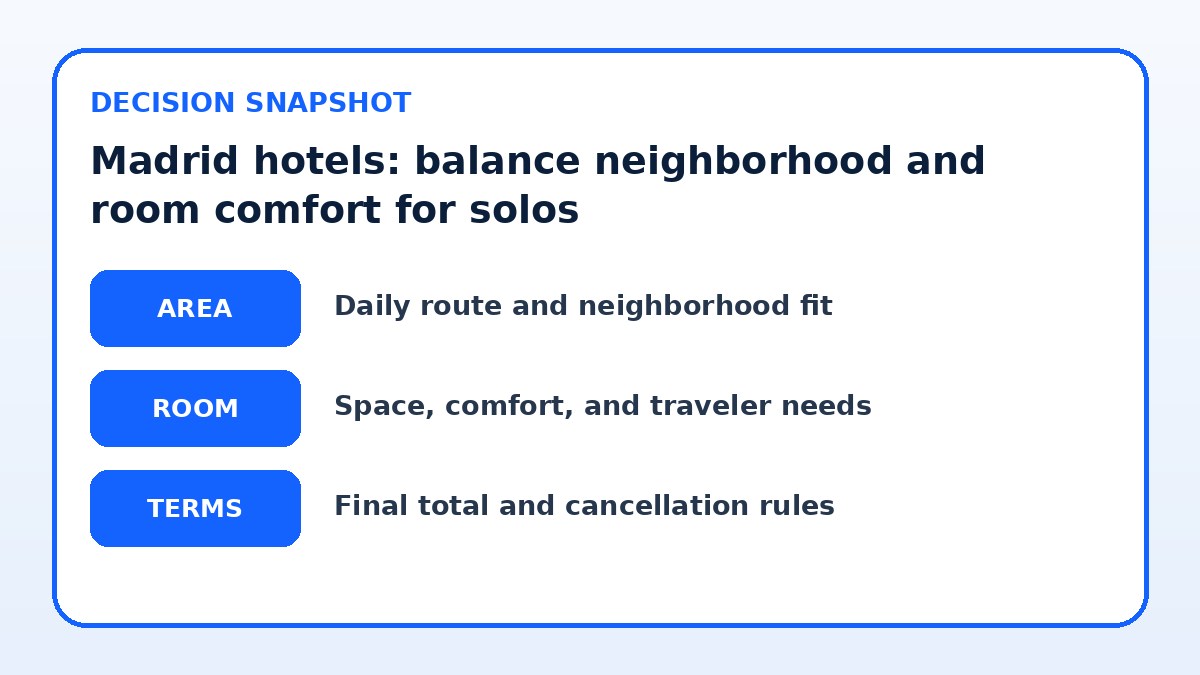
Practical answer first: pick your area based on how much time you’ll spend out versus resting. If you plan long days of sightseeing and nightlife, prioritize a central neighborhood with excellent walkability and transit access (Sol/Gran Vía, Huertas, or La Latina). If you want quiet evenings, choose a nearby residential area with good metro links (Salamanca, Chamberí). Once you’ve shortlisted an area, choose a room that balances size, noise control, and facilities: at least a private bathroom, a comfortable bed with blackout options, and a luggage-friendly layout. Verify photos, bed type, and cancellation details on the booking page before paying. This article explains neighborhood fit, daily-route friction, room and solo-traveler needs, and the final booking checks that will make your Madrid stay work for you.
Check live stays in the areas that fit
Use your dates and party size to compare current rooms after you narrow the neighborhood fit.
Neighborhood fit: match vibe to itinerary
Start by listing the three things you’ll actually do most days: museum mornings, tapas and wandering in the afternoons, or evenings out. If your itinerary centers on museum clusters and walkable sightseeing, pick a neighborhood inside or immediately bordering Madrid’s central ring. Those areas keep walking distances short so you can return midday for a rest or to change for an evening plan. For a schedule with late dinners and bars, prioritize neighborhoods where taxis or short metro rides are easy after midnight to avoid long, tiring transfers.
If you want quieter nights after busy days, consider residential neighborhoods with good metro links rather than the busiest plazas. They trade immediate street buzz for calmer streets and often slightly larger rooms. Salamanca, Chamberí, and nearby barrios give you local bakeries and quieter evenings while still making the Retiro, Prado, and central districts reachable in 15–25 minutes by metro. Decide whether you value being in the middle of the action or having a restful base for nights.
Choose an area-selection strategy
| Area approach | Best for | Tradeoff to check |
|---|---|---|
| Stay central in Sol/Gran Vía/Huertas | Short walking distances to major sights and nightlife | Noisy streets, smaller rooms, and higher foot traffic at night |
| Base near museums (Retiro/Prado area) | Quick museum runs and daytime sightseeing | Softer nightlife and slightly higher daytime tourist crowds |
| Choose a residential barrio (Salamanca/Chamberí) | Quieter nights and more spacious rooms | Longer walk or short metro ride to central attractions |
| Pick a transport-hub location (Atocha/Chamartín) | Easy arrival/departure and fewer luggage transfers | Less evening atmosphere and fewer dining options within immediate walking distance |
Daily-route friction: cut minutes that add up
Map your daily routes before researching hotels. Identify your main hub — Prado, Reina Sofía, Retiro, Plaza Mayor, or a business address — then check how many line changes a typical trip from each neighborhood requires. A single-line 15-minute metro trip is less tiring than a 10-minute walk plus two transfers. Also consider first- and last-mile options: are there safe, well-lit streets and reliable taxi ranks nearby? If you’ll be jet-lagged or traveling between late-night events, shorter and simpler routes matter more than one extra block of boutique restaurants.
Think about luggage and arrival logistics. If you arrive by train at Atocha or Chamartín, neighborhoods with a direct connection reduce stress. If you land at the airport, note whether a single metro or airport bus will get you from arrival to your door, or if you’ll need a taxi. Finally, check stair versus elevator access when you look at room photos and property descriptions: dragging a suitcase up multiple flights can change a neighborhood tradeoff into an unwise choice, especially if your stay is short.
Now compare like with like
Keep the same dates, guests, room needs, and cancellation preferences while you compare the final choices.
Room and solo-traveler needs: privacy, safety, and comfort
For solo travelers, a private bathroom is a baseline convenience that preserves routines and sleep. Look for rooms that show a clear bed type (double or queen versus single or sofa bed) and verify mattress descriptions or guest comments about sleep if available. Noise control matters: rooms on higher floors, courtyard-facing rooms, or units that mention double-glazed windows will generally be quieter. Amenities that reduce friction — secure luggage storage, keycard access, 24-hour reception, or an express check-in option — are worth prioritizing over complimentary extras you won’t use.
Also consider workspace and charging access if you’ll be doing any remote work or research. A small desk, reliable lighting, and accessible outlets can be more important than extra seating. If you prefer social contact, look for smaller guesthouses or hostels that offer private rooms but shared lounges; these let you meet people without sacrificing a private bathroom. Always confirm on the booking page whether the property enforces a curfew, allows late check-in, or charges for late arrival — those operational details change the solo experience.
Hotel booking check before payment
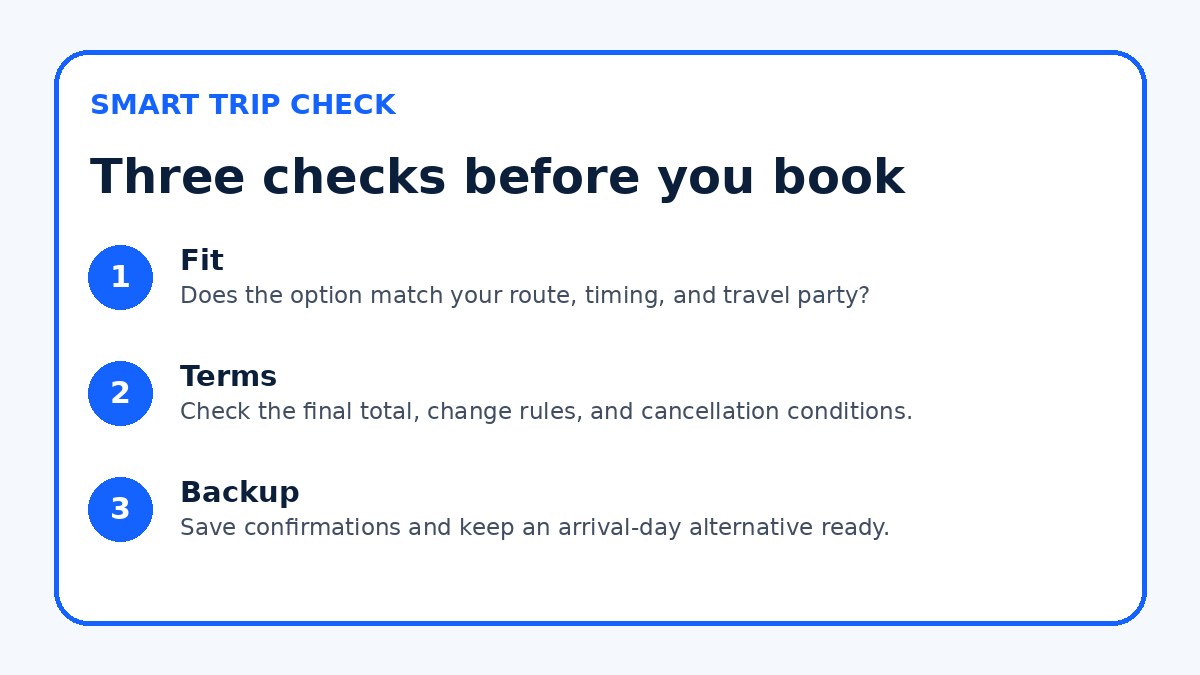
- List your daily top three activities and map them to the nearest neighborhoods to spot the best central fit.
- Open the booking page and confirm exact bed type, private bathroom availability, and whether the room faces the street or courtyard.
- Check recent guest photos and reviews for noise, elevator access, and the accuracy of advertised room size.
- Confirm staff hours, late check-in options, and whether the property provides luggage storage for early arrivals or late departures.
- Ask the property about stair access and elevator dimensions if you’ll have large suitcases or mobility needs.
- Verify cancellation policy, any non-refundable clauses, and whether taxes or mandatory fees appear at checkout on the provider’s final page.
Final booking terms: what to verify before you pay
Before you commit, open the provider’s final booking page and verify these specifics: exact bed type, floor level, whether the room has a window or blackout curtains, included services (breakfast, wifi), and the cancellation policy. Don’t rely solely on broad property descriptions; check recent photos and the latest guest reviews for recurring complaints about noise or cleanliness. If the site lists a transfer or late-check-in option, verify the hours and any additional fees on the provider’s confirmation page rather than the summary listing.
Also confirm arrival logistics: is there staff at all hours, or will you receive self check-in instructions? If you have accessibility needs or large luggage, message the property to confirm elevator access or storage. If you want to compare live availability or policies, you can check listings on Trip.com but always cross-check the property’s official page or confirmation email for the final terms and contact details in case of last-minute changes.
Hotel Guide questions travelers ask
Which Madrid neighborhood is best for solo travelers who want nightlife but safe, easy returns to their hotel?
For solo travelers prioritizing nightlife with safe returns, central areas like Sol, Gran Vía, or La Latina put you within walking or very short taxi rides of bars and late-night dining. These neighborhoods reduce late-night transit complexity, but rooms can be noisier and smaller. To balance safety and sleep, pick a hotel that advertises double-glazed windows, higher floors, or courtyard-facing rooms, and confirm 24-hour reception or clear late-check-in instructions on the booking page so you won’t be locked out after a late night.
How do I weigh room size versus location when my budget limits me to one or the other?
Decide which part of each day is most important to you. If you’ll be out from morning to late evening, favor location so you spend less time commuting and more time experiencing Madrid, accepting a smaller room as a tradeoff. If your trip includes recovery days, work sessions, or long nights of rest, prioritize a quieter, slightly larger room in a nearby residential area. To make the choice, compare the likely transit time saved against the comfort lost: if location saves you an hour or more daily, it often outweighs having a spare few square meters.
What room features should a solo traveler never skip when booking in Madrid?
Always book a private bathroom and confirm bed type and mattress comfort if possible; these features most directly influence sleep and daytime energy. Prioritize rooms with clear photos showing luggage space and outlet placement, and look for blackout curtains or window descriptions to manage sleep quality. Verify whether the property has secure access (keycard, reception) and storage options for luggage if you arrive before check-in — these practical details have more impact on a solo trip than extras like minibar items or in-room coffee machines.
Final decision note
Choosing the right Madrid hotels as a solo traveler is a structured tradeoff between where you spend time and where you sleep. Start by matching neighborhoods to your daily rhythm: central for walking and nightlife, museum-adjacent for daytime culture, residential for quieter evenings, or transport hubs for easy arrival and departure. Once you’ve shortlisted an area, shift attention to room essentials — private bathroom, bed type, noise control, and operational details like 24-hour reception or late check-in. Before you book, verify the exact room photos, floor level, accessibility, and cancellation terms on the provider’s final booking page. With those checks done, you’ll have a shortlist ready to compare live availability and pick the room that best supports your Madrid days and restful nights.
Continue planning
Check current options and final conditions
Use the provider page to confirm live availability, the final total, cancellation terms, and every condition that matters to your trip.
This evergreen planning guide was created with AI-assisted drafting and a structured quality review. It does not display live prices, schedules, availability, visa guidance, or provider rankings. Verify current details before booking. Some links are affiliate links; we may earn a commission at no additional cost to you.