
If you want a straight answer: choose a direct Dubai to Auckland flight when you value the shortest door-to-door travel time and simpler logistics; choose a connecting itinerary when you can save money, want greater schedule flexibility, or prefer a daytime stopover to break the trip. First-time visitors often weigh time against cost, comfort, and the stress of connections. This article helps you compare both approaches, pin down the decision criteria that matter most for your trip, and highlights the practical checks to perform before buying a ticket. We explain how to evaluate total travel time, layover risk, baggage transfer, and airport transit in an easy-to-use format so you can make a booking decision that fits your priorities and tolerance for complexity.
Understand total travel time and where minutes add up
A flight’s published block time is only part of the story. For most travelers the meaningful metric is door-to-door time: time to travel to the Dubai airport, check-in and security, flight time(s) including connection windows, arrival processing in Auckland, and transport from Auckland Airport to your accommodation. Direct flights reduce the number of takeoffs and landings and usually cut total travel time, but you should still factor in early airport arrival for international check-in and potential terminal transfers at large hubs.
Even on connecting itineraries total time can feel competitive when connections are well-timed and airports efficient. However, long layovers multiply uncertainty: you might spend hours in transit lounges or deal with immigration if an overnight stop requires clearing customs. When comparing options, list every segment and allow buffer time for delays, transit between terminals, and customs lines; that gives a realistic picture of how much of your travel day will be lost to airports rather than time in Auckland.
Comfort, sleep, and circadian impact for long-haul trips
Overnight comfort matters more on ultra-long routes. A direct flight often means fewer disruptions and one continuous sleep opportunity, which can be easier to manage for recovering from jet lag. If the direct service departs Dubai at a reasonable local time and arrives in Auckland during daylight, you may adapt faster. Think about seat class, ability to recline, and whether you can realistically sleep on the plane—these are practical comfort considerations that change how tired you’ll be on arrival.
A connecting option can be attractive when it breaks up the journey into manageable chunks, letting you sleep in a proper bed during a planned stopover. Yet this comes with the hassle of additional airport procedures and potential re-clearing of security and immigration. Choose a connection window that aligns with your natural sleep pattern if you plan to rest en route, and check lounge and transit hotel access as part of your comfort evaluation.
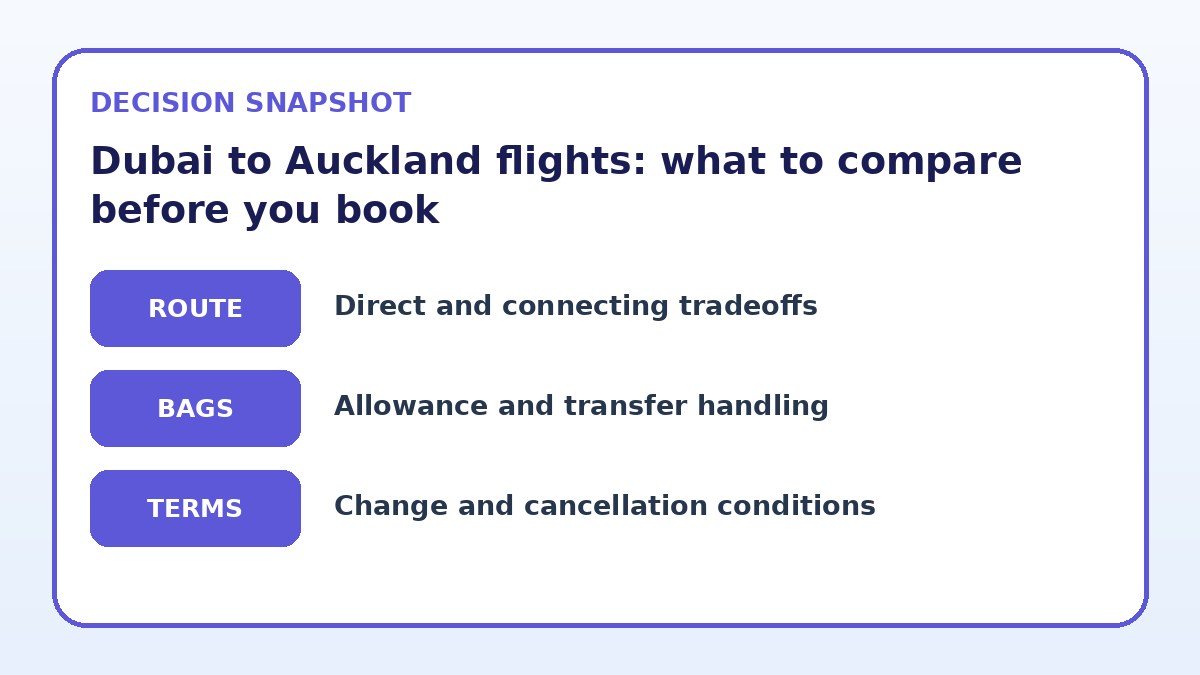
| Approach | Best for | Tradeoff to check |
|---|---|---|
| Direct flight | Travelers prioritizing the shortest door-to-door time and simpler logistics | May be more expensive and offer fewer departure times |
| Single-ticket connection (same alliance) | Those who want lower fares while keeping baggage and rebooking protected | Longer travel time and higher disruption risk than direct service |
| Separate-ticket connection (self-transfer) | Very flexible travelers seeking specific timings or lower fares across carriers | You must handle baggage recheck and accept full responsibility for missed connections |
| Planned stopover (split journey) | Travelers who want to rest or sightsee en route without hurrying through transit | Adds overnight logistics and may require exiting and re-entering immigration |
Risk, baggage, and the hidden costs of connections
Connections introduce operational risk. Missed flights, baggage delays, and schedule changes are more likely the more segments and carriers are involved. If your itinerary uses a single carrier on a single ticket, the airline usually assumes responsibility for rebooking and transferring baggage. If you mix carriers or book separate tickets, you may need to collect and re-check luggage during layovers and assume responsibility for missed onward flights. That increases stress and may add unplanned costs.
When comparing ticket options, examine the fine print: verify whether bags will be checked through to Auckland, whether minimum connection times are realistic at the hub airport, and what rebooking options exist if one segment is delayed. Also consider whether travel insurance or the airline’s protected rebooking will cover missed connections. These details are the practical differences that often determine whether a saving on the ticket is worth the additional hassle.
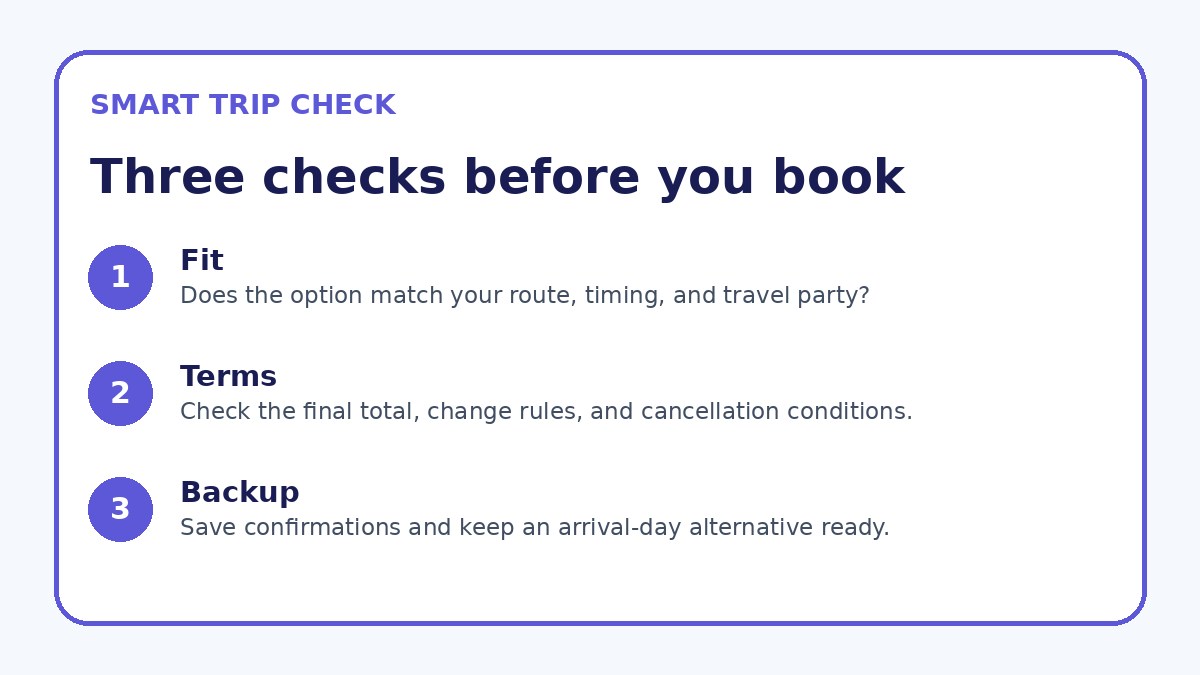
Before you book
- Calculate door-to-door travel time including airport transfers and likely wait times at both ends.
- Confirm whether your baggage will be checked through to Auckland on the carrier’s final booking page before purchase.
- Check minimum connection times and terminal transfer distances at the hub(s) listed on your itinerary.
- Review change and cancellation policies on the operating carrier’s site to understand rebooking options if disruptions occur.
- Consider purchasing travel insurance that specifically covers missed connections and baggage delay for multi-segment itineraries.
- If taking a planned stopover, verify visa or transit-entry requirements for the country where you’ll stay and allow time for immigration clearance.
Price, schedule flexibility, and personal priorities
Budget is a primary factor for many first-time visitors. Connecting itineraries sometimes provide lower headline fares or more flexible dates. But cheaper can mean longer total travel time and extra complexity. Balance the monetary saving against intangible costs: extra fatigue, time lost in transit, and the risk of disruptions. Consider whether the money saved could be better spent on a more comfortable class or on a short stopover hotel to rest between flights.
Finally, align the flight choice with your trip purpose. If you have limited time in New Zealand and want to maximize sightseeing, a direct routing may be worth the premium. If you’re traveling on a flexible schedule or want to explore a city along the way, a planned connecting stopover can become part of the trip. Use the airline’s booking page and, if desired, a comparison tool like Trip.com to see current options, but verify baggage, change-fee, and total travel-time details directly with the operating carrier before purchase.
Frequently asked questions
How much longer is a typical connecting Dubai to Auckland itinerary compared with direct flights?
Connection time varies widely depending on the routing and the hub you pass through. A well-timed single-connection itinerary can add only a few hours to total travel time, while multi-stop routings and long layovers can extend door-to-door travel by a day or more. When comparing options, add airport transfer times at both ends plus recommended airport arrival windows for international flights. This approach gives a realistic estimate of how much extra travel time a connection will add for your specific booking.
Will my checked baggage go all the way through to Auckland on a connecting ticket?
Whether baggage is checked through depends on how your ticket is issued. If all flight segments are on one ticket and operated by carriers within the same alliance or partners, airlines commonly transfer baggage to the final destination. If you book separate tickets or fly with carriers that do not have an interline agreement, you may need to collect and re-check luggage during layovers. Always confirm baggage transfer and any oversized or excess baggage charges on the operating carrier’s booking details before you finalize payment.
What connection time should I allow at major hubs to reduce stress?
Minimum connection times vary by airport and whether you need to change terminals or clear immigration, so there isn’t a universal number. As a rule of thumb, allow at least 90–120 minutes for international-to-international connections that stay airside in a single terminal, and more if you must change terminals, collect luggage, or pass through immigration. Check the hub airport’s terminal map and the operating carrier’s recommended minimum connection times on their site to choose a buffer that matches your risk tolerance.
Final planning note
Choosing between direct and connecting Dubai to Auckland flights is a practical tradeoff: direct services simplify the journey and usually shorten total travel time, while connecting options can offer lower fares, more schedule choice, and the chance to break the trip. For first-time visitors, the decision comes down to how much complexity you’re willing to manage in exchange for savings or an interesting stopover. Use door-to-door time, baggage transfer rules, and rebooking protections as your main decision criteria. Before booking, verify all operational details on the operating carrier’s final booking page; use a comparison tool such as Trip.com to view options, but rely on the carrier for definitive policies and confirmations.
Continue planning
Check current options and final conditions
Use the provider page to confirm live availability, the final total, cancellation terms, and every condition that matters to your trip.
This evergreen planning guide was created with AI-assisted drafting and a structured quality review. It does not display live prices, schedules, availability, visa guidance, or provider rankings. Verify current details before booking. Some links are affiliate links; we may earn a commission at no additional cost to you.