Practical answer up front: couples planning Kuala Lumpur to Singapore transport typically choose between a single-mode coach or train for simplicity, or stitch together rail, coach and local transit for more flexible multi-city stops. Your best route depends first on where you’ll start and finish in each city, how much luggage you have, and whether you want comfortable transit days or quicker point-to-point transfers. Focus on door-to-door time — transfers between terminals, immigration steps, and local onward travel matter more than headline travel time. This article walks through how to evaluate terminal fit, luggage friction, timing flexibility, and a clear disruption backup. It also shows how to combine modes across Malaysia and Singapore so your trip suits a couple’s pace, sightseeing priorities, and tolerances for transfers. At the end you’ll have a checklist of verifications to make before you book any segment.
Compare modes by door-to-door practicality
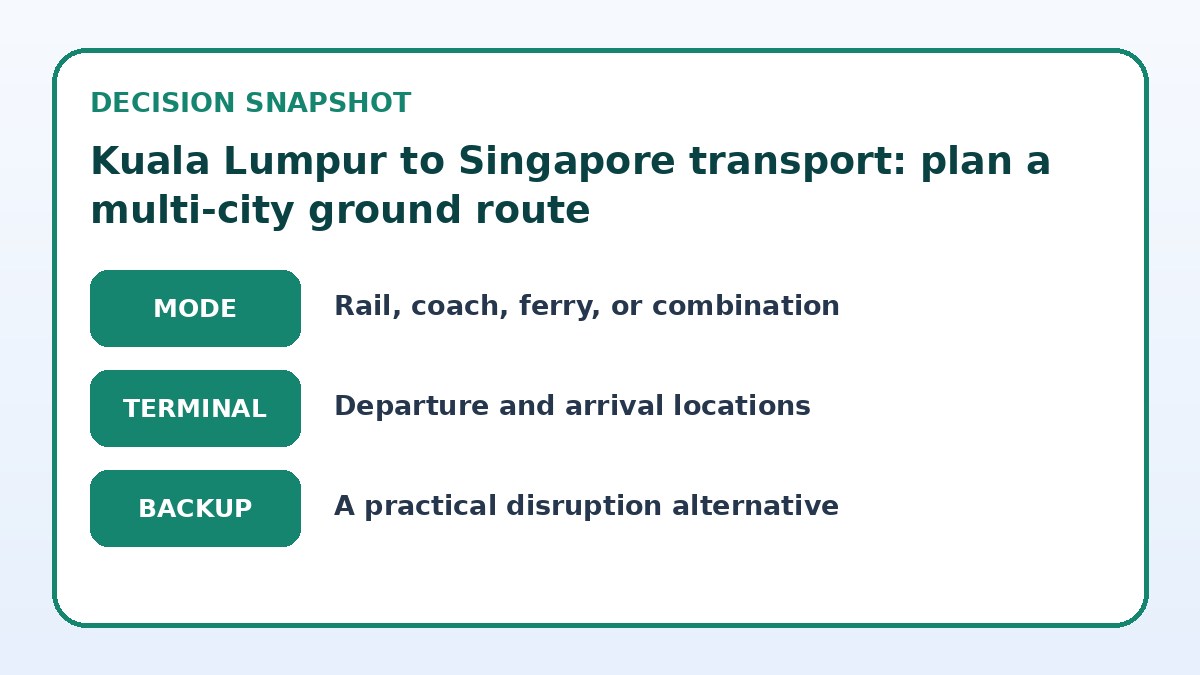
When deciding between rail, coach, ferry (where relevant) or mixed legs, measure door-to-door practicality rather than just ride quality. Start by mapping your origin and final hotel or suburb in both Kuala Lumpur and Singapore. Note the distance and typical travel time to the nearest major station or coach terminal, and whether that approach requires a taxi, rideshare, or additional urban transit. For many city-center to city-center itineraries, a slightly longer coach or train that drops you near central neighborhoods will save time and money on onward transfers and reduce the friction of moving luggage between modes.
Also consider terminal amenities that matter to couples: baggage storage, restrooms, secure waiting areas, and cascading immigration checkpoints. If one mode requires a remote pickup or drop-off, that adds negotiation for taxis and often costs more during peak times. Mixed-mode itineraries allow scenic detours or stops, but add transfer points — each transfer multiplies the chance of a delay affecting the next leg. Tally total time including transfers and realistic buffer time to identify the practical winner for your specific door-to-door plan.
Choose the end-to-end journey plan
| Journey approach | Best for | Friction to check |
|---|---|---|
| Single-mode direct coach or train | Couples seeking the simplest door-to-door experience with minimal transfers and straightforward luggage handling. | Fewer sightseeing opportunities en route and less flexibility for intermediate stops or tailored schedules. |
| Mixed-mode plan (train + short coach/local legs) | Couples wanting to visit smaller towns or scenic stops without relying on a single provider for the whole route. | More transfers increase the chance of delay and require careful timing and luggage management. |
| Separate single-leg tickets stitched together | Budget-conscious couples who want complete control over each segment and the ability to optimize individual fares. | No through-ticket protection — missed connections can become costly or require overnight stays. |
| Flexible/flexible-legs booking (mix of refundable or changeable tickets) | Couples prioritizing peace of mind and the ability to change plans without major penalties. | Higher upfront cost and potential need to verify different providers’ change policies on their booking pages. |
Check live intercity options
Look beyond the ride itself and compare terminals, transfers, luggage, and arrival fit.
Assess luggage and transfer friction for two travelers
Couples typically carry more combined luggage than solo travelers, and transfer friction grows with each extra bag and connection. Evaluate how each mode handles checked or carry-on baggage: some trains and coaches allow larger items stored on board, while local transfers might force you up stairs or through crowded terminals with heavy cases. If you plan side trips between cities, check whether storage is available at intermediate stations so you can sightsee unburdened for a day and resume your journey.
Think through the physical steps of each transfer: coach-to-train platform changes, ticket office queues, and immigration lines. Couples can split tasks (one handles luggage, the other handles check-in) but that only helps if spaces and queues are manageable. When building a multi-city itinerary, minimize transfers that require moving between non-adjacent terminals or across different transit systems; these are the points where fatigue and missed connections happen most often.
Timing flexibility and how to schedule relaxed connections
Decide how flexible you want your schedule. If you prefer relaxed mornings on travel days, choose fewer early departures and book services with later departure windows. When connecting modes, build realistic buffers that account for traffic variability, immigration processing, and walking between platforms. A convenient rule for couples: allow at least one extra hour for each unfamiliar transfer in addition to the provider’s recommended minimum connection time. That cushion buys time for sightseeing stops, a late breakfast, or a relaxed arrival without sprinting with luggage.
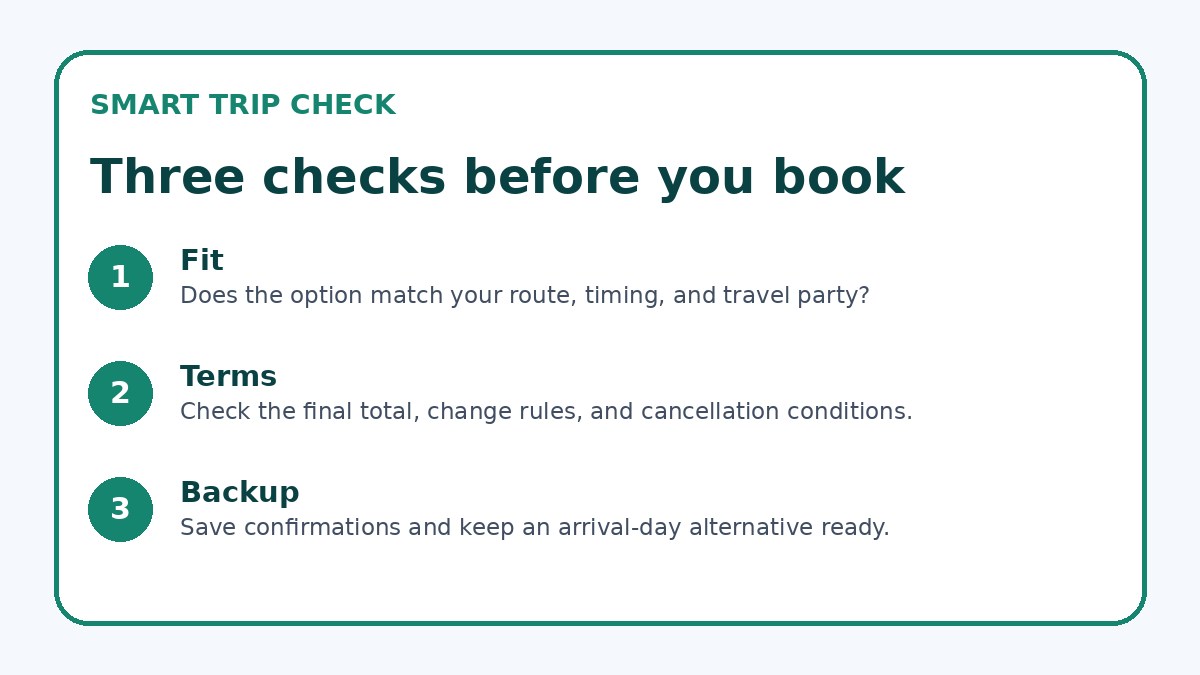
If you are booking separate tickets for each leg to save cost or to create a custom route, treat each segment as independent and plan larger gaps between them. For through-tickets or single bookings that link legs, confirm the provider’s protection for missed connections and what counts as an acceptable reason. Before purchasing, verify how strict cancellation and change windows are for each segment and whether you can change times without punitive fees if plans shift.
Compare the practical alternatives
Use the final page to confirm what is actually offered on your dates and save a workable fallback.
Intercity travel checklist
- Map exact start and end addresses and note the nearest major stations or coach terminals for each address.
- Verify baggage allowances, onboard storage rules, and whether elevators or ramps exist at each transfer point.
- Compare door-to-door time for each option, including estimated taxi or transit rides to terminals.
- Confirm the provider’s change and refund policies, especially for separate tickets you plan to link.
- Identify at least one alternate same-day service or route for each critical leg and save booking references.
- Download offline maps and save contact numbers, plus take screenshots of tickets and confirmation pages.
Build a straightforward disruption backup plan
Every ground plan needs at least one good backup for common disruptions: delays, full departures, or missed connections. Identify alternate departure points and secondary services you could take the same day, and note their typical frequency. For couples, having a clear Plan B reduces stress; agree ahead of time what to do if you miss a connection (wait for the next service, take a taxi for part of the route, or stay overnight). Keep the contacts and booking references for your backup options accessible offline on your phone.
Also confirm refund, rebooking and standby policies before you buy. When possible, buy flexible tickets for one leg of a multi-leg itinerary rather than trying to make all segments flexible; this concentrates cost upgrades where disruption risk is highest. Finally, test how you would make transfers between services at the busiest hubs in your plan — check maps, note elevator locations for luggage, and save local transport apps. These practical small preparations make a scrambled day feel manageable for two travelers.
Rail & Intercity Transport questions travelers ask
Should couples choose a single through-operator or stitch separate tickets when traveling from Kuala Lumpur to Singapore?
Choosing a through-operator simplifies transfers and can provide protection for missed connections, which reduces stress for couples managing luggage and arrival times. Stitching separate tickets gives flexibility to customize stops and potentially find better departure times, but it transfers disruption risk to you: if one leg is delayed, the next provider may not accommodate you. Evaluate how tolerant you are of tight transfer windows and whether you can absorb potential extra costs for rebooking or taxis before opting for separate tickets.
How much buffer time should we allow between connecting ground services on a multi-city route?
Allow at least one hour of buffer for each unfamiliar or cross-terminal transfer, and add additional time for peak-hour traffic or immigration checks. If you must cross a city or switch transport types (for example, coach to train), plan for extra walking, ticket queues and luggage handling. For separate tickets, use larger buffers; for through-bookings, follow the provider’s minimum but still add some personal cushion if you value relaxed travel days.
What practical checks should we make on a provider’s booking page before paying for any segment?
On the booking page, verify exact pickup and drop-off locations, baggage rules, permitted changes or cancellations and any required ID or travel documents for the route. Check whether your ticket is refundable or changeable and under what conditions. Also confirm boarding procedures and recommended arrival time before departure. If you plan to use a third-party comparison site such as Trip.com, use it to view options but verify final terms and seat assignments on the provider’s official booking page.
Final decision note
For couples traveling Kuala Lumpur to Singapore, the right ground-transport plan balances door-to-door practicality with the desire for flexibility or sightseeing. Start by mapping precise start and end points and compare total door-to-door time, not just the ride. Weigh luggage handling and the number of transfers against the benefits of intermediate stops. If disruptions worry you, prioritize flexible legs or through-ticket protection for the riskiest segments and keep a clear Plan B with alternate same-day services. Follow the checklist to verify baggage rules, terminal access, and change policies before booking — these checks turn a fine itinerary into a reliable, low-stress travel day for two.
Continue planning
Check current options and final conditions
Use the provider page to confirm live availability, the final total, cancellation terms, and every condition that matters to your trip.
This evergreen planning guide was created with AI-assisted drafting and a structured quality review. It does not display live prices, schedules, availability, visa guidance, or provider rankings. Verify current details before booking. Some links are affiliate links; we may earn a commission at no additional cost to you.