If you’re flying from Seoul to Jeju for the first time, the core decision is simple: prioritize convenience (short, direct travel) or prioritize schedule flexibility (lower risk if plans change). Direct morning or afternoon flights cut transit time and remove connection anxiety; flexible fares and refundable or changeable tickets buy peace of mind when dates are uncertain. Before you search, gather exact travel dates, the number of passengers, and baggage needs—those details shift which option makes sense. This guide gives the practical answer up front, then walks through routing choices, baggage and connection risk, how to match flight times to your itinerary, and what fare rules to verify on the airline’s booking page.
See live routes for your exact travel day
Compare direct and connecting choices with the same baggage and traveler details.
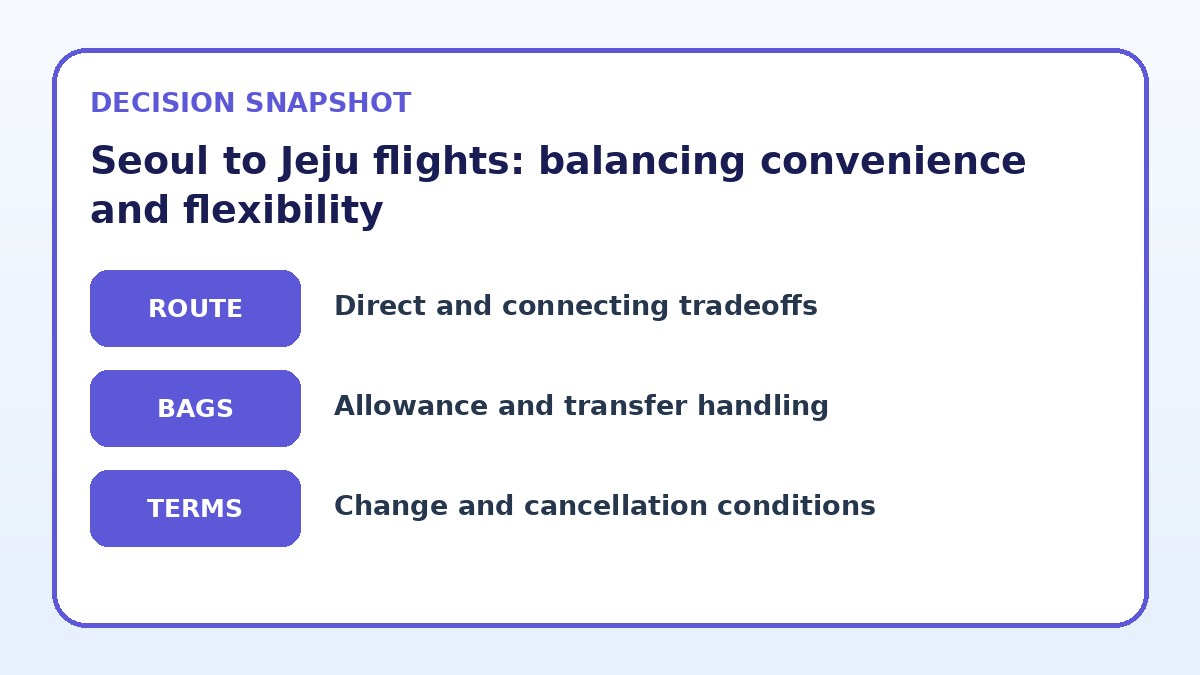
Routing: direct versus connecting options
On Seoul–Jeju routes you’ll typically compare direct flights from Seoul-area airports with any connecting options that route through an intermediate city. For a first-time visitor, direct flights are usually the simplest: fewer moving parts, less chance of missing a connection, and less time spent transferring. However, direct service might be less flexible in timing or more expensive when booked very close to departure, so decide whether shorter travel time or potential savings matter more to your overall trip plan.
When comparing direct and connecting itineraries, treat total door-to-door time as the metric that matters. A flight with a short connection might match the total travel time of a direct flight if ground transfers to/from different Seoul airports are involved. If a connecting option shows a large layover, evaluate whether that layover gives breathing room to deal with delays, or whether it’s an inefficient use of your travel day. Always confirm which Seoul airport is listed, since travel time to Gimpo and Incheon differs and affects your choice.
Baggage, connections and where risk appears
Baggage rules affect both cost and risk. Low-fare tickets sometimes exclude checked bags or charge per bag; if you need to check luggage, add that cost when comparing options. Also confirm whether a connection is on a single ticket (through-checked bags) or two separate tickets; separate bookings create transfer risk because delayed inbound flights may not trigger re-protection or baggage transfer by the carriers. For first-time visitors, minimizing the number of separate bookings reduces the chance of losing luggage or missing a connection.
Connection risk is about time margins and rebooking protection. For the cautious traveler, choose flights with at least the carrier-recommended minimum connection time plus an extra buffer for airport navigation or security lines. If an itinerary requires moving between two different Seoul airports or significant ground transfer, allow extra time or choose a later connection. When using separate tickets, plan for missed-connection contingencies: know the next realistic flight options and have contact details for rebooking assistance.
Compare flight-selection strategies
| Flight strategy | Best for | Risk to check |
|---|---|---|
| Direct earliest-morning flight | Travelers who want maximum time in Jeju and minimal airport complexity. | May require early transit to the airport or an overnight stay near the airport before departure. |
| Lowest-fare connecting itinerary | Budget-focused visitors comfortable with longer travel time and potential tight connections. | Higher risk of missed connections and extra fees for baggage or changes if delays occur. |
| Flexible fare on a direct flight | Uncertain itineraries where easy date changes or refunds are valuable. | Higher upfront cost but reduced rebooking stress and simpler disruption handling. |
| Later departure to preserve a full Seoul day | Those wanting a relaxed departure day in Seoul and to avoid rushing. | Less time on arrival day in Jeju; may require night-time arrival logistics to be verified. |
Recheck the complete itinerary
Confirm airports, connection handling, baggage, and change conditions before deciding.
Schedule fit: matching flight times to your plans
Think beyond departure time: consider arrival time at Jeju and how it fits with hotel check-in, tours, and daylight hours. Early-morning departures maximize time on the island but may require staying nearer the Seoul airport the night before. Midday flights are convenient for those who want a relaxed morning in Seoul. Late-afternoon departures preserve a full day in Seoul but can mean arriving in Jeju in the evening, potentially shortening your first full day on the island. Balance personal energy levels and sight-seeing priorities when picking times.
Also weigh weather and seasonal factors when choosing flight windows. Jeju’s winds and seasonal weather patterns can affect flight reliability at certain times of year; if your schedule is tight, prioritize flights with alternative same-day options you could shift to. For multi-day plans where a single missed flight would wreck the itinerary, a flexible fare or an itinerary with multiple daily flights provides insurance. Before you finalize, check the ground logistics: how long transfers to accommodations take from Jeju Airport at your expected arrival time.
Flight details to verify
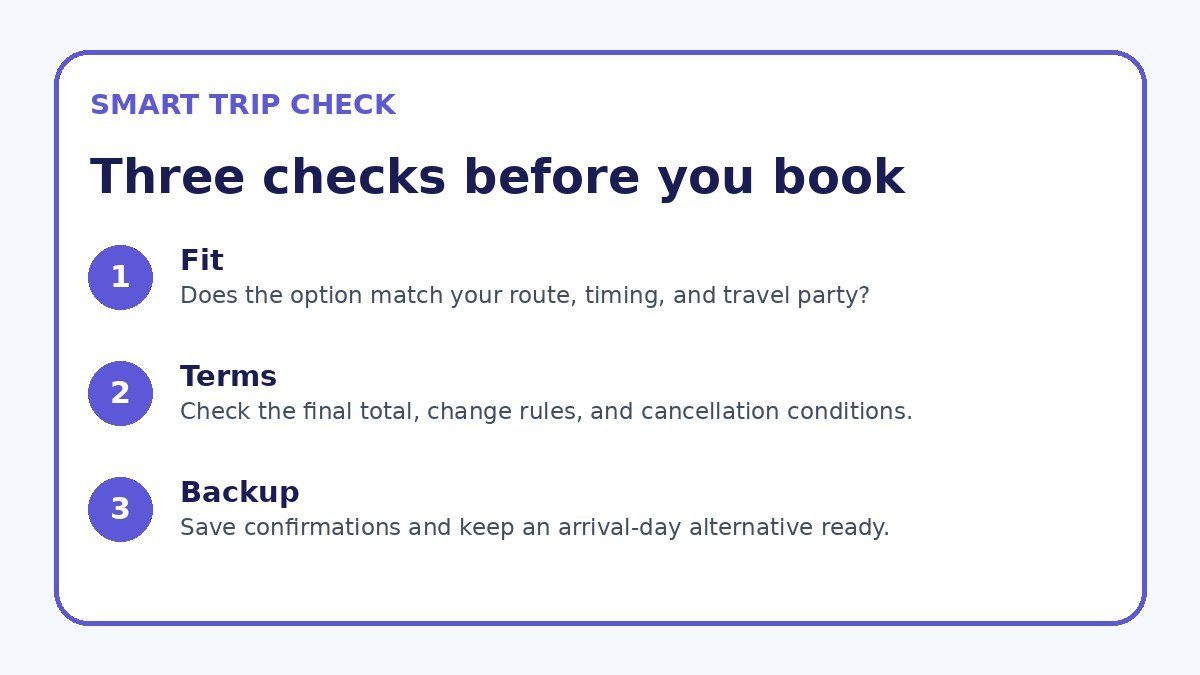
- Record exact travel dates, total passengers, and ages (adult/child/infant) before searching fares.
- Confirm which Seoul airport is listed (Gimpo or Incheon) and estimate transfer time to that airport.
- Open the fare rules and note baggage allowance, change fees, and refund conditions before finalizing purchase.
- If booking separate tickets, plan a buffer of extra time and identify alternate flights for missed connections.
- Compare total door-to-door travel time, not just airborne time, when choosing between direct and connecting options.
- Save or screenshot the airline’s final booking page showing fare conditions and contact details for rebooking.
Fare conditions: what to verify on the booking page
Fare headlines can be misleading; always open the fare rules and read the small print on the airline or booking page. Verify whether the fare includes carry-on and checked baggage, seat selection, and whether changes, cancellations, or name corrections are allowed. Pay special attention to change fees, fare difference policies, and the terms for same-day rebooking or standby—those details determine whether a seemingly cheap ticket is actually economical when plans shift. If carrier pages show tiered change rules, choose the tier that fits how likely you are to change plans.
When comparing a low-cost carrier option to a full-service carrier, don’t assume equivalence: low-cost carriers may price extras a la carte, while full-service fares often bundle benefits like checked luggage and a more generous change policy. If your travel dates are not fixed, prioritize fares that explicitly allow free or low-cost date changes. Finally, record the refundable portion, the timeline for requesting refunds, and any deadlines for free changes; these are the exact items to verify on the final booking confirmation or the carrier’s terms and conditions page.
Flight Guide questions travelers ask
Should I always choose a direct Seoul to Jeju flight?
Not always. Direct flights reduce transfer complexity and travel time, which is often best for first-time visitors or short trips. However, direct options can be more expensive or less flexible if your dates might shift. If you need to save money and can accept longer travel or a planned connection, a connecting itinerary may be reasonable—but only if connection times are comfortable and baggage will be handled on a single ticket. Weigh the cost savings against the added risk and the inconvenience of possible airport transfers.
How much connection time should I allow if I pick a non-direct option?
Allow at least the carrier’s recommended connection time plus a comfortable buffer to navigate terminals, security, and possible delays. If your itinerary requires moving between different Seoul airports or involves separate tickets, add significantly more buffer—several hours—to account for transit and check-in. For many first-time travelers, choosing routes with a single-ticket connection or a longer scheduled layover reduces stress and provides time to manage unexpected delays without missing the onward flight.
What fare details are most important to verify before booking?
Look specifically for baggage inclusions, change and cancellation fees, refund eligibility, and same-day rebooking or standby policies. Check whether seat selection is included and whether name corrections are allowed. If a low fare excludes checked baggage, add that cost to your comparison. Finally, confirm any deadlines for free changes or refunds and save the exact fare rules screenshot or confirmation page: these items determine the real flexibility you’ll have if plans change.
Final decision note
For first-time travelers, the practical approach is to decide whether convenience or flexibility matters more for your Seoul–Jeju trip. If you prioritize simplicity and time on Jeju, a direct flight that aligns with your itinerary is usually the right choice. If dates are uncertain or you want protection against change, factor flexible fares and clear change policies into your comparison—even if they cost more initially. Prepare exact dates, passenger details, and baggage needs before searching, and always verify airport, baggage, and change conditions on the airline’s booking page. Use the checklist here to ensure you compare apples to apples and book the option that fits your risk tolerance and on-island plans.
Continue planning
Check current options and final conditions
Use the provider page to confirm live availability, the final total, cancellation terms, and every condition that matters to your trip.
This evergreen planning guide was created with AI-assisted drafting and a structured quality review. It does not display live prices, schedules, availability, visa guidance, or provider rankings. Verify current details before booking. Some links are affiliate links; we may earn a commission at no additional cost to you.