If your trip to Chiang Mai is work-focused and time-sensitive, renting a car can offer schedule control and reliable access to out-of-town meetings. Practically, the decision hinges less on whether you can drive and more on fuel policy, daily or total mileage caps, and how damage liability is worded in the rental contract. Business travel adds pressure: missed meetings, tight timelines, and expense-account clarity mean you should verify specifics before you commit. This guide gives the quick recommendation up front—yes, rent only if route value and meeting locations justify the extra admin—and then walks through the exact contract terms and operational frictions to check at booking and pickup. If driving isn’t worth it, I’ll outline a clear non-driving fallback that keeps you mobile and on schedule without unexpected fuel or mileage charges.
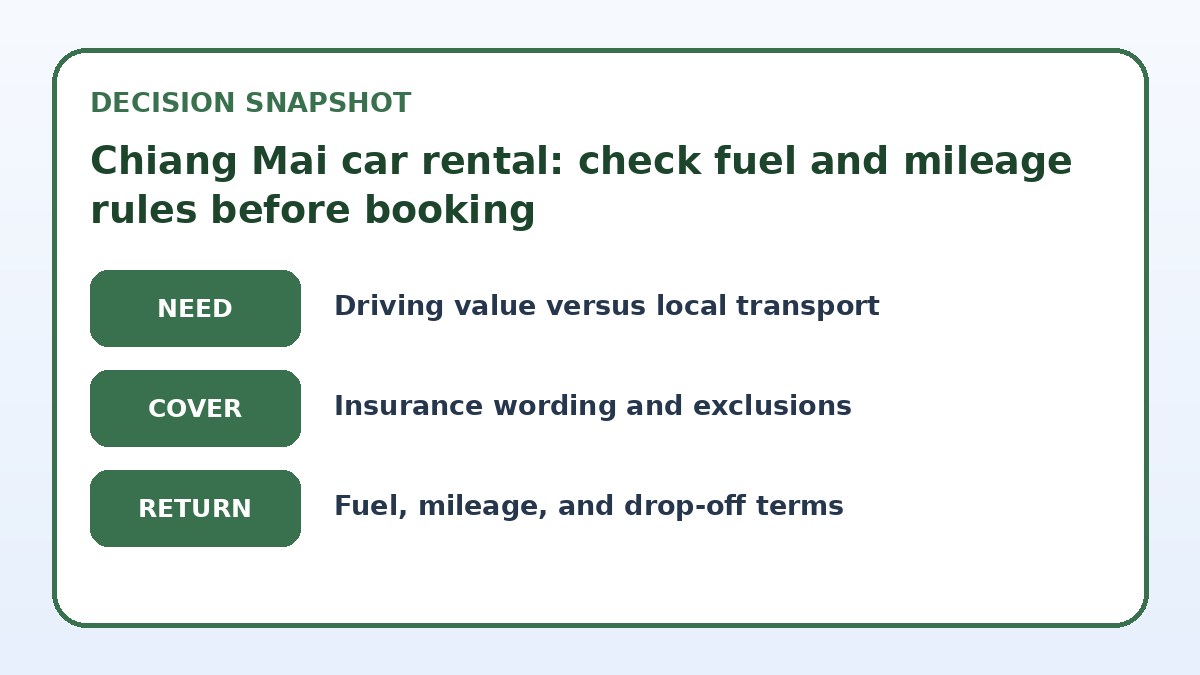
Decide whether driving adds real value
Start by mapping your meeting addresses and likely travel windows. Driving in Chiang Mai makes sense when you must reach industrial estates, suburban properties, or venues with limited taxi access, or when you need strict schedule control for multiple stops in one day. If most meetings are inside the Old City or Nimmanhaemin area, traffic and parking friction can erase any time advantage. Consider parking availability at each venue—hotel valet, street parking, or paid lots—and the time lost hunting for a space versus catching a brief taxi or using a dedicated driver.
Quantify the value: estimate taxi fares, ride-hail wait times, and private driver day rates against rental fees plus fuel and potential mileage charges. Factor in the administrative work of receipts, expense reporting, and any company car policy constraints. For single-day transfers to Chiang Rai, Lampang, or Doi Suthep area sites, a rented car might be essential. For routine inner-city meetings or late-night rides, alternative transport often beats the combined cost and operational risk of self-driving.
Decide whether driving earns its place
| Mobility strategy | Best for | Cost or friction to check |
|---|---|---|
| Self-drive rental car | Travelers with multiple off-city meetings or tight, flexible schedules needing direct control. | Higher admin, fuel and mileage checks, parking hassles, and potential liability if contract wording is unclear. |
| Private driver for full days | Business guests needing hands-free travel across multiple locations without parking or local navigation tasks. | Higher per-day cost than taxis and less personal privacy than a rental vehicle for impromptu solo trips. |
| Taxis and ride-hail (inner city) | Short, frequent trips inside central Chiang Mai where parking is scarce and speed matters. | Can be slower or more expensive for suburban routes and less predictable for strict multi-stop schedules. |
| Motorbike or scooter rental | Solo travelers moving through congested inner-city areas who need maximum agility and lower per-day cost. | Safety concerns, limited luggage space, and often different insurance exclusions for business use; not ideal for unfavourable weather. |
Check live rental choices only after the route test
Use the exact driver, dates, pickup point, and return plan to compare current conditions.
What to verify in insurance and contract wording
Insurance wording determines your financial exposure. On the booking page and rental agreement, look for the terms 'collision damage waiver (CDW)', 'theft protection', excess amount, and any exclusions tied to driver age, additional drivers, or use during business activities. Confirm whether your company’s corporate insurance or a corporate card offers secondary or primary coverage and whether that applies in Thailand. Ask the provider to show where business use is described—some policies restrict business-related driving or require an additional rider.
Also check instructive phrasing: how 'damage' is defined (glass, tyres, underbody, and interior), whether inspections are documented at pickup, and what condition photos or signed checklists will be used to dispute charges. Request written confirmation about roadside assistance response times and towing coverage. If anything is ambiguous, get a clarified email from the rental company and save it with your booking—disputed charges are far easier to contest when you have the provider’s words on record.
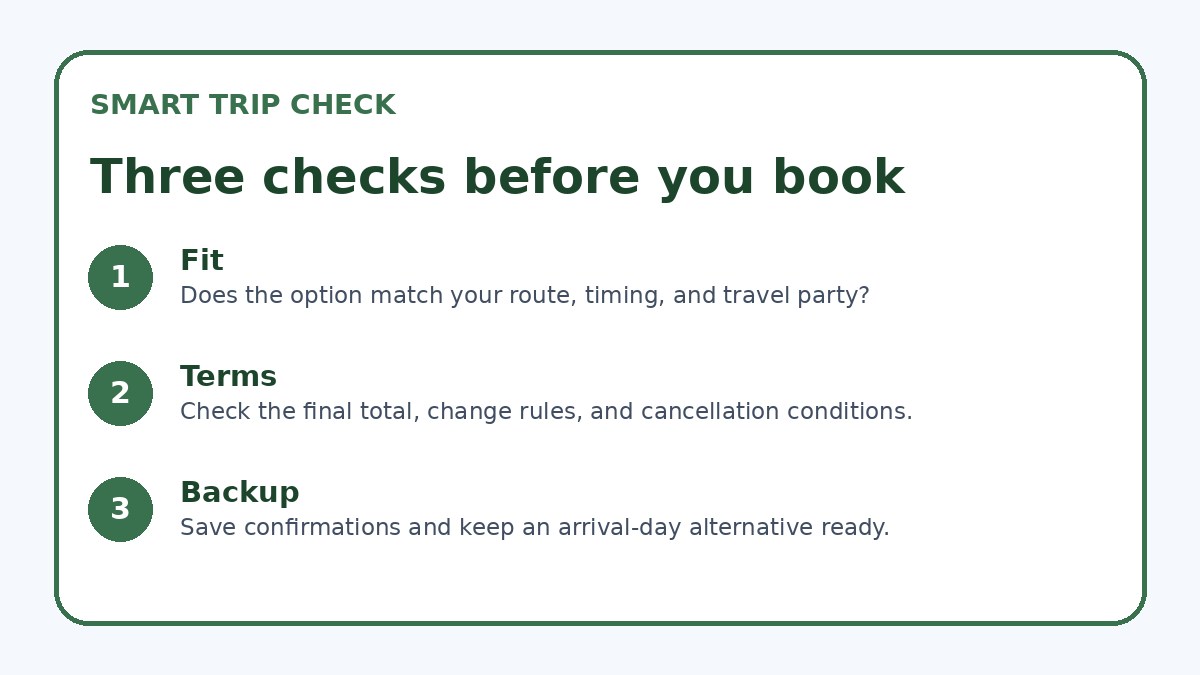
Compare the full rental conditions
Confirm insurance wording, exclusions, deposit, fuel, mileage, and return terms on the final page.
Pickup and return friction that affects business schedules
Pickup logistics can cost you valuable time. Verify the office hours, airport shuttle arrangements, and whether staff will inspect the car before handing over keys. A quick handoff isn’t automatic: expect a 10–30 minute check-in, especially if queues form or documentation is missing. Ask what ID and documents are mandatory—passport, Thai or international driver license, and a printed corporate booking confirmation—and whether additional lists (company letter, local contact) are requested for business rentals.
Return friction is equally important. Confirm the exact return window, where to drop keys after hours, and local refueling options near the return depot. Some stations charge a processing fee for late returns or for staff to refuel the car; others charge a premium per litre if you don’t refill to the agreed level. To avoid disputes, take time-stamped photos of fuel gauge and odometer at pickup and return, and keep fuel receipts if the policy requires refilling elsewhere.
Car rental terms to verify
- Confirm the rental’s fuel policy (full-to-full, prepaid, or refuel charge per litre) and note acceptable fuel types and required receipts.
- Ask for the written mileage policy: daily limits, total-kilometre caps, and excess kilometre rate per unit.
- Obtain a copy of the insurance wording showing CDW, theft protection, excess amount, and any business-use exclusions.
- Document pickup with time-stamped photos of the odometer and fuel gauge; keep the inspection checklist signed by staff.
- Confirm airport pickup and after-hours return procedures, including exact drop-off location and late-return fees.
- Save all invoices and correspondence (booking confirmation, email clarifications, and insurance statements) in your expense folder.
Non-driving fallback: efficient alternatives and when to use them
If driving looks marginal, plan a fallback that preserves schedule control without a rental. Arrange a trusted private driver for full days of meetings; this removes parking and inspection risk and keeps you working en route. For single trips or short inner-city hops, use taxis or ride-hail apps—they are inexpensive for short distances, reduce administrative paperwork, and have quick availability in central Chiang Mai. Negotiate fixed day rates with reputable drivers for multi-stop itineraries so you can leave meeting windows flexible.
Combine modes where it makes sense: book taxis for city movement and a rental or private car only for an out-of-town transfer. Keep local SIM data and a ride-hail app installed, and secure backup phone numbers for recommended driver services from your hotel concierge or meeting hosts. Finally, when using non-driving options, still request written invoices for expense reports and confirm cancellation and waiting-time rates in advance to avoid last-minute billing surprises.
Car Rental & Road Trip questions travelers ask
How does fuel policy typically affect business expense accounting?
Fuel policy affects both out-of-pocket spending and the paperwork you must submit. Full-to-full policies let you refuel close to the depot and submit petrol receipts for reimbursement; prepaid fuel may simplify returns but can lead to overpayment if you return with unused fuel. If the contract charges refuelling at a provider rate, that per-litre charge might be higher than local stations. For expense reporting, keep fuel receipts or the rental’s final invoice and match them to the stated policy. If unsure, ask the provider to confirm on the booking page what will appear on the final invoice so your finance team knows how to code it.
What specific contract words should I watch for to avoid surprise charges?
Key phrases include 'excess', 'deductible', 'additional driver fee', 'after-hours return fee', 'refueling charge', and 'administration fee'. Also check exclusions such as 'off-road use', 'driving outside Thailand', or 'use for hire or reward', which can void coverage. Pay attention to the sample damage-charge process: whether damage is estimated, charged, then refunded if disputed, and how long refunds take. If a term is vague, request a written clarification from the rental company before pickup and store that message with your reservation.
Will a corporate credit card or my company insurance cover rental excess in Thailand?
Corporate cards and company insurance may provide secondary or primary coverage, but their applicability depends on card terms and the insurer’s international rental clauses. Check if coverage applies to 'business use' in Thailand and whether it requires you to decline the provider’s CDW at pickup. Some card benefits cover collision but not theft or certain tyre and glass damage. Before relying on this, request written confirmation from your card issuer or insurer and bring contact details for claims; at minimum, know the excess amount the rental company will hold on your card at pickup.
Final decision note
For business travelers in Chiang Mai, the practical rule is simple: rent a car only when the route value—out-of-city meetings, heavy luggage, or tight multi-stop days—clearly outweighs the time and expense of handing fuel and mileage administration. The specific items that make or break that decision are transparent: the fuel policy, mileage limits, and insurance wording. Verify those three points on the provider’s booking page and collect written confirmations for any ambiguous clauses. If the contract terms or pickup logistics add undue risk, use a private driver or ride-hail for inner-city needs and reserve a car only for essential transfers. Save all receipts and documentation so expense reporting and any post-trip disputes remain straightforward.
Continue planning
Check current options and final conditions
Use the provider page to confirm live availability, the final total, cancellation terms, and every condition that matters to your trip.
This evergreen planning guide was created with AI-assisted drafting and a structured quality review. It does not display live prices, schedules, availability, visa guidance, or provider rankings. Verify current details before booking. Some links are affiliate links; we may earn a commission at no additional cost to you.