If you and your partner want to use price alerts to find Jeju travel deals without falling into impulse bookings, the practical answer is to combine disciplined alert settings with pre-agreed decision rules and an apples-to-apples comparison checklist. Start by setting alerts for the exact dates and traveler details you plan to use, and create a short list of acceptable inclusions (flight times, baggage, hotel type, and cancellation terms). When an alert pings, stop and compare the alerted option directly against your baseline: the package’s total cost, flexibility, and traveler-specific value versus booking the components separately. Use a fixed decision window—24 to 72 hours is common for couples deciding together—so neither partner feels pressured. Below I’ll walk through what to compare in a bundle, how to evaluate flexibility and real value, four ways to book, and a practical checklist and FAQs to help you verify final terms on provider pages before you click reserve.

Test package value fairly
| Booking approach | Best for | Tradeoff to check |
|---|---|---|
| All-in-one package (flight + hotel) | Couples who prioritize convenience and bundled inclusions like transfers or breakfasts. | May limit flexibility and hide separate fees; verify cancellation and who handles refunds before booking. |
| Book flights and hotel separately | Couples seeking maximum control and the ability to mix carriers and accommodations. | Requires more time to compare totals and may miss bundled conveniences that save time or hassle. |
| Package with flexible change options | Planners who want bundle convenience but expect possible date or passenger changes. | Flexible bundles often cost more; confirm how many changes are allowed and penalty amounts. |
| Split booking with add-on extras (transfers, tours bought separately) | Couples who want precise control over each element and to add curated experiences. | More booking steps and potential for higher combined cost if you don’t compare totals carefully. |
Check current package and separate options
Use identical dates, travelers, room needs, baggage, and flexibility so the comparison stays meaningful.
What to compare before judging a package
Before you decide whether a package is a good deal for two, list the exact elements you must compare. That means the same travel dates, identical passenger names and ages (infant, adult), the same number and type of rooms, and the same flight routing type (direct or with connections). Include an apples-to-apples comparison for extras that often hide value differences: checked baggage allowances, airport transfers, resort or hotel service fees, and if a package offers attraction tickets or meals. Only compare packages to separate bookings when every relevant inclusion is matched or noted for tradeoffs.
Also check the supplier’s fine print for how changes and cancellations are handled. Packages sometimes have different change fees or pooled cancellation policies that look cheaper up front but cost more if plans shift. For couples, flexibility can be as important as savings: confirm whether both partners can change a reservation without penalty and whether name corrections are allowed. Write down the specific verification items you’ll check on the provider’s final booking page so you don’t rely on marketing copy in alerts.
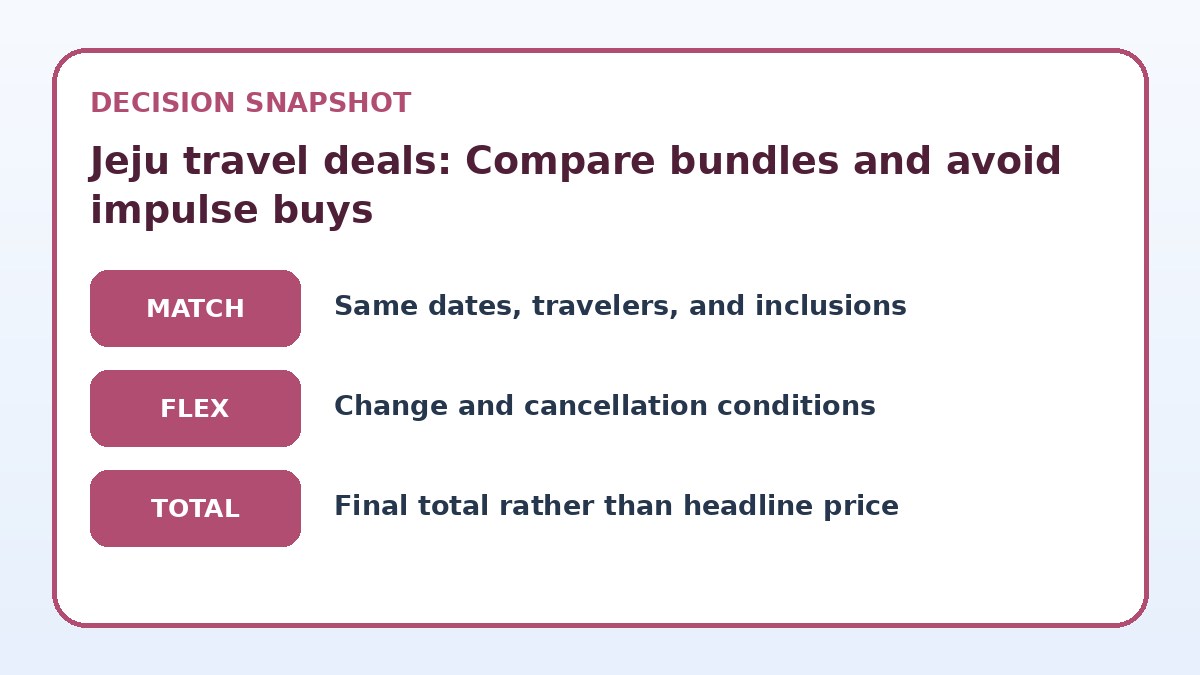
Inclusions versus flexibility: which matters most
A low headline price means little if the inclusions don’t match what you actually need. For example, a package that advertises a lower rate but requires paying extra for baggage or a preferred shore pickup can quickly become more expensive. Couples should weigh whether included convenience items—like breakfast, airport transfers, or early check-in—save time and reduce stress enough to justify a higher package price. Make a short list of inclusions that add real value to your trip together, and treat those as deal-breakers when alerts pop up.
Flexibility is a separate but equally important factor. If one partner’s work schedule might change or you’re booking far in advance, choose options that allow reasonable cancellations or free date changes. Confirm the exact change and cancellation terms on the booking page: look for refund windows, penalties per passenger, and whether changes require contacting customer service. If flexibility is worth more to you than a few currency units, prioritize it in the final choice and be prepared to pay slightly more for that certainty.
Look past the headline total
Compare inclusions and change conditions before deciding whether a package is genuinely useful for this trip.
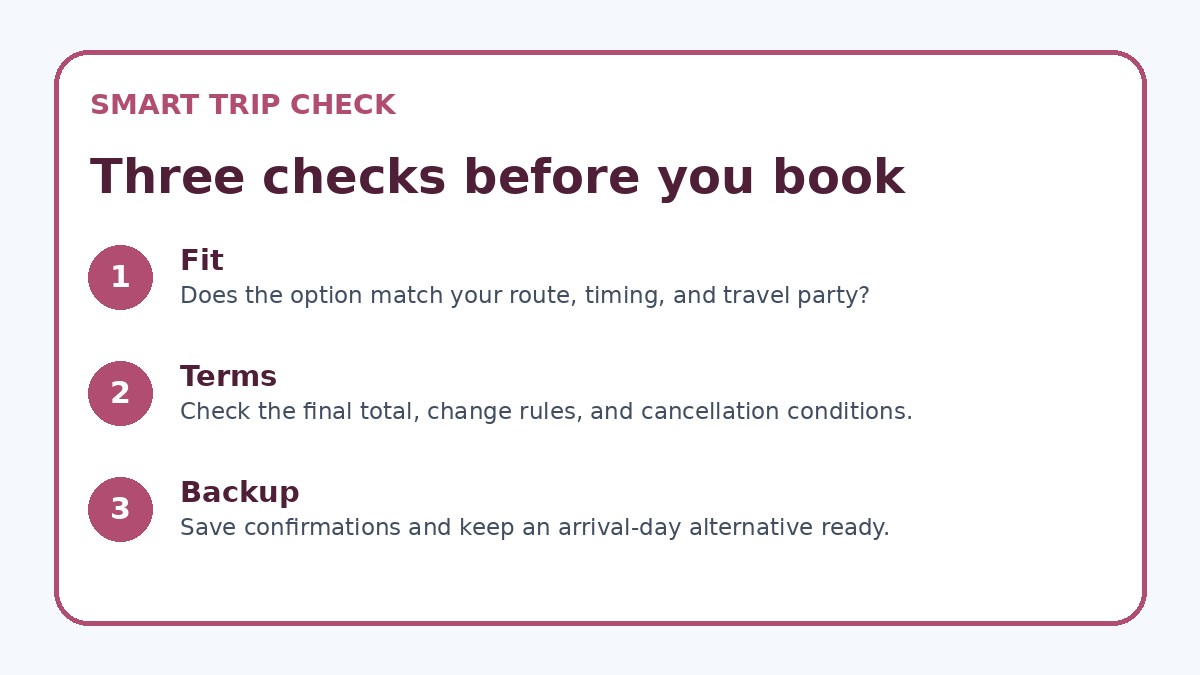
Deal comparison checklist
- Set price alerts for the exact travel dates, passenger types, and cabin or room type you actually plan to book.
- Agree with your partner on three nonnegotiable inclusions (for example, checked baggage, breakfast, airport transfer) before evaluating alerts.
- When an alert arrives, capture the headline offer and immediately open the provider’s booking page to verify cancellation and change terms.
- Compare the total landed cost (all fees included) for the package against separate bookings using the same dates and traveler details.
- Apply your pre-agreed decision window (e.g., 48 hours) and tie-break rule to avoid booking under impulse.
- Before paying, confirm who refunds or handles changes (the supplier or intermediary) and keep screenshots of the final terms.
How to use alerts responsibly as a couple
Turn alerts into actionable signals, not pressure triggers. Create alert rules that match your plan—same dates, number of travelers, and cabin class—and set channels that don’t demand immediate action: an email digest or a shared app alert both work. Before you subscribe together, agree on how you’ll treat an alert: will you research for 24 hours, discuss, or treat it as informational only? Having a short decision protocol prevents one partner from booking on impulse and avoids second-guessing later.
When a promising alert arrives, the next step is to gather the facts: total landed price, cancellation and change policies, baggage and seat rules, and whether any third-party fees apply. Compare those facts side-by-side with your baseline of separate bookings or another package offer. If either partner feels unsure, use your pre-agreed cooling-off period. For many couples, the rule that ‘greater flexibility wins’ is an effective tie-breaker when price differences are small.
Final terms to verify on the provider page
Never rely on alert summaries for final terms. On the provider’s booking page, verify the exact traveler names, passenger types, and dates are correct before you proceed. Check fields for baggage allowances, seat selection fees, deposit requirements, and the exact cancellation policy with time frames and penalties. If the booking is a package, confirm whether the supplier or an intermediary handles refunds and changes; that affects how quickly you’ll get a refund and who you contact in case of problems.
Also confirm payment timing and any non-refundable elements. Look for marked non-refundable segments, mandatory tourism or resort fees, and whether name changes or minor corrections are permitted without a fee. If the deal involves transfers or attraction vouchers, read the redemption instructions and whether you must print or present a mobile voucher. If you prefer, cross-check availability on a comparison site such as Trip.com, but verify all critical policy details on the provider’s own checkout page before completing payment.
Travel Deals & Booking Strategy questions travelers ask
How should couples decide whether to book a package or separate components for Jeju?
Start by listing what matters most to you as a couple: convenience, inclusions, or flexibility. Compare the total cost for identical dates, traveler details, and inclusions rather than comparing headline prices. If you value convenience—transfers, pre-paid breakfasts, or attraction passes—a package that bundles those may be worth paying slightly more. If you need full control over flight times or specific hotels, booking separately gives more customization. Always verify cancellation policies and who handles refunds on the provider’s checkout page before committing.
What decision rules reduce impulse bookings when a tempting alert appears?
Agree on a short decision protocol ahead of time: set a cooling window (24–72 hours), designate a tie-break rule (e.g., choose the option with better flexibility), and require both partners to confirm before purchase. Use alerts as prompts to research, not as triggers to buy. When checking a deal, compare the exact inclusions and cancellation terms to your baseline. If either partner is unsure, use the cooling-off period—most good opportunities reappear and impulsive regret is avoided.
Which contract details should couples always verify on the booking page for Jeju travel deals?
Check passenger names and ages, baggage allowances, seat selection rules, and any mandatory resort or service fees. Read the cancellation and change policy carefully: note time windows, per-person penalties, and whether refunds are processed by the supplier or an intermediary. Confirm payment timing and whether parts of the booking are non-refundable. If transfers or attractions are included, verify redemption instructions. Save screenshots of the final terms and booking confirmation for both partners.
Final decision note
Using price alerts for Jeju travel deals can save time and surface good options, but for couples the real challenge is converting alerts into considered choices rather than impulse bookings. Develop simple ground rules: alert settings that match your exact plans, a short list of nonnegotiable inclusions, an apples-to-apples comparison method, and a fixed decision window to avoid pressured choices. When an alert looks promising, always verify the provider’s final booking page for exact terms—especially cancellations, change rules, and who handles refunds. With those checks in place you can use alerts confidently and pick the option that best balances price, convenience, and flexibility for both partners.
Continue planning
Check current options and final conditions
Use the provider page to confirm live availability, the final total, cancellation terms, and every condition that matters to your trip.
This evergreen planning guide was created with AI-assisted drafting and a structured quality review. It does not display live prices, schedules, availability, visa guidance, or provider rankings. Verify current details before booking. Some links are affiliate links; we may earn a commission at no additional cost to you.