If you’re travelling from Vienna to Budapest with oversized bags, bulky cases, or extra sports equipment, the practical decision isn’t only which train or coach to take — it’s how you get your luggage between doors and terminals without stress. Start by comparing rail and coach routes for their terminal locations, platform access, and how much handling is required at each end. Consider whether door-to-door comfort justifies a private transfer for heavy or multiple items. This article lays out the tradeoffs — terminal fit (how stations and bus terminals handle luggage), luggage/transfer friction (stairs, elevators, storage rules), timing flexibility (schedules and peak congestion), and a disruption backup (options if your booked service changes). Use these criteria to decide which approach minimizes transfers, avoids painful stairs, and keeps you on time for connections or city-center arrivals.
Terminal fit: which stations and stops ease heavy luggage
Not all stations are created equal for travelers with lots of baggage. Vienna Hauptbahnhof is a rail hub with multiple platforms, covered concourses, and elevator access, while Budapest has separate main stations (e.g., Keleti, Nyugati, Kelenföld) that put you in different parts of the city. Coaches and long-distance buses typically use separate bus terminals or curbside stops that can be closer to specific neighborhoods. When planning, map both where your transport arrives and where you need to go next — a long walk, a subway transfer, or multiple staircases can transform a short intercity ride into a difficult door-to-door trip when you have multiple heavy bags.
Decide whether arrival at a central rail station or a bus terminal better matches your end point (hotel, apartment, or onward transport). For heavy luggage, prefer options with step-free access between platform and street, passenger lifts, and covered walkways; if those aren’t available, factor in a porter service or private transfer to avoid carrying bags up stairs or across long plazas. If your accommodation is far from the nominal arrival point, factor in an extra taxi or rideshare in your plan and add time for loading and unloading at both ends.
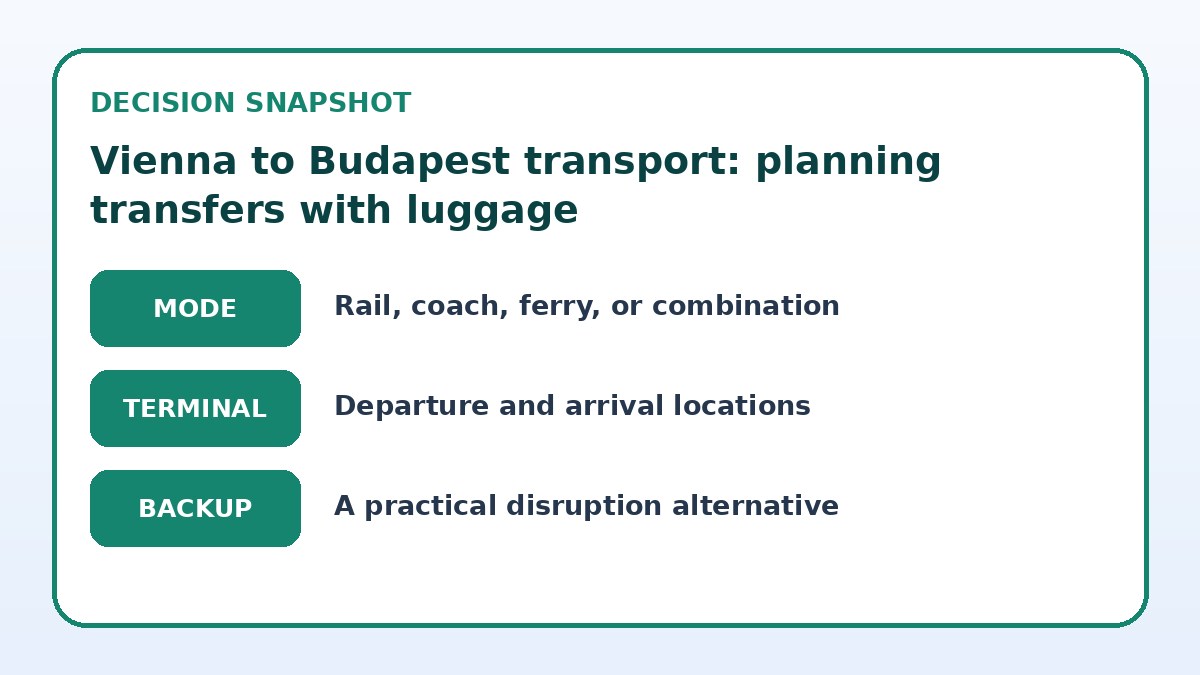
Choose the end-to-end journey plan
| Journey approach | Best for | Friction to check |
|---|---|---|
| Direct train (single-seat journey) | Travelers wanting minimal transfers and platform-level luggage handling | May require a longer walk from station to final city address depending on which terminal you arrive at |
| Coach or long-distance bus | Those needing curbside or neighborhood drop-offs closer to specific hotels | Luggage stored in bays can mean longer waits at stops and potential access constraints during short layovers |
| Private door-to-door transfer (taxi or prebooked car) | Groups, families, or travelers with bulky/fragile items who prioritize handling convenience | Higher cost and possible traffic delays on city approaches; requires reliable booking confirmation |
| Hybrid: rail to a nearby station + short taxi | Balancing rail comfort with targeted doorstep arrival when station choice doesn’t match final address | Adds one extra handoff and cost, but can reduce walking and stair-related friction |
Check live intercity options
Look beyond the ride itself and compare terminals, transfers, luggage, and arrival fit.
Luggage and transfer friction: how handling shapes your choice
Handling friction is the practical cost of each transfer: the number of times you lift or roll a bag, move it between vehicles, or carry it up and down stairs. Trains usually allow you to keep luggage with you in vestibules or store it in overhead racks and dedicated bays; however, short platform transfer distances and wide doors make trains easier when you’ve got heavy suitcases. Coaches place large luggage in underfloor bays, which is convenient but can slow boarding in busy terminals and sometimes requires lifting by staff — helpful if you prefer not to lift, but it adds waiting and coordination time.
If your route includes a metro, tram, or shuttle, count each change as a potential problem: narrow stairs, busy turnstiles, and short escalators complicate moves with multiple pieces. For truly bulky items — bicycles, skis, or musical instruments — check carrier policies and whether you can reserve a space; otherwise consider a specialist courier or a private transfer. When booking, verify baggage allowances, carriage rules, and whether lifts or ramps exist at both the departure and arrival stations on the provider’s final booking page.
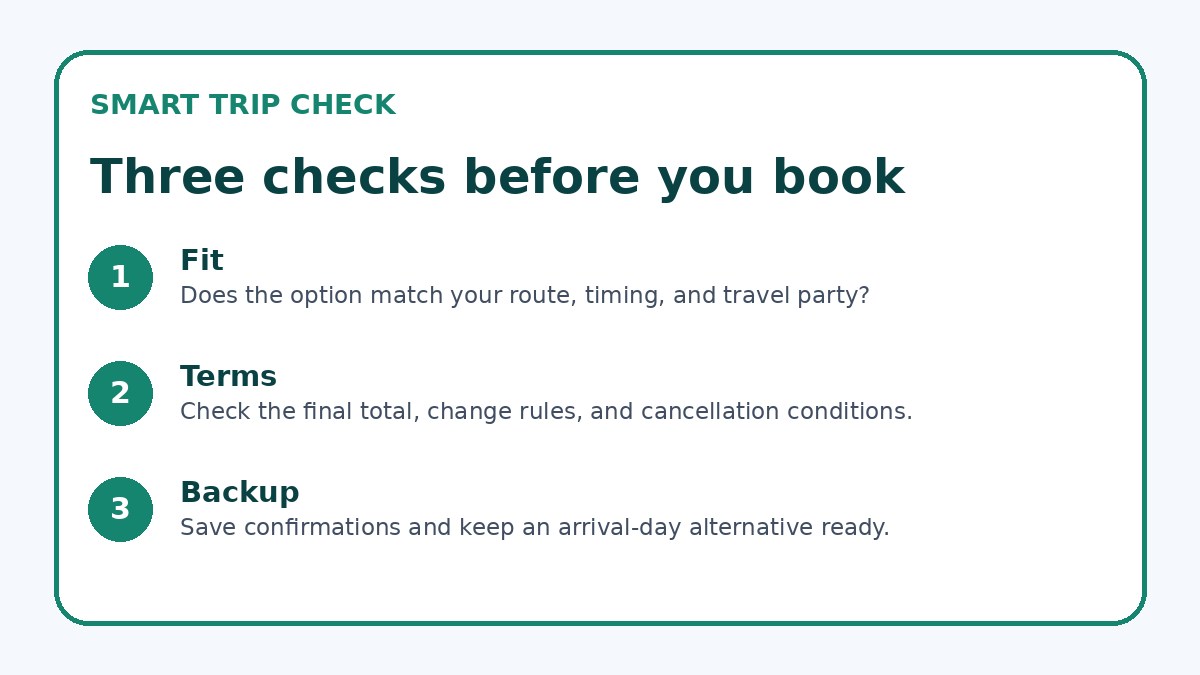
Timing flexibility: schedules, peak times, and buffer planning
Buffers are your best defense against missed connections and the extra time heavy luggage requires. Peak morning and evening periods increase platform congestion and elevator queues, which can add ten to twenty minutes to what looks like a short transfer. If you must use specific timetabled services, choose longer connection windows at interchange points and avoid planning back-to-back transfers. If you have latitude, pick off-peak departures to reduce crowds and make loading and unloading simpler.
Account for check-in or opening times if you’re dropping bags at lockers or station storage facilities; not all services run 24/7 and staffed desks can close in the evening. For short-stop coach services, include loading time and the possibility that the driver handles luggage — which may be slower if the bay is crowded. Build a conservative allowance into any itinerary: add at least 30 minutes for transfers when you’re carrying more than two large suitcases or irregular items, and increase that buffer if you plan to navigate subways or busy city-center terminals.
Compare the practical alternatives
Use the final page to confirm what is actually offered on your dates and save a workable fallback.
Intercity travel checklist
- Map both your departure and arrival station or terminal addresses and measure the walking route and elevation changes before you book.
- Confirm baggage rules, size limits, and whether you can reserve space for oversized items on the provider’s final booking page.
- Build at least a 30-minute buffer for each planned transfer when carrying more than two large suitcases or awkward items.
- Identify two reliable fallback options (taxi rank, later service, or luggage storage) and save their contact details offline.
- Check for step-free access, elevators, and porter services at both terminal locations and factor them into your decision.
- If choosing a private transfer, verify pickup logistics (exact curbside spot, possible congestion) and keep live contact with the driver.
Disruption backup: alternatives if your first plan changes
Have a clear set of fallback options before you travel: a nearby taxi rank or rideshare app, luggage storage locations at the station, later trains or buses you can switch to, and a local contact or hotel that can hold baggage temporarily. If your booked service is delayed or canceled, a private taxi or booked transfer can be the fastest way to salvage a tight schedule — particularly late at night when public services are sparse. Keep app-based transport options installed and a local currency card or contactless payment method ready for quick payment.
Also identify a secondary arrival station or bus stop that places you closer to your final destination, which can save a costly second transfer. For example, if one rail station is closed or disrupted, another station on the same network might be accessible by a short taxi ride. If you must break the journey and store luggage for a few hours, verify storage opening times and size limits on provider pages before you rely on them. Trip.com can be a place to compare current availability and conditions, but always confirm details on the operator’s official booking page.
Rail & Intercity Transport questions travelers ask
Is it easier to take a direct train or a coach between Vienna and Budapest when I have lots of luggage?
For most travelers with heavy or multiple suitcases, a direct train typically reduces handling because you can stay with your bags and use platform-level access, elevators, and wider doors. Coaches can be convenient for curbside drop-offs nearer to hotels but often place luggage in underfloor bays, which may require waiting for staff to load and unload and could add time at stops. Compare where each service arrives in the city and count transfers — the fewer times you move your luggage, the lower the friction.
How much extra time should I allow for transfers with oversized or fragile items?
Plan conservatively: add at least 30 minutes for each transfer involving heavy or bulky luggage. That buffer covers moving between platform and street, elevator waits, and potential short queues at luggage bays or ticket gates. If your itinerary includes a metro or tram change, add another 10–20 minutes to navigate stairs or busy passages. Longer buffers are prudent for late-night or peak-hour travel when station staff and elevators may be less available or crowded.
What’s the best way to avoid stairs and narrow passages when travelling through Vienna or Budapest stations?
Prioritize services and arrival terminals with step-free access and lifts; check station maps and accessibility pages on the operator’s site before booking. If stations lack direct step-free routes, arrange a taxi or prebooked transfer to bypass complex interchanges. When in doubt, contact the operator to confirm lift locations and working hours — do this on the final booking page or by phone — and consider asking your accommodation to provide a pickup if they offer it for guests with heavy luggage.
Final decision note
Traveling from Vienna to Budapest with extra luggage is fundamentally about minimizing handoffs and choosing terminals that align with your final address. Start by weighing whether a train’s platform access or a coach’s curbside drop better suits your bags, then layer in timing buffers and fallback transport options. For bulky or fragile items, a private transfer often simplifies door-to-door logistics despite higher cost. Before you finalize anything, check the provider’s baggage rules, station access details, and local pickup/drop-off points on the official booking page. With a little mapping and a conservative schedule, you can turn an intercity trip into an efficient, low-stress transfer from door to door.
Continue planning
Check current options and final conditions
Use the provider page to confirm live availability, the final total, cancellation terms, and every condition that matters to your trip.
This evergreen planning guide was created with AI-assisted drafting and a structured quality review. It does not display live prices, schedules, availability, visa guidance, or provider rankings. Verify current details before booking. Some links are affiliate links; we may earn a commission at no additional cost to you.