Practical answer first: if you value simplicity, the direct flight is usually the best fit for a solo traveler because it reduces connection risk, baggage handling and unexpected schedule stress. If you prioritize lower fares or more flexible departure times, a single connecting itinerary can be worth the tradeoff, but it requires careful attention to connection windows, baggage transfer rules, and fare conditions. Before you search live fares, lock in exact travel dates, your passport details, any mobility or seating needs, and whether you want to check bags. With those details ready you can compare total door-to-door travel time, cancellation/change policies, and whether the connection is on a single ticket or separate tickets — that last point fundamentally changes your risk and protection options.
See live routes for your exact travel day
Compare direct and connecting choices with the same baggage and traveler details.
Routing and total travel time
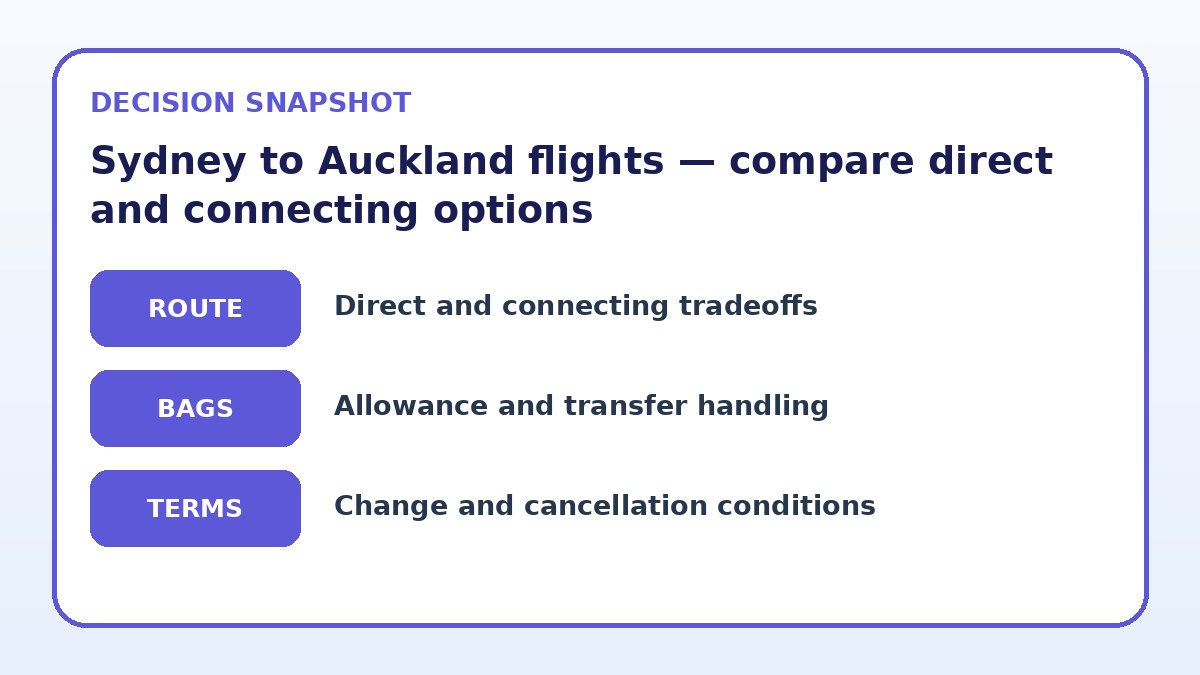
The core routing choice is straightforward: nonstop or connecting. A nonstop removes the middle step, so your airport time is mostly boarding, flight and arrival procedures. For many solo travelers this reduces anxiety because you avoid coordinating layovers, re-clearing security, or navigating an unfamiliar transit airport. Nonstops also make it easier to plan ground transportation and arrive at your destination with fewer unknowns, which matters when you want to check into accommodation quickly or start activities the same day.
Connecting options expand the range of departure times and can sometimes reduce fares, but they add complexity. Total door-to-door travel time may still be competitive if connection windows are short and efficient, but you must factor in time for baggage transfer, potential delays, and additional terminal changes. When evaluating itineraries, map out realistic transfer time including moving between gates and re-clearing passport control if required — and add a buffer for unexpected delays.
Baggage and connection risk
Checked baggage is a major decision point. On a single-ticket itinerary where all segments are issued together, carriers typically transfer bags through to the final destination, which protects you if a connection is delayed and the airline is responsible. That reduces what you need to manage in busy terminals. However, if the itinerary uses separate tickets or involves low-cost carriers on one leg, you’ll likely need to collect and recheck bags during the layover, which increases the time you need and the chance of missed connections for solo travelers carrying multiple pieces.
Beyond baggage handling, consider missed-connection protection. Direct flights remove the need to coordinate between two separate operators and minimise the chance of being stranded. When you must make a connection, check whether the carrier guarantees minimum connection times and offers rebooking assistance if the inbound leg is late. Also review how each fare class treats irregular operations — you want to know if re-routing, hotel accommodation, or meal vouchers are included or require extra steps to secure.
Compare flight-selection strategies
| Flight strategy | Best for | Risk to check |
|---|---|---|
| Nonstop direct flight | Solo travelers prioritizing convenience and short door-to-door time | Usually fewer scheduling alternatives and potentially higher base fares compared with connecting options |
| One-stop single-ticket connection | Travelers seeking a balance of lower fares and protected transfers | Still adds transfer time and complexity; disruptions are handled by the ticketing carrier but delays can be stressful |
| Separate-ticket self-transfer | Price-sensitive solo travelers willing to manage baggage and tight schedules | Higher risk: no automatic protection for missed connections and you must recheck baggage yourself |
| Flexible schedule mixing nights and layovers | Those trading time for savings or wanting a stopover to break the trip | Adds accommodation and logistics, increases total travel time and planning effort for a solo traveler |
Recheck the complete itinerary
Confirm airports, connection handling, baggage, and change conditions before deciding.
Schedule fit and personal comfort
Solo travelers should match flight times to energy levels and practical needs. Nonstops let you pick a time that aligns with your routine — early arrival in Auckland may be great if you have daytime plans, while an evening arrival might suit a traveler who wants to sleep on the plane. When comparing options, look at departure and arrival times at both ends and think about ground transport options in Sydney and Auckland; even a short connection can be unpleasant if it forces a midnight arrival or a long transfer to city center transport.
Connection itineraries can offer more departure choices, which helps if your dates are fixed or you need a specific time out of Sydney. But connections lengthen the travel window and can interrupt rest — an overnight layover could be tempting for sightseeing, yet it adds hotel cost and planning. For solo travelers who rely on predictable travel rhythms, the fewer moving parts the better. If you enjoy scouting alternate routing for lower fares, ensure the connection pattern matches your tolerance for extra time and hassle.
Flight details to verify
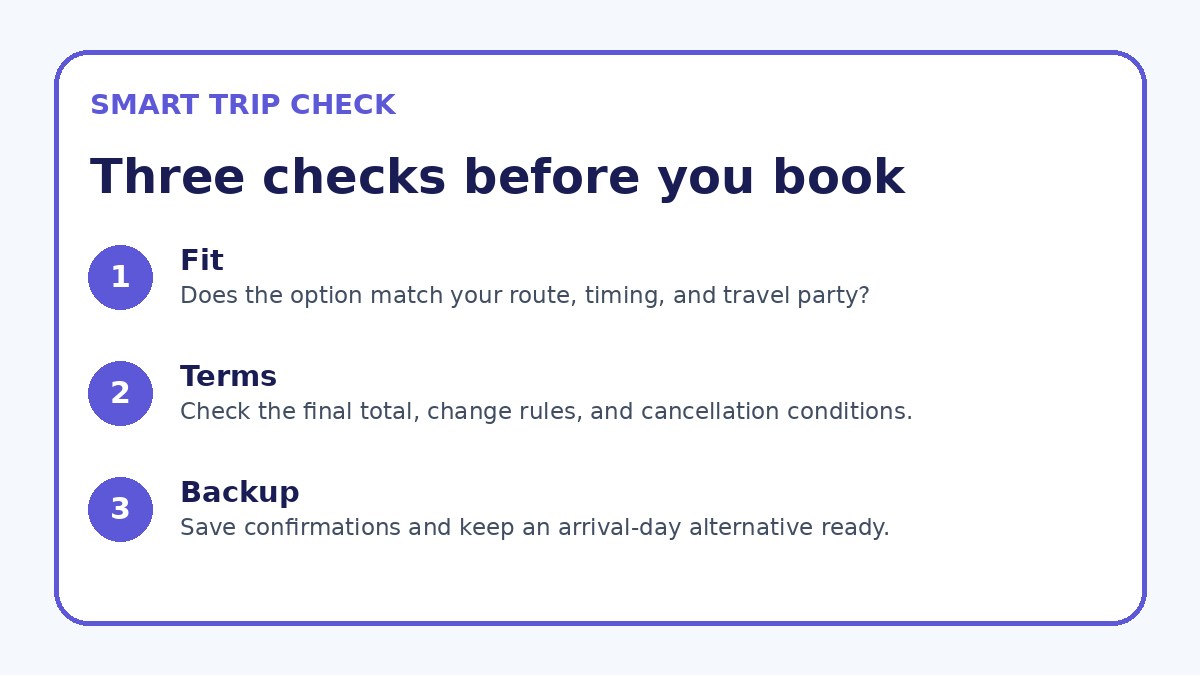
- Confirm your exact travel dates, full passport name, passport number, and expiry before searching fares.
- Decide whether you will check bags or travel carry-on only; compare baggage rules by fare class on the airline’s final booking page.
- If considering connections, note the minimum connection time and plan at least 60–90 extra minutes for personal buffer depending on airport layout.
- Verify whether both legs are on a single ticket; if not, add generous layover time and factor in recheck procedures.
- Read the fare’s change and cancellation conditions on the carrier or ticket issuer page, and consider travel insurance for missed connections on separate tickets.
- Check arrival and departure times against local ground transport schedules and book onward transfers if arrival times are outside public transport hours.
Fare conditions and what to verify before booking
Fares can look similar at first glance but the conditions behind them determine real value. Check change and cancellation penalties, refundability, and how upgrades or seat selections are handled. For connecting itineraries, confirm which carrier manages the ticket and whether both legs are covered by the same fare rules. If you find a cheaper connecting fare on separate tickets, understand you may need to buy additional protection or leave generous time between flights because missed connections won’t be automatically covered.
Always verify provider-specific details on the booking page before you commit: baggage allowances by fare class, whether the carrier accepts your passport/visa status for boarding, minimum connection time guidance, and the carrier’s re-accommodation policy for missed connections. If you use a third-party aggregator, double-check the final conditions on the airline’s site. Trip.com can be useful as one place to compare availability, but always confirm protective terms and final totals with the airline or ticketing agent that issues your ticket.
Flight Guide questions travelers ask
Should a solo traveler always choose a direct Sydney–Auckland flight?
Not always. Direct flights reduce touchpoints, baggage handling and the risk of missed connections, which is especially valuable for solo travelers who prefer simplicity. However, if your dates are fixed and direct flights don’t match your schedule or budget, a single well-timed connecting itinerary on one ticket can make sense. Evaluate total door-to-door time, connection protection, and the fare’s change/cancellation rules. If a connection requires separate tickets or very tight layovers, the convenience benefit of a nonstop often outweighs modest savings.
How much connection time should I allow in Sydney if I choose a one-stop itinerary?
Allow more than the stated minimum and factor in things only you can control: whether you must clear immigration, change terminals, or collect and recheck baggage. For many solo travelers a comfortable buffer is at least 60–90 minutes above airport minimums for domestic-to-international or international-to-international transfers where terminals are different. If a layover requires moving between terminals or passing through customs, plan for two hours or more. Always confirm transfer options and required checks on the airline’s booking page and factor in your confidence navigating the airport.
What specific fare rules should I check before booking a connecting itinerary?
On the final booking page verify change and cancellation fees, refundability, baggage allowance per segment, and whether the ticket is issued as a single itinerary or separate tickets. Also check the carrier’s policy for re-accommodating passengers on missed connections and whether alternative flights are offered at no extra cost. If your trip uses partner airlines, confirm that the carriers are properly code-shared and that baggage transfers are included. Finally, compare the total cost including any required baggage or seat-selection fees, and consider travel insurance if protection looks limited.
Final decision note
For solo travelers choosing between direct and connecting Sydney–Auckland flights, the best decision balances convenience, schedule fit and acceptable risk. Nonstop itineraries minimize airport steps and reduce the chance of missed connections, which is often worth a modest fare premium for travelers seeking a low-stress trip. Connecting itineraries can save money or provide better timings, but they require you to confirm baggage transfer rules, ticketing arrangements, and protection against delays. Before you search, finalize travel dates and passport details, decide on baggage needs, and compare full fare conditions on the carrier’s final booking page. That preparation lets you evaluate total door-to-door time and the real cost of convenience versus savings.
Continue planning
Check current options and final conditions
Use the provider page to confirm live availability, the final total, cancellation terms, and every condition that matters to your trip.
This evergreen planning guide was created with AI-assisted drafting and a structured quality review. It does not display live prices, schedules, availability, visa guidance, or provider rankings. Verify current details before booking. Some links are affiliate links; we may earn a commission at no additional cost to you.