Practical answer first: choose a hotel area based on where you’ll spend most of your daytime hours, how often you’ll cross boroughs, and whether you need fast airport connections. For most first-time visitors, that means deciding between staying in Midtown Manhattan for straightforward access to tourist sites and multiple subway lines; a Lower Manhattan or Brooklyn neighborhood for a local feel and dining variety; or near a major transit hub (Penn Station, Grand Central, or Atlantic Terminal) if rail or airport trains matter. Once you pick an area, shortlist three hotels with the transit walk you’re comfortable with, check entry and luggage policies, and confirm the final booking details on the provider’s page. Below you’ll find the tradeoffs, how to map daily friction, room and party considerations, and what to verify before clicking reserve so you can confidently pick an area and open live inventory.
Check live stays in the areas that fit
Use your dates and party size to compare current rooms after you narrow the neighborhood fit.
Neighborhood fit: map your day-to-day
Start by listing the places you most want to visit and group them into clusters: classic tourist loop (Times Square, Central Park, major museums), downtown scenes (Wall Street, 9/11 Memorial, Battery Park), and borough visits (Williamsburg, DUMBO, Harlem). If the majority of your time will be inside the Midtown tourist loop, a Midtown hotel minimizes walking and keeps multiple subway lines within a short distance. If you value evenings in neighborhood restaurants and bars, look at Lower Manhattan or Brooklyn neighborhoods where you’ll trade a slightly longer commute to some sights for a quieter, more local vibe.
Consider special-case needs: if you plan multiple day trips by Amtrak or NJ Transit, staying near Penn Station or Moynihan/Amtrak-connected hotels saves transfers. If you want faster airport transit, a hotel near the Long Island Rail Road at Penn or Atlantic Terminal links well with certain airport rail options; check how many steps, elevators, or platform changes are involved. Finally, factor in evening comfort — some transit lines run less frequently late at night and walking routes can be poorly lit; prioritize well-populated streets and direct subway access for late returns.
Choose an area-selection strategy
| Area approach | Best for | Tradeoff to check |
|---|---|---|
| Stay in Midtown Manhattan | First-time tourists who want walkable access to major attractions and multiple subway lines | Higher foot traffic, smaller rooms, and more cost pressure for the same comfort level |
| Stay near a major transit hub (Penn, Grand Central, Atlantic) | Travelers prioritizing rail links, airport trains, or regional day trips | Can be noisy, less neighborhood character, and longer walks to leisure areas |
| Stay in Lower Manhattan or Brooklyn | Visitors who prefer restaurants, nightlife, and a local atmosphere over central tourist proximity | Longer transit times to some Midtown sights and possibly more transfers |
| Stay near an express subway line or ferry terminal | Those who want fast commutes to specific destinations or scenic water crossings | May require compromises on hotel selection and evening service frequency |
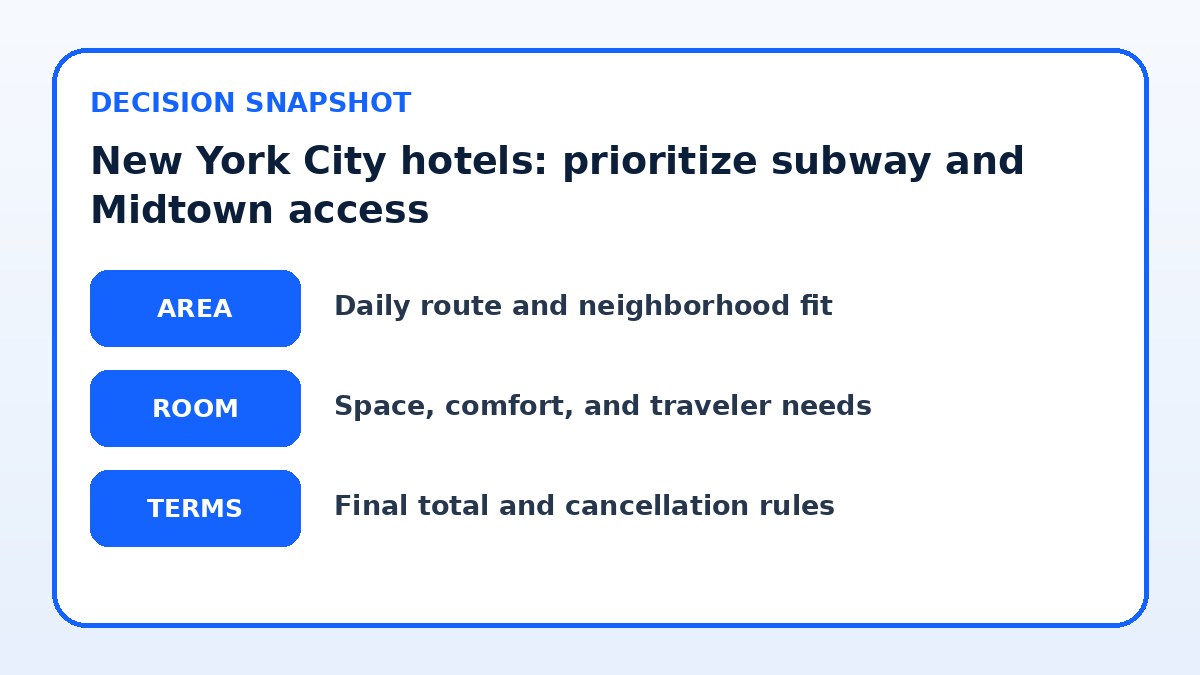
Daily-route friction: count transfers and walking
Not all subway transfers are equal. A trip that looks short on a map can include stairs, long corridors, and waiting for a connecting train. To estimate friction, pick two typical days of your trip, map routes from candidate hotels to your morning and evening destinations, and count the number of subway lines, direction changes, and any bus or ferry links required. Prefer hotels within a 5–12 minute walk to a station that serves multiple lines to keep options open and reduce the need for extra transfers.
Also measure sidewalk quality and elevation changes: neighborhoods like parts of Brooklyn require bridges or steep approaches to reach popular spots, adding fatigue if you walk often. If mobility is a factor, prioritize stations with elevators or properties advertising step-free access; verify elevator availability and status on the transit provider’s site before booking. For late-night return trips, check how frequently the lines you’ll use run after midnight and whether a reliable taxi or rideshare pickup spot is nearby.
Now compare like with like
Keep the same dates, guests, room needs, and cancellation preferences while you compare the final choices.
Room and party needs: balance space, privacy, and costs
Your party size and rhythm change the hotel tradeoffs. Couples and solo travelers often accept smaller rooms in central areas because they spend days out; families and groups may choose larger rooms or suites in slightly quieter neighborhoods to have evening space and easier bed configurations. If you need connecting rooms or an accessible layout, filter properties for those features before you shortlist. Also consider luggage flow—hotels with efficient check-in, luggage storage, and elevators reduce hassle when you arrive or have late departures.
If you plan to work or study during your stay, prioritize hotels that advertise dedicated desks, reliable in-room Wi-Fi, and a quiet room location. Travelers who will cook occasionally might prefer an aparthotel or a room with a kitchenette, often found in neighborhoods slightly away from the tourist center. When researching, confirm bed types, whether extra beds cost more, and the hotel’s policy on additional guests and rollaway beds on the provider’s final booking page—these operational details change often and should be verified directly.
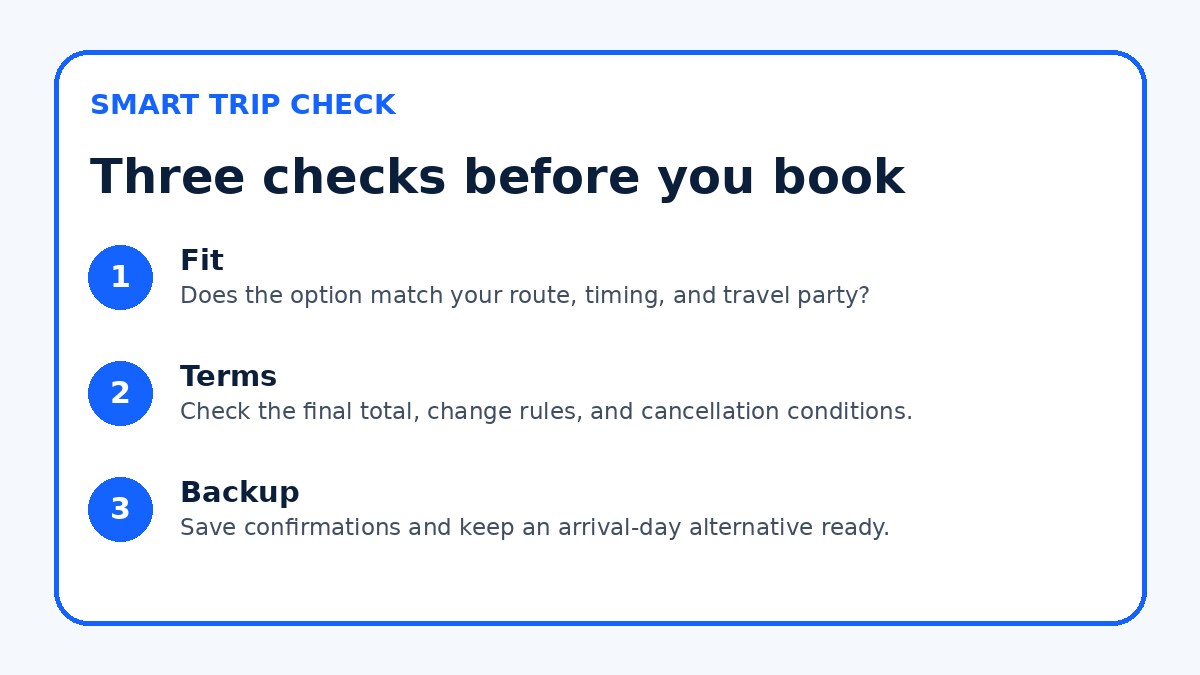
Hotel booking check before payment
- Make a list of your top five daily destinations and map them against each candidate neighborhood to see which area minimizes transfers.
- Walk the route from the nearest subway station to the hotel on map imagery and note stairs, long corridors, or unlit stretches to assess safety and effort.
- Filter shortlisted hotels for room layout, bed types, and connecting-room options, then confirm extra-bed policies on the booking page.
- Confirm the hotel’s cancellation, prepayment, and check-in/out times exactly as stated on the provider’s final booking confirmation.
- Ask the property about luggage storage, elevator availability, and step-free access if you have mobility needs or large suitcases.
- Compare identical room types across at least two booking sites (Trip.com may be an option) and verify the final terms and total cost on the site where you will pay.
Final booking terms: what to verify before you pay
Before confirming a room, verify the cancellation and prepayment terms, any mandatory taxes or occupancy fees, and the property’s check-in and check-out times. Look for restrictions that affect arrival logistics: do they require pre-registered guest names, impose additional identity checks, or limit late-night arrivals? If you expect to store luggage, check whether storage is complimentary, hours of access, and security procedures. Because these policies can change, read the exact terms shown on the booking provider’s confirmation page rather than relying on third-party summaries.
Confirm transport facts that affect your stay: how far the hotel is from your nearest major station in walking minutes, whether the shortest route includes stairs or a long corridor, and whether the hotel offers shuttle links to airports or nearby transit hubs. If you need accessible routes, ask the hotel about step-free entrances and elevator access between lobby and rooms and request photos or a short description. For final convenience, compare the same hotel across providers such as Trip.com to see different rate types and cancellation options, but always validate the provider’s displayed policies before booking.
Hotel Guide questions travelers ask
How do I choose between Midtown and Brooklyn if I want both tourist sites and local food?
Balance your priorities by allocating nights: choose Midtown for one or two nights if you want immediate access to major tourist sites and museums, then move to a Brooklyn neighborhood for the remainder to enjoy local dining and nightlife. If moving hotels isn’t desirable, pick a Midtown property with good subway access to lines that run to Brooklyn; verify how many transfers you’ll need for your favorite Brooklyn spots and whether the walk from the hotel to the station includes stairs or long corridors.
Is staying near a transit hub always the fastest option to reach airports?
Not necessarily; a major transit hub often offers convenient connections to rail services that reach certain airports quickly, but airport access depends on which rail lines serve the hub and if they connect to airport trains without transfers. Check the specific airport transfer route from your candidate hotel—count transfers, platform changes, and walking distance from the hotel to the airport train entrance. Always verify schedules and any luggage restrictions on the airport rail provider’s and the hotel’s booking pages.
How much walking from hotel to subway is too much for a first-time visitor?
Comfortable walking distance varies, but aim for hotels within 5–12 minutes on foot to a station serving multiple lines for flexibility. If you have mobility issues, large luggage, or expect late-night returns, prefer under 7 minutes and confirm elevator availability at the station. Use street-view or map tools to inspect sidewalks, crosswalks, and elevation changes along the route—these details affect daily fatigue more than a raw distance measurement.
Final decision note
Choosing New York City hotels by transport convenience starts with a simple decision: where will you spend most of your time? Use that to pick an area—Midtown for tourist ease, a transit-hub for rail or airport access, Lower Manhattan or Brooklyn for atmosphere—and then measure daily friction by mapping typical routes and counting transfers. Match room size and layout to your party, confirm operational details such as cancellation, luggage storage, and accessibility on the booking page, and shortlist three hotels with walking routes you’ve inspected. With the area chosen and the checklist completed, you’ll be ready to open live inventory and make a confident booking.
Continue planning
Check current options and final conditions
Use the provider page to confirm live availability, the final total, cancellation terms, and every condition that matters to your trip.
This evergreen planning guide was created with AI-assisted drafting and a structured quality review. It does not display live prices, schedules, availability, visa guidance, or provider rankings. Verify current details before booking. Some links are affiliate links; we may earn a commission at no additional cost to you.