Practical answer first: if your trip to Gyeongju centers on meetings in the city or the industrial park near Singyeongju, prioritize a hotel close to your meeting location to cut daily transit time. If you need overnight productivity, rest after long days, or host a small in-room meeting, prioritize room comfort—bigger beds, a desk, noise isolation and reliable Wi‑Fi—even if that means a longer commute. Balance these by estimating the number of in-room working hours per day and the predictability of your meeting locations. This article walks through how to pick the right neighborhood, evaluate daily-route friction, size rooms for work needs and read the booking terms that affect a business traveler. You’ll finish able to shortlist an area and the room features to search in live inventory with the right questions ready for hotel pages and booking sites like Trip.com.

Check live stays in the areas that fit
Use your dates and party size to compare current rooms after you narrow the neighborhood fit.
Choose the right Gyeongju neighborhood for your itinerary
Start by mapping your appointments before you look at hotels. Gyeongju’s points of interest and business pockets cluster differently—some meetings will be near the city center, others closer to transport nodes or industrial areas. If most appointments sit in one zone, choose a hotel in or adjacent to that zone to minimize door‑to‑door time. Remember that some quieter neighborhoods farther from the center can still be centrally connected by bus or taxi; assess the consistency of those connections rather than one‑off travel times.
Business travelers who expect evening networking or client dinners may prefer the city center or areas with a higher concentration of restaurants and cafes. If you’ll need early starts to reach a remote site or an industrial client, opt for a hotel that shortens the morning commute. To shortlist neighborhoods, mark your highest‑priority meeting locations and draw a realistic time buffer for peak traffic, taxi availability, and hotel check‑in requirements.
Choose an area-selection strategy
| Area approach | Best for | Tradeoff to check |
|---|---|---|
| Stay in the city center near dining and client entertainment | Business dinners, short evening returns, and networking convenience | Rooms tend to be smaller and noisier; you may sacrifice quiet work space and larger beds |
| Stay near major transport nodes (train station/expressway) | Arrivals/departures and easy transfers to regional meetings | May require additional local travel to reach specific company sites or downtown dining |
| Stay close to industrial or corporate parks | Minimizing commute time to remote client sites or factories | Fewer evening options and limited hotel facilities for extended work sessions |
| Choose a quieter residential neighborhood with larger rooms | In-room productivity, restful sleep, and small team work sessions | Longer daily commutes to central meetings or client locations |
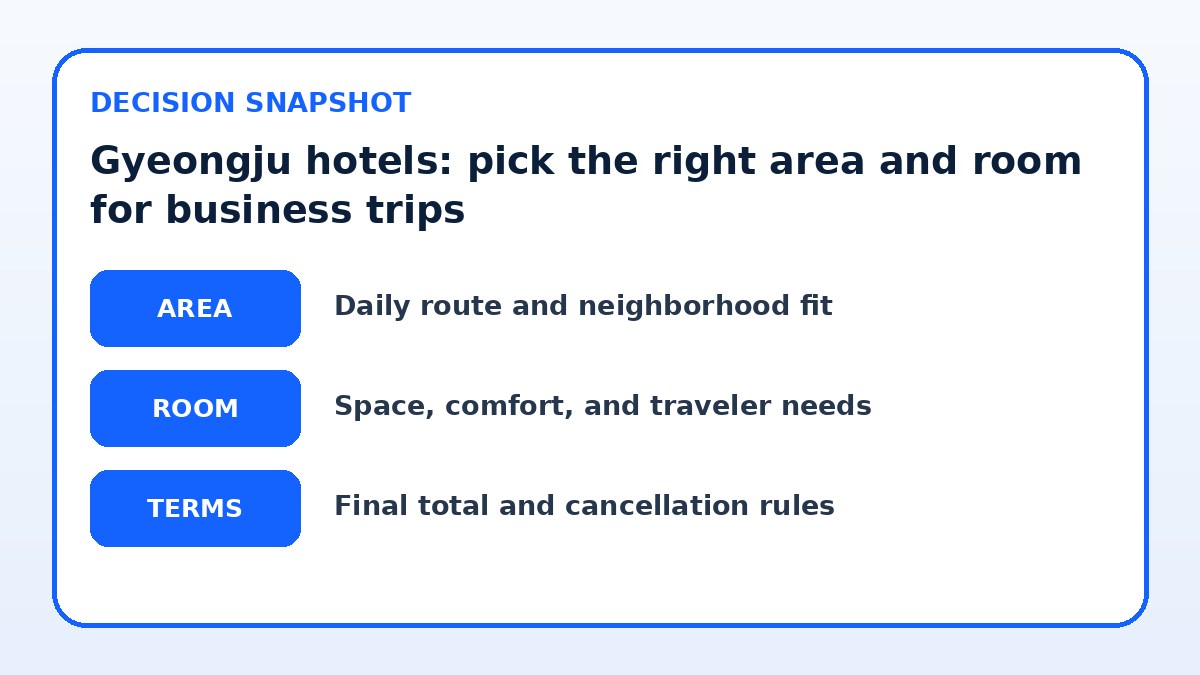
Daily-route friction: how to evaluate commute cost in time and stress
Commute cost is more than minutes on the road. Consider the variability: will public transit be frequent and reliable at your meeting times, or will you need taxis after certain hours? Add buffer time for traffic, waiting for transport, and the walk from drop‑off points to meeting venues. For tight schedules, a slightly pricier hotel next to your meeting cluster can yield higher productivity by reducing unexpected delays and stress.
Also evaluate the hotel’s micro‑logistics: proximity to airport or train station for arrivals and departures, luggage drop options for early check‑ins, and whether the property offers meeting rooms or business lounges you can use if a meeting overruns. These small features can reduce friction more than raw distance—an on‑site meeting room or extended‑hour front desk can replace a long taxi ride to a late dinner or client visit.
Now compare like with like
Keep the same dates, guests, room needs, and cancellation preferences while you compare the final choices.
Room and party needs: pick the room that supports work, sleep, and small meetings
For solo business travel, a well‑configured standard room might be enough—but focus on specific features. Look for a dedicated desk with an ergonomic chair, abundant accessible power outlets, and clear lighting for video calls. If high‑quality video calls are part of your day, confirm the hotel’s Wi‑Fi policy and ask whether wired connections or business‑floor upgrades are available. If you hold in‑room meetings, prioritise rooms with space to seat three to four people comfortably, or request a junior suite.
Traveling with a colleague or client changes the priority toward privacy and sound isolation. Larger rooms or suites reduce interruptions and make it easier to handle late work or host small discussions. Also check bedding and noise control—blackout curtains and good HVAC control help after long days. When multiple people share a room, verify that the hotel allows more than two guests per room, whether extra beds are offered, and how that affects the booking terms you will need for invoicing.

Hotel booking check before payment
- Map all meeting locations and mark the zone where the majority lie to narrow neighborhood choices.
- Estimate realistic door‑to‑door commute time including traffic, parking, and walking between drop‑off and venue.
- List the in‑room features you need (desk, outlets, Ethernet, blackout curtains, seating for extra guests).
- Confirm on the hotel booking page the Wi‑Fi speed/policy, and whether wired connections or business floors are available.
- Verify invoice options, corporate billing details, cancellation windows, and whether prepayment is required.
- Call or message the hotel to confirm early check‑in/late check‑out flexibility and availability of meeting rooms.
Booking terms and final checks before you confirm
Before you hit reserve, read the booking page carefully for the specifics that affect business travel: exact check‑in and check‑out times, early check‑in or late‑check‑out policies, whether invoices can show a company name and tax ID, and the cancellation and prepayment rules. Hotels often have different policies for corporate or flexible rates; confirm which rate you’re selecting and what data is required for a business invoice. If a property offers a business center, verify the access hours and whether printing or scanning carries fees.
When provider details might change, verify them on the hotel’s final booking page or by calling the property. Check whether Wi‑Fi is complimentary and whether higher speeds or dedicated lines cost extra. If you plan to use a shuttle, meeting rooms, or airport transfers, confirm schedules and any booking windows for those services. Use the booking page to document the exact room type, number of guests allowed, and any extra charges; if you compare options on Trip.com or similar sites, use that as a starting point and then confirm essential terms with the hotel.
Hotel Guide questions travelers ask
How do I decide between a quieter hotel and one that saves commute time?
Compare how many hours you’ll realistically work inside your hotel room versus travel time saved by a central location. If you do long video calls, drafting, or host clients in-room, prioritize room comfort and quiet. If your day is dominated by back‑to‑back offsite meetings, saving commute minutes by staying close to the client cluster often raises productivity. Make a simple calculation: multiply expected daily commute time saved by the number of days, then weigh that against the quality you lose in room space and rest.
What room features matter most for virtual meetings in Gyeongju hotels?
For reliable virtual meetings prioritize a desk with clear lighting, stable Wi‑Fi (ask whether the hotel offers business lines), and a quiet room with good sound isolation. Check outlet placement near the desk and the availability of HDMI or adapters at the front desk if you need to connect a laptop to a TV. If the hotel’s listing doesn’t show these details, message the property directly and confirm whether they can guarantee a quiet room and provide a wired connection if needed.
Can I rely on hotel business centers for printing and meeting space?
Some properties provide business centers or rentable meeting rooms, but services and hours vary widely. Always verify on the booking page or by contacting the hotel what equipment is available, any hourly or page charges, and whether you need to reserve space in advance. If reliable printing and fixed meeting facilities are essential, choose a hotel that explicitly lists business services rather than assuming availability—ask for confirmation and pricing in writing before finalising your booking.
Final decision note
Choosing between location and room comfort in Gyeongju comes down to where your time matters most. Prioritize proximity when commutes will eat into core work hours or when early starts and late returns are unavoidable. Favor room comfort when you need uninterrupted work time, reliable rest, or a space to host small meetings—especially if your agenda is flexible. Use the checklist here to narrow neighborhoods and compile exact room-feature requirements, then verify the hotel’s Wi‑Fi policy, invoicing options, and check‑in/out rules on the booking page. With those details confirmed, you’ll be able to shortlist a small group of properties and make a booking that supports both your schedule and your productivity.
Continue planning
Check current options and final conditions
Use the provider page to confirm live availability, the final total, cancellation terms, and every condition that matters to your trip.
This evergreen planning guide was created with AI-assisted drafting and a structured quality review. It does not display live prices, schedules, availability, visa guidance, or provider rankings. Verify current details before booking. Some links are affiliate links; we may earn a commission at no additional cost to you.