Short answer: most first-time visitors to San Francisco can have a smooth trip without a rental car, but there are clear situations where renting makes sense. If you plan to stay inside the city proper, use transit, walk, rideshares, and occasional taxis; parking, one-way hills, and narrow streets often mean a car is more hassle than benefit. However, if your itinerary includes day trips to Muir Woods, Point Reyes, Napa or road routes along Highway 1, a car can add flexibility and access that public transit won’t. This article helps you weigh those tradeoffs against practical factors—where you’ll stay, how many people and bags are traveling, how much time you have, and what kind of experiences you prioritize—so you can choose the right transportation approach for your San Francisco visit.
City travel realities: parking, traffic, and neighborhoods
San Francisco’s compact geography and dense neighborhoods make walking, bicycling, and transit efficient for many itineraries. Neighborhoods like Union Square, Chinatown, North Beach, and the Embarcadero are designed for pedestrians and have excellent transit links including buses, historic streetcars, the Muni light rail, and regional BART connections. Streets in older parts of the city can be narrow and steep, and one-way routes are common. Street parking fills quickly in tourist-heavy zones and can carry strict meter rules, residential permits, or time limits; validating what the city or your accommodation offers will help avoid fines.
Traffic is variable: commute windows can be congested and bridges into or out of the city (Golden Gate, Bay Bridge) create peak delays. Driving between dispersed attractions in the city often spends more time looking for parking than moving, which affects full-day plans. If you must drive in the city, plan routes carefully, use a parking app to find garages, and pick a centrally located parking spot so you can walk to clusters of sights. For short, transit-rich stays, not having a car often produces a calmer, more predictable schedule.
When a rental car is a clear advantage
A rental car becomes attractive when your plans extend beyond the dense core. Day trips to coastal cliffs, state parks, and wine regions are simplest with a vehicle because public transit options can be slow, infrequent, or require multiple transfers. A car gives you flexibility for timing, the ability to carry picnic gear, hiking packs, or wine purchases, and the option to modify your route spontaneously. Families with young children or travelers with mobility needs also gain convenience from point-to-point driving instead of juggling public schedules and transfers.
Another advantage is scheduling: if your itinerary stacks destinations across the peninsula, like driving south to the Stanford/Palo Alto area or east to Oakland and Berkeley with stops en route, a car can shave hours from door-to-door transit times. Nighttime returns from distant outings are also simpler with a car. Still, remember that rural and park parking can fill on busy weekends; check trailhead and visitor center arrangements before you go so a rental delivers the access you expect.
| Approach | Best for | Tradeoff to check |
|---|---|---|
| No rental: use transit, walking, rideshares | City-only itineraries, budget-conscious travelers, short stays | Less flexibility for distant day trips and carrying bulky gear |
| Rent only for day trips | Mostly city stays with planned excursions outside San Francisco | Requires planning pickup/drop-off and may add daily rental complexity |
| Full-trip rental | Road-trippers or multi-destination itineraries across the Bay Area | Higher parking and city driving hassles, plus extra costs |
| Hybrid: rental plus public transit | Travelers wanting both convenience and lower city costs | Need careful scheduling and possibly multiple bookings to coordinate |
Cost and convenience: comparing total trip expenses
Assess total cost, not just the base rental rate. For a San Francisco car rental, include insurance or coverage options you don’t already have, fuel, bridge tolls, daily parking or garage fees, and possible congestion or airport surcharges. Parking at many downtown hotels may be charged per night and can exceed what you’d pay for a day of transit passes for two people. Also account for the time cost of finding parking and walking from garages to attractions—those minutes can add up and affect how many places you actually visit.
Convenience factors matter too: if you prefer door-to-door control over timing, luggage management, or transporting children and gear, those non-monetary benefits can justify additional expense. If most of your days are city-focused, calculate how many times you would need the car versus using rideshares or transit. Often a hybrid approach—renting a car only for specific days or booking a single day tour that offers transport—balances cost and convenience effectively.
Before you book
- Map each day’s start and end points to see how often you’ll cross the city or leave it entirely.
- Contact your accommodation to confirm on-site parking availability, rates, and reservation rules.
- Estimate parking costs using nearby garages and street rules and add them to the rental daily rate.
- Compare total travel time for transit versus driving for at least two representative days.
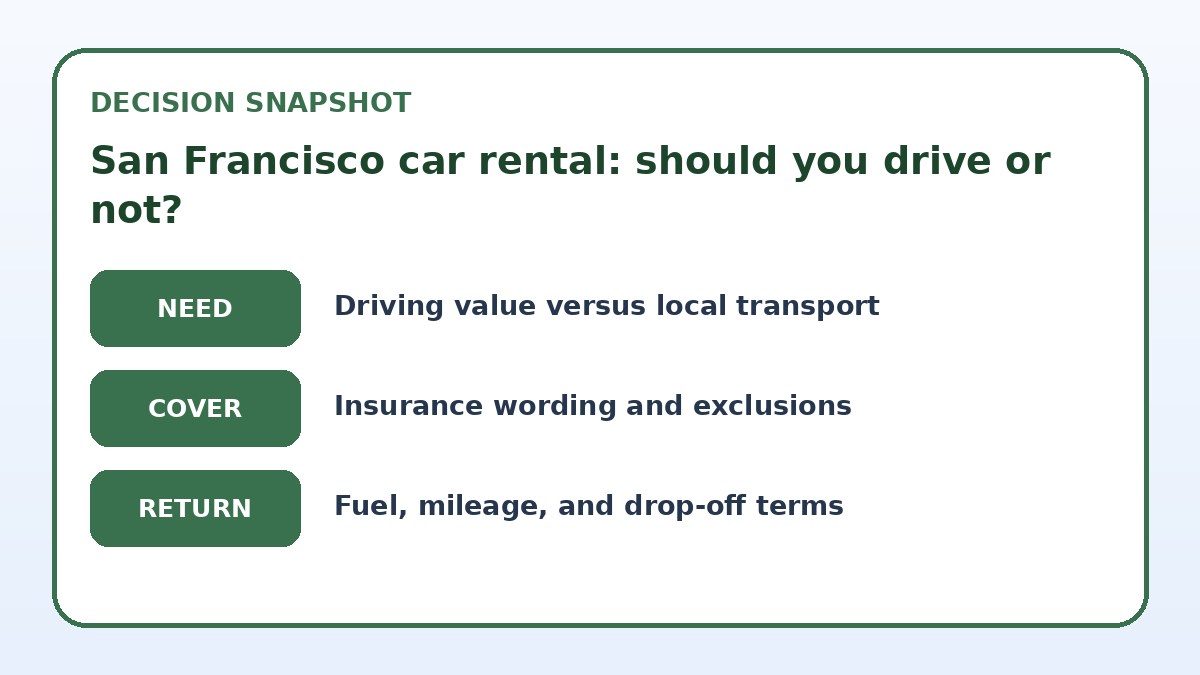
- Check whether your personal car insurance or credit card covers rental insurance and road assistance.
- If renting, reserve a vehicle size that fits passengers plus luggage and verify mileage and fuel policies.
Making the choice: practical decision criteria
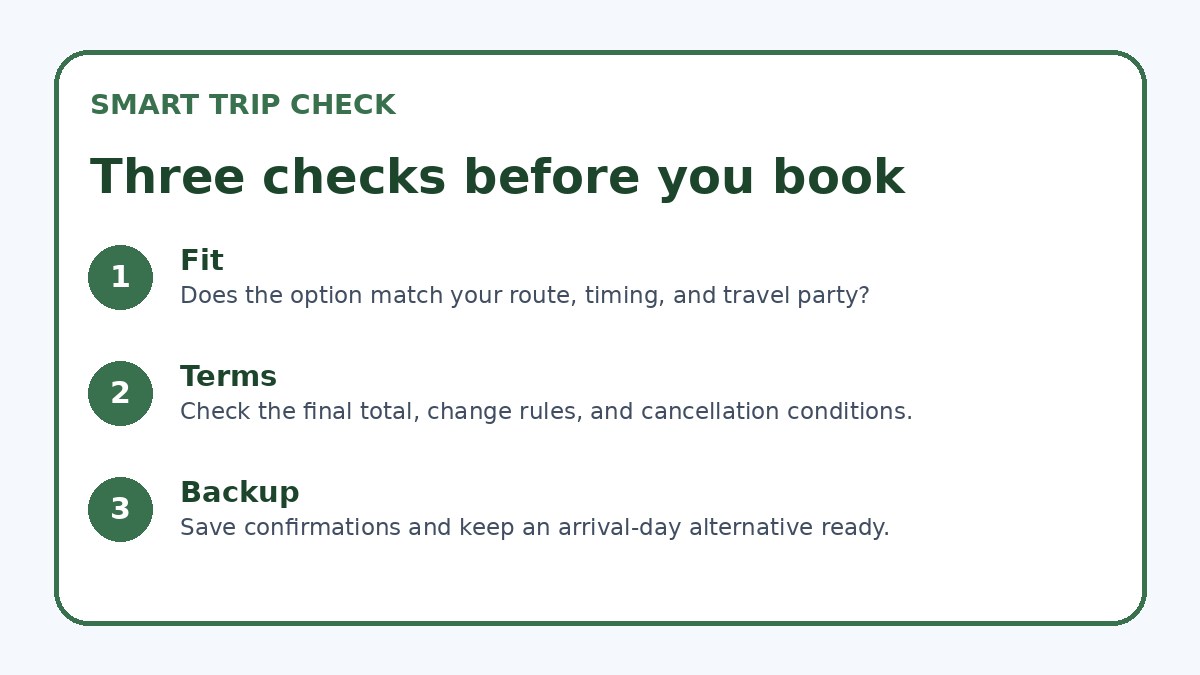
Use a short checklist to decide: map your day-by-day route, identify destinations that lack easy transit, count people and baggage, and estimate parking availability at your lodging. If more than half your planned activities are outside the core neighborhoods, or payoffs like flexibility and scenic driving are central to your trip, a rental is worth considering. Conversely, if you’ll base yourself in neighborhoods with transit access and plan half-day outings, a car will likely be a net negative.
When you do choose a rental, compare pickup locations (airport versus neighborhood), vehicle size, and pick-up drop-off flexibility. Verify all provider terms on the booking page, especially insurance coverage, mileage limits, fuel policy, and one-way fees. Trip.com can be a place to compare current availability and conditions, but always confirm the final price and contract details on the rental company’s booking page before committing.
Frequently asked questions
Is it difficult to drive and park in downtown San Francisco?
Driving downtown can be more demanding than in flatter cities because of steep hills, one-way streets, and heavy pedestrian activity. Parking is limited and often metered or in paid garages with varying rules; residential permit zones are enforced in many neighborhoods. If you plan to drive into downtown, allow extra time to find legal parking and read signs carefully. Consider parking once and walking or using transit to move between nearby attractions rather than hunting for new spaces throughout the day.
Can I rely on public transit and rideshares instead of renting a car?
Yes—San Francisco has frequent buses, light rail, historic streetcars, and BART for regional links, making it feasible to visit major city attractions without a car. Rideshares and taxis fill gaps late at night or for trips that are awkward by transit. For daytime sightseeing within the city proper, public transit often beats driving for speed and predictability. For travel beyond San Francisco to parks or wine country, transit options are more limited and may take significantly longer than driving.
What should I verify on the rental company’s booking page before confirming?
On the provider’s final booking page, check the total price breakdown, insurance and liability options, fuel policy (full-to-full or prepay), mileage limits, one-way drop fees, and pickup/drop-off location rules. Confirm whether tolls and bridge charges are handled by the company or billed separately. Also review cancellation and modification terms, age restrictions, and any additional driver fees. If you’re picking up at the airport, verify shuttle arrangements or on-site counters to avoid unexpected delays.
Final planning note
For most first-time visitors whose plans focus on San Francisco’s compact neighborhoods and main attractions, skipping a car reduces cost, stress, and time spent finding parking. A rental shines if your trip includes coastal drives, national and state parks, wine country, or multiple destinations across the Bay Area. Weigh the convenience of flexible timing and capacity against parking fees, city driving challenges, and added administrative steps of a rental. Use the checklist to make a day-by-day decision; consider renting only on the days you need a car or booking private transfers or tours for farther-away excursions.
Continue planning
Check current options and final conditions
Use the provider page to confirm live availability, the final total, cancellation terms, and every condition that matters to your trip.
This evergreen planning guide was created with AI-assisted drafting and a structured quality review. It does not display live prices, schedules, availability, visa guidance, or provider rankings. Verify current details before booking. Some links are affiliate links; we may earn a commission at no additional cost to you.