Practical answer first: for most solo travelers the decision between a direct and a connecting London to Paris flight comes down to whether you value door-to-door simplicity and lower connection risk (pick direct) or a potentially lower fare and more schedule choices (pick connecting). London–Paris is a short international corridor with multiple ways to travel; flights can compete with trains but once you choose air travel focus on total travel time, baggage handling, and refund/change rules. Before you search, lock in exact travel dates, cabin preference, bag needs, and departure/arrival airports — these details change whether a direct hop is available and what the full trip will feel like. Below you’ll find clear tradeoffs, what to check on the provider’s booking page, and four decision approaches to match your priorities.
See live routes for your exact travel day
Compare direct and connecting choices with the same baggage and traveler details.
Routing: know what “direct” and “connecting” mean for this route
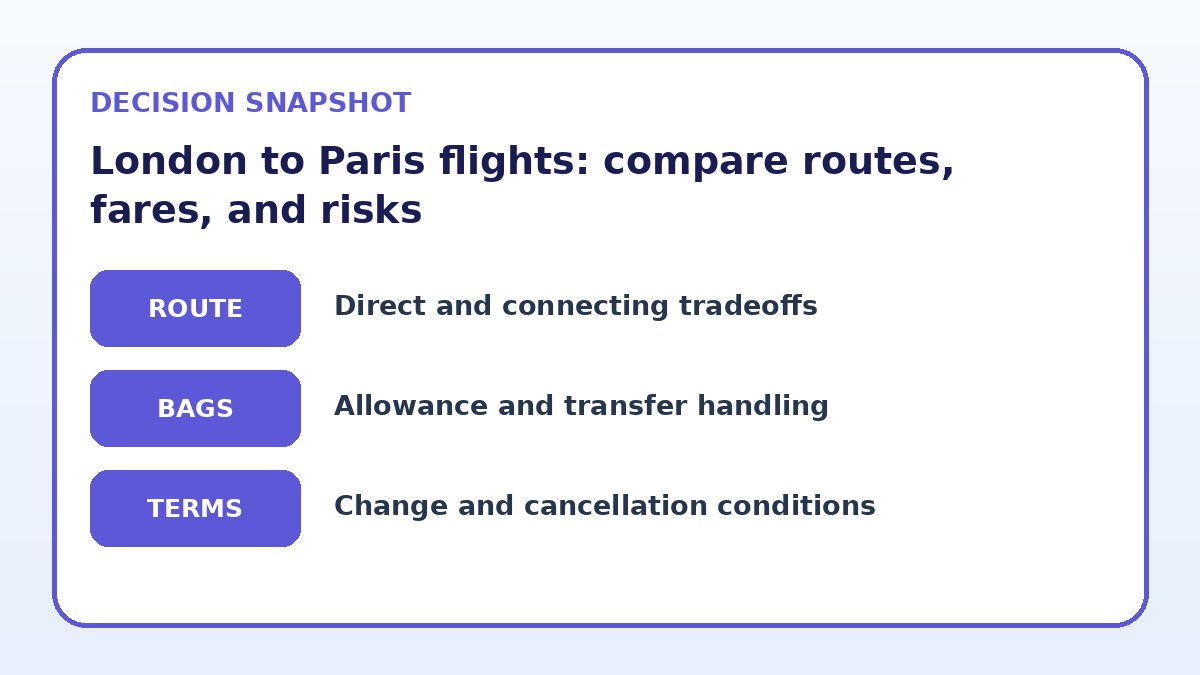
On London to Paris trips, a “direct” flight normally means no scheduled stop between your origin and final airport; you disembark only at your destination. However, different London airports (Heathrow, Gatwick, Stansted, Luton, London City) and different Paris airports (Charles de Gaulle, Orly, Beauvais) change ground transit time and convenience. When comparing options, treat routing as door-to-door routing — include the time and cost to get to and from airports, and whether a single airline itinerary or separate bookings are needed.
A “connecting” option could connect through another European hub or within the UK and typically increases total travel time but might widen departure windows or lower fares. For connections, check how long the layover is and whether the itinerary is on one ticket. Single-ticket connections usually protect you if an earlier flight is delayed, while separate bookings expose you to rebooking and baggage retrieval risks if you miss the next leg.
Baggage and connection risk: protect your luggage and schedule
If you check bags, a direct flight or a single-ticket connection that includes through-checked baggage is far less hassle. With connecting itineraries on separate tickets you may have to collect and recheck bags, clear security and immigration, and allow generous transfer times. For solo travelers, the time and stress of handling luggage during a connection can outweigh perceived savings, so factor in realistic transfer steps and how comfortable you are moving quickly through unfamiliar airports.
When a connection is on a single itinerary, the airline(s) generally assume responsibility for missed connections caused by delays on their segments, but you must verify this on the booking page and in the fare conditions. If the connection requires an inter-terminal transfer or passing border control, add buffer time. Also confirm whether priority baggage or fast-track options are available and whether your fare class includes checked baggage — these details alter the practical risk of taking a connecting option.
Compare flight-selection strategies
| Flight strategy | Best for | Risk to check |
|---|---|---|
| Single direct flight | Solo travelers valuing simplicity, minimal transfers, and lower connection risk | May be less flexible on departure times and can be pricier than multi-leg options |
| Single-ticket connecting flight | Travelers seeking more schedule choices with protected transfers | Longer total travel time; still protected but more moving parts and possible layover discomfort |
| Separate tickets with a short connection | Highly price-sensitive travelers willing to manage transfers and risk | Higher chance of missed connections and baggage handling hassle; no standard airline protection |
| Multi-city or extended layover plan | Travelers who want to break the journey intentionally or explore a stopover city | Adds complexity to planning and may increase ground transport needs, visas, or lodging between flights |
Recheck the complete itinerary
Confirm airports, connection handling, baggage, and change conditions before deciding.
Schedule fit: match travel rhythms and purpose
Consider your full day, not just the airborne time. A direct early-morning flight that requires a 5:00 a.m. train to the airport may be less attractive than a mid-morning connecting option that lets you sleep, despite a longer overall travel duration. Solo travelers should weigh how tired they’ll be on arrival — if you need to be productive immediately on arrival in Paris, prioritize shorter total door-to-door time and fewer moving parts.
If you have flexible dates, look for departure windows that keep you within comfortable hours on both ends. Connecting flights can expand those windows, often offering late-evening or late-night departures not available direct. But late connections can increase the chance of missed transport or closed ground services at your arrival airport. Confirm local ground transport schedules to avoid ending up stranded after a cheap but poorly timed flight.
Flight details to verify
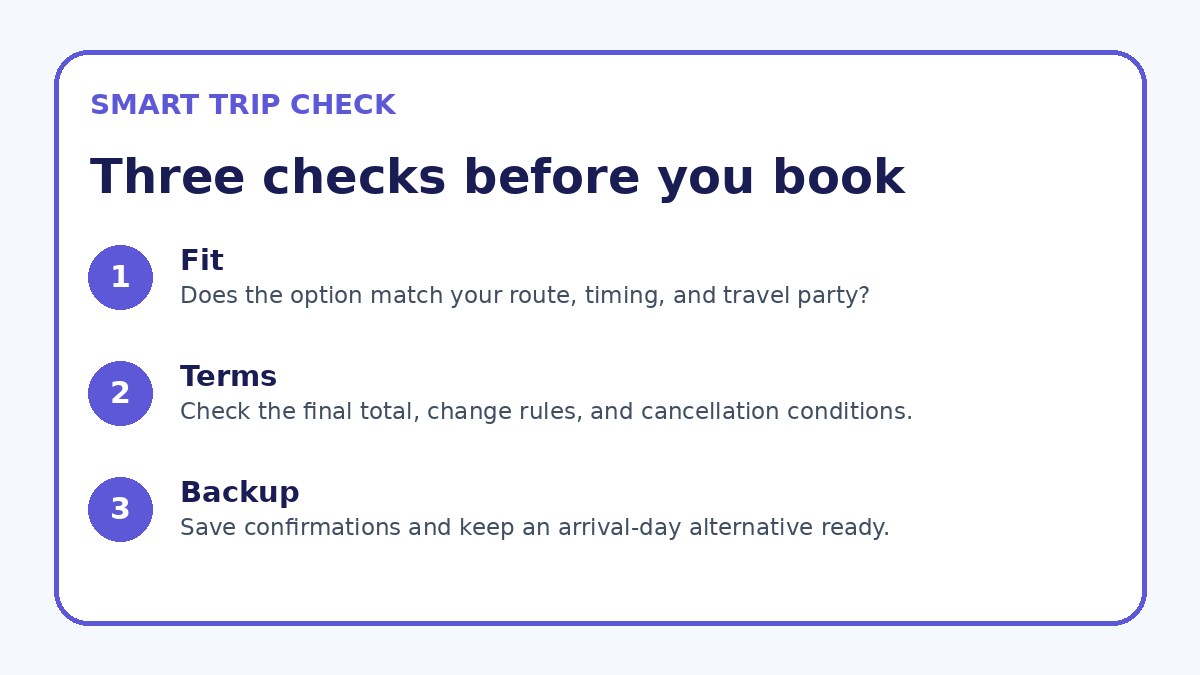
- Write down exact departure and arrival airports and preferred departure windows before searching live fares.
- Note the number of checked bags you’ll bring and confirm whether the selected fare class includes them on the booking page.
- For connecting itineraries, check whether the connection is on one ticket and whether baggage is through-checked.
- Set a realistic minimum transfer time: allow extra buffer for immigration, inter-terminal transfers, and security lines.
- Read the fare rules on the airline’s final booking page—confirm change, cancellation, and refund terms before paying.
- If choosing separate tickets, buy travel insurance that explicitly covers missed connections and delayed baggage for this trip.
Fare conditions: what to verify on the booking page
Fare conditions are where the advertised ticket price and your true cost part ways. Before you commit, verify baggage allowance, change and cancellation fees, whether seat selection costs extra, and the exact conditions for refunds. These rules vary by fare class and carrier; read the fare notes on the final booking page rather than relying on summarized search results. Don’t assume a low headline fare includes checked baggage or modifications without fees.
Also verify connection protections when the trip includes more than one carrier or separate tickets. If your connection is on different tickets, the airlines are less likely to cover missed connections, so check whether the seller offers any protection service. If travel insurance is part of your plan, confirm it covers missed connections, delays, and baggage issues specific to your selected routing and booking structure.
Flight Guide questions travelers ask
If I’m solo and tight on time, should I always pick a direct flight from London to Paris?
Not always. Direct flights minimize connection risk and can save time door-to-door, but they may depart from an inconvenient airport or at a time that forces early starts or late-night ground travel. If a connecting itinerary fits your schedule better and keeps you well-rested, it can be the smarter choice. Before booking, compare total travel time including ground transfers, check-in and security, and verify baggage handling and fare rules on the booking page to ensure the connection won’t introduce unacceptable delays or costs.
How long should my layover be when connecting between London and Paris?
Aim for a layover that comfortably covers immigration, baggage transfer, security, and any inter-terminal shuttle time. If your connection is on a single ticket within the same terminal, an hour may be feasible in many airports, but busy hubs and inter-terminal moves require more time. For connections that cross border control or involve separate tickets, plan several hours. Always check the airline’s minimum connection time guidance and add a safety buffer based on the airport layout and the time of day you’re traveling.
What should I verify on the booking page to avoid surprises after purchase?
On the final booking page, confirm the exact airports, total itinerary duration, baggage allowance (carry-on and checked), seat assignment policy, and change/cancellation fees for the fare class. For connecting itineraries check whether the segments are on one ticket and whether baggage is checked through. Also verify whether any ground transfers or inter-terminal shuttles are required and if they’re covered by the carrier. If the information is unclear, contact the airline or seller before paying to avoid unwelcome surprises.
Final decision note
Choosing between direct and connecting London to Paris flights comes down to balancing simplicity, schedule fit, and cost. Direct flights reduce the number of moving parts and are usually the best choice for solo travelers who prioritize reliability and minimal luggage handling. Connecting flights can widen your options and sometimes lower the fare, but they introduce timing and baggage risk—especially if booked on separate tickets. Before you book, lock in exact dates, airports, bag needs, and your tolerance for transfers, then verify fare rules and baggage terms on the booking page. If you want to compare live availability and conditions quickly, consider checking a comparison site such as Trip.com as one of several places to confirm details, then book where the fare rules meet your priorities.
Continue planning
Check current options and final conditions
Use the provider page to confirm live availability, the final total, cancellation terms, and every condition that matters to your trip.
This evergreen planning guide was created with AI-assisted drafting and a structured quality review. It does not display live prices, schedules, availability, visa guidance, or provider rankings. Verify current details before booking. Some links are affiliate links; we may earn a commission at no additional cost to you.