If you need a direct, practical answer: for most solo travelers heading from Ho Chi Minh City to Da Nang, prioritize a short daytime flight if convenience and time savings matter most; choose the train if you want a relaxed journey with more space and scenery; pick a private or quality sleeper bus only if your budget or schedule forces it. This article helps you weigh travel time, personal comfort, safety, luggage handling, and arrival logistics so you can decide quickly. I’ll explain the tradeoffs — including when an overnight option makes sense — and list what to check on booking pages, so you know exactly which details to confirm before you buy a ticket.
Speed versus simplicity: choosing flights
A flight cuts the clock and keeps things simple for solo travelers who dislike overnight uncertainty or long ground transfers. If you have limited vacation days or arrive late in Ho Chi Minh City and need to reach Da Nang the same day, flying minimizes time spent in transit and reduces the logistical burden of connecting ground transport or overnight accommodation. Before booking, compare total door-to-door time, including getting to the airport, check-in, security, baggage pickup, and transport from Da Nang airport to your final stop.
When you consider a flight, verify the exact airports on the booking page, baggage allowance, and airport transfer options at both ends. Don’t assume any particular airline policy; modern low-cost fares and full-service carriers use different rules. Check where the flight lands in Da Nang and whether the timing leaves you convenient onward transport. If you expect to arrive late, confirm ground transport availability or have a backup plan to reach your accommodation safely.
Comfort and scenery: choosing the train
The train is attractive if you want more personal space, the ability to walk around, and a chance to see countryside and coastline. Trains typically allow larger carry-on items and give a steadier rhythm to the journey; for solo travelers who appreciate comfort over speed, a daytime train can be restorative rather than exhausting. Compare sleeper and seated options and consider how comfortable you are sharing a compartment or sleeping car with strangers if choosing an overnight service.
When comparing trains, look at departure and arrival stations and how easy it is to get there from your accommodation. Confirm whether the train requires transfers at either end and whether seats or berths include linens and meals. On provider pages, verify exact boarding procedures, seat/berth layout, and luggage rules. If you need to work en route, check for power outlets or reliable Wi‑Fi notes on the operator’s site before you book.
| Approach | Best for | Tradeoff to check |
|---|---|---|
| Flight | Travelers prioritizing speed and minimal transfer complexity | Higher overall transit cost and potential airport transfer time at each end |
| Daytime train | Those who want space, comfort, and scenic travel without an overnight stop | Generally slower than flying and may require station transfers |
| Overnight train or sleeper | Travelers wanting to save daytime and combine accommodation with transit | Sleeping on trains can be less private; verify berth layout and safety features |
| Bus (modern operator) | Budget-minded travelers needing flexible schedules or specific pickup locations | Longer travel time and more exposure to road fatigue; quality varies by operator |
Budget and flexibility: choosing buses
Buses can be a practical fallback when flights or trains don’t match your schedule, but quality and comfort vary widely. For solo travelers, pick reputable companies with clear pickup points in Ho Chi Minh City and drop-off locations in Da Nang that suit your plans. If a bus saves you a transfer or overnight stay, the tradeoff of a longer drive may still make sense. Choose daytime rides if you prefer to avoid the fatigue and safety questions that occasionally arise on overnight coach services.
Before buying a bus ticket, check the exact meeting point in Ho Chi Minh City, luggage limits, and whether the bus stops frequently. Review the booking page for pick-up and drop-off addresses and how staff will contact you if plans change. If you rely on a bus operator to transfer you between a suburban meeting point and the main terminal, confirm that arrangement and any extra fees. Always have a local maps app or address saved in the local language for the driver or station staff.
Before you book
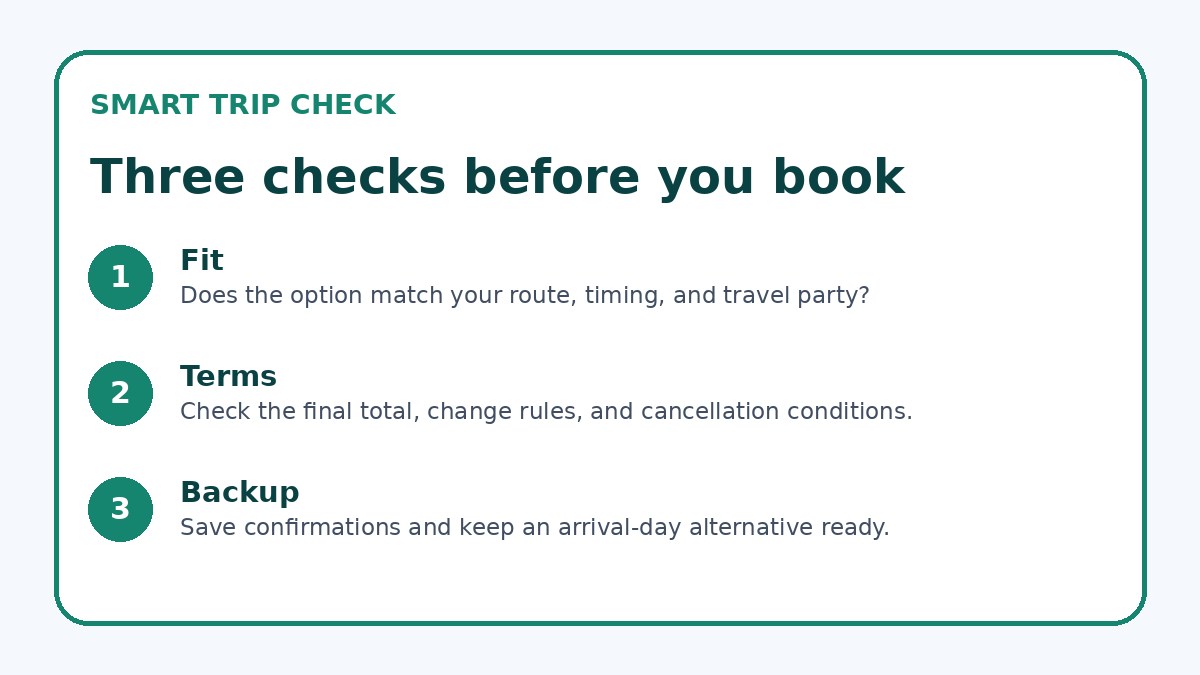
- Confirm total door-to-door travel time (transfer time to/from terminals included) on the final booking page.
- Verify exact pickup/drop-off addresses and how staff will contact you if plans change.
- Check baggage allowances and any extra fees for oversized or additional bags before payment.
- Read the operator’s cancellation, change, and refund terms on their booking confirmation page.
- Save your arrival address in Vietnamese to show drivers or station staff if needed.
- Have a backup local transport plan (taxi app or prebooked transfer) for late or changed arrival times.
Decision checklist: what matters most to solo travelers
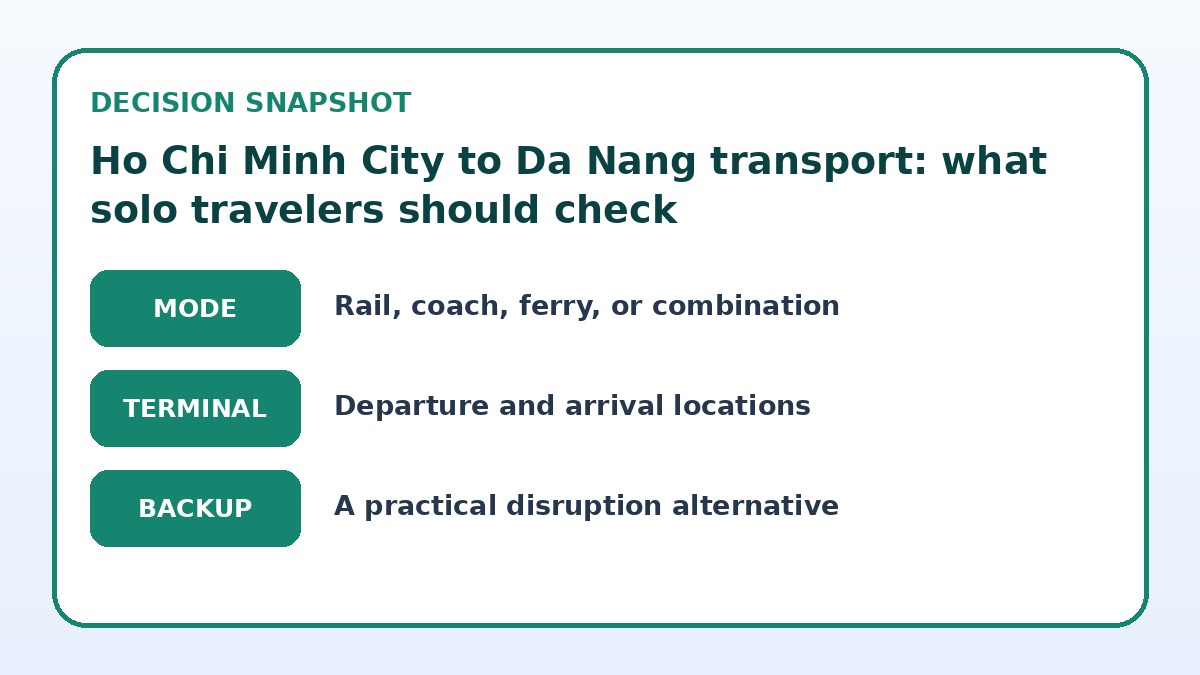
Make your choice by prioritizing three practical questions: how much time do you have, how comfortable do you need to be, and where do you want to arrive in Da Nang? Time-limited travelers should favor the fastest reliable option; those seeking downtime on the road should weigh trains or daytime buses. If arriving close to your accommodation matters more than speed, compare arrival locations and local connections — a slightly slower route that drops you centrally can be the smarter overall pick.
Also factor in personal safety and luggage control: solo travelers often benefit from straightforward check-in and clear baggage handling policies. When researching, confirm pickup and drop-off points, verify baggage limits and handling, and read the provider’s cancellation and change terms on their booking page. Use Trip.com or the operator’s official site to compare current availability and conditions, but always verify critical details on the final booking page before you pay.
Frequently asked questions
Is it safer to fly or take the train for a solo traveler between Ho Chi Minh City and Da Nang?
Both options are commonly used by solo travelers; safety depends more on the operator and your personal precautions than the mode itself. Flights reduce time spent in transit and limit exposure to roadside risks, while trains provide a controlled, monitored environment with staff on board. Regardless of mode, choose reputable providers, keep valuables on your person, and confirm meeting or boarding points before travel. On the booking page check for provider contact details and emergency procedures so you can reach them quickly if plans change.
Should I book a daytime or overnight option as a solo traveler?
Daytime travel is better if you want to stay alert, access local transport easily on arrival, and avoid uncertainty about sleeping in transit. Overnight options can save a night’s accommodation and may suit travelers comfortable sleeping in shared berths. Consider how well you sleep in moving vehicles, your need for privacy, and whether you value waking up already in Da Nang. Check specifics like berth privacy, locker options, and staff presence on the final booking page before committing to an overnight journey.
How do I compare door-to-door travel time when booking?
Add the time it takes to reach the departure point in Ho Chi Minh City, recommended check-in or boarding buffers, the advertised travel time, and the time to reach your final accommodation in Da Nang from the arrival point. Use local transit apps or maps to estimate transfer times for each leg. On the booking page verify suggested arrival and departure terminals, local transfer options the operator provides, and whether transfers are included or sold separately so your door-to-door estimate matches reality.
Final planning note
For most solo travelers, choosing between flights, trains, and buses from Ho Chi Minh City to Da Nang comes down to a few clear priorities: save time with a flight, gain comfort and scenery on the train, or accept a longer ride by bus for scheduling or budget reasons. The practical route is the one that aligns with your sleep preferences, baggage needs, and where in Da Nang you need to arrive. Before you book, verify exact pickup and drop-off locations, baggage policies, and change or cancellation rules on the provider’s final booking page. Use a comparison site like Trip.com to check current options, but always confirm critical details directly with the operator before payment.
Continue planning
Check current options and final conditions
Use the provider page to confirm live availability, the final total, cancellation terms, and every condition that matters to your trip.
This evergreen planning guide was created with AI-assisted drafting and a structured quality review. It does not display live prices, schedules, availability, visa guidance, or provider rankings. Verify current details before booking. Some links are affiliate links; we may earn a commission at no additional cost to you.