Short answer: for most first-time visitors, driving in Singapore can add flexibility for families with young children or special needs, but it rarely saves time inside the city. Singapore’s compact size, excellent public transport, and dense central areas make driving optional; choose a rental if your plan prioritizes doorstep access to suburban parks, a one-day cross-border drive into neighbouring Malaysia, or if you’re carrying lots of child gear. Before you book, weigh pickup and return ease, insurance wording, congestion and toll systems, and where you will park. This guide leads with the practical decision, then explains the route value, the fine print on insurance and fees, how pickups and returns typically work, and a clear non-driving fallback that keeps a family’s mobility simple and low-stress.
Does driving add route value for a family?
Start by mapping your must-see stops and how they sit on the island. Central Marina, Chinatown, and Orchard are compact and well served by MRT and buses; driving here buys convenience at the cost of traffic and paid parking. The route value for a family often comes from suburban destinations: parks like the eastern coast, Pulau Ubin access points, or sprawling nature reserves where public transport is slower and transfers with children can be tiring. Consider how many times you would need to load and unload car seats, strollers, or picnic gear—if that happens repeatedly, a car can reduce friction.
Also weigh whether you want to combine Singapore with a short overland day trip to Malaysia. Cross-border driving may be appealing but adds immigration steps and insurance complexities. If you plan several out-of-center day trips, driving offers door-to-door timing and the freedom to leave when the kids need a break. If most activities cluster in the core and you prefer sightseeing without parking worries, the marginal benefit of a rental shrinks and you’ll likely be better-served by transit and short taxi hops.
Decide whether driving earns its place
| Mobility strategy | Best for | Cost or friction to check |
|---|---|---|
| Full rental (self-drive) | Families needing maximum flexibility and storage for child gear. | Higher complexity: insurance checks, parking fees, and potential cross-border paperwork. |
| Public transport plus taxis | Families prioritizing speed in the central area and minimal logistics. | Less storage and schedule control; may be costly for frequent long trips outside the core. |
| Hybrid rental (one or two days) | Families who want a car only for specific suburban or intercity days. | Requires careful planning for pickup/return times and may increase per-day cost. |
| Guided day trips or private transfers | Cross-border plans or nature days without the hassle of driving and insurance checks. | Less spontaneous control over timing; depends on provider schedules and availability. |
Check live rental choices only after the route test
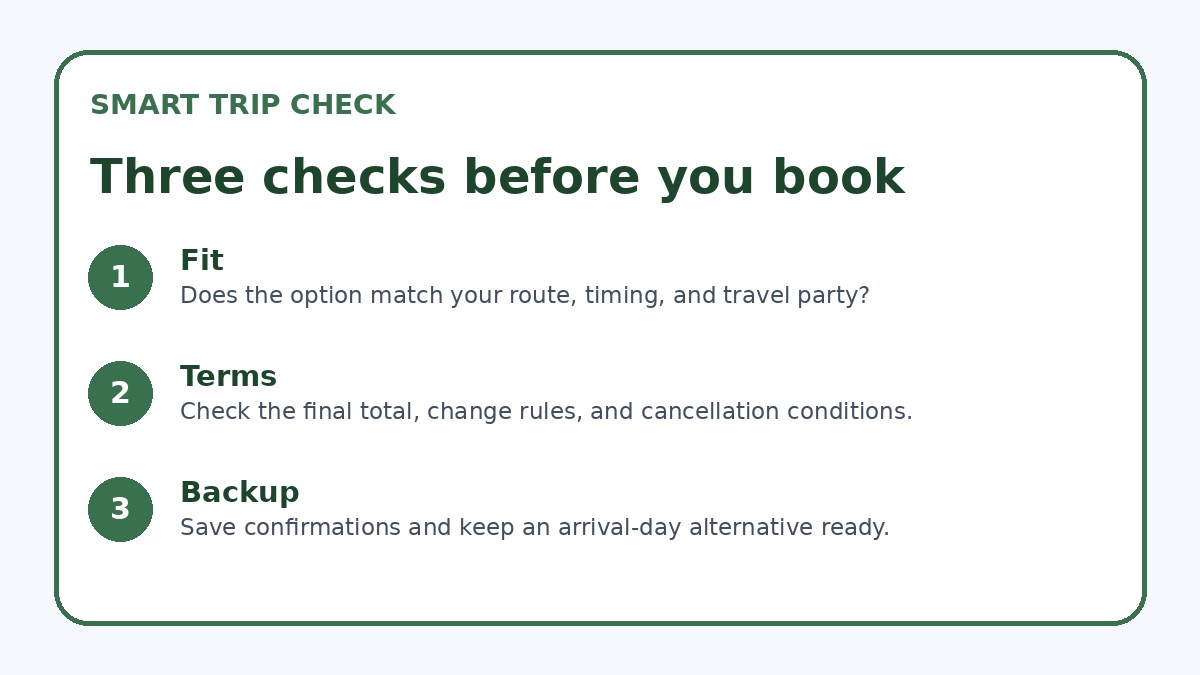
Use the exact driver, dates, pickup point, and return plan to compare current conditions.
Understanding insurance, coverage wording, and what to verify
Insurance language varies: rental quotes often list collision damage waiver (CDW), liability limits, and optional super cover that reduces your excess. Read the exact wording on the booking page and the rental agreement — verify what 'third-party' and 'cross-border' coverage actually permit and whether additional driver names or young-driver surcharges apply. Note any exclusions: damage to tires, windshields, or undercarriage is sometimes excluded unless you purchase add-ons. For families, confirm child-seat damage policies and whether the vehicle’s legally required equipment is supplied or available for rent.
Don’t rely on summary lines alone. Before you book, check the final provider page for the stated excess amount, how claims are handled, what documentation is needed after an incident, and whether you can leave a credit-card pre-authorization or must pay a cash deposit. If you plan to drive into Malaysia, ensure the insurance explicitly covers cross-border travel and confirm whether a temporary insurance sticker or Green Card is required. Keep screenshots or PDFs of the booking page and the insurance wording for quick reference at pickup.
Compare the full rental conditions
Confirm insurance wording, exclusions, deposit, fuel, mileage, and return terms on the final page.
Pickup, return friction, and family-friendly logistics
Pickup location and hours can make or break a family rental. Airport counters are convenient but can involve shuttle transfers to the car lot and long queues during peak arrivals. City collection points may be closer to family accommodation but could require scheduling specific windows. Ask the provider about handover time, whether they install child seats or if you must bring your own, the fuel policy (full-to-full is usually simplest), and options for roadside assistance. A timed pickup just after a long flight is often more stressful than booking a later afternoon.
Return logistics also deserve scrutiny: confirm the closing time of the drop-off location and whether after-hours drop-off is possible without extra fees. If your flight departs early, returning the car the night before and using airport transfers might reduce the morning rush. Verify cleaning and damage inspection procedures—some companies document the car with timestamps and photos; ask if you will receive a copy. Finally, check parking availability and costs at your planned stays; even short-term hotel parking can exceed the cost of a day’s ride.
Car rental terms to verify
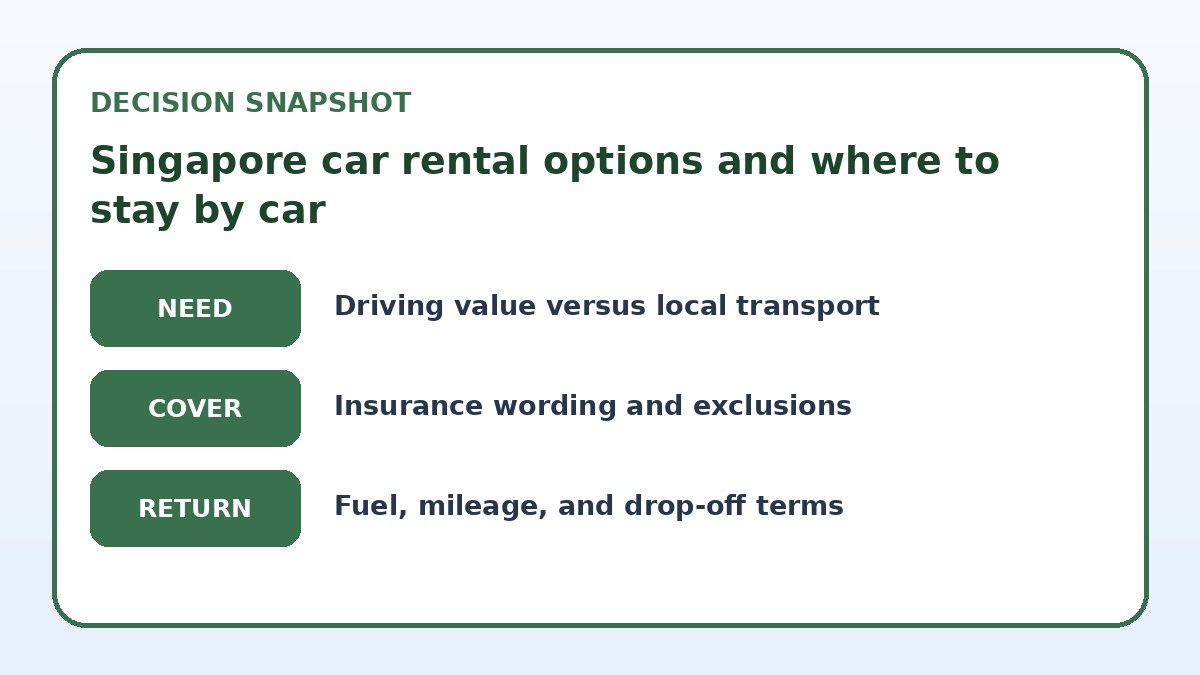
- Map your daily stops and mark which are within quick MRT access versus requiring a car to decide true driving value.
- Read the rental agreement line-by-line: note excess amount, included cover types, and any exclusions for tyres, windscreen, or undercarriage.
- Confirm whether child seats are provided, their installation policy, and any fees; bring your own if uncertain.
- Ask the provider explicitly about cross-border permissions and required insurance documents if you plan to enter Malaysia.
- Plan pickup and drop-off windows around family rhythms; verify operating hours and after-hours return procedures.
- Take time-stamped photos during handover and return and save booking pages and insurance screenshots to speed dispute resolution.
If you don’t drive: the non-driving fallback for families
A reliable fallback is transit plus strategic private rides. Singapore’s MRT and buses cover most tourist areas quickly and predictably; pair them with taxis or ride-hailing for door-to-door trips when you have luggage or tired kids. Book family-friendly accommodations near an MRT station to reduce transfers. Rent or bring a compact travel stroller and use app-based taxi services that can request larger vehicles when needed. For attractions outside the core, consider guided day tours that include pickup—these remove the planning burden and usually handle ticketing and parking.
For a lightweight approach, sequence your days geographically: central museums and gardens on one day, Sentosa and kid-focused attractions on another, and an eastern or northern nature day where a short taxi or shuttle minimizes transfers. Keep one flexible day for rest or impromptu activities. If a cross-border visit is tempting, arrange it as a guided crossing or a private transfer that manages immigration and insurance details, rather than attempting a self-drive without clear cross-border coverage.
Car Rental & Road Trip questions travelers ask
Is driving in Singapore difficult for first-time visitors with family?
Driving in Singapore uses well-maintained roads and clear signage, but you’ll face congestion near downtown, paid parking systems, and strict enforcement of traffic rules. For families, the main challenges are finding suitable parking at attractions and managing repeated load/unload cycles with children. If you’re comfortable with navigation apps, parking apps, and short urban driving stints, renting can work well. If you prefer to avoid these logistics, central public transport combined with taxis usually provides faster door-to-door trips and removes parking worries.
What insurance terms should I check before confirming a Singapore car rental?
Verify the collision damage waiver (CDW) excess amount, whether third-party liability is included and at what limit, and any optional super-cover details that reduce your liability. Check for exclusions (tyres, windscreen, undercarriage), whether child-seat damage is covered, and how roadside assistance is handled. If crossing into Malaysia, confirm explicit cross-border cover and whether additional local paperwork is required. Always save or screenshot the provider’s full insurance wording from the final booking page; summaries in search listings may omit crucial limitations.
How do I decide between a one-day rental and using taxis for suburban family trips?
Compare the total door-to-door time and the number of transfers required. A one-day rental makes sense when you need multiple stops with bulky gear or want to leave on your own schedule; calculate approximate driving time, expected parking availability, and potential tolls. For a short outing with a single round trip, a taxi or rideshare may be simpler and avoids pickup/return friction. Consider child-seat needs: if a rental supplies a seat and taxis do not, that can tip the balance toward hiring a car for that day.
Final decision note
For first-time visitors with children, decide first whether your itinerary genuinely requires the storage, timing flexibility, or cross-border option a car provides. If your days are mostly central, public transport and selective taxis will keep things simpler and reduce parking and insurance headaches. If you plan multiple suburban days, heavy gear, or a cross-border drive, a rental can make family travel more comfortable—just check insurance wording, cross-border permissions, and pickup/return logistics before you reserve. Keep a fallback plan: book family-friendly accommodation near an MRT line and identify reliable taxi apps so you can pivot quickly if driving proves more hassle than benefit.
Continue planning
Check current options and final conditions
Use the provider page to confirm live availability, the final total, cancellation terms, and every condition that matters to your trip.
This evergreen planning guide was created with AI-assisted drafting and a structured quality review. It does not display live prices, schedules, availability, visa guidance, or provider rankings. Verify current details before booking. Some links are affiliate links; we may earn a commission at no additional cost to you.