If you’re visiting Jeju for the first time, the single practical question that drives many choices is: will a rental car actually improve your trip? Short answer: it depends on your itinerary, comfort with driving in Korea, and how much flexibility you want. For tight schedules with widely scattered sites—mountain trails, remote beaches and coastal drives—a car usually frees you to go further each day. If you plan to stay in one town, use tours, or prefer not to navigate unfamiliar roads and parking, public transport plus taxis can cover most popular sights. This article gives a clear decision framework up front, then walks through route value, insurance wording to watch, pickup and return friction, and a ready non-driving fallback that still lets you see the island efficiently.

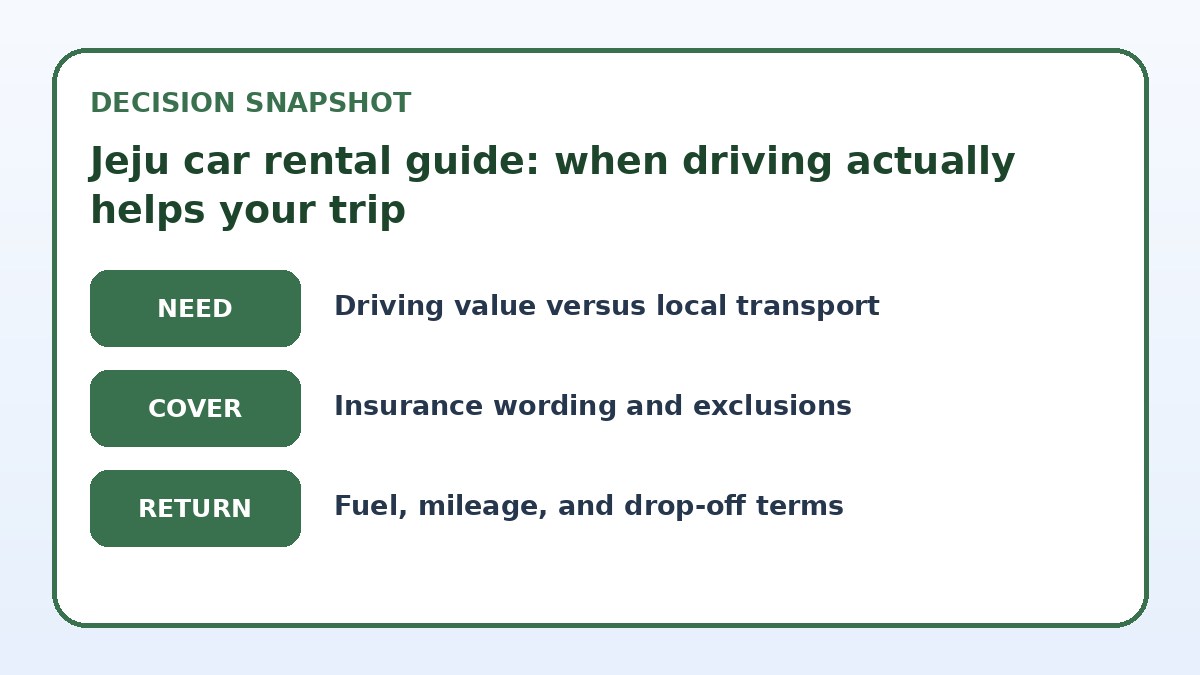
Route value: when driving adds real time and experience
Start by mapping what you really want to see. Driving adds the most value when your itinerary strings together sites that are far apart or off main bus corridors—coastal overlooks, small beaches, mountain trailheads and villages with limited services. If you like spontaneous detours, sunrise drives or visiting less-trafficked natural spots, a car converts travel time into sightseeing time. Consider how many hours you’re willing to spend each day in transit; if you’d rather spend mornings at a quiet bay and afternoons at a museum without waiting for scheduled buses, driving pays off.
By contrast, if most highlights you care about cluster around Seogwipo or Jeju City, or you plan guided day tours that include transfers, public transport plus local taxis covers the list with less hassle. Also factor seasonal traffic—weekends and holiday spikes can make driving slower than buses that use bus lanes or timed routes. Ultimately, compare door-to-door transit time, number of interchanges, and whether your plan needs a car for early-morning or late-night movements that buses won’t serve.
Decide whether driving earns its place
| Mobility strategy | Best for | Cost or friction to check |
|---|---|---|
| Full rental car for entire stay | Travelers with dispersed, flexible itineraries and comfort driving in unfamiliar conditions. | Higher responsibility for parking, navigation, insurance details and pickup/return logistics. |
| Mix: car for selected days, public transport otherwise | Visitors who need a car for remote sites but prefer less driving overall. | Requires planning to coordinate rental days with bus/tour schedules and possible extra pickup friction. |
| Public transport plus taxis and tours | Travelers staying in one area or those avoiding driving and parking stress. | Less flexibility for remote or early-morning sites; possible extra waiting time and higher short-hop taxi costs. |
| Guided day tours for entire stay | Visitors who want convenience and local insight without navigation or parking concerns. | Less independence, fixed schedules and potential difficulty reaching off-the-beaten-path spots. |
Check live rental choices only after the route test
Use the exact driver, dates, pickup point, and return plan to compare current conditions.
Insurance wording: what to read before you sign
Rental insurance pages use acronyms and limits that vary by provider. Key terms to verify on the supplier’s booking and contract pages are Collision Damage Waiver (CDW) or Loss Damage Waiver (LDW), liability limits, and whether theft protection is included. Check for exclusions such as driving on unpaved roads, using the car for commercial purposes, or penalties for unauthorized drivers. Also confirm the deductible amount you’ll be responsible for after a claim and whether basic coverage is included or sold as an optional extra at pickup.
Don’t rely on summary lines alone—look for the exact wording on the final booking page and the rental agreement you sign. If the supplier mentions a 'zero deductible' or 'super CDW', read the fine print for caps, temporary hold amounts on your card, and any documentation required after an accident. If you plan to use a credit card benefit for secondary coverage, verify whether the card excludes certain vehicle classes or countries; call the card issuer or check their terms before you rely on that coverage.
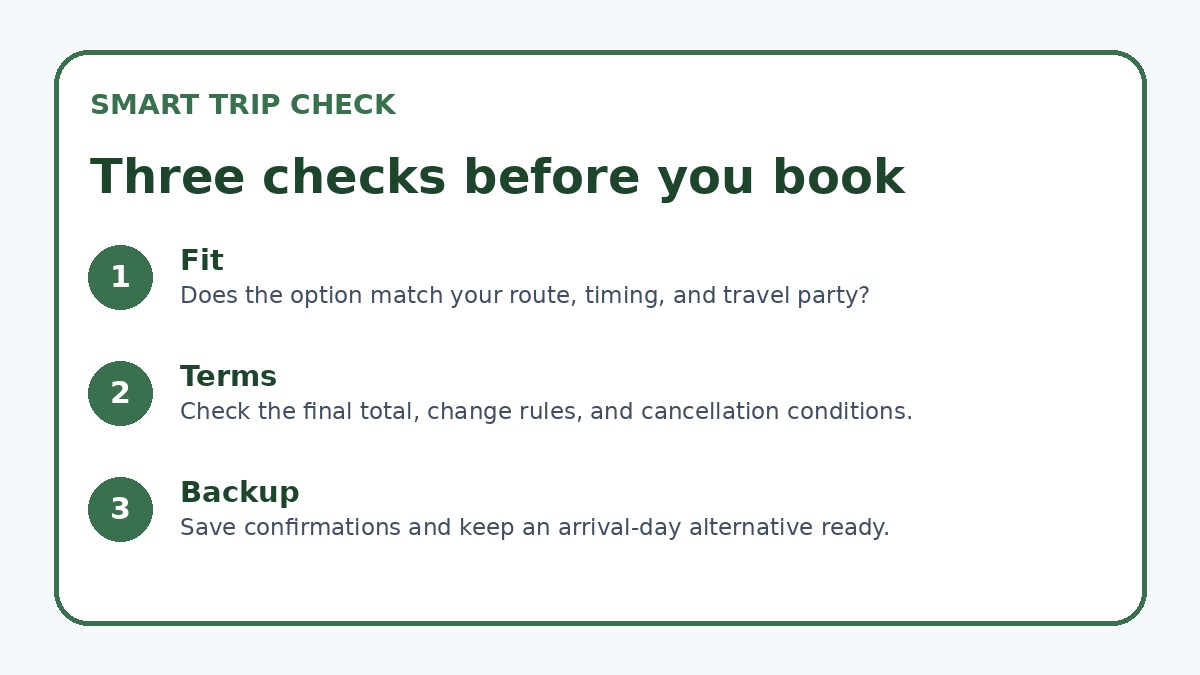
Compare the full rental conditions
Confirm insurance wording, exclusions, deposit, fuel, mileage, and return terms on the final page.
Pickup and return friction: realistic minutes and potential delays
Pickup and drop-off are often where plans unravel. At Jeju’s airport or city counters, factors that add time include off-site lots requiring shuttles, queues at the desk, additional paperwork for drivers without local licenses, and vehicle inspection notes. Expect to spend longer than the advertised '10-minute pickup' if you need to process an IDP (if applicable), wait for a shuttle, or add optional insurance. When comparing suppliers, read the booking page for pick-up location details, shuttle frequency, and whether the fuel policy requires you to return full or pay a refill fee.
Return friction can include parking layouts, office hours and the company’s stated check-in deadline. If your flight departs late at night or very early, confirm the rental company’s after-hours drop-off procedure and whether they accept key drops. Even when public transport is used, consider last-mile transfers: taxis can be plentiful but surge during peak tourist periods. Before booking any option, verify pickup and return address details, office hours and any shuttle schedules on the provider’s final booking page—Trip.com can be used to compare current availability but verify details with the supplier directly.
Car rental terms to verify
- Compare door-to-door transit time for each day’s plan and mark locations with limited or no bus service.
- Read the rental company’s full insurance terms on the final booking page; note deductibles and listed exclusions.
- Confirm pickup and return logistics, including shuttle needs, office hours, and after-hours key-drop policies.
- Check whether your driver’s license, an International Driving Permit, or additional ID is required and carry originals.
- Plan parking: identify accommodations or attractions with on-site parking and understand any paid parking systems.
- Keep a non-driving backup mapped—bus timetables, reliable taxi contacts and at least one guided tour for remote sites.
Non-driving fallback: plan B that still covers the island
If you decide not to drive, assemble a practical fallback mix: intercity buses between Jeju City and Seogwipo, local bus routes to major attractions, scheduled coach tours for harder-to-reach sites, and taxis for short or late-night hops. Many popular sites have bus stops within reasonable walking distance, while day tours can replace a car for routes that require complex transfers. Prepare a daily plan with backup activities near bus hubs in case connections are slow, and prebook any guided tours or intercity coaches that are crucial to your itinerary.
Also keep a taxi budget and a list of reputable local taxi apps or phone numbers handy for early departures or late returns when buses stop running. If you anticipate trying both approaches, consider renting a car for just a few days in the middle of your stay and using public transport for the rest—this reduces driving time while still letting you reach remote highlights. Whatever fallback you choose, verify bus timetables, tour meeting points and taxi services on official sites or on-the-ground notices before relying on them.
Car Rental & Road Trip questions travelers ask
Do I need an International Driving Permit (IDP) to rent a car in Jeju?
Whether you need an IDP depends on your home country’s agreement with Korea and the rental company’s policy. Some travelers can use a domestic license if it is accompanied by an official translation recognized by Korean authorities; others must present an IDP alongside their national license. Always verify the rental supplier’s document requirements on the booking page before you travel, and contact the company if the policy language is unclear. Carry both your license and passport at pickup to prevent last-minute surprises.
How do I compare rental insurance with my credit card coverage?
Credit card rental benefits vary widely; some provide secondary coverage that kicks in after the rental company’s insurance, while others offer primary coverage with limits and exclusions. Before relying on a card, check the issuer’s terms for country exclusions, vehicle-type limits and whether liability or theft is covered. Confirm whether the rental company requires you to decline their CDW at pickup to activate card benefits. Call your card issuer if any contract language is ambiguous and save proof of the coverage policy for your records.
Are buses and taxis reliable enough to see Jeju without a car?
Yes—many first-time visitors see Jeju without renting a car by combining intercity buses, local routes, taxis and organized day tours. Buses serve the main tourist corridors and town centers, while taxis cover short or late-night trips. That said, some natural sites and remote beaches require multiple transfers or are harder to reach without a vehicle. If your priorities include several off-grid spots or early starts, a car significantly reduces transit time; otherwise, a well-planned mix of buses and tours is a practical non-driving strategy.
Final decision note
Choosing whether to rent a car in Jeju comes down to what you value most: independence and easy access to remote spots, or the lower stress of navigating schedules and parking. If your days string together distant natural sites, or you crave sunrise and sunset flexibility, a rental car often improves the itinerary—provided you read insurance language and confirm pickup/return details. If you prefer to relax into a single base, rely on tours, or avoid driving unfamiliar roads, public transport plus taxis and targeted tours will cover the island’s highlights. Whatever you pick, verify insurance terms, driver documentation requirements and pickup logistics on the supplier’s final booking page before you commit.
Continue planning
Check current options and final conditions
Use the provider page to confirm live availability, the final total, cancellation terms, and every condition that matters to your trip.
This evergreen planning guide was created with AI-assisted drafting and a structured quality review. It does not display live prices, schedules, availability, visa guidance, or provider rankings. Verify current details before booking. Some links are affiliate links; we may earn a commission at no additional cost to you.