Practical answer: pick a neighborhood that minimizes the time and transfers between your arrival point and the hotel, offers easy late check-in, and gives you a room layout that stores bags without blocking movement. For most extra-luggage arrivals into New York City, Midtown Manhattan, Long Island City (Queens), Downtown Brooklyn, or hotels near major transit hubs are the fastest practical choices—each reduces one common friction: transfer length, elevator waits, stairs, or narrow rooms. Before booking, confirm late check-in policy, luggage storage, elevator access, and whether the hotel charges for additional bags or holds. If you arrive past 11 p.m. or on an overnight flight, prioritize a hotel on the same rail or subway line as your final transfer or within a short cab/Uber route to keep handling and stress to a minimum.

Check live stays in the areas that fit
Use your dates and party size to compare current rooms after you narrow the neighborhood fit.
Neighborhood fit: which area reduces late-arrival friction
Start by matching your arrival point with a neighborhood that minimizes transfers. If you land at JFK, Queens neighborhoods like Long Island City cut taxi or rideshare times and keep you near a handful of hotel corridors. If you arrive at LaGuardia, Queens or northern Manhattan areas close to direct bus or cab routes make sense. For Newark arrivals, hotels in Downtown Manhattan near Penn Station or the Port Authority Bus Terminal reduce further transfers because they’re close to the airport express bus or New Jersey Transit connections. Choosing the neighborhood by transfer geometry, not prestige, is the fastest way to avoid lugging multiple bags through stations or carrying them between modes late at night.
Also consider late-night neighborhood conditions: some areas feel more active after midnight with 24-hour lobbies and eateries, while others are residential and quieter, which could mean limited staff or earlier front-desk closures. For extra luggage, prioritize neighborhoods with hotels clustered near major transit arteries or crosstown streets that taxis and rideshares can reach without navigating narrow side streets. If you value a short on-foot approach from a subway exit rather than a long elevator or multi-stair carry, map the last 300–800 meters from the station to the hotel before locking the neighborhood down.
Choose an area-selection strategy
| Area approach | Best for | Tradeoff to check |
|---|---|---|
| Stay near a major transit hub (Penn Station/Port Authority) | Arrivals by train or airport shuttle seeking the shortest transfer chain. | Busy streets and heavier crowds can make curbside luggage handling trickier during peak hours or late-night events. |
| Choose Midtown hotels close to taxi-friendly avenues | Those with very heavy or numerous suitcases who prefer a straightforward driver drop-off. | Traffic and limited curb space can delay drop-offs; hotels may be on busy blocks that require a short walk. |
| Pick Long Island City or Downtown Brooklyn | Arrivals from JFK or LGA who want easier drives and quieter hotel streets near subway lines. | You may trade a shorter arrival for a slightly longer Manhattan commute the next day if you plan to visit central attractions. |
| Book a hotel near your airport rail link | Travelers prioritizing speed from the airport rail or express bus with minimal transfers. | Areas close to rail terminals sometimes have fewer leisure amenities and smaller rooms geared to short stays. |
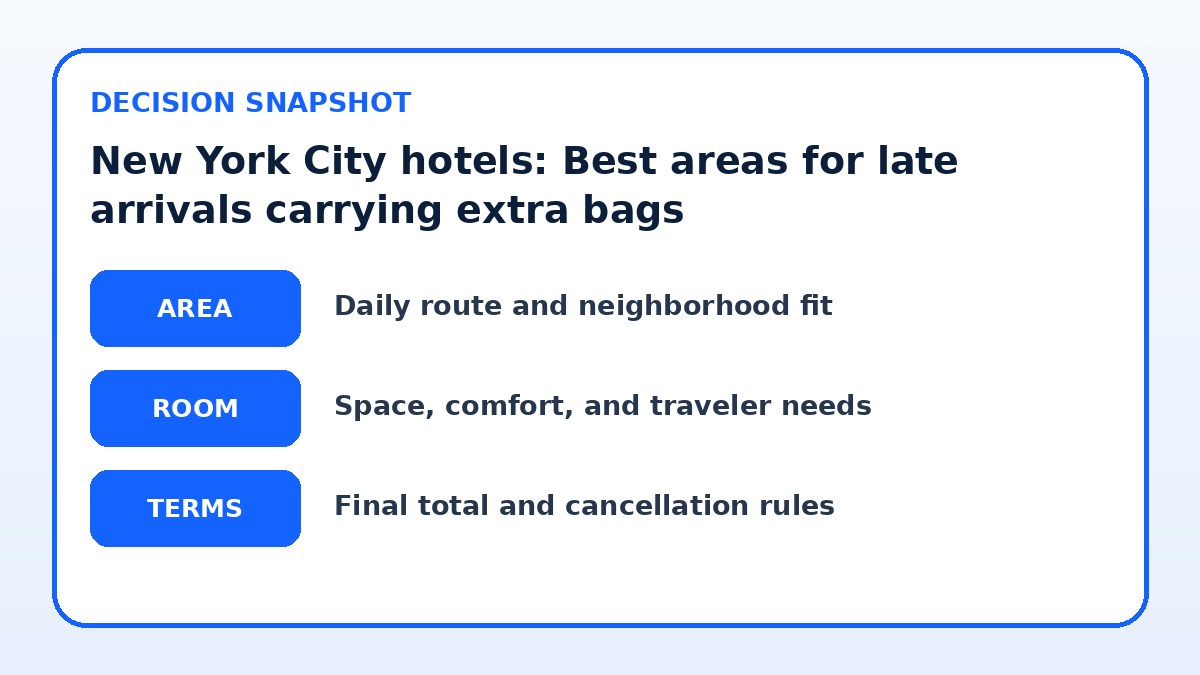
Daily-route friction: transfer choices and late-night options
Compare the routes you’ll actually use on arrival—subway, airport shuttle, commuter rail, taxi, or rideshare. Subways are often the most predictable route in Manhattan and parts of Queens and Brooklyn at night, but moving luggage through stairs and crowded platforms can be hard. A direct single-transfer trip beats a shorter overall distance with multiple transfers. When researching hotels, open the street map and plot your likely path from the station or drop-off point to the door. Count stairs, distance along sidewalks, and whether there’s an elevator or ramp at your arrival station.
If a taxi or rideshare is an option for the last leg, check whether hotels have an easy drop-off spot rather than forcing a stop on a busy avenue. Some hotel lobbies are set back from the curb; others require curbside walking lanes to be crossed. For late arrivals, verify whether the building has a staffed 24-hour entrance or a keycode entry and whether bell service is on duty; these determine how much luggage you’ll need to carry through public spaces and whether you can ask staff to help with heavy suitcases.
Now compare like with like
Keep the same dates, guests, room needs, and cancellation preferences while you compare the final choices.
Room and party needs: how to choose the right room layout
For travelers with extra luggage, the room layout matters as much as location. Look for rooms described as larger, corner, or with sitting areas—these usually provide more floor space to stage bags without blocking access. If you’re sharing with a partner, book a room that can separate luggage from sleeping space, such as a room with a foyer or an additional chair/bench. If multiple people arrive together with several suitcases, consider booking two rooms on the same floor or a suite with a living area to avoid always moving bags in and out of a narrow single room.
When room descriptions are sparse, message the hotel before booking to ask about closet space, extra storage, and whether rollaway or luggage racks are available. Confirm elevator dimensions if you have very large suitcases; some older buildings have small elevators that make moving oversized cases awkward. If you plan to store luggage before check-in or after check-out, verify the hotel’s policy and where stored bags are kept—luggage rooms, front-desk areas, or secured storage—so you can decide how to move bags when arriving late.
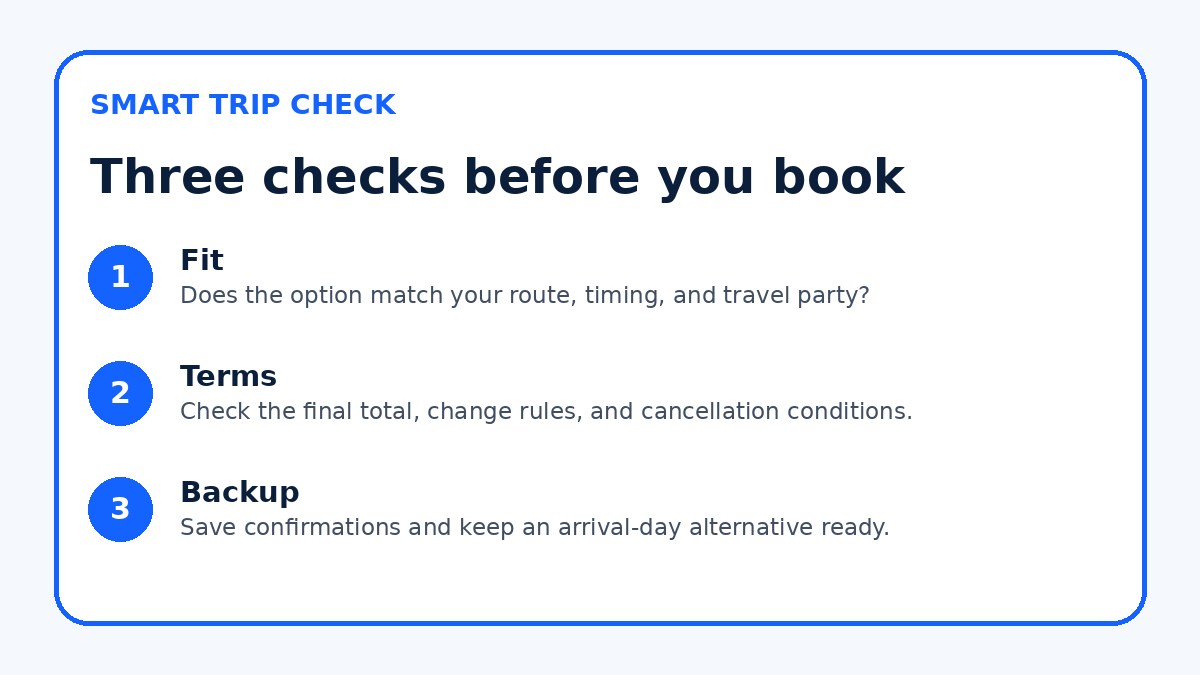
Hotel booking check before payment
- Map your route from arrival point to hotel and note stairs, elevator locations, and estimated walking distance in meters.
- Confirm the hotel’s late-check-in policy and get written instructions on key pickup or after-hours access.
- Ask the hotel about luggage storage availability, location, and any size or time limits before you book.
- Verify elevator dimensions with the hotel if you have oversized suitcases or a piano-case-sized instrument.
- Request a room on a lower floor or with a lift access if you want to avoid long elevator waits or carry heavy bags.
- Save contact details for the hotel’s front desk and the staff member who confirmed your late-arrival arrangements.
Final booking terms: what to verify on the hotel’s page
Before finalizing a reservation, verify four key things on the hotel’s booking page: late check-in procedures (how to check in after midnight), luggage storage policy, elevator or accessible entry details, and any fees related to extra bags or late arrivals. When the site is unclear, call or email to get written confirmation and note the staff member’s name. If a third-party site lists the property, check the hotel’s official page or contact the property directly to ensure the late-arrival terms you rely on match the hotel’s own statement.
Don’t assume a 24-hour front desk in New York City—confirm it explicitly. For remote or self-check-in arrangements, ask how key collection works at night. If you plan to use a luggage hold before check-in or after check-out, ask where the bags will be stored overnight and what identification is required. You may also want to verify whether bell service is available and if there are any size or time limits for stored items; keep a copy of any email confirmation to show on arrival if questions arise.
Hotel Guide questions travelers ask
Is it better to book a hotel near the airport or in Manhattan for a late arrival?
If minimizing luggage handling is your priority and you arrive very late, a hotel near the airport or close to the airport rail/bus stop reduces time and transfers. However, staying in Manhattan often makes your first full day simpler if you plan to sightsee immediately, so weigh a short overnight near the airport against an easier first-day itinerary. Check whether the airport-area hotel has 24-hour reception and compare total door-to-door transfer complexity rather than just distance.
What room features should I request when traveling with many suitcases?
Ask for rooms with clear floor space, a foyer, a sitting area, or a suite layout to stage luggage without blocking entryways. Request a luggage rack and extra hangers if you’ll unpack minimally. If you expect to leave bags with the hotel, confirm where they store luggage and whether items are secured. For large groups or bulky items, consider adjacent rooms or a suite to spread bags across spaces and reduce congestion.
How can I ensure help with my bags at late hours?
Confirm the hotel’s bell service or 24-hour front desk availability before booking; ask for written confirmation of staff availability on late arrivals. If bell staff are not guaranteed, request advice about safe drop-off points to minimize carrying distance from the curb. If the hotel uses self-check-in kiosks or keyboxes, verify how oversized items can be handled and whether staff can be called by phone for assistance after hours.
Final decision note
When handling a late arrival to New York City with extra luggage, make the neighborhood decision first: prioritize minimal transfers, curbside or elevator access, and straightforward late-check-in procedures. After you select a neighborhood, focus on room layout, elevator size, and written confirmation of luggage and after-hours policies. Small prep steps—mapping the last stretch, confirming storage and staffing, and requesting appropriate rooms—can turn a stressful late arrival into a manageable first night. For live availability compare search results on your preferred booking sites and, if you like, check Trip.com to cross-reference hotel options and current conditions before you finalize your reservation.
Continue planning
Check current options and final conditions
Use the provider page to confirm live availability, the final total, cancellation terms, and every condition that matters to your trip.
This evergreen planning guide was created with AI-assisted drafting and a structured quality review. It does not display live prices, schedules, availability, visa guidance, or provider rankings. Verify current details before booking. Some links are affiliate links; we may earn a commission at no additional cost to you.