If you're booking a business trip to Bangkok, the most practical first step is to compare the total landed cost across every option you’ll consider. That means matching the same dates, number of travelers, baggage allowances, meeting-day logistics, and cancellation conditions before you judge a package’s value. A bundle that looks cheaper on first glance may omit airport transfers, impose inflexible change fees, or lock you into nonrefundable rooms that cost more if your schedule shifts. Conversely, separate bookings—air alone, hotel separately, and transfers on demand—can add admin time but may offer targeted flexibility for business needs. This guide walks through what must be checked to make a decision that minimizes risk and unexpected expense, with practical questions to ask on provider pages and a checklist you can use before you click Confirm.
Test package value fairly
| Booking approach | Best for | Tradeoff to check |
|---|---|---|
| All-in-one package (flight+hotel+transfer) | Travelers seeking simplified single-invoice booking and low administrative effort. | May lack flexibility, exclude loyalty benefits, and hide separate-supplier rules that complicate changes. |
| Separate flight and hotel bookings, transfer separately | Travelers prioritizing flexibility and loyalty program accrual for each supplier. | Requires more time to compare and manage multiple confirmations and invoices. |
| Corporate travel agent or managed travel platform | Companies needing policy enforcement, consolidated billing, and duty-of-care services. | May restrict choice to approved suppliers and add agent fees or approval delays. |
| Hybrid: book flight on loyalty airline, package local hotel/transfer | Travelers who need flight status benefits but want local convenience bundled. | Complexity rises—ensure combined terms don’t create change conflicts between suppliers. |
Check current package and separate options
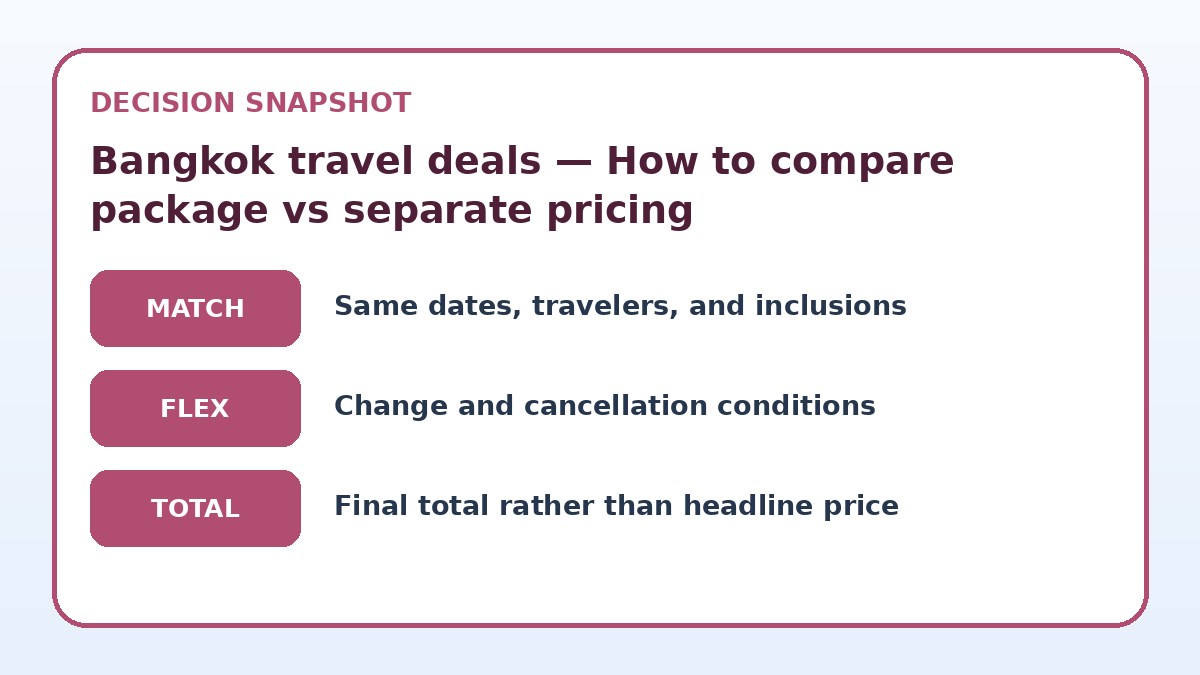
Use identical dates, travelers, room needs, baggage, and flexibility so the comparison stays meaningful.
Inclusions: What the package actually covers
Start by listing every service you need for the trip: roundtrip air, checked baggage, airport-to-hotel transfer, hotel nights, breakfast, meeting-room access, reliable Wi‑Fi, transport for evening meetings, and emergency contact or rebooking help. When you compare a package to separate bookings, align that list exactly. Many bundles advertise a single price but exclude items business travelers count on—like checked baggage per person, guaranteed fast Wi‑Fi for video calls, or airport transfer timed for late flights—so the advertised saving can evaporate when you add excluded items separately.
When provider pages are ambiguous, use the booking flow to reveal final totals and inclusions before payment. Look for explicit statements on baggage allowances per passenger, transfer type (shared shuttle versus private car), and hotel amenities: free or paid meeting rooms, breakfast time windows, and the availability of early check-in. If something important to your itinerary isn’t visible, contact the provider or agent and save their written confirmation. For business use, a documented inclusion list prevents hassles if you need receipts or expense reports later.
Flexibility: fees and rebooking rules that matter
Business travel often requires last-minute changes. Compare change and cancellation policies for each component: flights, hotels, and any transfers or add-ons. Pay special attention to how fees are calculated—are they flat penalties, percentage-based, or nonrefundable? Also check whether airlines or hotels permit changes online or require an agent call; the latter can add time and uncertainty. A low package rate that’s nonrefundable could cost more than a flexible separate booking if your meeting shifts.
Look beyond headline terms to operational details: how long before departure is a change permitted; does the hotel allow date swaps without penalty; will the flight fare class allow reissuance rather than a full fare difference? When terms reference “supplier rules” or “fare conditions,” open those linked pages and read them; the booking confirmation page should summarize key change and refund conditions. If the contract language is unclear, request a written clarification and keep it with your travel files.
Look past the headline total
Compare inclusions and change conditions before deciding whether a package is genuinely useful for this trip.
Deal comparison checklist
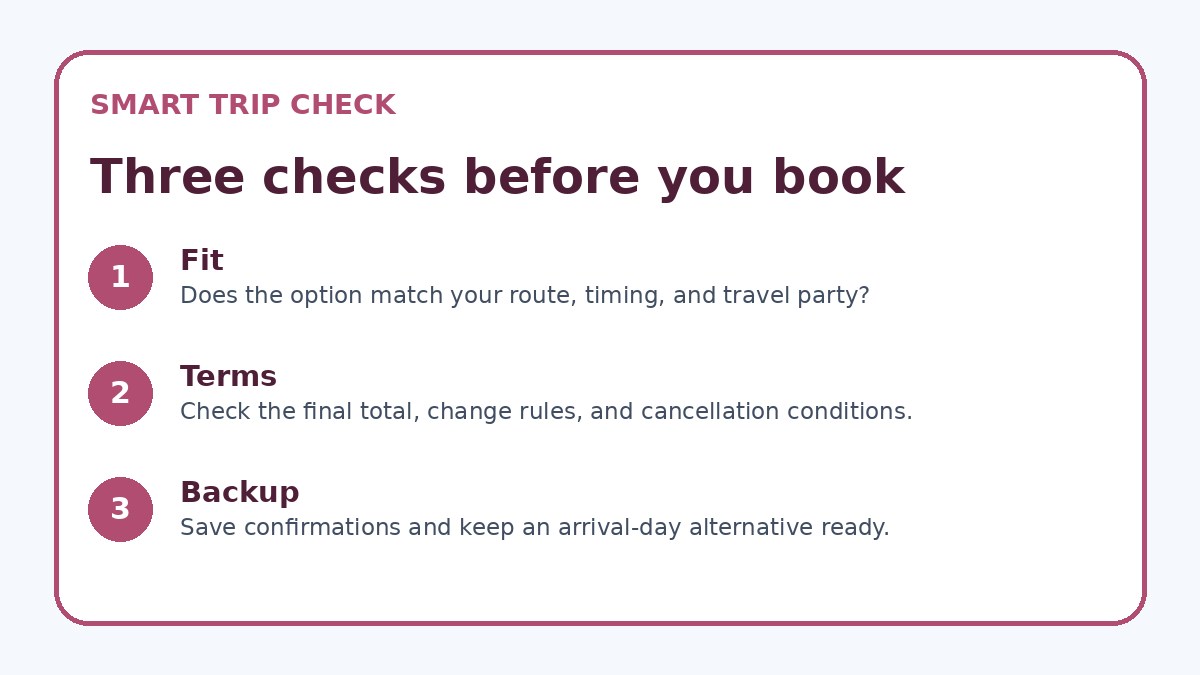
- Match the same travel dates, passenger names, and number of rooms/flight seats across all options before comparing totals.
- Confirm baggage allowances, checked baggage fees, and any carry-on restrictions for each flight option.
- Read the change and cancellation policy on the supplier’s final booking page and save a screenshot or PDF of that page.
- Verify airport transfer type, pickup window, and cancellation terms when a transfer is included or sold separately.
- Check whether hotel inclusions (breakfast, Wi‑Fi speed, business facilities, and early check-in) meet meeting-day needs.
- Ensure invoices will meet corporate expense rules and that loyalty program earnings or elite benefits are preserved if required.
Traveler-specific value: business needs vs leisure assumptions
Think about how your company defines value: is it minimizing out-of-pocket costs, maximizing flexibility, or ensuring arrival and departure windows that fit meetings? For executives, a private transfer and a quiet hotel close to the client site may be worth a premium. For frequent-traveler employees, loyalty program accrual and direct airline or hotel status benefits—like upgrades or waived fees—might outweigh a small bundle discount. Don’t accept a bundle that prevents earning or using corporate loyalty advantages unless the net cost and convenience clearly justify it.
Also evaluate the administrative burden. Consolidated invoices from a single supplier can simplify expense reporting, approvals, and invoice reconciliation for corporate travel teams. But if a package locks reservations under a nonrefundable group code or requires that changes be handled through the original seller, the time cost of managing exceptions can be high. Balance the ease of a single booking channel against the need for flexibility and loyalty program benefits that matter to individual travelers.
Final terms: what to verify on the provider’s booking page
Before committing, verify the final booking page shows the exact dates, passenger names, fare classes, baggage allowances, and any taxes or service fees. Check whether airport transfers specify pickup windows, vehicle type, and cancellation rules. For hotels, confirm room type (business/standard), breakfast policy, Wi‑Fi speed or business center access, and whether early check-in or late checkout is included or available for a fee. If you plan on expense reporting, confirm whether invoices will list VAT or GST separately and whether supplier receipts meet your company rules.
If you used a travel agent or corporate booking tool, compare their final confirmation against the supplier’s own terms. Differences sometimes appear between agent summaries and supplier confirmations; the supplier page is the ultimate source for operational rules. Where available, consult provider terms and conditions links and save screenshots of the final booking screen. Trip.com can be one place to check current availability and terms, but always read and save the supplier’s final confirmation and any written clarifications.
Travel Deals & Booking Strategy questions travelers ask
Should I always pick a bundled package to save time when booking a Bangkok business trip?
Not always. Bundles do reduce administrative steps because you receive fewer confirmations and a single invoice, which is appealing for corporate expense workflows. However, they can reduce flexibility: bundles may impose stricter change fees, prevent separate loyalty accrual, or omit services business travelers expect. Evaluate bundles by comparing the full landed cost and operational rules against equivalent separate bookings for your exact dates and traveler count. If your schedule is firm and the bundle includes required services, it can be efficient; if your itinerary might change, separate or hybrid options could be safer.
How do I verify that a package’s inclusions actually apply to my corporate traveler?
Use a side-by-side checklist to compare the package’s listed inclusions with your traveler’s requirements: transfer timing, baggage, breakfast timing, Wi‑Fi, meeting-room access, and invoice details. Proceed through the booking flow to the final confirmation page before payment; that page should itemize fare classes, baggage allowances, taxes, and any supplier-specific restrictions. If the supplier’s language is unclear, request written confirmation from the agent or provider. Keep that confirmation with your travel files in case you need to dispute missing services upon arrival.
What specific contractual terms should corporate bookers watch for when comparing Bangkok travel deals?
Focus on change and refund clauses, fare-class reissue rules for flights, blackout dates or minimum night stays for hotels, and supplier liability for delays or missed transfers. Check whether the booking requires supplier mediation for changes or if changes can be made online, and confirm how service fees are calculated. Also verify VAT/GST invoicing practices and whether receipts meet your company’s expense policy. Any vague phrasing—such as references to “supplier rules” without a link—should trigger a request for the explicit terms before purchase.
Final decision note
For business travel to Bangkok, the right choice depends on aligning inclusions and flexibility with your company’s priorities. Compare identical dates, traveler counts, and required services across any package and separate booking options, read the final supplier confirmation, and document change and refund terms before payment. Weigh administrative convenience—single invoice and consolidated support—against the need for loyalty accrual, flexible rebooking, and precise operational details like transfer pickup windows and meeting-room access. Use the checklist above to verify critical items and save confirmations. Taking these steps will reduce surprises and ensure your Bangkok travel arrangements support, rather than disrupt, your work.
Continue planning
Check current options and final conditions
Use the provider page to confirm live availability, the final total, cancellation terms, and every condition that matters to your trip.
This evergreen planning guide was created with AI-assisted drafting and a structured quality review. It does not display live prices, schedules, availability, visa guidance, or provider rankings. Verify current details before booking. Some links are affiliate links; we may earn a commission at no additional cost to you.