For first-time visitors, the practical choice between rail, coach, ferry or mixed options comes down to how smoothly you can get to and from terminals, where you’ll store luggage, and how flexible your schedule must be. On the Osaka–Hiroshima corridor, rail is common for speed and frequency, coaches for lower friction at budget terminals, and ferries or combinations can suit scenic or itinerary-driven trips. Start by mapping your door-to-door route: which hotel, which station or bus terminal, and how you'll move between them. That will immediately narrow options. The rest of this guide walks you through terminal fit, luggage and transfer friction, timing flexibility, and a simple disruption backup so you can choose the option that matches your priorities — speed, convenience, cost control, or scenic value.
Choosing rail, coach, ferry, or a mix
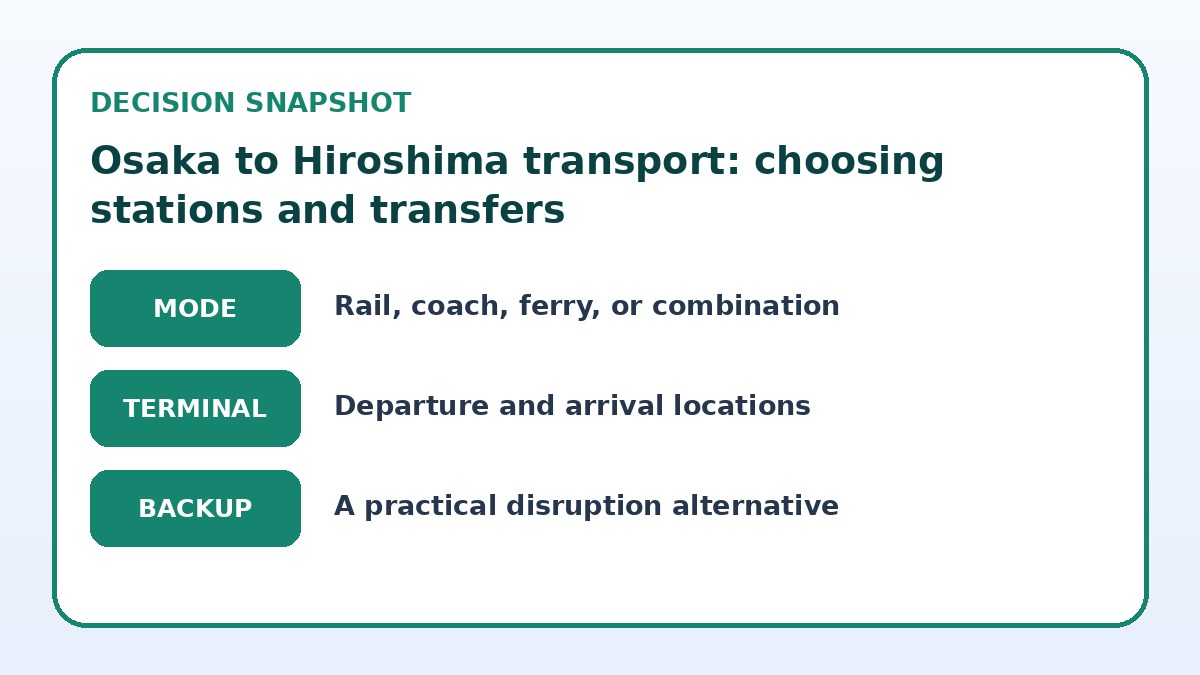
Start with the practical question: where exactly are you starting in Osaka and where do you want to end in Hiroshima? If your Osaka accommodation is near a major station, rail options will likely win for frequency and ease of connecting onward in Hiroshima. Coaches and long-distance buses often use central terminals that may be closer to certain hotels and avoid platform changes and staircases. Ferries or combined journeys can be attractive if you plan an island detour or want a specific arrival port; however, they usually require extra transfers at terminals and may not be competitive for door-to-door time.
Compare the total journey door-to-door rather than the advertised transit time. That means adding the time and hassle of getting to the departure station or terminal, any transfers along the way, and the onward trip from the arrival terminal to your final destination. A slightly slower coach leaving from a convenient terminal near your hotel can be faster overall than a quicker train that requires a taxi or multiple subway hops. Use mapping tools to measure walking routes between hotels and terminals and to estimate transfer times when weighing options.
Choose the end-to-end journey plan
| Journey approach | Best for | Friction to check |
|---|---|---|
| Direct rail-focused plan | Travelers prioritizing frequent departures and predictable journey structure | May require extra time and cost to reach major stations at either end |
| Coach-focused plan | Those wanting fewer transfers and easy curbside access from central hotels | Often fewer daily departures and potentially longer in-vehicle time |
| Mixed-route plan (train plus ferry or local bus) | Travelers valuing scenic segments or specific arrival points | Adds terminal changes and luggage handling, increasing transfer friction |
| Door-to-door convenience plan (taxi + terminal option) | Passengers with heavy luggage, mobility needs, or tight schedules | Higher out-of-pocket cost and dependency on local road conditions |
Check live intercity options
Look beyond the ride itself and compare terminals, transfers, luggage, and arrival fit.
Terminal fit and transfer friction
Terminal fit is about how a chosen departure or arrival point aligns with your baggage, mobility, and schedule needs. Major rail stations often offer escalators, elevators, luggage storage, and better signage, which reduces friction for travelers with large bags or mobility concerns. Smaller coach terminals may have fewer facilities but simpler arrival and departure flows, sometimes with bus bays close to street level and direct taxi ranks. If you have heavy luggage or require step-free access, prioritize terminals with confirmed elevator routes and easy platform access.
Transfer friction rises with each change of vehicle or terminal. Moving from an Osaka hotel to a suburban station, changing trains at a busy hub, then switching to a local tram in Hiroshima multiplies opportunities for delays and fatigue. Plan for walking times between platforms, the availability of elevators, and whether baggage must be carried over stairs. If a terminal change is unavoidable, look for services that permit checked luggage transfers or stations that offer short-term storage so you can break the trip into less stressful segments.
Timing flexibility and itinerary tradeoffs
Decide how rigid your arrival time in Hiroshima must be. If you must arrive by a fixed hour for a check-in or tour, choose the most reliable and frequent option so a missed departure won’t derail your day. Trains often provide more frequent departures, which reduces the penalty of a delay getting to the station. Coaches may have fewer departures but run from terminals with simpler access, so they can be more dependable if you’re starting from a location close to the bus terminal. Keep in mind that routes with long single led segments give fewer recovery options en route than those with frequent departures.
If you value sightseeing or scenic value, include that in your timing decision. A mixed route—train to a coastal port and ferry onward—adds time but can turn a transfer into a pleasant break. On the other hand, if you are moving between hotels or connecting to an early morning activity in Hiroshima, prioritize options with minimal transfer complexity. Always allow extra buffer time for the segments you control: getting to the terminal, ticketing, security lines, and any station navigation. That buffer reduces the need for last-minute taxis or rushed transfers.
Compare the practical alternatives
Use the final page to confirm what is actually offered on your dates and save a workable fallback.
Intercity travel checklist
- Map door-to-door travel time from your Osaka accommodation to each candidate departure terminal and from arrival terminals to your Hiroshima destination.
- Confirm elevator/escalator access and short-term luggage storage at chosen departure and arrival stations if you travel with large bags.
- Note frequency of departures for each option and pick one with enough alternatives if your arrival time in Osaka may slip.
- Save official operator contact details and a screenshot of timetables or booking confirmations for offline use at terminals.
- Identify a practical backup: a later train, the nearest coach departure, or a reusable taxi option and record its estimated travel time.
- Prepare local-language station names and your final address in Japanese to show at ticket counters or to taxi drivers.
A simple disruption backup plan
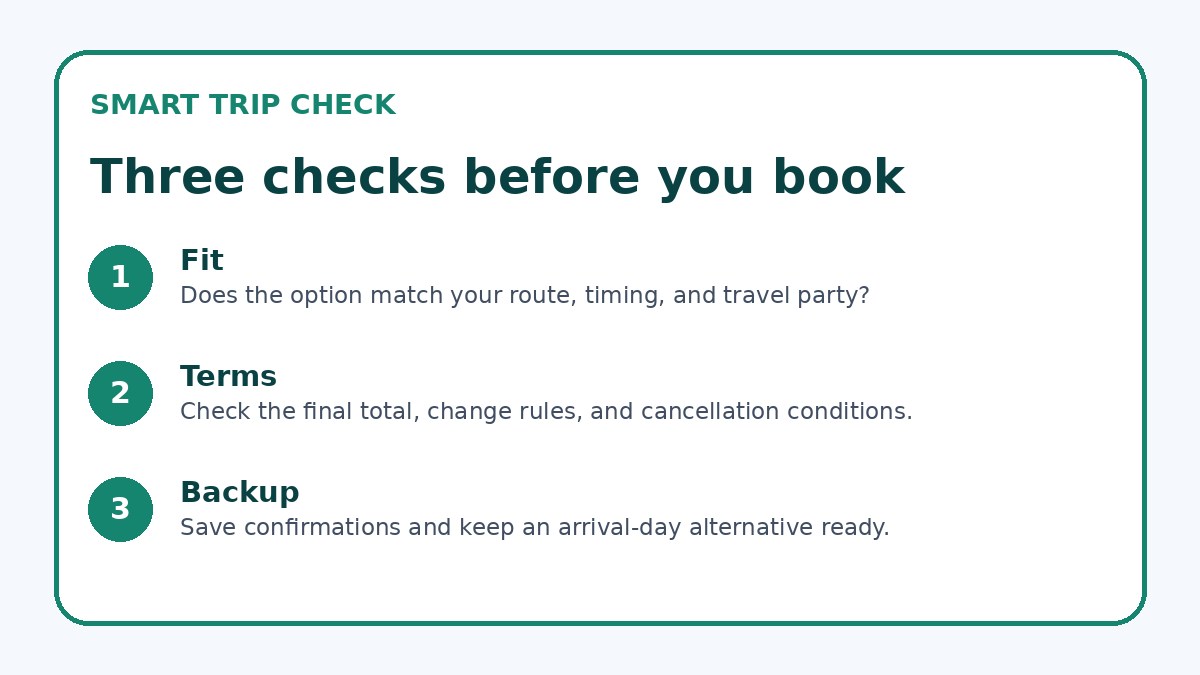
Create a short, practical backup plan before you leave. Choose one alternative that you can switch to with minimal stress: a later train on the same route, a coach from a nearby terminal, or a taxi for the critical final leg. Note how long it takes to reach the alternate terminal from your hotel and whether you can book seats or tickets on short notice. If you have mobility needs or heavy luggage, also identify a taxi phone number or app that serves the terminal so you can skip additional transfers if necessary.
When provider-specific information matters — such as seat reservation policies, luggage allowances, or real-time availability — verify those details on the official booking page before you commit. For quick comparisons of current options and schedules you can consult sources like Trip.com, but always confirm directly with the rail, coach, or ferry operator for boarding times, baggage rules, and last-minute payment methods. Pack a printed or offline copy of your chosen alternatives and key station names in Japanese if possible to ease communication at terminals.
Rail & Intercity Transport questions travelers ask
How do I decide if a train or coach is better for my Osaka to Hiroshima trip?
Compare total door-to-door time and transfer complexity rather than only advertised travel times. If your hotel sits near a major rail station, trains may offer frequent departures and easier onward rail connections in Hiroshima. If a coach terminal is much closer to your hotel, the coach might save time and hassle despite a longer in-vehicle segment. Also consider luggage handling and elevator access; coaches often have straightforward curbside boarding while trains may require platform navigation. Finally, think about schedule flexibility: trains typically run more often, giving you more recovery options if you’re running late.
What should I pack or prepare for station transfers and luggage handling?
Bring luggage that you can handle across short stairs or platform gaps, or confirm elevator access at each station. Pack a small day bag with essentials in case checked or stored luggage is delayed. Carry printed or screenshot directions showing walking routes between terminals and the nearest taxi ranks. If you rely on mobility aids, contact station staff in advance where possible and arrive early to request assistance. Keep booking confirmations and station names in Japanese accessible to present at help desks or to taxi drivers.
If my planned service is disrupted, what is a realistic backup strategy?
Pick a single, simple alternative you can execute quickly: catch the next frequent train on the same corridor, walk or taxi to a nearby coach terminal, or use a booked taxi for the final leg. Before traveling, check how long it takes to reach the alternative terminal from your hotel and whether seats can be bought on short notice. Have operator contact info and a map screenshot handy to avoid waiting at ticket counters. If you need official rebooking or refunds, confirm the provider’s policy on their booking page or with their staff at the terminal.
Final decision note
Planning Osaka to Hiroshima transport for the first time becomes straightforward once you focus on door-to-door practicality: which terminal fits your location, how many transfers you can tolerate, where luggage handling will slow you down, and how flexible your schedule needs to be. Use mapping tools to measure real walking and transfer times, check station accessibility details, and prepare one clear backup option you can use without complex rebooking. Verify operator-specific rules and availability on the provider’s booking pages (and use comparison tools like Trip.com if helpful), and carry simple local-language directions for terminals and your final destination. With those steps, you’ll reduce transfer stress and choose the route that best matches your priorities.
Continue planning
Check current options and final conditions
Use the provider page to confirm live availability, the final total, cancellation terms, and every condition that matters to your trip.
This evergreen planning guide was created with AI-assisted drafting and a structured quality review. It does not display live prices, schedules, availability, visa guidance, or provider rankings. Verify current details before booking. Some links are affiliate links; we may earn a commission at no additional cost to you.