The practical choice in the first hour after landing is simple: match vehicle space to your luggage count, then lock in a clear pickup plan. If you’re returning to the airport with extra bags — whether coming back from a longer stay or leaving after a heavy shopping trip — decide immediately whether you'll use a ride-share, shuttle, private transfer, or taxi, and confirm pickup logistics and luggage capacity while you still have connection and accommodation details open. Hotels and hosts often help, but their vehicles may not fit multiple large suitcases. If your arrival is late, disrupted, or re-routed, prioritize a flexible option that offers wait-time allowances or easy rescheduling. This guide helps you choose by luggage/party size, arrival timing, meeting-point clarity, and whether your accommodation’s driveway or local streets can handle the vehicle you need.

Check options for your arrival details
Use your flight, luggage, party size, and accommodation address to compare current choices.
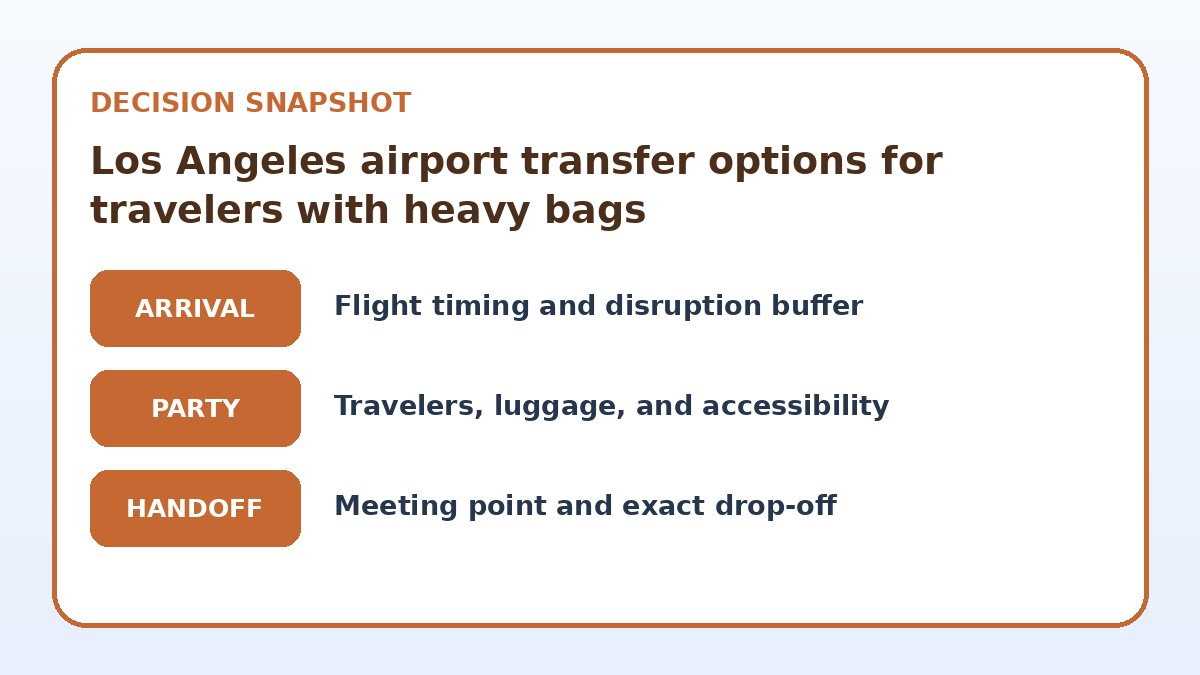
Luggage and party size: pick the right vehicle
Start by listing every piece of luggage by type and size: hard-case checked bags, duffels, soft totes, and oversized items like skis or strollers. Translate that list into trunk volume and cabin needs. If you travel with three large suitcases and two backpacks, a standard sedan will feel cramped and may require bags on laps or in the rear cabin, which is uncomfortable and complicates loading. A larger SUV or minivan typically offers both trunk space and the ability to stow items inside the cabin, easing transfers and protecting fragile items from being crushed.
Also factor passengers’ comfort and accessibility needs: elderly travelers, kids, or anyone with limited mobility may need a vehicle with easier step-in height and room for a booster or wheelchair. When booking, specify exact luggage counts and any bulky items so the supplier or driver can confirm suitability. If using an app-based service, choose the vehicle class (large, XL, van) that matches your list rather than assuming the default option will fit. Confirm whether the driver can help load and unload heavy bags, and plan for a little extra time at pickup for careful handling.
Arrival details to have ready
- Count and list each bag (large, carry-on, duffel, special items) and note who will carry which piece at pickup.
- Measure or estimate bulky items and state exact quantities when you book a vehicle class (XL, van, minivan) to confirm fit.
- Confirm pickup location with the driver or operator in writing and send a clear photo of the meeting spot from your accommodation.
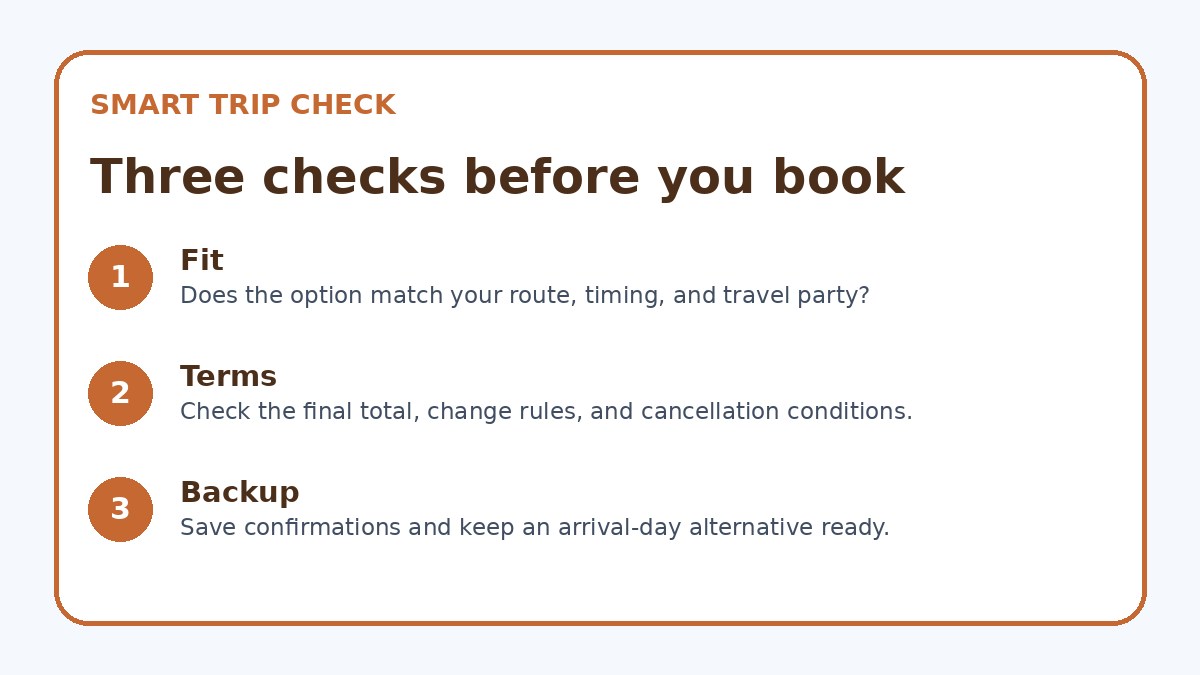
- Check the provider’s wait-time, change, and cancellation terms on their final booking page before you finalize payment.
- Plan your buffer time to the airport based on traffic windows and terminal drop-off rules; add 20–40 minutes for loading heavy luggage.
- Keep both digital confirmations and a printed copy of pickup details, plus a reachable phone number for the driver or operator.
Late or disrupted arrivals: build flexibility
If your return picks start around common disruption windows—late-night flights, holiday heavy traffic, or connections that can change—choose a transfer option that allows rescheduling or has a reasonable wait policy. Some services will hold a booking without charge for a limited window, while others require rebooking. When a flight is late, apps that track flight status can alert the driver automatically; with private operators or taxis, you’ll want a clear contact number. Always confirm how long a driver will wait without extra fees and what happens if your flight diverts to another airport.
An added layer of protection is a backup plan: if your primary transfer cancels or can’t reach you due to traffic or closures, know the nearest alternative pickup options—hotel concierge-arranged vans, a nearby short-term parking curb, or a reputable rideshare zone. Keep both digital and printed confirmations accessible, and ensure your phone number is reachable. If you anticipate severe delays, consider booking a service with explicit flexibility or a provider who accepts last-minute changes; verify change and cancellation terms on the booking page before you commit.
Match the transfer to your arrival
| Arrival approach | Best for | Detail to verify |
|---|---|---|
| Rideshare (large/XL vehicle) | Flexible pickups with moderate to heavy luggage for small groups needing on-demand service. | Driver may have limited assistance and variable trunk space; surge pricing and pickup restrictions can complicate late-night returns. |
| Private pre-booked transfer (van or SUV) | Groups with many suitcases or bulky items wanting guaranteed space and driver assistance. | Less flexible for last-minute schedule changes and usually requires booking details in advance; confirm wait-time rules. |
| Hotel-arranged shuttle or taxi | Convenience when staying at hotels that manage pickups and know local drop-off rules. | Shuttle vehicles may have fixed routes or limited capacity; hotel cars sometimes can’t handle oversized loads—verify vehicle size. |
| Public shuttle or shared airport bus | Budget-conscious travelers with manageable luggage and time to spare. | Multiple stops and limited luggage handling; shared services can be slower and less suited to oversized items. |
Make the meeting plan clear
Check the final pickup instructions, waiting conditions, and exact drop-off coverage.
Meeting-point clarity: avoid wasted time and heavy lifts
Ambiguity about where to meet costs time and energy—especially with heavy bags. Confirm a specific, easily describable meeting point: the hotel lobby door, a marked loading zone, or a short stair-free curb. If your accommodation sits on a narrow street or a gated property, give exact pickup instructions and note any access codes, restricted hours, or parking limitations. Share these details with the driver and keep a phone handy for last-minute coordination. When a driver must circle while you wrestle with luggage, it’s stressful and often triggers additional charges.
If you’re staying in a complex or short-term rental without a front-desk, arrange a visible landmark for the driver and allow a few extra minutes for bag transfer. For large groups, pick a single point where luggage can be grouped and loaded efficiently. Photograph the pickup area and, if possible, send the photo to the driver in advance. For airport departures, identify the closest permitted drop-off zone at your departing terminal—some hotels and streets prohibit stopping, and drivers will prefer a legal, quick-loading location to avoid fines.
Destination-side drop-off fit: direct terminal or curb strategy
When returning to Los Angeles airports, decide whether you need direct terminal drop-off or can handle a short walk from a designated curb or passenger pick-up area. Direct curbside drop-offs are fastest for heavy luggage but may have strict traffic rules or temporary closures; some operators can drop you off right outside the airline terminal, while others only use nearby staging areas. If you have a lot of bags or mobility concerns, prioritize a service that confirms the exact terminal entrance it will access to avoid long walks with heavy cases.
Also consider time-of-day traffic and security checkpoints near terminals. If you’re traveling during peak periods, allow extra time for slow airport roads and queueing at departures. For regional airports around Los Angeles, verify drop-off zones—some require a short shuttle from the curb to the terminal building. Before booking, check the provider’s terminal access policy and confirm whether they include assistance with baggage to the airline counter. If the booking page isn’t explicit, ask the operator directly so there are no surprises at drop-off.
Airport Transfer & Local Mobility questions travelers ask
How many large suitcases can a typical rideshare XL or van carry to Los Angeles airports?
Rideshare XL or van classes vary by vehicle model; some vans carry four to six large suitcases while an XL SUV might handle two or three plus backpacks. Don’t assume capacity—always state the exact number and size of suitcases when requesting a vehicle. If the app doesn’t let you specify oversized items, call or message the driver after matching or choose a pre-booked private transfer that lets you confirm trunk space. Verify on the provider’s booking page whether bulky items like sports equipment are accepted and whether the driver will assist with loading.
What should I do if my flight is delayed and my driver says they can’t wait?
If a delay means your driver can’t wait, first check the booking terms for wait-time windows and rebooking options. Contact the operator directly to request an extension or a new pickup time; some services allow one free reschedule within a certain limit. If that fails, switch to an on-demand rideshare or taxi at the airport, but expect limited vehicle availability for oversized loads. Keep your reservation confirmation handy to show any penalties or change policies, and consider booking a more flexible provider next time if you anticipate frequent flight timing changes.
Can hotels or short-term rentals legally allow curbside pickups for large vans in Los Angeles?
Policies differ by property and by street; many hotels have designated loading zones or private driveways where pickups are allowed, but some residential streets or gated communities restrict commercial vehicles or curbside stopping. Always ask the property host or front desk for permitted pickup locations and any necessary access codes or loading-window restrictions. If the accommodation cannot legally host a van at the curb, arrange a nearby legal loading point and share clear directions with your driver. Verify any specifics with the host and the driver before arrival to avoid surprise refusals or parking citations.
Final decision note
Planning your Los Angeles airport transfer when you have extra luggage reduces stress and prevents last-minute scrambles. Start by inventorying your bags and choosing a vehicle class that fits that inventory and your party’s comfort needs. Favor services that allow clear pickup instructions and some flexibility for delays, and always confirm wait-time and change policies on the provider’s booking page. Designate an exact meeting point and tell the driver how many hands will help carry bags, then allow extra time for loading and airport queues. With a bit of preparation—measured luggage counts, clear directions, and a backup option—you’ll reach the terminal smoothly and leave time to relax before your flight.
Continue planning
Check current options and final conditions
Use the provider page to confirm live availability, the final total, cancellation terms, and every condition that matters to your trip.
This evergreen planning guide was created with AI-assisted drafting and a structured quality review. It does not display live prices, schedules, availability, visa guidance, or provider rankings. Verify current details before booking. Some links are affiliate links; we may earn a commission at no additional cost to you.