If you’re traveling to Sydney with extra luggage, the simplest way to decide whether to rent a car is to start with the practical question: will driving remove more friction than it creates? A car can simplify moving bulky bags between airport, accommodation, and day trips, but pickup and return rules—airport lot access, luggage handling, vehicle inspection, and timed returns—often determine the real cost in time and stress. This guide gives the short answer up front: rent a car if your itinerary requires frequent door-to-door moves or remote stops where public transport and taxis would struggle with bags; otherwise plan a non-driving fallback. Below you’ll find a focused checklist of what to verify on booking pages, how to read insurance wording for baggage, what pickup and return friction looks like in Sydney, and four mobility approaches to compare for your trip.
Route value: when the drive is worth your extra bags
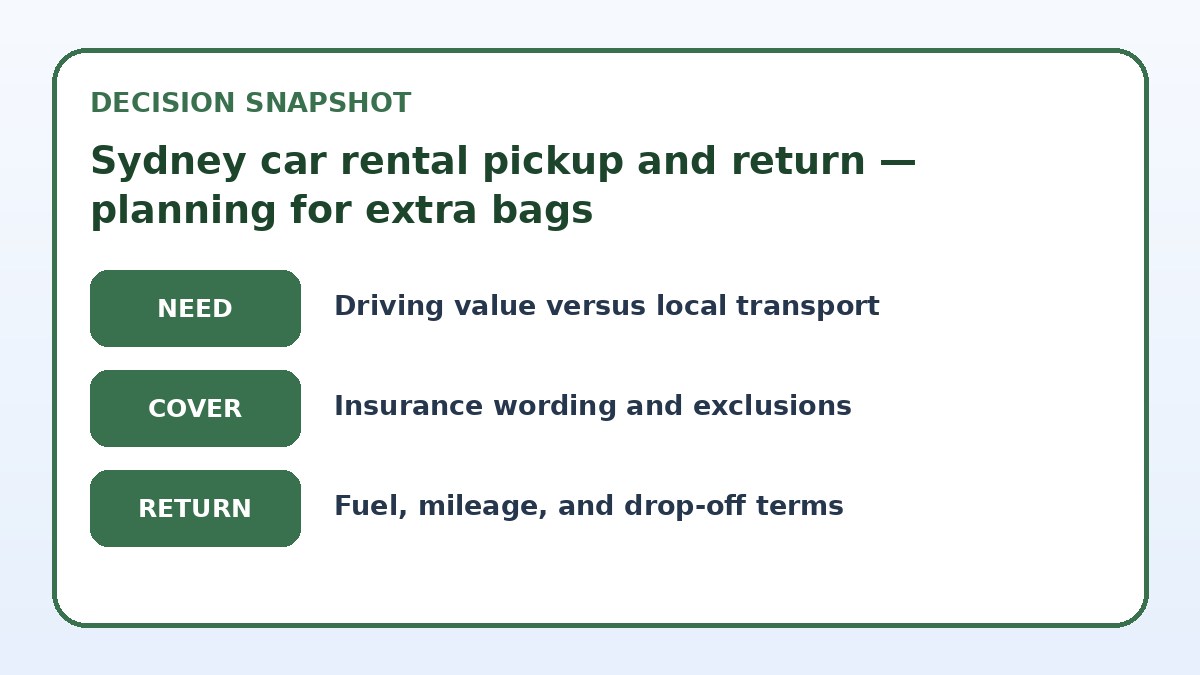
Assess the value of driving by mapping the number of bag moves and the character of destinations. A car pays off when you have several transfers between separate accommodations, plan day trips to coastal or rural spots outside public transport reach, or carry bulky gear—surfboards, musical equipment, or lots of checked luggage. Consider where you’ll park at each stop: inner-Sydney parking can be expensive or restricted, while some coastal towns offer free parking near beaches. Weigh the time savings of door-to-door travel against parking searches and loading/unloading at each stop.
Also think about the type of roads and distances. Short hops within the CBD normally don’t justify a rental if you can use rideshare with trunk space or scheduled luggage-friendly shuttle services. Conversely, routes along the Grand Pacific Drive, Royal National Park, or to the Blue Mountains make a rental more attractive because public transit is slower and less frequent. Finally, factor in flexibility: a car lets you alter plans mid-trip without hauling luggage through stations or relying on others’ timetables.
Decide whether driving earns its place
| Mobility strategy | Best for | Cost or friction to check |
|---|---|---|
| Full rental car for entire trip | Travelers making multiple moves, remote day trips, or regularly transporting bulky gear. | Higher cost for parking, fuel, and inspection time; must manage airport pickup and return logistics with luggage. |
| Short-term rental for specific transfers | Those who only need a vehicle for a day or two to move luggage between accommodations or reach a single remote location. | Saves parking costs and hassle but adds two pickups/returns that must be timed to avoid fees. |
| Public transport plus occasional taxi/rideshare | City-centered itineraries with limited luggage or when stations are close to your stops. | Less control over timing and space for bulky items; repeated luggage handling on trains and platforms. |
| Shuttle/courier for luggage and local transit for people | Travelers who want to avoid driving and reduce physical handling of heavy bags between points. | Adds planning to coordinate courier pickups and limits spontaneity; costs vary and require advance booking. |
Check live rental choices only after the route test
Use the exact driver, dates, pickup point, and return plan to compare current conditions.
Insurance wording for baggage and liability
Insurance and excess rules can be decisive when you’re carrying valuable or bulky luggage. Rental contracts usually focus on vehicle damage, collision excess, and third-party liability, but coverage for personal belongings inside the vehicle is often limited or excluded. Before confirming a booking, read the insurance section on the provider’s final page: look for explicit wording on personal effects, whether theft from a locked vehicle is covered, and any exclusions for roof boxes or unfastened cargo. If the provider’s page is unclear, request written confirmation via email.
Consider whether your travel credit card or home insurance covers personal baggage in rental cars and what documentation they require for a claim. Many travelers buy supplemental policies that explicitly include personal effects inside a rental vehicle for the trip’s duration. Note also that some insurers void coverage if you leave valuables in plain sight or fail to lock the vehicle—clear rules you should follow while loading, parking, and returning the car.
Compare the full rental conditions
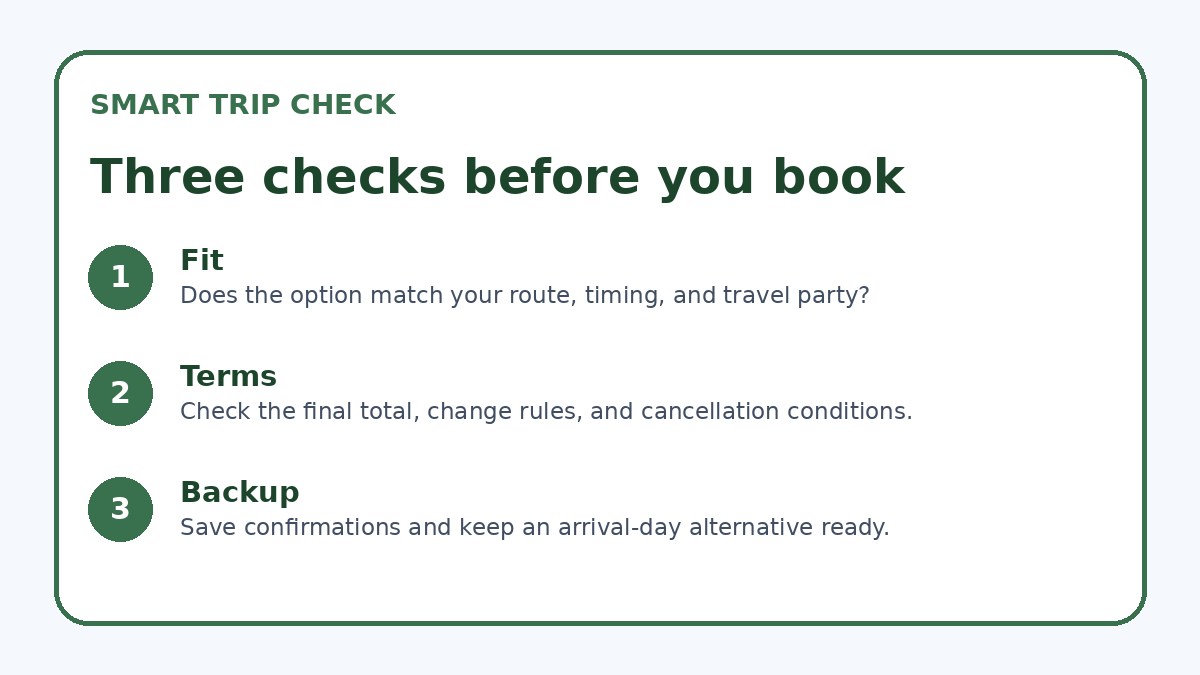
Confirm insurance wording, exclusions, deposit, fuel, mileage, and return terms on the final page.
Pickup and return friction: what to expect at Sydney locations
Pickup friction centers on where and how you collect the car with your luggage. At Sydney Airport, rental desks and collection lots can be off-terminal, requiring a shuttle or dedicated pickup point; confirm whether luggage assistance is available and whether the shuttle can accommodate oversized items. For city pickups, verify whether the office has stairs or narrow entrances that complicate moving suitcases. The booking page should state the exact pickup address, required ID, and any checklist for vehicle size or special equipment such as child seats or roof racks.
Return friction often includes inspection and timing rules. Companies typically perform a walk-around check and may charge for perceived damage or missed cleaning; with extra luggage, scuffs on boot linings or interior marks occur more frequently. Note the provider’s policy on return windows and grace periods, where late returns can trigger hourly or daily fees. If returning at the airport, allow extra time for shuttles and luggage drop-off; for city depots, confirm public transport or taxi access if you don’t want to leave bags unattended during inspection.
Car rental terms to verify
- On the booking page, confirm the exact pickup and return addresses, including whether the airport location is off-site and requires a shuttle.
- Verify the vehicle size and boot capacity are listed or request measurements so your luggage fits without blocking visibility or seat operation.
- Read the insurance and personal effects wording on the provider’s final page; get written confirmation if baggage coverage is ambiguous.
- Ask how the company documents pre-existing interior damage and whether they provide a signed checklist or photos at pickup.
- Note the depot’s allowed return window and any grace period; plan buffer time for luggage transfer and shuttle waits to avoid late fees.
- If using rooftop boxes or external racks, ensure the booking permits them and record any additional charges or restrictions in writing.
Non-driving fallback: when not to rent and viable alternatives
If your stay is concentrated in the CBD, or if public transport links efficiently connect your planned destinations, consider a non-driving plan. Trains, light rail, and ferries in Sydney can handle regular luggage if you travel off-peak; rideshare and taxis are practical for single transfers and can be cheaper once parking and fuel are accounted for. For heavier gear, look into private airport-to-hotel shuttle services that accept large suitcases and sports equipment or book a courier baggage transfer between accommodation points to avoid hauling bags on public transport.
Another fallback is a mixed approach: a short-term rental for one or two days when you need to transport luggage between locations, combined with public transport for the remainder. This reduces pickup/return overhead and parking stress. When planning a fallback, list the exact stations, shuttle pickup points, and trunk size limitations for taxis or rideshares. If you need to compare live options quickly, you can check availability on Trip.com, but always verify supplier details on the provider’s final booking page.
Car Rental & Road Trip questions travelers ask
Will rental companies let me store luggage in the car overnight or during inspections?
Policies vary. Many companies discourage leaving personal belongings unattended in a rental, and some explicitly prohibit storage during maintenance or inspection windows. Always check the provider’s terms on the final booking page and ask staff at pickup whether leaving luggage in a parked, locked vehicle is permitted, and under what conditions. If you must leave bags temporarily, record their condition and ask for a receipt or note from staff to reduce disputes later.
How do I prove damage wasn’t caused by my luggage during return inspections?
Document the vehicle thoroughly at pickup: take time-stamped photos (boot interior, floor mats, seats, and door sills) and request a signed vehicle condition form if available. When returning the car, be present for the inspection, compare the items noted at pickup, and ask for written evidence if the company cites new damage. If a dispute arises later, photo timestamps and the signed condition report are your strongest evidence for contesting charges with the provider or your insurer.
Can I add roof racks or a rooftop cargo box for bulky luggage?
Many providers permit roof racks or cargo boxes but require them to be listed on the reservation and may charge extra or restrict installation locations. Verify on the provider’s final booking page whether rooftop equipment is available, whether staff fit it at pickup, and how its use affects insurance or damage liability. If the option isn’t offered online, call the depot before booking; any additional fees or restrictions should be confirmed in writing.
Final decision note
For travelers with extra luggage, the decision to rent a car in Sydney hinges on whether driving solves more problems than it creates. If your trip involves multiple transfers, remote day trips, or bulky gear, a rental gives control and convenience—provided you confirm pickup locations, boot capacity, insurance wording for personal effects, and return inspection protocols on the final booking page. If your schedule is city-centered, a short-term rental or non-driving solutions like taxis, shuttles, or couriered luggage often cut costs and reduce friction. Use the checklist above at booking, take detailed photos at pickup, and if you need to compare live availability or depot details quickly, Trip.com can be a starting point—but always verify provider specifics directly before you commit.
Continue planning
Check current options and final conditions
Use the provider page to confirm live availability, the final total, cancellation terms, and every condition that matters to your trip.
This evergreen planning guide was created with AI-assisted drafting and a structured quality review. It does not display live prices, schedules, availability, visa guidance, or provider rankings. Verify current details before booking. Some links are affiliate links; we may earn a commission at no additional cost to you.