Decide the neighborhood first, then the hotel. That simple rule will save families hours of daily friction in Tokyo. Pick a base close to the activities you plan — museums and parks for young kids, central transit for a multi-district agenda, or quieter residential areas if naps and calm evenings matter. Once you have a shortlist of neighborhoods, you can compare room layouts, bedding options, elevator access, and proximity to convenience stores and pediatric care. This guide helps you choose the right area by weighing walkability, transit convenience, evening noise, and room needs so you can shortlist one neighborhood before checking live inventory on booking sites or Trip.com.

Check live stays in the areas that fit
Use your dates and party size to compare current rooms after you narrow the neighborhood fit.
Neighborhood fit: which Tokyo area matches your family’s priorities?
Start by matching what your family expects from each day in Tokyo to neighborhood personalities. If your kids love hands-on science and wide open spaces, prioritize access to large museums, planetariums, and parks. If your plan is to hop between varied neighborhoods—temples, shopping, and themed cafés—choose a central hub with multiple transit lines. For families with very young children or anyone who needs predictable bedtimes, quieter residential wards can provide calmer nights and nearby convenience stores for quick meals and baby supplies.
Treat each neighborhood as a tradeoff between daytime convenience and evening comfort. Areas near major attractions reduce transit time but can be noisy after dark; residential districts deliver calm but add travel to headline sites. Consider small details like the presence of family-friendly restaurants, diaper supply stores, and playgrounds within walking distance. Mapping a sample day from potential neighborhoods—breakfast to bedtime—will reveal whether a location truly fits your family rhythm before you examine hotel rooms.
Choose an area-selection strategy
| Area approach | Best for | Tradeoff to check |
|---|---|---|
| Stay near major attractions (tourist districts) | Families who want short walks to museums and theme spots | Higher evening noise and busier streets may complicate naps and early bedtimes |
| Stay near major transit hubs (central stations) | Families planning multi-district day trips and efficient transfers | More crowding and longer hotel check-in lines; rooms may be smaller |
| Stay in quiet residential neighborhoods | Families prioritizing calm nights and local convenience | Longer transit to headline attractions, requiring more planning per outing |
| Stay in family-oriented hotel zones (near parks/children’s facilities) | Families wanting immediate playgrounds, museums, or kid-focused amenities | Fewer late-night dining or shopping options compared with central districts |
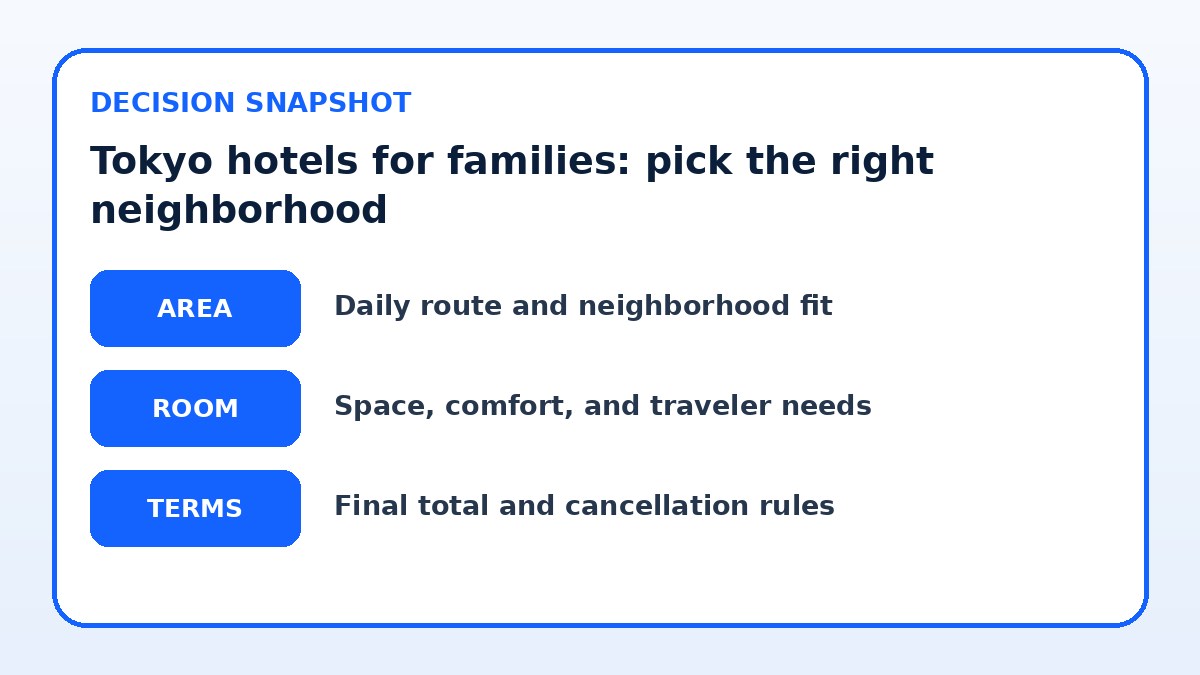
Daily-route friction: assess how easy each neighborhood makes your typical day
Daily-route friction is the cumulative waste of time and energy from walking, transfers, and repeated returns to your hotel. Measure it by imagining common sequences: hotel to museum, then to lunch, back to the hotel for a nap, then a nearby park and dinner. Neighborhoods with frequent subway or JR lines reduce transfer stress; those with pedestrian-friendly streets and short walks between conveniences save stroller energy. Avoid hotels that require long station walks or steep stairs with luggage—those minutes add up on an outing with small children.
When comparing neighborhoods, look beyond a single commute and consider midday returns, grocery runs, and emergency detours. Count transfer points when you move between lines and note whether transfers are on the same level or require stairs and escalators. Also check whether late-night options exist for easy meals after a long day—convenience stores and casual family restaurants within walking distance matter more than headline attractions when a toddler needs an early bed.
Now compare like with like
Keep the same dates, guests, room needs, and cancellation preferences while you compare the final choices.
Room and party needs: picking hotel types and layouts that work for families
Room configuration is a decisive factor for comfort. Families often benefit from rooms with separate sleeping areas, a sofa bed, or connecting rooms so adults and children can keep differing schedules. Look for explicit descriptions of bed types and room square footage on the booking page and confirm whether rollaway beds or cribs are available. If you plan to prepare small meals, verify whether the room has a refrigerator, microwave, or kitchenette and whether the hotel permits simple food preparation.
Also evaluate hallway and elevator logistics: stroller-friendly elevators, low curb thresholds, and wide corridors reduce stress when moving with gear. Noise insulation is another often-overlooked detail—ask whether rooms face inner courtyards versus busy streets if a child’s sleep is sensitive. Lastly, double-check cancellation, child occupancy policies, and whether extra guest fees apply; these terms can vary by room type and change the cost-effectiveness of booking a single larger room versus two smaller rooms.

Hotel booking check before payment
- Map one typical day from each candidate neighborhood: hotel to morning activity, midday return, afternoon outing, and dinner, then score convenience.
- Confirm exact bed types and maximum occupancies on the hotel’s booking page and request crib or rollaway availability in writing.
- Ask the hotel about elevator dimensions, stroller access routes, and any stairs between street and lobby before arrival.
- Verify breakfast options and child pricing, or identify nearby early-opening restaurants and convenience stores for backup.
- Check the hotel’s cancellation, early check-in, and late-checkout policies to ensure flexibility around nap schedules and travel delays.
- Compare two nearby neighborhoods on a map for evening noise sources (main roads, nightlife streets) and proximity to emergency services.
Final booking terms: what to verify on the hotel page before you commit
Before you click book, verify the facts that most affect family travel: the explicit number of beds and their sizes, crib or rollaway availability, elevator access, and whether breakfast options suit young children. Don’t rely on stock photos alone—read the room description and fine print and confirm policies about extra guests, children’s breakfast charges, and check-in/check-out flexibility. If you need specific accessibility features or have a medical requirement, contact the hotel and ask for written confirmation that the room meets your needs.
Also inspect location details: which station exits are closest and whether the hotel lists an accessible route from those exits. When provider-specific facts could change—such as shuttle services, early check-in, or housekeeping schedules—note that you must verify these on the hotel’s final booking page or by contacting the property. Trip.com can be used to compare current availability and terms, but always confirm the crucial family-related details directly with the hotel before finalizing.
Hotel Guide questions travelers ask
Which Tokyo neighborhood is best for toddlers who need frequent naps?
For toddlers who nap regularly, prioritize quieter residential wards or parkside neighborhoods where hotels tend to be calmer at night. These areas reduce traffic noise and late-night crowds, making midday returns and predictable bedtimes more manageable. Choose hotels that advertise quiet-room options, inner-courtyard views, or soundproofing and confirm floor level—low floors can be easier with a stroller. Finally, check proximity to convenience stores and pharmacies for easy access to quick meals or supplies between naps.
Is it better to book one family room or two separate rooms in Tokyo hotels?
Deciding between one family room and two separate rooms depends on your family’s sleep habits, privacy needs, and budget flexibility. One larger room or connecting rooms keep everyone together for shorter night checks and make daytime naps simpler, but may lack adult privacy. Two rooms offer separation for different bedtimes but add coordination for wake-ups and belongings. Compare actual bed layouts and any extra guest fees on the hotel’s booking page before choosing; verify whether connecting rooms are guaranteed or subject to availability.
How can I reduce transit stress when staying in Tokyo with children?
Reduce transit stress by choosing a neighborhood with frequent, level transfers and short walks between station exits and your hotel. Favor stations served by multiple lines to cut transfer complexity and avoid long platform changes. Bring a lightweight stroller for busy platforms and pack essential items in a small day bag for quick access. When planning routes, account for midday hotel returns and check whether nearby exits have elevators or ramps; if unsure, confirm accessible routes with the hotel ahead of arrival.
Final decision note
Choosing where to stay in Tokyo for a family trip starts with neighborhood selection, not individual hotels. When you match daily priorities—nearby attractions, transit flexibility, or quieter nights—with the neighborhood personality, picking the right hotel becomes a matter of room layout and logistics, not a leap of faith. Use the comparison framework here to shortlist one or two neighborhoods, then verify room details, accessibility, and family policies on the provider’s booking page. For live availability and comparative listings you can check Trip.com or the hotel directly, but always confirm bedding, elevator access, and cancellation terms before you finalize.
Continue planning
Check current options and final conditions
Use the provider page to confirm live availability, the final total, cancellation terms, and every condition that matters to your trip.
This evergreen planning guide was created with AI-assisted drafting and a structured quality review. It does not display live prices, schedules, availability, visa guidance, or provider rankings. Verify current details before booking. Some links are affiliate links; we may earn a commission at no additional cost to you.