Decide where to base your family in Busan by focusing first on transport convenience rather than hotel brand alone. If you plan to mix beach days, market visits, and museum time, a hotel near a major subway line or bus hub will reduce daily friction and keep young travelers happier. For families, convenience means fewer transfers with luggage and stroller access, predictable morning routes to attractions, and easy returns after long days. Start by selecting one of the transport-centered neighborhoods below, then move on to room size, child-friendly amenities, and cancellation policies. This article helps you shortlist an area, compare tradeoffs between neighborhoods, and prepare the checklist and questions to ask on the booking page before you confirm.

Check live stays in the areas that fit
Use your dates and party size to compare current rooms after you narrow the neighborhood fit.
Neighborhood fit: which transport hub matches your family plan
Match the district to your itinerary before you open hotel inventory. If your days will center on beaches and waterfront parks, choose a hotel near a coastal station or bus line; if museums and markets are priorities, seek a base with easy connections to central subway interchanges. Families traveling with elders or infants should favor areas that concentrate services—supermarkets, pharmacies, and casual restaurants—within a short walk from the hotel so you can avoid repeated long transit runs.
Think about arrival and departure logistics too. Some neighborhoods have convenient long-distance bus terminals or are closer to ferry piers, which can matter if you plan island trips or land transfers. If you expect several short outings with small children, weight the neighborhood’s walkability and frequency of buses and taxis at off-peak times; a slightly longer subway ride might be acceptable if it means fewer transfers and a simpler walk from station to hotel.
Choose an area-selection strategy
| Area approach | Best for | Tradeoff to check |
|---|---|---|
| Stay near major subway interchange | Families who plan broad sightseeing and value quick cross-city access | More crowds and potentially less of a neighborhood feel; hotels may be on busy streets |
| Choose a beachfront station area | Families prioritizing beach days and easy water-access outings | Longer rides to inland attractions and possible seasonal crowds on weekends |
| Base near a long-distance bus or ferry terminal | Families with onward island trips or intercity bus transfers | Fewer local leisure options within walking distance; attention to terminal noise |
| Pick a quieter residential district close to a single line | Families preferring calmer evenings and local convenience stores | Requires planning for transfers to multiple attractions and possibly longer travel times |
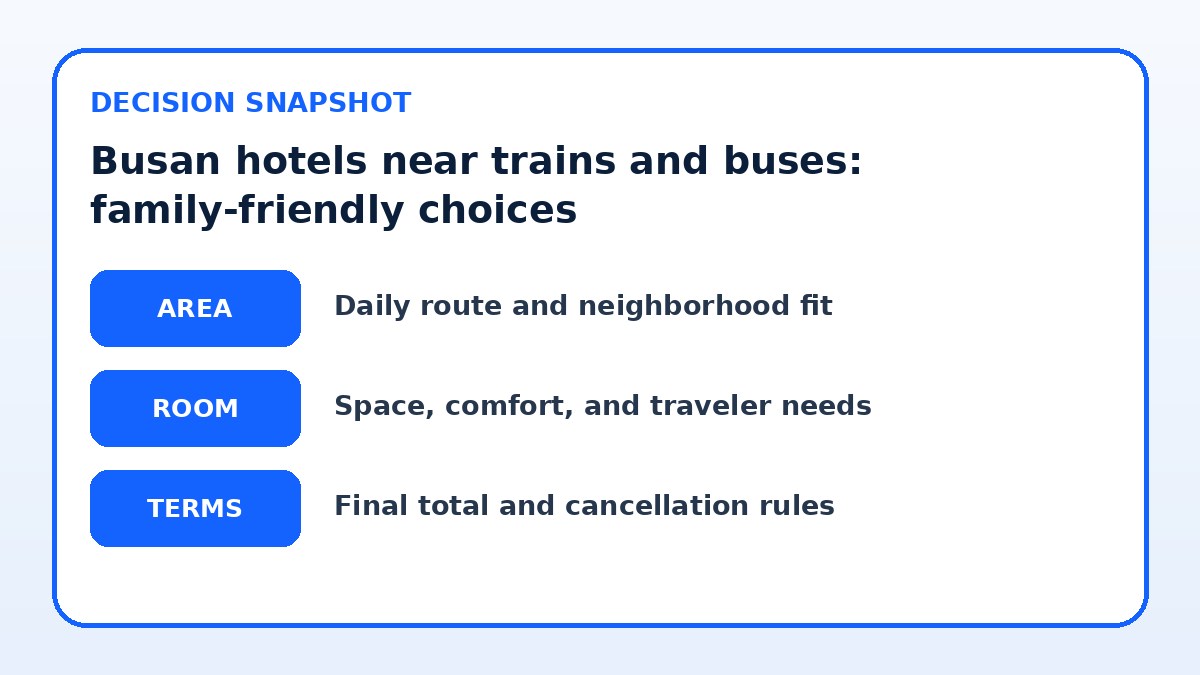
Daily-route friction: minimizing transfers, stairs, and wait times
Count transfers and stair climbs as friction points. A one-transfer subway ride is usually manageable; two or more transfers with strollers and tired kids quickly becomes unpleasant. Look at station maps and identify exits with elevators—many subway stations have multiple exits and only some are accessible. When you find a hotel you like, ask the property which station exit they recommend and whether that exit has elevator or ramp access.
Also plan for schedules and peak crowding. Morning and evening subway peaks, weekend tourist crowds near beaches, and reduced evening bus frequencies can all change how long a trip feels. For short trips across town, a reliable taxi fleet may be an acceptable backup; check whether your hotel can call a taxi for you or offer a meet-and-greet to reduce waiting time with children in tow.
Now compare like with like
Keep the same dates, guests, room needs, and cancellation preferences while you compare the final choices.
Room and party needs: space, sleeping arrangements, and family facilities
Decide your non-negotiables: do you need two rooms, a suite, or a single family room with extra beds? Many hotels label room types differently, so confirm bed configuration and any age rules for rollaway beds. If you have infants, ask about cribs or portable cots and whether these are complimentary or have a fee. For longer stays, a room with a small kitchenette or fridge can make snack and meal times easier and reduce outings with tired kids.
Beyond the room, look for family-friendly facilities that matter most: laundry access, a safe play area, or an on-site convenience store. Pool or play spaces can make downtime more pleasant, but balance that against the transport convenience tradeoff—sometimes the most family-friendly amenities sit away from the best-connected stations. Prioritize the services that will save you time and stress during the day rather than those that are merely nice-to-have.
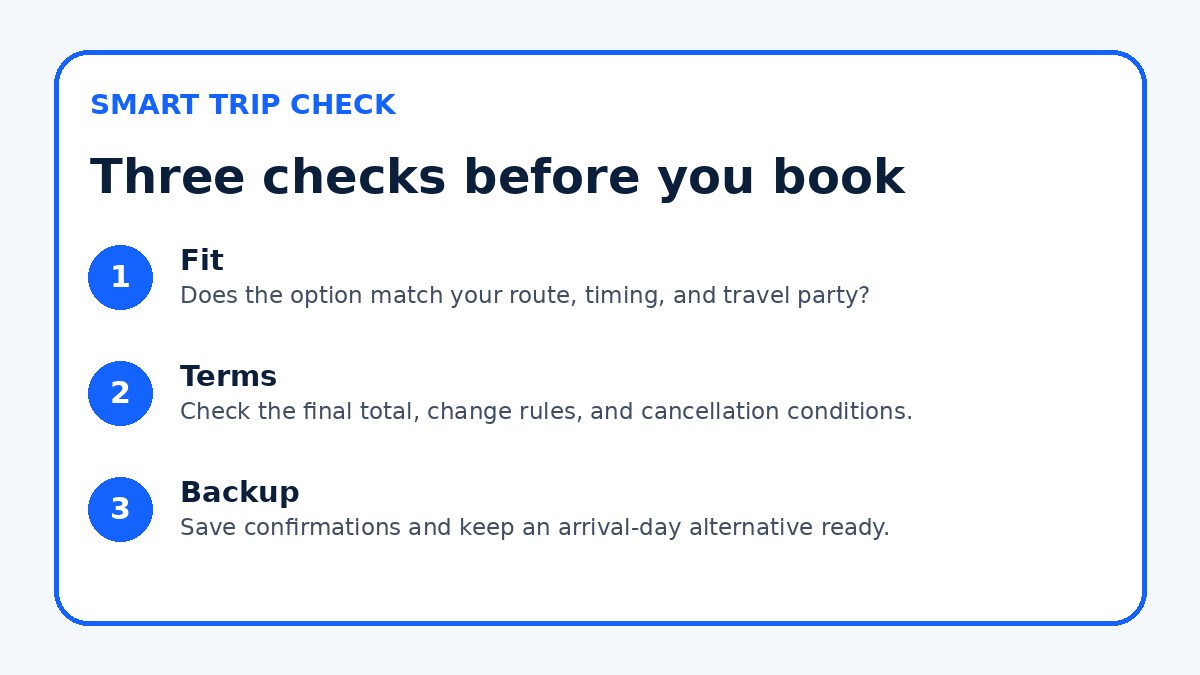
Hotel booking check before payment
- Confirm the hotel’s nearest subway station, recommended exit, and whether that exit has elevator access for strollers.
- Request specific room configurations in writing—bed types, rollaway or crib availability, and any additional guest fees.
- Ask the hotel about luggage-hold policies for early arrivals or late departures and how they handle secure storage.
- Verify morning and evening public transport frequency near the hotel and whether taxis are readily available at night.
- Check on-site facilities important to your family: laundry, kitchenette, child-friendly dining, and a place to unwind.
- Compare cancellation and amendment rules on the hotel’s official page and save screenshots or confirmation emails before travel.
Final booking terms: what to verify on the hotel page
Before you book, verify the exact address and the subway exit or bus stop the hotel recommends for arrival. Confirm check-in and check-out windows, whether early check-in or late check-out is possible, and any luggage-holding policies. When it comes to family needs, ask the hotel to confirm bed types, crib availability, and any extra charges for additional guests so you avoid surprises at reception.
Also check cancellation and amendment policies directly on the hotel’s booking page and compare them across sites. If policies or fees are important for your trip flexibility, contact the property to get written confirmation. For current availability and to compare terms quickly, you can optionally check Trip.com, but always confirm the provider’s final cancellation terms and room rules on the hotel’s official listing before you commit.
Hotel Guide questions travelers ask
Which Busan neighborhoods are easiest for families who want to use public transport?
Areas clustered around major subway lines or interchanges are usually easiest for families because they reduce transfers to key sights. Neighborhoods near coastal stations can be convenient for beach days, while districts close to bus terminals suit families planning island trips. For each neighborhood you consider, check the specific subway exit accessibility and whether daytime and evening bus frequencies match your planned schedule. Confirm these operational details with the hotel or local transit sites before booking.
How should I compare hotels when traveling with a toddler or infant?
Prioritize elevator access, flat walks from station exits, and available cribs or portable cots. Look for hotels that can confirm bed arrangements and any extra-bed rules in writing. A nearby convenience store or supermarket and a quiet room location can make daily life easier. If you need to prepare baby food or store milk, a small fridge or kitchenette is helpful—ask the property to confirm amenities and any additional costs.
Is it better to prioritize transport convenience or on-site family amenities?
Balance depends on your itinerary. If you’ll be out most days exploring different parts of Busan, prioritize transport convenience to reduce commute time and transfers. If you plan many full days at the hotel—pool time, relaxation, or limited outings—then strong on-site amenities matter more. Often the right compromise is a well-connected neighborhood hotel that offers basic family facilities; use the checklist to confirm both transport details and the amenities that save time during your stay.
Final decision note
For families planning a Busan trip, start by choosing the neighborhood that best matches your daily rhythm—beach-focused, museum-heavy, or transfer-oriented—and prioritize stations with elevator exits and simple walks to the hotel. Once you have a short list of areas, compare room configurations, confirm crib and bed policies, and verify luggage and check-in arrangements on the hotel’s booking page. Use the checklist to make sure you’ve covered transport exits, room details, and cancellation terms before booking. With a neighborhood selected first, you’ll find it much easier to compare real rooms and pick the hotel that minimizes daily friction for your family.
Continue planning
Check current options and final conditions
Use the provider page to confirm live availability, the final total, cancellation terms, and every condition that matters to your trip.
This evergreen planning guide was created with AI-assisted drafting and a structured quality review. It does not display live prices, schedules, availability, visa guidance, or provider rankings. Verify current details before booking. Some links are affiliate links; we may earn a commission at no additional cost to you.