Decide where to stay first: pick the Toronto neighborhood that matches how your family likes to travel—short walks to sights, quieter mornings, or easier transit to kid-friendly museums and parks. If your days will revolve around a stroller-friendly waterfront, choose Harbourfront; if you want museums and elegant streets, Yorkville or the Museum District fits better. Prefer lots of green space and a residential feel for small children? The High Park and West End neighborhoods can be calmer and more kid-oriented. The Entertainment District and downtown are best when you want short transfers to CN Tower, Ripley’s Aquarium, and Union Station, but expect busier streets and taller hotels. Below you’ll find quick tradeoffs and a practical checklist so you can shortlist one area before opening hotel inventory and finalizing booking details.

Check live stays in the areas that fit
Use your dates and party size to compare current rooms after you narrow the neighborhood fit.
Neighborhood fit: who in your family will be happiest here?
Start by matching daily energy levels and ages to a neighborhood vibe. Families with toddlers and strollers often prefer flat, walkable streets and easy access to parks and splash pads; Harbourfront and the West End score highly for those needs. School-age children who enjoy museums, interactive exhibits, and quieter evenings may be happiest in Yorkville or the Museum District, where several institutions cluster together and streets feel more residential during the day.
If your family includes older kids or teens who want nightlife, sports events, and quick arrivals to tourist icons, the Entertainment District and downtown deliver shorter transfers to arenas and tourist sites. Consider noise sensitivity: downtown skyscrapers and busy streets can be louder into the evening. Finally, think about meal needs—neighborhoods vary in family-friendly dining options and kitchen-equipped accommodations, which matter on longer stays or for picky eaters.
Choose an area-selection strategy
| Area approach | Best for | Tradeoff to check |
|---|---|---|
| Waterfront/Harbourfront base | Families wanting easy lakefront walks and short stroller-friendly routes to island ferries | Fewer hotel choices and sometimes longer transfers to inland museums and attractions |
| Entertainment District / Downtown | Families prioritizing proximity to major attractions, Union Station, and evening events | Busiest streets, more noise, and potentially smaller room footprints in some towers |
| Yorkville / Museum District | Families focused on museum days, calm streets, and nearby cafés for quiet afternoons | Hills and busier weekend sidewalks; some attractions still require short transit rides |
| High Park / West End | Families who want green space, playgrounds, and a residential feel with lower traffic | Longer trips to downtown attractions and fewer large hotel chains or suites |
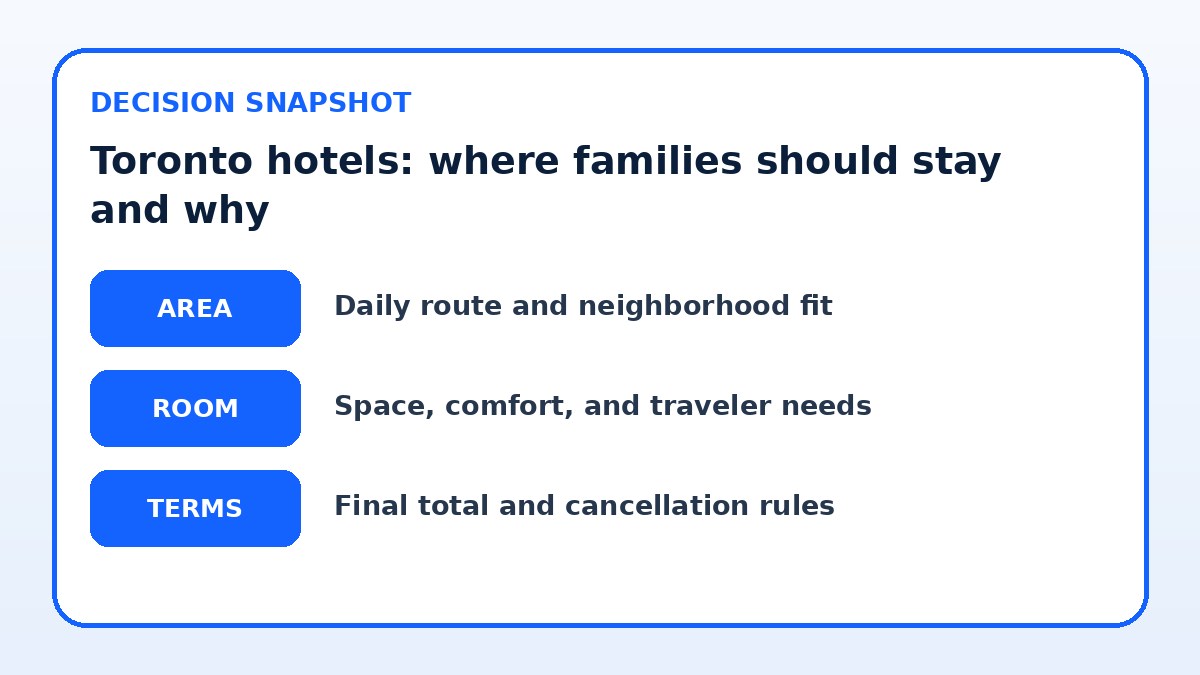
Daily-route friction: how much traveling will you actually do?
Map a typical day and estimate door-to-door movement rather than straight-line distance. Harbourfront limits daily friction if your plan is lakefront walks, ferry rides to Toronto Islands, and short subway or streetcar hops for one or two museum stops—most paths are stroller-friendly and flat. Downtown/Entertainment minimizes transfers to Union Station and many attractions but expect denser streets, which can slow stroller movement during peak times and large event days.
Yorkville and the Museum District put several top museums within short transit distance, but spread-out dining and shopping may require more walking or short taxi rides. High Park and the West End reduce everyday crowds and give direct access to playgrounds and bike paths, but trips to the CN Tower or aquarium will require longer transit time. For each neighborhood, identify one backup route—streetcar, subway, or taxi—that works with a stroller or small children.
Now compare like with like
Keep the same dates, guests, room needs, and cancellation preferences while you compare the final choices.
Room and party needs: choose a room type and building that works
Decide how many separate beds, kitchen facilities, and quiet hours your family needs. Hotel rooms in downtown and the Entertainment District often offer larger suites and elevated views but may lack full kitchens; consider booking a connecting room or a suite with a small kitchenette if you need space for naps or late bedtimes. Yorkville hotels and boutique properties sometimes have family suites or apartment-style rooms that are quieter and closer to museums—verify room layouts and whether rollaway beds or cribs are available on the booking page.
If you prefer to prepare snacks or simple meals for children, filter for rooms with kitchenettes or look at aparthotels in the West End and Harbourfront. Check bed configurations carefully: many hotel listings show maximum occupancy rather than whether beds are separate. Always confirm crib availability, any extra-person fees, and check-in/out flexibility on the provider’s final booking page so you won’t be surprised at arrival.

Hotel booking check before payment
- Sketch a typical day and time your family will spend travelling; shortlist neighborhoods that minimize those transfers.
- Filter hotels for room layouts showing bed configurations, sofa beds, and availability of cribs or rollaway beds.
- Verify on the hotel’s booking page any child fees, cancellation policy, and whether breakfast is included or available.
- Confirm elevator access, stroller-friendly entrances, and step-free routes from the street into lobbies and rooms.
- Check parking and drop-off procedures if you’ll have a rental car, including where to load and unload strollers.
- Ask the property in writing about noise levels, quiet-room availability, and any blackout dates tied to nearby events.
Final booking terms: what to verify before you secure the room
Before booking, confirm cancellation policies, check-in times, and whether the property charges extra for children or cots. Because hotel terms change, verify directly on the hotel’s booking page or on a reliable aggregator like Trip.com for current availability, policies, and any fees. Look for clear language about parking (important if you’ll rent a car), elevator access, and stroller storage—some smaller boutique hotels have limited elevator capacity or steps at the entrance.
Also confirm breakfast options and whether the property offers kid-friendly menus, microwaves, or fridge access in-room. If accessibility matters—for a wheelchair or for easier stroller movement—verify door widths, bathroom features, and elevator availability with the hotel before you finalize. Finally, ask about noise mitigation measures if you’re booking near arenas or busy streets; a quiet room request can sometimes be honored but should be confirmed in writing.
Hotel Guide questions travelers ask
Which Toronto neighborhood is easiest with a stroller and young children?
Harbourfront and parts of the West End are the most stroller-friendly because they offer flat, wide promenades and direct access to parks and the lakefront. Sidewalks near major downtown attractions can be narrower and busier, especially during event days, which makes manoeuvring a stroller harder. When choosing a property, check for step-free entrances, elevators, and distances from transit stops; verify on the hotel’s booking page whether the shortest route to the waterfront or park is level and suitable for pushing a stroller.
Is it better to stay downtown near Union Station or in a quieter neighbourhood for family trips?
Staying near Union Station reduces transit time to many attractions and is convenient for rail or airport transfers, but expect greater street noise and heavier foot traffic. Quieter neighbourhoods like Yorkville or the West End give calmer evenings and nearby parks, which may be preferable for families who plan several relaxed days rather than back-to-back sightseeing. Weigh how many long transit trips you’ll make each day; if most activities are scattered across the city, central access can save time despite the busier surroundings.
How can I compare Toronto hotels quickly to pick the right area for my family?
First, define priorities—easy transit, green space, or proximity to museums—and use those to narrow neighborhoods. Then filter listings for family-size rooms, crib availability, and kitchen facilities. Review the hotel’s stated accessibility features and policies on children; for any unclear points, contact the property directly and confirm details on their booking page. Optionally, compare current availability and terms on Trip.com to see live inventory, but always treat those listings as a starting point and verify final terms with the hotel.
Final decision note
Shortlist one neighborhood before hunting hotel rates: that choice shapes daily logistics, noise level, and whether your family spends time in parks or rushing between attractions. Harbourfront minimizes stroller friction and gives lake access; the Entertainment District shortens transit to major sights but brings more noise; Yorkville and the Museum District suit museum-focused, quieter days; and High Park/West End gives residential calm with longer downtown trips. Use the checklist to verify room layouts, elevator access, and cancellation rules on the provider’s booking page. Once you confirm those essentials, open live inventory to compare room types and finalize your booking with confidence.
Continue planning
Check current options and final conditions
Use the provider page to confirm live availability, the final total, cancellation terms, and every condition that matters to your trip.
This evergreen planning guide was created with AI-assisted drafting and a structured quality review. It does not display live prices, schedules, availability, visa guidance, or provider rankings. Verify current details before booking. Some links are affiliate links; we may earn a commission at no additional cost to you.