Deciding whether to rent a car in Sapporo often comes down to one practical question for couples: does driving meaningfully improve your plan, and are you comfortable with the insurance terms that come with it? For many couples, Sapporo’s compact city center, efficient public transport, and attractive nearby day-trip routes create a clear split: rent for flexibility to reach mountain scenery, coastal towns, or hot springs on your schedule; skip it if you prefer relaxing in the city and avoiding extra costs and paperwork. This article gives the short answer up front, then walks you through route value, how to read common insurance phrases on rental contracts, pickup and return frictions a couple should expect, and a reliable non-driving fallback plan. Read through and use the checklist at the end to verify specific policy language on the rental company’s final booking page before you commit.
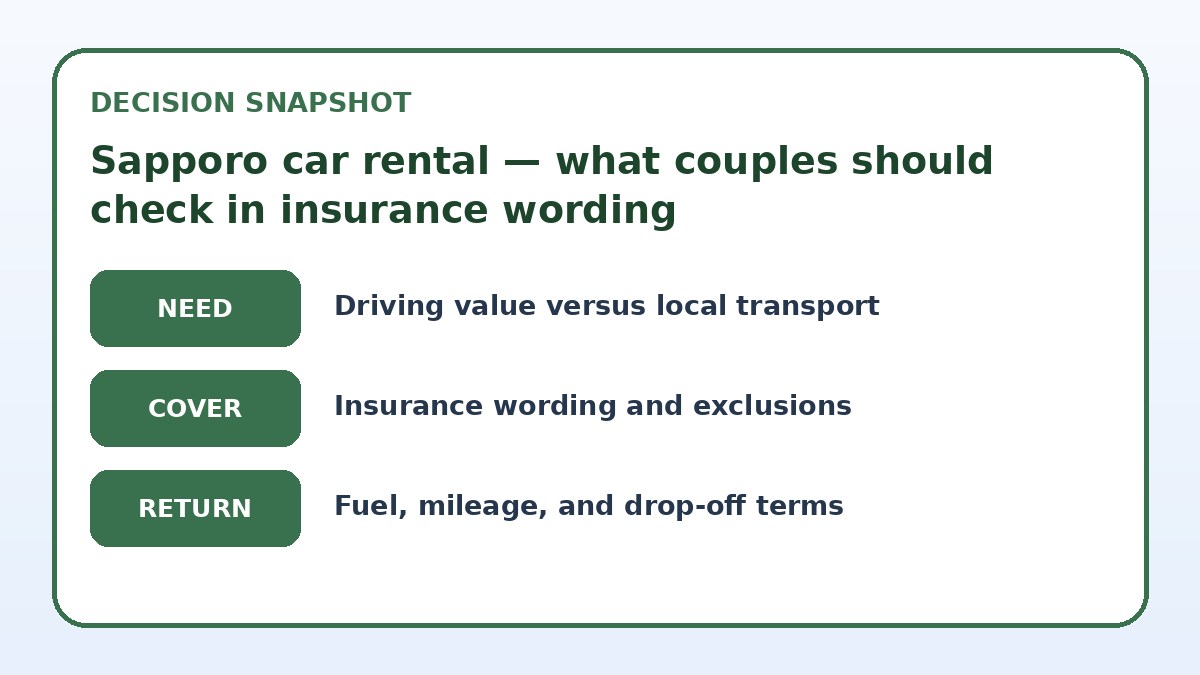
Does driving add real value to your Sapporo itinerary?
Start by listing the places you both want to visit and then map them roughly by travel time from Sapporo. Driving pays when your desired stops are dispersed, like mountain viewpoints, rural onsen towns, or small coastal villages with limited public transit. If your schedule centers on downtown Sapporo attractions, food markets, museums, and nightlife, you may not gain enough time to justify the rental, especially once you add parking and insurance complexity.
Discuss your priorities as a couple: flexibility for spontaneous detours versus a relaxed itinerary with fewer logistics. Also weigh mobility needs—carrying luggage, scenic photo stops, or a child seat—because those practicalities can tilt the decision. If either of you is uncomfortable driving unfamiliar mountain roads or winter conditions, that changes the balance even when routes look attractive on a map.
Decide whether driving earns its place
| Mobility strategy | Best for | Cost or friction to check |
|---|---|---|
| Self-drive rental with full coverage add-ons | Couples who want maximum route flexibility and will share driving duties | Higher upfront cost and more paperwork; verify excess amounts and listed exclusions on booking pages |
| Self-drive basic policy (lowest included coverage) | Short drives inside city limits with careful driving and low incident risk | Lower cost but larger deductibles and narrower protection; confirm what counts as excluded damage |
| Public transport plus taxis/shuttles | Couples preferring minimal logistics and no rental insurance concerns | Less flexibility for remote stops and timed connections; check schedules and taxi availability in advance |
| One-day rental or private driver for a specific excursion | Couples who want a single flexible day without managing insurance for the whole trip | Can be cost-efficient for targeted needs, but you must still verify driver terms and any liability clauses |
Check live rental choices only after the route test
Use the exact driver, dates, pickup point, and return plan to compare current conditions.
How to read car-rental insurance wording together
Insurance language can feel opaque; make it a shared task so both partners understand responsibilities. Look first for these items on the rental contract page: collision damage waiver (CDW) or excess amount (the deductible you would pay after a claim), third-party liability limits, theft protection, and whether additional driver coverage is included or costs extra. Pay attention to exclusions spelled out in bold or a separate clause—common exclusions include damage from off-road driving, driving under influence, or using winter tires when required but not provided.
Also check the claim process wording: what documents are required, whether police reports and Japanese-language paperwork are needed, and how long you must report an incident. If the insurer or rental company uses phrases like 'full coverage', ask them to define exactly which damages are covered and what residual excess you might still owe. Put a couple-friendly note in your booking that both names should appear on the rental agreement if you both plan to drive.
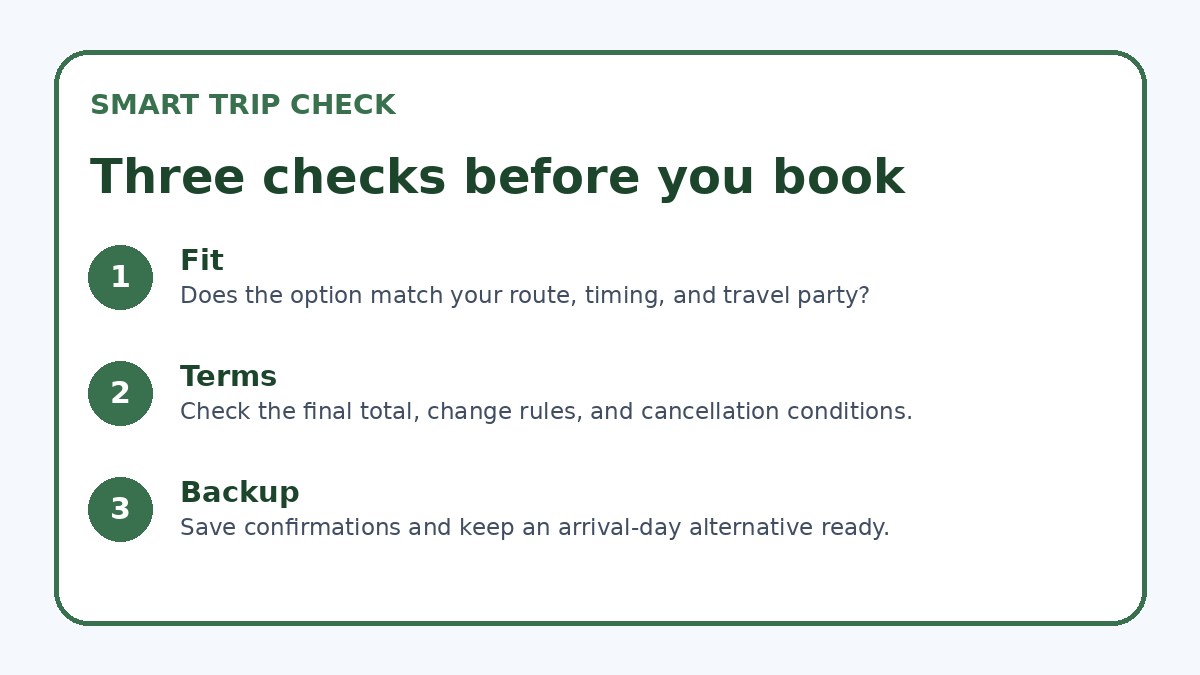
Compare the full rental conditions
Confirm insurance wording, exclusions, deposit, fuel, mileage, and return terms on the final page.
Pickup and return friction couples should expect
At pickup, rental agents routinely check driver licenses, international driving permits, passports, and the booking confirmation. If only one partner is listed as the primary driver, adding the second driver at the counter may incur a fee; if you want both names on the contract, arrange that during online booking or confirm the charge on the booking page. Ask whether there are time-window penalties for late return and whether the final inspection will be done with you present—having both partners there reduces disputes about pre-existing scratches.
Bring printed or clearly accessible digital copies of insurance details, credit card used for the deposit, and a record of the vehicle’s condition. For couples splitting responsibilities—one driving, one navigating—agree in advance who will handle tolls, parking receipts, and incident reporting. If a reservation includes options to add roadside assistance or temporary GPS, decide together whether those extras matter for your confidence level and clarify whether assistance is available in English.
Car rental terms to verify
- Confirm both partners’ names are listed on the rental agreement if you both plan to drive and note any additional-driver fee.
- Find the exact excess/deductible number in the contract and compare it to optional CDW or excess-reduction wording.
- Read exclusions carefully: look for off-road, winter-tire, alcohol, and unauthorized-driver clauses and highlight any unclear language.
- Ask the rental company how incident reporting works and what documents (police report, photos) are required for a claim.
- Verify pickup and return windows, late-return penalties, and whether the inspection is recorded with photos or a signed checklist.
- Check whether roadside assistance is included, whether English support is available, and how to contact help during your trip.
Non-driving fallback: plan B for couples who skip the car
If you decide not to drive, create a realistic mobility plan so you won't feel limited on the trip. Identify direct rail or bus routes to destinations you’d otherwise drive to, and list local taxis or shuttle services that cover the last mile. Many scenic day trips around Hokkaido are served by seasonal buses or tour operators; couples can pair these with short taxi rides for convenience without taking on insurance complexities.
Allocate extra time in your itinerary for transfers and check timetables early in your planning. Couples who prioritize relaxed mornings or enjoying local food tend to appreciate the no-driving option because it frees them from parking hunts and deposit holds on credit cards. If needed, you can still hire a car for a single day or book a driver service for one excursion—these hybrid approaches preserve flexibility while keeping insurance wording simple.
Car Rental & Road Trip questions travelers ask
If only one partner is named on the reservation, can the other still drive?
Often you can add an additional driver at the counter, but rental companies commonly charge an extra fee and require that the additional driver presents the same license and ID documents. Some bookings allow you to add a second driver during online booking—verify that option on the final booking page and confirm the exact extra-driver charge. Also read the policy for driver age limits and any restrictions tied to age or license country, because those details affect whether the second person can legally drive the vehicle.
What does 'excess' or 'deductible' mean in practical terms?
The excess (or deductible) is the amount you'd be liable to pay if a claim is made after an accident or theft; the rental company or insurer covers the remainder up to policy limits. If the contract says 'CDW reduces liability to X' or lists an excess amount, note that you might still pay that sum immediately and reclaim it only after the claim is processed, subject to approval. If you want to lower or eliminate that liability, look for excess-reduction options on the booking page and read exactly how they change the residual charge and claim process.
How do I verify coverage language before I arrive in Sapporo?
On the provider’s final booking or policy page, locate the specific sections that list what is covered, what is excluded, and the steps for filing a claim. Save or screenshot the policy wording and the booking confirmation email. If anything is unclear, contact the rental company by email and request written clarification about key points—excess amount, additional-driver terms, regional exclusions (like mountain roads), and whether roadside assistance includes English support. You can also compare current availability and bundle options on sites like Trip.com, but always confirm the verbatim policy on the provider’s own page.
Final decision note
For couples planning Sapporo travel, the right answer about renting a car depends on the places you want to reach and how comfortable you are with the insurance wording and operational details. If your trip includes rural or scenic stops where public transport is sparse, a self-drive rental with appropriate coverage can be liberating. If you prefer a lower-stress, city-focused trip, public transport plus targeted taxis or single-day rentals may be a better fit. Whatever you choose, use the checklist to verify names on the rental agreement, exact excess amounts, listed exclusions, and the incident-reporting process on the final booking page. Clear communication between partners and a short joint review of the policy will prevent surprises and let you enjoy Sapporo together.
Continue planning
Check current options and final conditions
Use the provider page to confirm live availability, the final total, cancellation terms, and every condition that matters to your trip.
This evergreen planning guide was created with AI-assisted drafting and a structured quality review. It does not display live prices, schedules, availability, visa guidance, or provider rankings. Verify current details before booking. Some links are affiliate links; we may earn a commission at no additional cost to you.