Practical answer up front: for most solo travelers staying inside Barcelona and visiting the city, public transport plus walking is usually the smoother, cheaper, and less stressful option. Driving becomes sensible if your Barcelona itinerary includes regular day trips beyond well-served regional rail lines—think multiple rural towns, beaches with limited transit, or flexible countryside stops where timetables would limit you. This guide compares the two approaches so you can decide quickly: it covers route value (what you gain from a car), how insurance wording affects liability and peace of mind, pickup and return friction at airports and city locations, and a strong non-driving fallback plan. Read the quick points, then dive into the sections that match your trip style—city-focused, day trips, full road trips, or mixed plans—so you know exactly what to verify before you book.
Route value: when driving actually improves your solo trip
Driving buys you flexible routing and time control: you set departure times, linger where you like, and visit multiple small towns that have infrequent public transport. In Barcelona’s region, that matters if you want to string together coastal villages, remote vineyards, mountain viewpoints, or natural parks where buses run only a few times daily. For a solo traveler who values spontaneity and a private base for gear, a car transforms itineraries that would otherwise require careful timetable planning or expensive guided tours.
But driving also shifts trip value toward the road itself: the time you spend navigating, parking, and coping with city traffic replaces time you might spend exploring on foot or relaxing. For short urban stays—two to four days centered in the Eixample, Gothic Quarter, or beach areas—the marginal benefit of a car is low. Evaluate each planned destination: if most are within Barcelona, regional rail, suburban trains, and trams often reach them with less hassle and at lower cost than the combined rental, fuel, and parking expenses.
Decide whether driving earns its place
| Mobility strategy | Best for | Cost or friction to check |
|---|---|---|
| Public transport + walking | City-centered solo travelers who prioritize museums, neighborhoods, and nightlife without parking worries. | Less flexible for rural day trips and dependent on timetables for early or late departures. |
| Car rental for day trips only | Solo travelers who want occasional flexibility to reach remote beaches or inland villages on their own schedule. | You’ll handle pickup/return logistics and pay daily rental, fuel, and parking; single-day rates can feel steep. |
| Full self-drive road trip | Travelers whose main goal is exploring regions outside Barcelona across multiple days with flexible routing. | Higher total costs, more driving fatigue, and local driving rules to manage; insurance wording and cross-border rules matter. |
| Public transport plus targeted private transfers | Solo travelers who want transit reliability in the city and occasional private transfers for hard-to-reach spots. | More planning to coordinate transfers and variable per-trip costs versus owning a car for the whole stay. |
Check live rental choices only after the route test
Use the exact driver, dates, pickup point, and return plan to compare current conditions.
Insurance and liability: what to read and ask before you sign
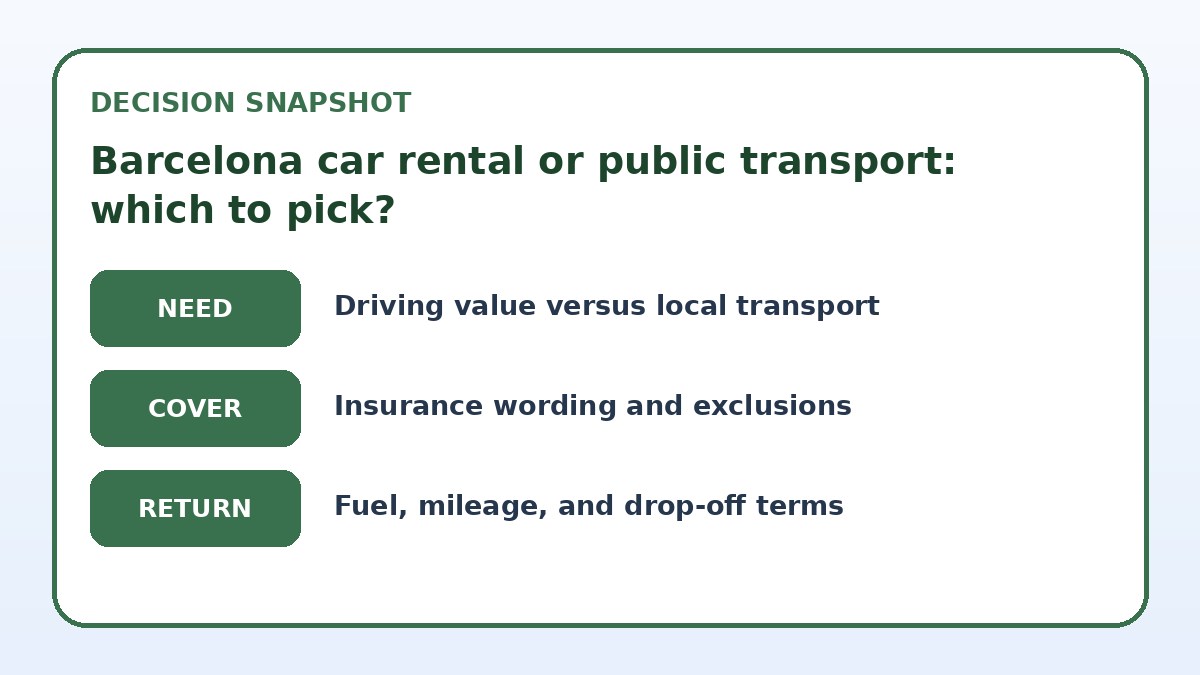
Insurance wording is where solo travelers can lose confidence—and money. Don’t rely on general statements: check the exact excess (deductible) on the rental agreement, what types of damage are excluded, and whether theft cover is conditional on using a locked garage. Credit-card coverage can reduce your excess but typically requires you to decline the rental company’s collision waivers and meet documentation rules. Ask the rental firm about third-party liability limits and whether local laws require additional minimum coverage.
Also verify cross-border permissions if you’re planning to drive outside Spain: some rental contracts forbid travel into certain countries, or require extra insurance and fees. Read the provider’s damage-reporting process so you know what paperwork to gather if anything happens—police reports, photographs, and an incident form. Finally, confirm whether roadside assistance is included, how quickly service responds, and whether towing or replacement vehicles are covered; these operational details matter more to solo travelers than abstract policy names.
Compare the full rental conditions
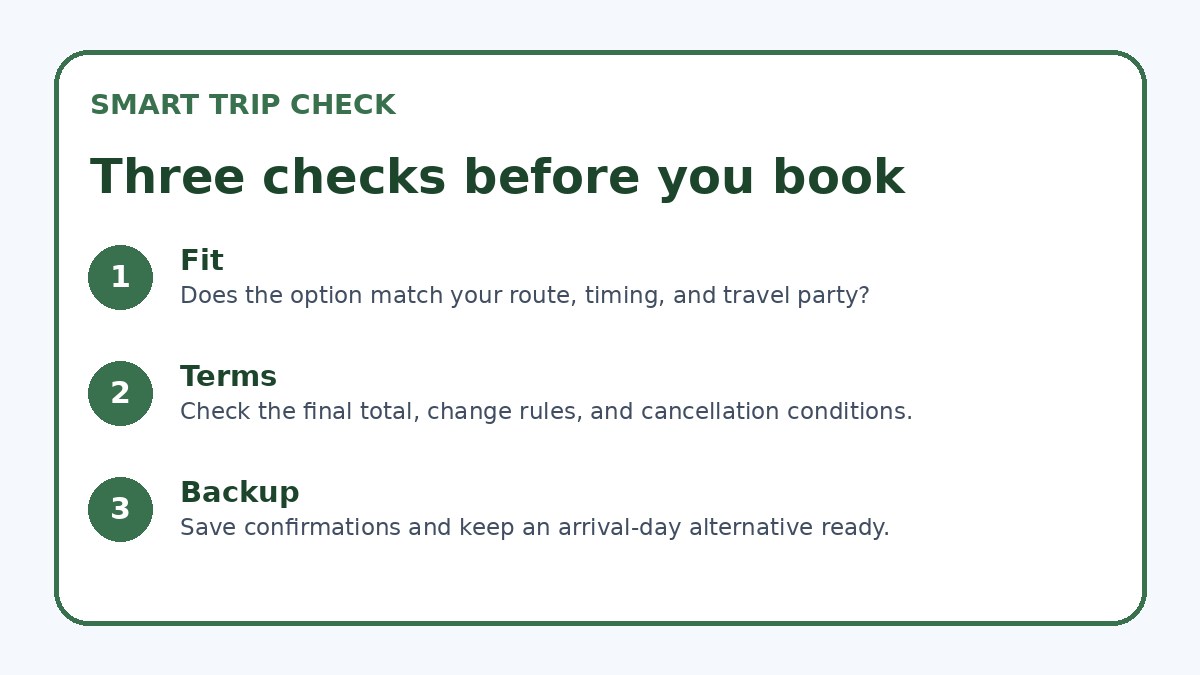
Confirm insurance wording, exclusions, deposit, fuel, mileage, and return terms on the final page.
Pickup and return friction: airport vs city collection
Pickup and return logistics add real time costs. Airport desks can be convenient but often sit offsite, require shuttles, and carry airport surcharges; city pickup points might mean a short taxi or metro trip but avoid some fees. For solo travelers, factor the time and fatigue of arriving at Barcelona’s airport, queueing at counters, and handling paperwork alone. Consider whether the provider offers contactless pickups or flexible return hours—late returns can trigger penalties that feel punitive when you’re traveling solo.
One-way rentals add convenience but can carry hefty fees, so compare the net time saved. If you choose a city pickup, check proximity to your accommodation and whether public transport routes will get you there quickly with luggage. Plan return logistics as carefully as pickup: allow extra time for refueling rules, vehicle inspection, and photographing the car at handover. When in doubt, pick a collection point that minimizes transfers from your arrival station or hotel so you don’t start the day exhausted.
Car rental terms to verify
- List the exact day-trip destinations and check rail or bus schedules to see if a car meaningfully shortens travel times.
- Read the rental contract’s insurance wording: note excess amounts, excluded damage types, theft conditions, and roadside assistance details.
- Compare pickup/return points and transfer times from your arrival spot; allow buffer time for queues and vehicle inspection.
- Confirm cross-border rules and extra fees if you plan to drive outside Spain; ask the rental company to put permissions in writing.
- Estimate total road-trip costs including fuel, tolls, parking, airport surcharges, and likely one-way fees versus transit fares.
- Identify and book non-driving fallbacks—regional train seats, a day tour, or a private transfer—so you aren’t forced to rent a car last minute.
Non-driving fallback: a realistic plan if you decide not to rent
If you skip a car, craft a fallback that keeps your itinerary flexible. Combine Barcelona’s metro, buses, trams and regional trains for inner-city and many nearby destinations; use scheduled R-series and rodalies trains for coastal towns and some inland options. For places not reached directly by public transit, look for private shuttles, organized day tours that depart from central pick-up points, or a mix of short taxi hops and local buses. Mixing transport modes keeps costs predictable and removes worries about parking or unfamiliar traffic.
Also map a few on-demand alternatives: ride-hailing services for late-night returns, bike-share programs for short hops, and luggage storage options so you can move between locations without hauling gear. Book key regional train seats or popular day tours in advance if your schedule is tight—this ensures you won’t need a car purely because a transit option filled up. Keeping a backup budget for a single day car rental or private transfer gives you the freedom to respond if a weather change or timetable mismatch affects your plan.
Car Rental & Road Trip questions travelers ask
Can I rely on public transport to reach popular day-trip spots from Barcelona?
Many popular day-trip spots around Barcelona—coastal towns, nearby vineyards, and some mountain villages—are reachable by regional trains and buses, though frequency varies. Check actual timetables for your travel dates and compare direct versus connecting options: direct services save time but may be less frequent, while connections add waits but broaden your choices. For places with sparse service, look for scheduled shuttles, organized day trips, or a single private transfer. Use official rail and bus sites or Trip.com to confirm current schedules and seat availability before finalizing plans.
What exactly should I look for in rental insurance wording?
Focus on the excess (the amount you’d pay if the car is damaged), what types of incidents are excluded (windshield, undercarriage, tires), and whether theft coverage requires specific precautions. Check if collision damage waivers reduce or remove excess, and read the conditions for credit-card coverage carefully—cards often require you to decline certain waivers and follow specific claim procedures. Also verify roadside assistance scope, towing, and replacement vehicle terms. Ask the rental company to clarify unclear clauses and keep a copy of the signed agreement.
If I pick up a car at Barcelona’s airport, what practical issues should I expect?
Airport pickups can be convenient but may involve offsite desks and shuttle transfers, busy counters at peak times, and additional airport-related fees in the contract. Solo travelers should allow extra time for paperwork, vehicle inspection, and locating the return point. Confirm fuel-return rules, refuelling options near the airport, and whether the company accepts contactless check-out. Photograph the car during pickup and return, keep inspection receipts, and leave at least 60–90 minutes before your next flight to manage handover and potential queueing.
Final decision note
Decide with purpose: if your Barcelona trip stays inside the city or focuses on neighborhoods, museums, food, and beach time, public transport plus walking is usually the least stressful and most efficient choice for a solo traveler. Choose a rental car when your main objectives include multiple rural or poorly connected destinations where transit would severely limit timing and flexibility. In any scenario, read insurance wording, verify pickup and return logistics, and plan a non-driving fallback so you can adapt. Finally, compare current availability and conditions on provider pages or use Trip.com to see options, but always confirm contract details directly with the rental company before booking.
Continue planning
Check current options and final conditions
Use the provider page to confirm live availability, the final total, cancellation terms, and every condition that matters to your trip.
This evergreen planning guide was created with AI-assisted drafting and a structured quality review. It does not display live prices, schedules, availability, visa guidance, or provider rankings. Verify current details before booking. Some links are affiliate links; we may earn a commission at no additional cost to you.