
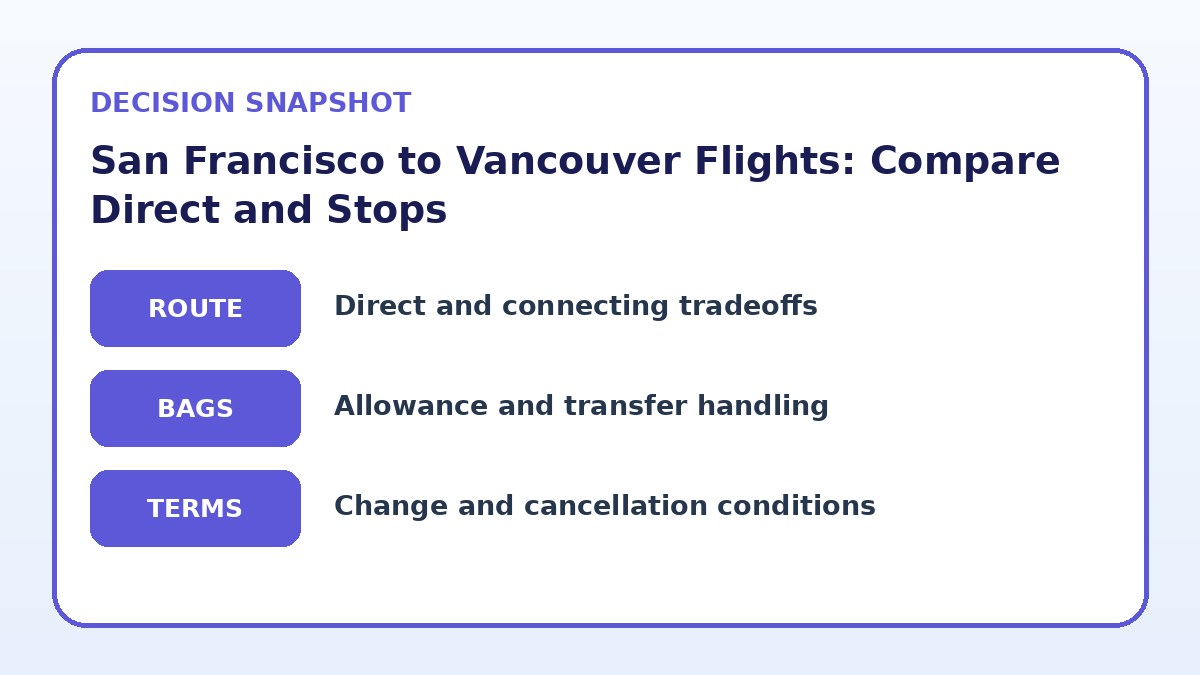
Practical answer up front: if you value simplicity, a direct flight generally saves stress—fewer legs, no rechecking luggage, and less chance of missed connections. If you value lower fares or need flexible routing times, a one-stop option can expand choices and sometimes reduces cost, at the price of longer total travel time and more variables to manage. For first-time visitors, your top considerations should be total door-to-door time, luggage handling, airport transfers on both ends, and how comfortable you are managing layovers. Below you’ll find clear tradeoffs, decision criteria to weigh against your priorities, and a checklist for booking and day-of-travel. Use the comparison rows to match a decision approach to your trip style, and verify live schedules and baggage rules on the airline’s booking page (or on Trip.com as a comparison tool) before you buy.
How to compare total travel time beyond air minutes
When comparing direct and connecting flights, don’t focus only on airborne time. Total travel time includes time to and from each airport, check-in, security, possible international departure procedures, the scheduled block time, and any expected layover. A one-stop itinerary with a short but well-timed connection can sometimes match or beat a direct flight’s door-to-door time depending on your starting point in the Bay Area and how far Vancouver’s airport is from your final destination. Also factor in the time of day—early morning and late evening flights can change how long you spend in traffic and at checkpoints.
Estimate door-to-door: add transit time to SFO or OAK, then add recommended airport arrival time for international travel, the scheduled flight plus any layover buffer, immigration and customs at Vancouver, and finally onward transport to your accommodation. When you compare options on booking sites, mentally insert these ground segments—an alluring cheaper fare may vanish in value if it requires an extra taxi ride or an overnight layover. Keep a small time margin for unfamiliar airport layouts and possible delays when making your choice.
Cost considerations and what to verify before booking
Price is often the deciding factor, but it’s layered. Compare the total cost including seat selection, checked-bag fees, and change/cancellation terms—low-cost carriers or some connecting fares can add fees that make them costlier in practice. If you must travel with checked luggage or prefer assigned seats, make sure those options are included or that you know the exact fee structure on the airline’s final booking page. When comparing connecting itineraries, check whether the airline treats the whole route as a single ticket (which can protect you on missed connections) or as separate segments booked separately (which shifts more risk to you).
Taxes and airport surcharges can differ by carrier and by routing; don’t assume headline fare equals final price. Also verify whether transfers between terminals or airports are required during a connection—some itineraries route through other West Coast hubs or through U.S./Canadian border processes that affect arrival timing. If a connection requires clearing immigration and picking up baggage, budget time and confirm whether you need a visa or an Electronic Travel Authorization; check official government sites or the airline’s booking page for the latest entry requirements.
| Approach | Best for | Tradeoff to check |
|---|---|---|
| Choose a direct flight | Travelers prioritizing simplicity, shorter risk exposure, and fewer transit steps | Often fewer schedule options and sometimes higher fares or less departure-time flexibility |
| Choose a single connecting itinerary on one ticket | Travelers seeking lower fares with airline protection for missed connections | Longer total travel time and the need to trust the carrier’s rebooking policies if delays occur |
| Choose connecting segments booked separately | Flexible travelers hunting very specific timing or mixed-carrier routings | Higher risk: no through-check baggage or guaranteed rebooking if a missed connection occurs |
| Choose a long layover intentionally | Travelers who want a planned stopover to rest or see another city briefly | Adds hours to the trip and may require extra planning for visas, luggage, and transfers |
Comfort, convenience, and how layovers change the experience
For many first-time visitors, comfort and simplicity weigh heavily. Direct flights reduce the number of security checkpoints, limit the need to track boarding gates in a new airport, and reduce the stress of transferring luggage. If you’re traveling with children, mobility needs, or tight onward connections in Vancouver, the predictability of a single-leg journey is valuable. Direct service also tends to mean fewer opportunities for disruptions like missed connections or mishandled bags, though no option is immune to delays.
On the other hand, a planned stopover can break up a long travel day, allow you to choose preferred airlines or alliance networks, and sometimes get you a preferred departure time. Long layovers can be useful if you want to add a brief stop in another city, but they require planning—know whether you’ll need transit visas, whether you can access lounges, and how to handle checked luggage during the break. If your schedule is flexible and you enjoy exploring, a well-chosen connection can add variety; if you prioritize ease, favoring direct will likely make your arrival in Vancouver smoother.
Before you book
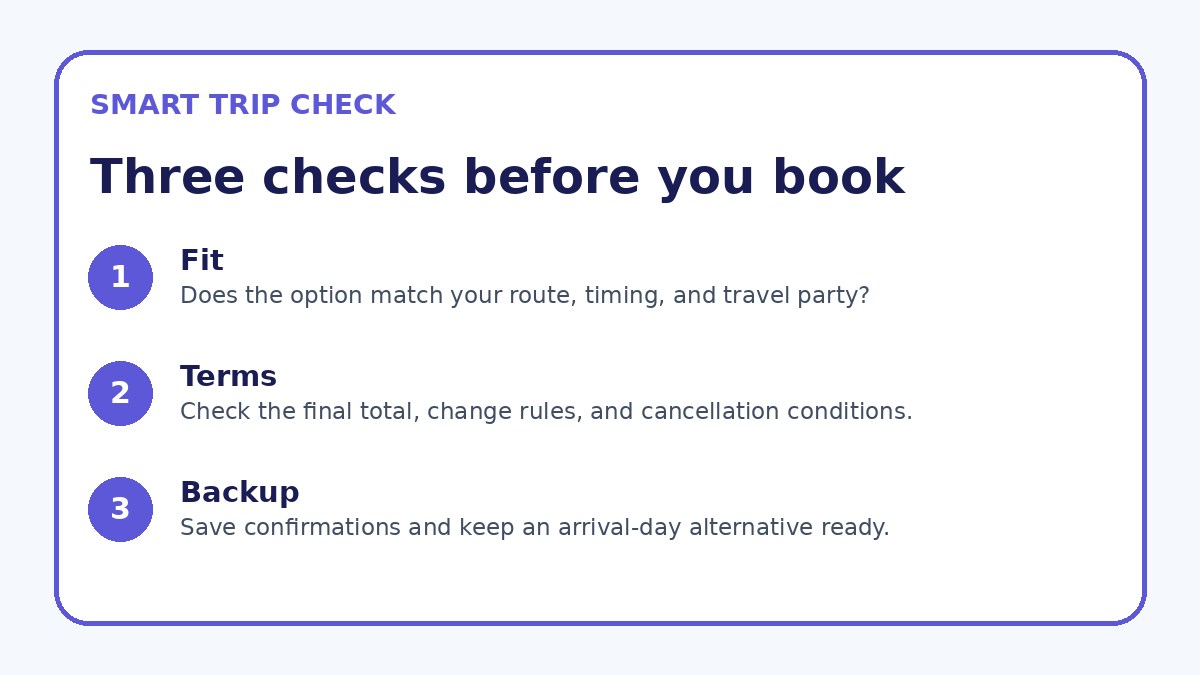
- Compare total door-to-door time including ground transport and immigration, not just flight duration.
- Confirm baggage allowances and fees on the airline’s final booking page before purchasing any fare.
- Check whether the itinerary is on a single ticket (protects you on missed connections) or requires separate bookings.
- Note arrival and departure terminals for any connection and review the airport map ahead of travel.
- Pack a carry-on with essentials and documents in case checked luggage is delayed or a tight connection fails.
- Book onward transfer from Vancouver in advance or have clear public-transit options ready to avoid delays after arrival.
Practical booking tips and day-of-travel priorities
When you’re ready to book, start by searching for itineraries that list total travel time and show baggage policy and change fees clearly. Use comparison sites to surface options—Trip.com can be one of those places to check availability—but always confirm critical terms on the airline’s official booking page before payment. If you find a connecting itinerary that looks attractive, verify the minimum connection time at the transit airport and whether the airline provides through-checked baggage and protection for missed connections on a single ticket.
On travel day, arrive at your departure airport with the recommended international check-in time and documents easily accessible. For connections, note the arrival and departure terminals on your itinerary and look up the airport map beforehand so you can move efficiently. Keep digital and printed copies of confirmations, and allow extra time for customs and immigration at Vancouver, where lines can vary. Pack essentials in a carry-on in case checked luggage is delayed and plan your onward ground transfer from Vancouver in advance to avoid last-minute choices.
Frequently asked questions
Are direct flights always faster from San Francisco to Vancouver?
Direct flights usually have shorter elapsed travel time because there’s no layover, but they aren’t guaranteed to be faster door-to-door. Travel time depends on your starting point in the Bay Area, the airport you use, when you travel, and how long you’ll spend on ground transfers and at security. A one-stop itinerary with a short, well-timed connection can sometimes match a direct flight’s total trip time. Always compare complete itineraries—ground transfer estimates, recommended check-in times, and scheduled connection durations—before deciding.
What should I check about luggage and connections?
Verify whether the airline will through-check your baggage to Vancouver or whether you must claim and recheck it during a connection. On a single-ticket itinerary this is commonly handled by the carrier, which can simplify transfers and reduce the chance of missing baggage, but on separately booked segments you will likely be responsible for retrieving and rechecking bags. Also confirm baggage size, weight limits, and fees on the airline’s final booking page; these policies vary by carrier and fare class and can materially affect total trip cost and convenience.
How much time is safe for a connection when flying through a U.S. or Canadian hub?
Connection time needs vary by airport layout, whether you’re changing terminals, if you must clear security or immigration, and whether checked baggage is transferred automatically. Short connections can work when both flights are on the same ticket and the carrier lists a feasible minimum connection time, but they increase stress and reduce recovery room for delays. If you’re unfamiliar with the transit airport, traveling with checked luggage, or traveling during peak hours, allow extra buffer beyond the airline’s minimum and prioritize itineraries with straightforward transfers.
Final planning note
Choosing between direct and connecting flights from San Francisco to Vancouver comes down to a few simple tradeoffs: direct service favors simplicity and fewer moving parts, while one-stop options increase timing and price flexibility but require more planning. First-time visitors should weigh total door-to-door time, baggage handling, and personal comfort with transfers. Use comparison tools to surface options, then confirm critical details—baggage policy, ticketing conditions, terminal information, and entry requirements—on the airline’s official booking page before purchase. With a clear priority (time, cost, or convenience), you can pick the itinerary that best fits your arrival plans in Vancouver and reduce travel-day surprises.
Continue planning
Check current options and final conditions
Use the provider page to confirm live availability, the final total, cancellation terms, and every condition that matters to your trip.
This evergreen planning guide was created with AI-assisted drafting and a structured quality review. It does not display live prices, schedules, availability, visa guidance, or provider rankings. Verify current details before booking. Some links are affiliate links; we may earn a commission at no additional cost to you.