Within the first hour after landing in Abu Dhabi you’ll decide how to move from the terminal to your accommodation and, crucially, how to plan the reverse trip when you leave with more bags than you arrived with. The practical answer: choose a transfer option now—taxi, private transfer, hotel shuttle, or rental car—based on how many large suitcases you’ll have, how many people are in your party, and whether your departure could be late or disrupted. Book or reserve the return leg where possible and note the provider’s luggage policy and meeting point. Doing this up front prevents last-minute hauling, delays, and unexpected fit issues in vehicles when you need to get to the airport with time to spare.

Check options for your arrival details
Use your flight, luggage, party size, and accommodation address to compare current choices.
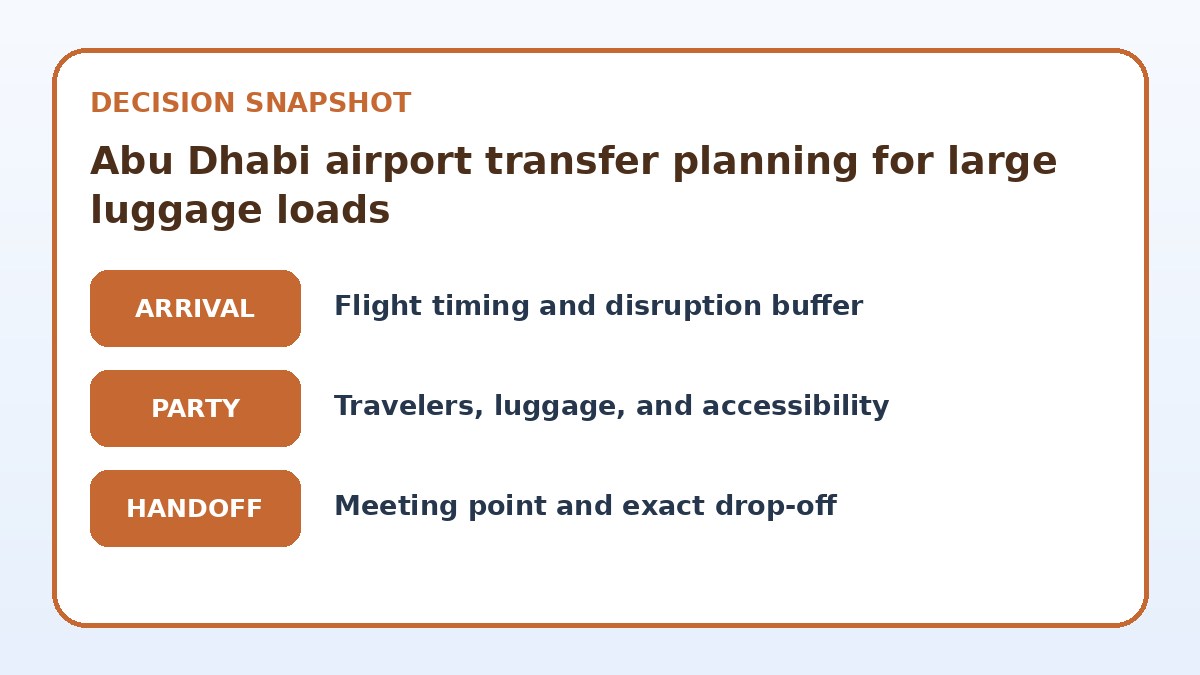
Luggage and party-size decisions that shape the return
Start by inventorying the bags you expect to leave Abu Dhabi with: count suitcases, measure any bulky sports gear or boxes, and consider carry-ons and duty-free purchases. Those simple numbers are the primary determinant of which transfer option makes sense. A standard sedan can fit two checked bags plus carry-ons for a solo or couple traveler; anything beyond that usually requires an SUV, minivan, or a vehicle with rooftop or trailer capacity. Also factor who is traveling: children with car seats, older travelers who need door-to-door assistance, and anyone with mobility limitations will influence the vehicle choice more than a modest price difference would.
Next, convert that inventory into booking requirements. When you reserve a private transfer or rental car, select the vehicle that explicitly lists passenger and luggage capacity or contact the supplier to confirm. For hotel shuttles and shared rides, check whether they accept oversized or fragile items; many shared services have limited cargo space and strict rules about surfboards, musical instruments, and boxed goods. If you’re in doubt, plan for one size up—an extra vehicle cost is usually less painful than chasing multiple trips or repacking at the last minute.
Arrival details to have ready
- Count and describe every piece of luggage and oversized item; note dimensions, approximate weight, and whether items are fragile.
- Choose the return transfer type (private, taxi/ride-hail, hotel shuttle, or rental return) that fits your luggage and party size, and make the reservation if possible.
- Confirm and save the exact pickup and drop-off points for both your accommodation and the airport, including terminal name and any car-park or curb details.
- Save the provider’s local contact number and your booking reference in at least two accessible places (phone note and printed copy).
- Allow extra time for baggage handling and airport procedures; plan a conservative arrival window rather than the minimum required.
- Verify the provider’s luggage policy, wait-time rules, and procedure for late pickups or unexpected schedule changes on the final booking page.
Planning for late arrivals, disruptions and schedule changes
Travel plans rarely go exactly to schedule; late flights, delayed baggage, or an extended checkout can all push your return time. Choose transfer options that offer clear policies on wait times, rebooking, and emergency contact. When you book, save the supplier’s local phone number and the booking confirmation detail that specifies where the driver will wait and how long they will hold the pickup without extra charge. If you expect a higher disruption risk—tight connection windows, late-night flights, or weather-prone periods—lean toward private transfers or hotel-arranged pickups where the operator can wait or be reached directly.
If flexibility matters more than cost, confirm whether your chosen provider has a flexible cancellation or change policy you can use without penalties within a sensible window. For shared shuttles and ride-hailing, understand surge or peak-time impacts that could make last-minute travel more expensive or slower. Consider buffer time when planning onward flights: allow extra time for luggage handling and traffic, and plan a conservative arrival window at the terminal rather than cutting it fine. Finally, keep digital receipts and booking references handy for quick changes or to rebook on short notice.
Match the transfer to your arrival
| Arrival approach | Best for | Detail to verify |
|---|---|---|
| Private prebooked transfer | Large groups or heavy/bulky luggage and travellers who want guaranteed vehicle size. | Higher cost than shared options and requires accurate pickup time or change management. |
| Taxi or ride-hailing on demand | Solo travellers or small parties with moderate luggage who value flexibility over guaranteed space. | Possible vehicle-size mismatch and variable wait times; may struggle with very large items. |
| Hotel shuttle or concierge-arranged pickup | Guests staying at hotels that offer door-to-terminal service and who prefer simplified coordination. | May have limited luggage allowance and fixed schedules that don’t suit late or irregular departures. |
| Rental car with airport return | Travellers needing local transport during the trip and who can load luggage themselves for a controlled return. | You must handle parking/return logistics and ensure the vehicle can carry all items securely. |
Make the meeting plan clear
Check the final pickup instructions, waiting conditions, and exact drop-off coverage.
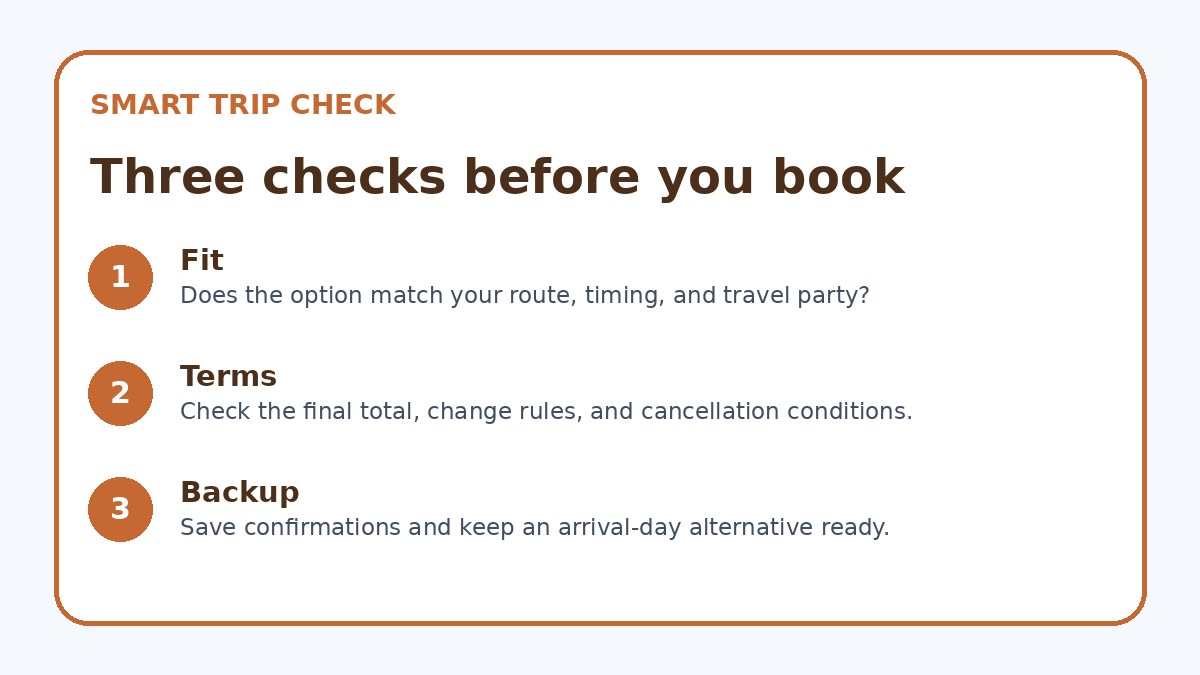
Meeting points and communication: avoid pickup confusion
Meeting-point clarity is often the simplest fix to a stressful return. At your accommodation, confirm whether the driver can enter the property, meet at the lobby, or must wait on the curb. For apartment stays or villas, specify a clear landmark and share a photo or exact door number with the driver. At Abu Dhabi airport, terminals can have separate commercial-vehicle zones, short-term parking, or designated rideshare pickup points; before you travel, find and note the official pickup location for your chosen service so you can estimate walk time with luggage.
Good communication matters: share your mobile number in the booking and ensure roaming, local SIM, or messaging apps work at pickup. If you’ll be traveling with multiple phones or an offline map, leave the driver clear instructions on how to find you. For private transfers, ask for the driver’s name and vehicle details; for shared services, confirm the pickup window and what to do if the vehicle is late. When booking through hotels or a third-party platform, verify whether the provider monitors flight updates and adjusts pickup automatically if your departure is delayed.
Destination-side drop-off: luggage fit and final-mile considerations
Think beyond the vehicle: the drop-off point at Abu Dhabi airport matters because walking distance, elevators, and terminal layout affect how manageable your bags will be once you arrive. If you have bulky or heavy items, request a drop-off as close to the terminal entrance or check-in hall as the operator can provide, and ask whether they will help with baggage to the counter if needed. If you foresee using curbside check-in or airline-assisted luggage services, confirm accessibility and the exact procedure ahead of time so you’re not negotiating space while tired and pressed for time.
If you intend to return a rental car at the terminal, verify the rental company’s airport return process and whether they require you to drop keys at a desk or in a clearly marked lot; some airport returns include a shuttle from the rental lot to the terminal. For hotel shuttles and private drivers, clarify if there are charges for extended stopovers, additional drop-offs, or assistance with oversized bags. Finally, keep copies of important documents—flight itinerary, passport, and booking confirmations—in an easily reachable place to speed up check-in and correspondence during the final leg of your trip.
Airport Transfer & Local Mobility questions travelers ask
How do I know what vehicle size to request for my return to Abu Dhabi airport?
Start with a clear inventory: count checked suitcases, carry-ons, and any bulky sports or musical equipment. Check vehicle specifications when booking—many transfer providers list passenger and luggage capacity. If capacities aren’t explicit, ask the provider for a confirmation that the vehicle can hold your total bag count. If in doubt, upgrade to the next vehicle size to avoid multiple vehicles or cramped transport. Also account for any car seats or mobility aids, which reduce available cargo space.
What should I do if my flight is delayed and my prebooked transfer won’t wait?
Locate the provider’s change and cancellation policy in your booking confirmation and contact them immediately using the local phone number provided. Many private transfer companies offer flexible rebook windows for a fee or will reschedule if notified early; shared services and prepaid shuttles may be less flexible. If you can’t reach the original provider, be ready to book an alternative—taxi, ride-hail, or hotel assistance—and keep documentation of timing and communications in case you need to request a credit or dispute later.
Can hotels help with oversized luggage for airport drop-off?
Yes, many hotels provide assistance with heavy or oversized luggage, but levels of service vary between properties. When booking or checking in, ask the front desk specifically whether they can coordinate a vehicle that accommodates your items and whether porters will help carry bags to the pickup point. Confirm any associated charges and whether the hotel needs advance notice to source an appropriately sized vehicle. Always verify the hotel’s exact meetup spot and how the shuttle or arranged vehicle will be identified at departure time.
Final decision note
When you plan the return trip to Abu Dhabi airport with extra luggage, the best outcome comes from straightforward preparation: know exactly what you’ll be carrying, pick the transfer type that matches those needs, and confirm pickup and drop-off logistics in writing. Prioritize vehicle capacity and communication over small savings; the stress and delay of dealing with ill-fitting transport can undo the best-planned itineraries. Keep provider contact details and your confirmations easily accessible, plan conservative timing, and ask your accommodation for help when available. These steps let you leave Abu Dhabi on schedule and with far less baggage-related hassle.
Continue planning
Check current options and final conditions
Use the provider page to confirm live availability, the final total, cancellation terms, and every condition that matters to your trip.
This evergreen planning guide was created with AI-assisted drafting and a structured quality review. It does not display live prices, schedules, availability, visa guidance, or provider rankings. Verify current details before booking. Some links are affiliate links; we may earn a commission at no additional cost to you.