Decide where to stay in Sydney based first on the area that will save you time and stress during work days: proximity to meetings, transport links to the CBD or airport, and evening options for client dinners. Once you narrow an area—CBD, Barangaroo/Barangaroo edge, North Sydney, or airport-adjacent—compare the hotel booking terms that matter for business travelers: free cancellation windows, same-day changes, corporate rate flexibility, and whether an early check-in or late checkout is available by policy or only by request. This article gives the practical answer up front: pick the neighborhood that minimizes your daily travel, then choose a rate that balances refundable flexibility with any loyalty or corporate benefits you need. After the quick recommendation we explain tradeoffs, how to evaluate the fine print, and the checklist to confirm before you commit.
Check live stays in the areas that fit
Use your dates and party size to compare current rooms after you narrow the neighborhood fit.
Neighborhood fit: pick the area that saves time
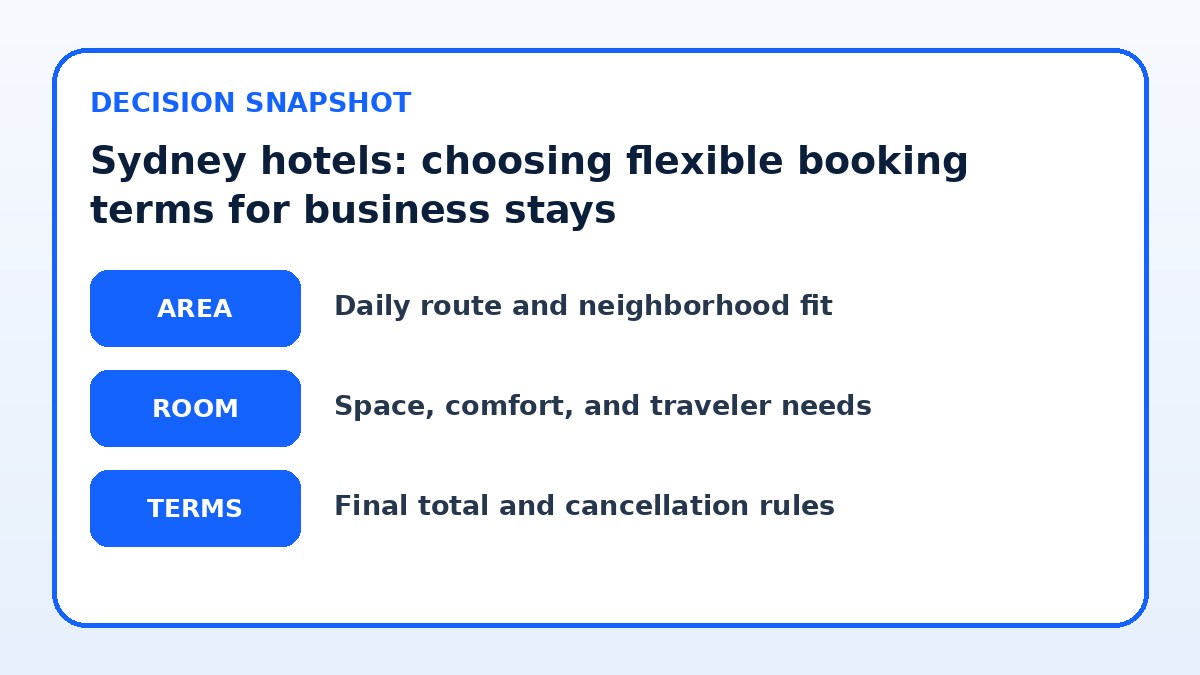
For business travelers the first decision is neighborhood fit: where are your meetings, which venues do clients prefer, and when will you need evening options? If most meetings sit inside the Sydney CBD, staying in the CBD reduces short taxi or tram rides between appointments and often offers better access to meeting-focused hotel services such as business centers, meeting rooms, and quick in-house dining. Barangaroo and The Rocks are convenient if you have client dinners along the harbour or media/tech meetings near the western edge of the CBD.
North Sydney suits teams meeting in the government or corporate towers across the Harbour Bridge and can reduce commute stress for those commuting from the north shore. Airport-adjacent hotels appeal if you land late or depart early, saving transfer time, but they can add friction for city meetings unless you plan to travel across peak traffic. Measure the daily routes you’ll actually take—walking, rideshare, or train—and prioritize the neighborhood that removes the most small delays from your schedule.
Choose an area-selection strategy
| Area approach | Best for | Tradeoff to check |
|---|---|---|
| Stay in the CBD | Short walking commutes to meetings and easy access to corporate services | May be pricier and busier; flexible rates can cost more than restrictive prepaid options |
| Barangaroo/The Rocks edge | Client dinners on the harbour and mixed leisure-work schedules | Evening appeal can mean slightly longer transit to inland corporate offices |
| North Sydney | Meetings with northern-corporate or government offices across the bridge | Harbour crossing adds commute variables during peak traffic and ferry changes |
| Airport-adjacent | Very early arrivals or late departures with minimal transfer stress | Distance from the CBD can make daytime meetings less convenient and require longer travel |
Daily-route friction: how transport shapes term choices
After choosing an area assess daily-route friction: how predictable are your transit options between hotel and meeting venues? If you rely on trains or light rail, staying within a short walk of a major station or the CBD can make a non-refundable rate less risky because missed connections are easier to manage. If you expect frequent rideshares or taxis, living near arterial roads or a reliable pick-up spot reduces the chance that a canceled meeting forces a long, expensive trip back to the airport late at night.
Where travel across the harbour is required, factor bridge crossing times and ferry schedules into decisions about early check-in or late checkout. If peak-hour bridge congestion could make you miss flights or evening events, prioritize hotels offering easy check-in flexibility or on-property meeting rooms. In areas where transport is less reliable, flexible booking terms that allow day-of changes or refunds reduce stress and financial exposure when itineraries shift.
Now compare like with like
Keep the same dates, guests, room needs, and cancellation preferences while you compare the final choices.
Room and party needs: matching space with policy
Decide the type of room and number of occupants before comparing terms. A single business traveler with light luggage often benefits most from standard flexible rates that permit last-minute changes; larger teams or multi-night stays may need adjoining rooms, suites, or small meeting spaces which can have stricter booking rules or separate cancellation windows. If you need a meeting room or breakfast for several people, confirm how the hotel handles amendments to group add-ons—sometimes room-only flexible rates won’t cover meeting-space cancellation penalties.
If you plan hybrid meetings or require robust in-room connectivity, ask whether the hotel’s business or corporate rate includes guaranteed high-speed internet and whether switching to a refundable rate affects those inclusions. For overnight stays tied to client entertainment or late working sessions, prioritize hotels that explicitly allow late checkout for a fee or complimentary as part of their flexible packages; otherwise you may need to request a manual exemption that isn’t guaranteed.
Hotel booking check before payment
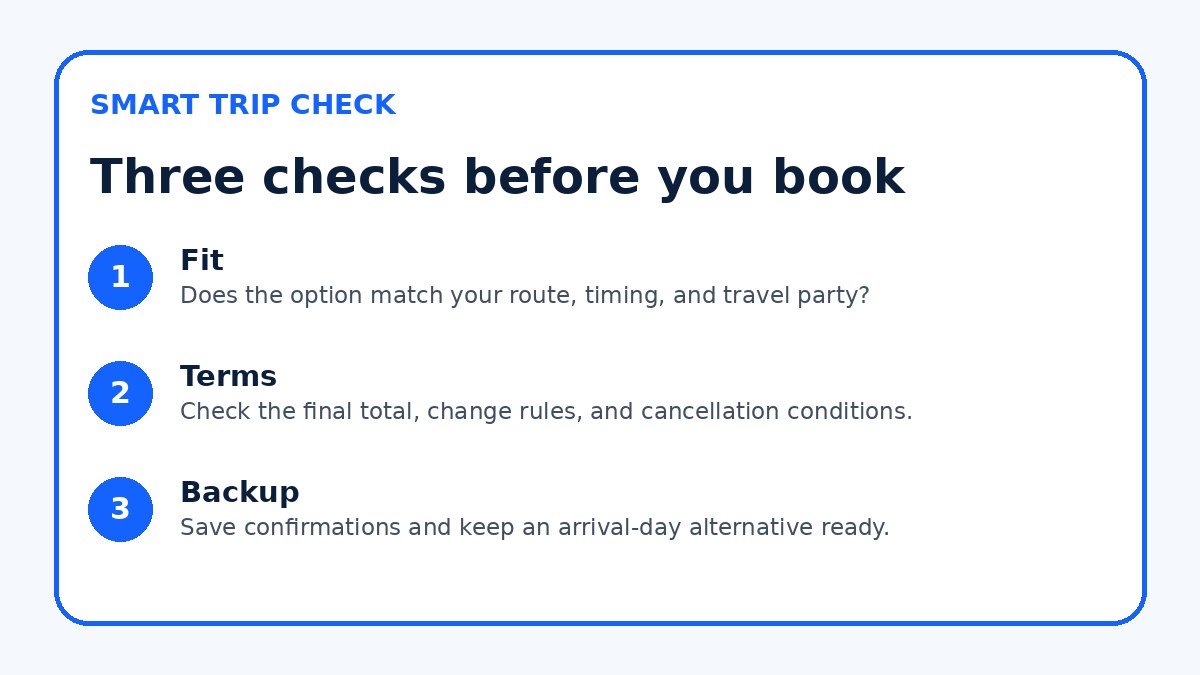
- Confirm the exact local cutoff date and time for free cancellation and save a screenshot or PDF of the terms.
- Verify whether the flexible rate includes early check-in or late checkout and note any guaranteed times or fees.
- Check if corporate or loyalty benefits apply to the chosen rate and whether points or upgrades are excluded.
- Ask how group additions (meeting rooms, breakfasts, extras) affect cancellation windows and amendment fees.
- Ensure the card or billing method required by the booking matches what you will use at check-in to avoid issues.
- If travel is uncertain, prioritize a rate that allows same-day changes or refundable options and confirm any associated admin fees.
Final booking terms: what to check on the provider page
Before you click confirm, check four precise things on the hotel’s booking page: the last date and exact time (local) you can cancel for a full refund, the policy for same-day changes, whether early check-in or late checkout is guaranteed in writing, and what fees apply for no-shows or partial stays. If a corporate or negotiated rate is offered, verify whether it applies to refundable or non-refundable plans and whether loyalty points accrue on that specific rate. Do not assume verbal staff assurances; only the written policy on the booking page is enforceable.
Also confirm what identity or payment method triggers the rate—some flexible or refundable rates require the same credit card at check-in used to reserve the room, or they allow invoice billing under corporate accounts but with different amendment rules. If you need a letter of credit or a third-party invoice, get it approved and attached to the reservation. Use a screenshot or a saved PDF of the final booking terms and cancellation window; that record is useful if policies are later disputed.
Hotel Guide questions travelers ask
How much flexibility should I expect from a business-friendly rate in Sydney?
Business-friendly rates commonly offer clearer cancellation windows, corporate billing options, and sometimes flexible check-in/out times, but policies vary by hotel and rate type. Expect some refundable rates to require cancelling by a specific local time 24 to 48 hours before arrival, while others let you change reservations same-day for a fee. Always read the exact wording on the booking page: check the last-change timestamp, whether a fee applies for modifications, and whether corporate or loyalty benefits are preserved on that rate. If in doubt, message the hotel to request written confirmation and save that exchange.
Should I choose refundable or non-refundable rates for short business trips?
The decision depends on schedule certainty and cost sensitivity. If meetings are confirmed and unlikely to move, a non-refundable prepaid rate can save money but increases financial risk if plans change. If your itinerary may shift, a refundable or flexible rate reduces stress and protects budgets by permitting last-minute cancellations or changes. Consider partial compromises: refundable rates with a shorter free-cancellation window, or flexible rates that permit changes for a modest fee. Always compare what’s actually written on the booking page, and verify whether refunds are processed back to the original card or require hotel credit.
How do I handle early check-in or late checkout when policies aren’t explicit?
If the published terms don’t guarantee early check-in or late checkout, request confirmation when booking and again by email or message 24–48 hours before arrival. Ask whether the hotel can reserve an adjoining room or hold luggage if a guaranteed early check-in isn’t available, and whether late checkout can be added to the reservation for a fee. For important meeting days, book the previous night or a flexible day-use option if you need guaranteed access. Keep any written confirmations with your reservation documentation in case staff need to reference prior approvals.
Final decision note
For business travel in Sydney the practical route is: choose the neighborhood that removes the most daily friction, then pick a rate whose written terms match your schedule flexibility and corporate rules. The CBD, Barangaroo edge, North Sydney, and airport-adjacent areas each suit different meeting patterns—short walks, client dinners, north-shore offices, or early/late flights—and your choice should drive which booking terms you prioritize. Before confirming, verify the exact cancellation deadline, change fees, early/late check-in rules, and whether corporate or loyalty benefits apply to the chosen rate. If you want to compare live availability and current terms, you can check Trip.com as one of several platforms, but always verify the provider’s final booking page for the enforceable policy.
Continue planning
Check current options and final conditions
Use the provider page to confirm live availability, the final total, cancellation terms, and every condition that matters to your trip.
This evergreen planning guide was created with AI-assisted drafting and a structured quality review. It does not display live prices, schedules, availability, visa guidance, or provider rankings. Verify current details before booking. Some links are affiliate links; we may earn a commission at no additional cost to you.