Practical answer first: if you want walking access to temples and a traditional atmosphere, stay in Higashiyama/Gion; if you prefer easy rail links and a budget-to-midrange range of hotels, stay near Kyoto Station; for a quieter, historic feel with boutique ryokans, choose Arashiyama; and for nightlife and shopping with compact transit access, consider Central Kyoto (Karasuma/Kawaramachi). Those choices balance convenience, character, and price flexibility. Below I explain the tradeoffs, what to verify before booking, and decision criteria—walking time to sights, access to JR and subway lines, luggage handling, and morning/evening rhythms. I’ll also suggest which neighborhoods best fit common trip types and how to compare hotels using your must-have features rather than star labels.
Higashiyama and Gion — traditional atmosphere and temple walks
Higashiyama and adjacent Gion are the postcard neighborhoods of Kyoto: wooden machiya houses, lantern-lit lanes, and a cluster of major temples like Kiyomizu-dera within walking distance. Staying here gives you early-morning and late-evening access to quieter temple views when daytrippers are absent, and you can easily wander smaller shrines and side streets. Many accommodations emphasize traditional design—some are small ryokan-style guesthouses—so room size and modern amenities vary. If walking between sites matters, prioritize a hotel near a main road or a short walk from Kiyamachi or Shijo-dori to avoid steep or very narrow alleys with luggage.
Tradeoffs include fewer large hotels and sometimes higher nightly rates for midrange properties with character; public transit is available but not as central as Kyoto Station. Expect more pedestrian traffic at dusk when tourist flow increases, which can affect arrival logistics if you have lots of luggage. Before booking, check the exact walking distances to your top sights and whether the property offers luggage hold or a late check-in option. If you value immersive scenery and don’t mind paying a little extra for location, Higashiyama/Gion is often worth it for a first Kyoto stay.
Kyoto Station area — best for arrivals, trains, and practicality
The Kyoto Station area is the practical hub: it houses the shinkansen terminal and multiple local and private rail lines, along with many hotels in a range of budgets. If you plan day trips to Osaka, Nara, or the Kansai airport, staying here minimizes transfers and simplifies early departures or late arrivals. Large hotels tend to have fuller service—luggage forwarding, on-site restaurants, and bank of elevators—making travel logistics easier for families or travelers with heavy bags. Also, major department stores and a big bus terminal are right at the station, which helps when arranging city buses to temple clusters.
On the downside, the area feels more modern and businesslike, with far fewer traditional streetscapes; most temple clusters require transit or a longer walk. If you choose Kyoto Station, verify what public transport is easiest to reach the top sights on your list, and whether your hotel provides shuttle information or assistance buying IC cards and bus passes. This area is best if you prioritize connectivity and simple logistics over staying inside the old-city atmosphere.
| Approach | Best for | Tradeoff to check |
|---|---|---|
| Higashiyama / Gion | Travelers who prioritize historic atmosphere and temple walking routes | Less direct rail access and fewer large hotels; winding streets can complicate arrivals with luggage |
| Kyoto Station area | Arrivals, departures, day-trip convenience, and luggage-friendly hotels | More modern/businesslike feel; larger distance to many historic neighborhoods |
| Arashiyama | Scenic, relaxed stays near bamboo groves and riverside temples | Fewer evening dining options and longer transit times to central sights |
| Karasuma / Kawaramachi (Central Kyoto) | Evening dining, shopping, and a central base for varied daily plans | Busy urban feel and potentially smaller room sizes compared with suburban ryokans |

Arashiyama — riverside calm, scenic escapes, and limited evening choices
Arashiyama on Kyoto’s western edge is ideal if you want scenic river views, bamboo groves, and a slower pace. It’s an excellent base for two to three days if your trip focuses on temples, gardens, and walks along the Katsura River. The neighborhood offers charming guesthouses and small ryokans where mornings and evenings feel like a retreat. Many travelers enjoy staying here to avoid the crowds that cluster around central temples, especially for sunrise at the bamboo grove and for strolls across Togetsukyo Bridge.
However, Arashiyama is farther from central Kyoto and the core temple triangle; reaching Kinkaku-ji, Fushimi Inari, or downtown restaurants usually requires a 30–50 minute train or bus ride. Evening dining options are more limited, and some smaller lodgings close reception early. Before booking, check train schedules and whether your hotel assists with onward travel; if you plan a mix of central and western-site visits, weigh the extra transit time against the peaceful setting of Arashiyama.
Before you book
- Confirm exact walking distance from your hotel to the top one or two sites you really want to visit and compare that with transit options.
- Check whether the property offers luggage storage, late check-in, or assistance forwarding bags to another hotel or station.
- Verify public-transport connections from the hotel to Kyoto Station, principal subway lines, and the nearest bus stop for temple circuits.
- Read recent guest notes about noise levels, especially for Central Kyoto and station-area hotels where streets can stay busy late.
- Ask the booking page whether breakfast service is included and if it fits your schedule for early temple visits.
- If staying in a smaller ryokan or guesthouse, confirm reception hours and emergency contact procedures before arrival.
Central Kyoto (Karasuma & Kawaramachi) — balance of nightlife, shopping, and transit
Central Kyoto around Karasuma and Kawaramachi combines easy access to subway lines, a dense selection of restaurants and bars, and lively shopping streets. This area suits travelers who want an evening scene after daytime temple visits and those who appreciate flexibility: you can walk to Nijo Castle or use short subway or bus trips to other districts. Hotels here range from compact city-style properties to midrange international brands, often with straightforward booking terms and familiar amenities for first-time visitors.
Tradeoffs are that the area can be busy and lacks the distinct traditional presence of Gion or the tranquil riverfront of Arashiyama. Streets are more modern, and accommodation sizes may be smaller than in suburban ryokans. If nightlife, diverse dining, and a central base to reach multiple parts of Kyoto matter most, Karasuma/Kawaramachi can be the best compromise. Double-check proximity to the subway station entrance and whether noise insulation meets your needs if you plan late nights.
Frequently asked questions
Is it better to stay near Kyoto Station or in Gion for a first visit?
For practicality and quick connections, Kyoto Station is better: it simplifies arrivals, departures, and day trips. But if your trip centers on exploring temples on foot and you value traditional atmosphere, Gion/Higashiyama places you inside the historic scene. Decide which matters more: transport convenience and luggage handling (Kyoto Station) or immersive streets and early-morning quiet near temples (Gion). If you can't choose, split your stay: arrive and use the station area for logistics, then move to a neighborhood with more atmosphere for a couple of nights.
Can I rely on buses to reach the main temples from any of these neighborhoods?
Buses serve most major temple clusters but can be slow during peak tourist hours; they’re useful from Kyoto Station and central areas. From Higashiyama you can often walk to several attractions instead of using a bus. In Arashiyama and some peripheral spots, trains or private lines can be faster than buses. Before booking, check current routes and frequency on provider pages or a transit app, and compare walking time versus bus travel for each hotel's specific location—bus stops and service patterns differ by street and can affect morning plans.
Are ryokan a better choice than hotels for my first trip to Kyoto?
Ryokan offer traditional rooms, tatami floors, and a cultural experience that many travelers enjoy, especially in Higashiyama or Arashiyama. However, they tend to be smaller, may have fixed meal times, and sometimes limit reception hours. Hotels—especially near Kyoto Station or in Central Kyoto—often provide greater flexibility, multilingual front desks, and larger rooms. For first-timers who want a mix of convenience and tradition, consider staying at a hotel for most nights and reserving one ryokan night to experience the style without risking logistical hassles.
Final planning note
Choosing where to stay in Kyoto depends on the balance you want between atmosphere and logistics. Higashiyama/Gion immerses you in the city’s historic heart and walking routes; Kyoto Station delivers transit convenience and easy day trips; Arashiyama offers scenic calm; and Central Kyoto gives nightlife and shopping without sacrificing access. Before you book, match your top two trip priorities—whether that’s walking to temples, minimizing transfers, or enjoying peaceful riverside mornings—with a neighborhood, then use the checklist to confirm walking distances, luggage options, transit links, and reception hours. For up-to-date availability and to compare specific hotel details, you can check listings on Trip.com as one of several booking references, and always verify final cancellation and amenity information on the hotel’s official booking page.
Continue planning
Check current options and final conditions
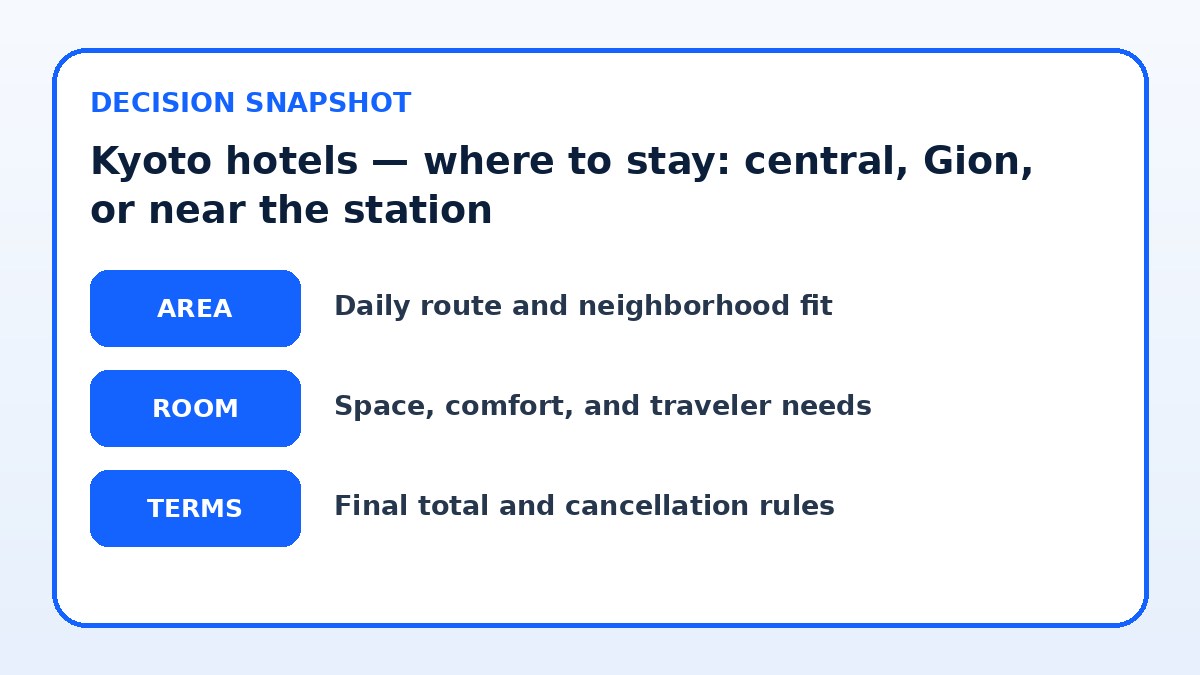
Use the provider page to confirm live availability, the final total, cancellation terms, and every condition that matters to your trip.
This evergreen planning guide was created with AI-assisted drafting and a structured quality review. It does not display live prices, schedules, availability, visa guidance, or provider rankings. Verify current details before booking. Some links are affiliate links; we may earn a commission at no additional cost to you.