Your first-hour decision after landing in Melbourne sets the tone for your return. If you’ve arrived with extra luggage, or are planning to leave with more than you can comfortably handle, think about where you’ll store or stage bags, whether your group needs a single vehicle, and how flexible your departure time really is. The practical answer: pick an airport-transfer approach that matches your party size, luggage bulk, and tolerance for waiting or handling bags. Read on to quickly compare four common choices, learn what to verify on booking pages, and use a short checklist to prepare while you still have your flight and accommodation details open. This article focuses on the return trip to the airport — the last logistical hurdle before your flight — and gives concrete actions so you can book with confidence.
Check options for your arrival details
Use your flight, luggage, party size, and accommodation address to compare current choices.
Match luggage and party size to vehicle capacity
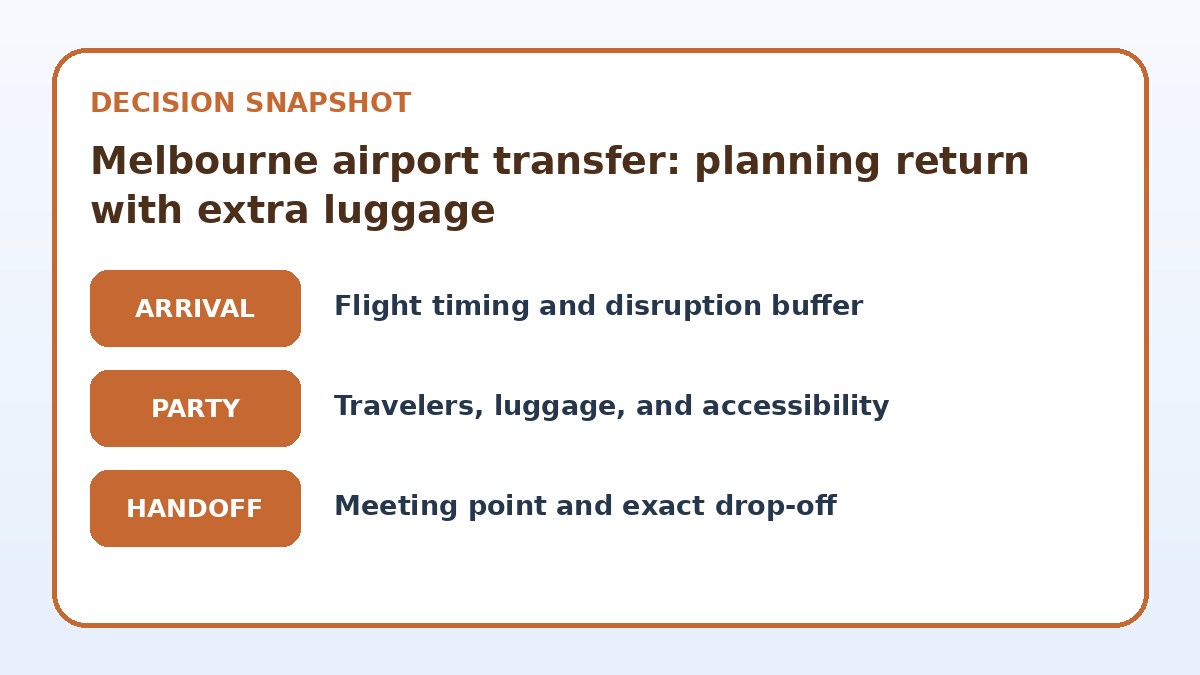
Start by inventorying bags: how many suitcases, any oversized items, and whether you have prams, instruments, or sports gear. Count people and factor in carry-on versus checked bags — carry-ons may fit overhead or under seats but bulky suitcases need trunk or cargo capacity. Once you know the exact haul, compare that to vehicle options. A standard sedan typically handles two medium suitcases and two small bags; larger groups with three or more checked bags should look at people-movers, minibuses, or private airport shuttles that explicitly advertise luggage capacity.
When booking a private transfer or rideshare, use the vehicle selection tools and, if possible, message the driver or operator with your baggage details. For shared shuttles, read the booking terms to learn whether oversized items require an additional booking or if there are limits on the number of large items per passenger. If your accommodation offers a shuttle or can recommend a supplier, ask them for a vehicle recommendation based on your luggage count. Clear communication avoids last-minute rebooking and ensures the driver brings an appropriate vehicle.
Arrival details to have ready
- Count all checked and carry-on items and note any oversized pieces; write totals in your booking notes and messages to the driver or operator.
- Confirm terminal and airline check-in requirements, then match your drop-off point to the correct terminal on the transfer booking page.
- Check operating hours and cancellation/amendment terms for your chosen transfer; verify these details on the provider’s final booking page.
- Measure or estimate luggage volume and compare it to the vehicle types offered; request a larger vehicle if in doubt.
- Save the driver’s vehicle details and a local contact number, and share your phone number and precise pickup spot with the operator.
- Have a backup option (rideshare app, taxi number, or nearest shuttle point) in case of last-minute schedule changes or capacity issues.
Handling late or disrupted arrivals and departures
Flights run late and plans change; build flexibility into your return plan. If your outbound flight is early morning or peak evening, factor in traffic and airport check-in times, and choose a transfer option with flexible cancellation or amendment terms. For late-night or very early flights, verify that the chosen service operates at those hours. Private transfers and rideshares often operate 24/7 but shared shuttles and some hotel shuttles may have limited schedules. Always confirm operating hours on the provider’s final booking page before booking.
If disruptions occur on the day—delays, missed connections, or sudden extra luggage from last-minute shopping—have a fallback method. Identify a secondary transfer option you can access quickly, such as a major rideshare app or the nearest shuttle pickup point. Keep important contacts handy: your accommodation, the transfer company, and an alternative driver number. If you must split your party to get everyone to the airport on time, plan how to reunite at the airport and who will handle which bags.
Match the transfer to your arrival
| Arrival approach | Best for | Detail to verify |
|---|---|---|
| Private pre-booked transfer (van or people-mover) | Groups with many or heavy suitcases who want no handling, direct door-to-door service. | Higher cost than public options and requires advance booking and clear luggage counts. |
| Shared shuttle service | Travelers wanting lower per-person cost who carry moderate luggage and accept possible stops. | Longer door-to-door time and limits on oversized items; less flexibility on pickup times. |
| Rideshare or taxi | Small groups or solo travelers with manageable luggage needing on-demand pickup. | Vehicle trunk size varies; may require two cars for bulky loads and surge pricing can apply. |
| Public transport (train/bus + SkyBus) | Budget-conscious travellers staying near major stations and able to handle luggage over short walks. | Potentially awkward with oversized bags, requires transfers and schedule alignment with your flight. |
Make the meeting plan clear
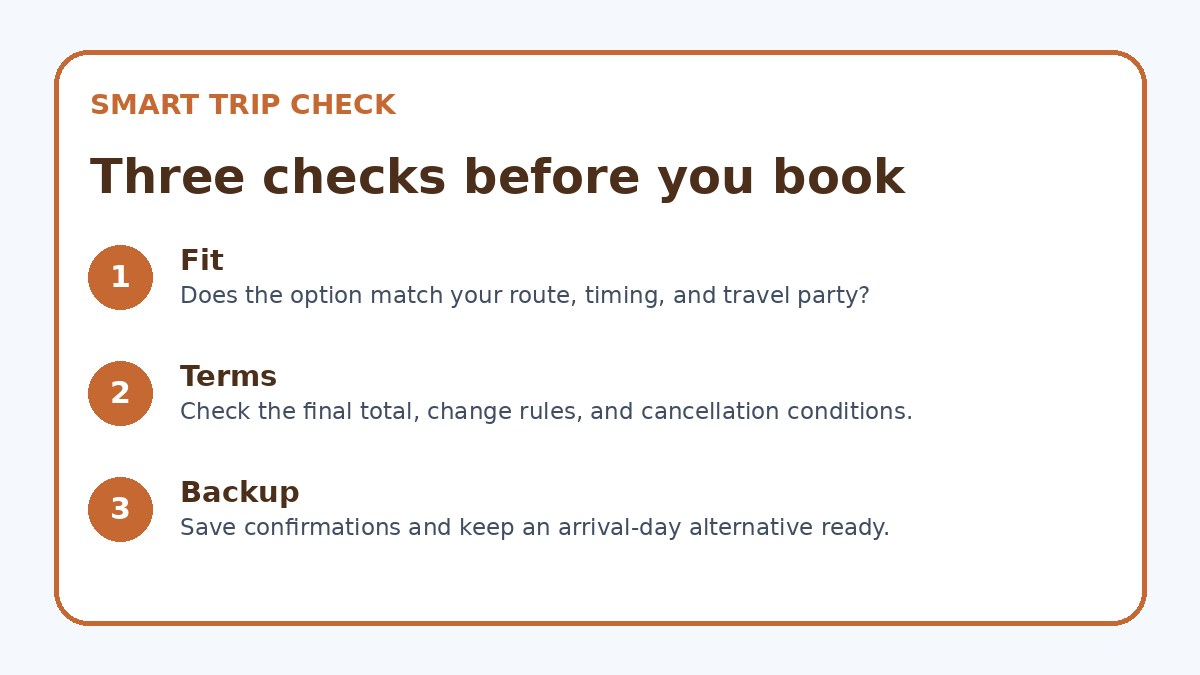
Check the final pickup instructions, waiting conditions, and exact drop-off coverage.
Clear meeting-point and pickup instructions
A surprising number of delays come from unclear pickup points. For pickups from hotels, confirm whether the driver collects you at the hotel door, a designated curbside zone, or a nearby intersection. For private homes or short-term rentals, pick a safe, legal roadside spot that’s easy to find and tell the driver any building or gate codes. When using public stops or station pickups, choose the most accessible exit or platform that minimizes stairs and long walks with luggage. Provide the driver with a phone number that works locally and a precise arrival time window.
When booking shared or prearranged transfers, note if there is a central meeting hub or multiple pickup stops; some services consolidate passengers at a single collection point which could involve extra walking with bags. If you are using rideshare, take a screenshot of the driver’s car make, license plate, and photo, and communicate a clear visual landmark to avoid confusion. If language might be a barrier, save a short message with your meeting point in plain English and, if helpful, a second language common in Melbourne to show the driver.
Destination-side drop-off and airport access fit
Know which terminal serves your flight and whether the drop-off point allows curbside access for unloading luggage. Melbourne Airport has multiple terminals and different curb policies for private cars, shuttles, and taxis; verify which terminal your airline uses and where drivers are allowed to stop. For shared shuttles and buses, confirm whether they drop passengers at the terminal entrance or at a consolidated coach bay that might require a short walk or shuttle transfer within the airport grounds.
If you need fast check-in for tight connections or have oversized luggage requiring special handling, tell the driver in advance so they can prioritize a curbside drop where legal. For large groups, arrange to be dropped as close as possible to airline check-in desks and allow extra time to move through security. If your airline offers curbside check-in or oversized-baggage handling, check eligibility and whether a short wait at the drop-off is acceptable. Always re-check the provider’s directions and terminal notes on their booking confirmation before you leave accommodation.
Airport Transfer & Local Mobility questions travelers ask
Can I book a transfer in Melbourne that guarantees space for large sports equipment or oversized bags?
Many private transfer companies and some shuttle operators can accommodate oversized items if informed in advance; this usually requires selecting a larger vehicle or declaring the item during booking. Never assume standard cars will fit unusual items. On the provider’s booking page check their luggage policy, vehicle sizing options, and whether they charge for oversized baggage. If the site lacks explicit guidance, contact the operator directly and request confirmation in writing or via the booking platform before relying on the ride for oversized gear.
How much extra time should I allow when returning to Melbourne Airport with heavy luggage?
Allow more buffer than for light travel: add time for loading, traffic variability, and moving through check-in and security with heavy bags. A good rule is to add 15–30 minutes to the standard recommended arrival window for domestic flights and 30–60 minutes for international flights if you have multiple large pieces. If using shared services, add time for potential stops. Check-in and security wait times are variable, so verify recommended arrival times with your airline and pick a transfer that delivers you with ample spare time.
Is it better to use a hotel-recommended shuttle or book independently when I have extra baggage?
Hotel shuttles can be convenient and familiar with where to load luggage, but their vehicles and schedules vary; some have limited capacity for oversized bags. Independent private transfers let you specify vehicle size and luggage needs more precisely. Evaluate both by asking for vehicle dimensions or capacity, whether assistance with loading is provided, and what happens if you exceed the advertised limits. Always confirm those specifics on the booking confirmation, and keep an independent backup option if the hotel shuttle’s capacity looks tight.
Final decision note
When your return to Melbourne Airport involves extra luggage, the right transfer comes down to three questions: how much luggage, how many people, and how flexible your schedule is. Private transfers reduce handling and complexity for groups with lots of bags; shared shuttles and public options save money if your luggage fits typical limits; and rideshares work well for small groups with manageable trunks. Before you book, verify vehicle capacity, operating hours, and exact pickup/drop-off points on the provider’s final booking page. Keep a fallback plan and the driver’s details to hand, and you’ll turn a potentially stressful finish into a smooth conclusion to your trip. For current availability across options, you can compare listings on Trip.com as one of several booking resources.
Continue planning
Check current options and final conditions
Use the provider page to confirm live availability, the final total, cancellation terms, and every condition that matters to your trip.
This evergreen planning guide was created with AI-assisted drafting and a structured quality review. It does not display live prices, schedules, availability, visa guidance, or provider rankings. Verify current details before booking. Some links are affiliate links; we may earn a commission at no additional cost to you.