Practical answer up front: pick the mode or combination that matches your priorities — speed, luggage ease, or flexible timing — then plan transfers to and from central stations and terminals so your door-to-door journey is seamless. For many visitors that means deciding between a single-mode trip (rail or coach) that minimizes handoffs, or a mixed route that may include a ferry or city transfers to reach a particular terminal. Focus on where each service drops you in both cities, how you will carry or store bags between legs, and extra time for urban transfers. This article breaks down those choices, explains transfer friction points, offers a simple disruption backup plan, and lists concrete checks to complete before you book. Use provider booking pages and Trip.com to confirm current schedules and terminal locations before finalizing any reservations.
How to choose between rail, coach, ferry, or a mix
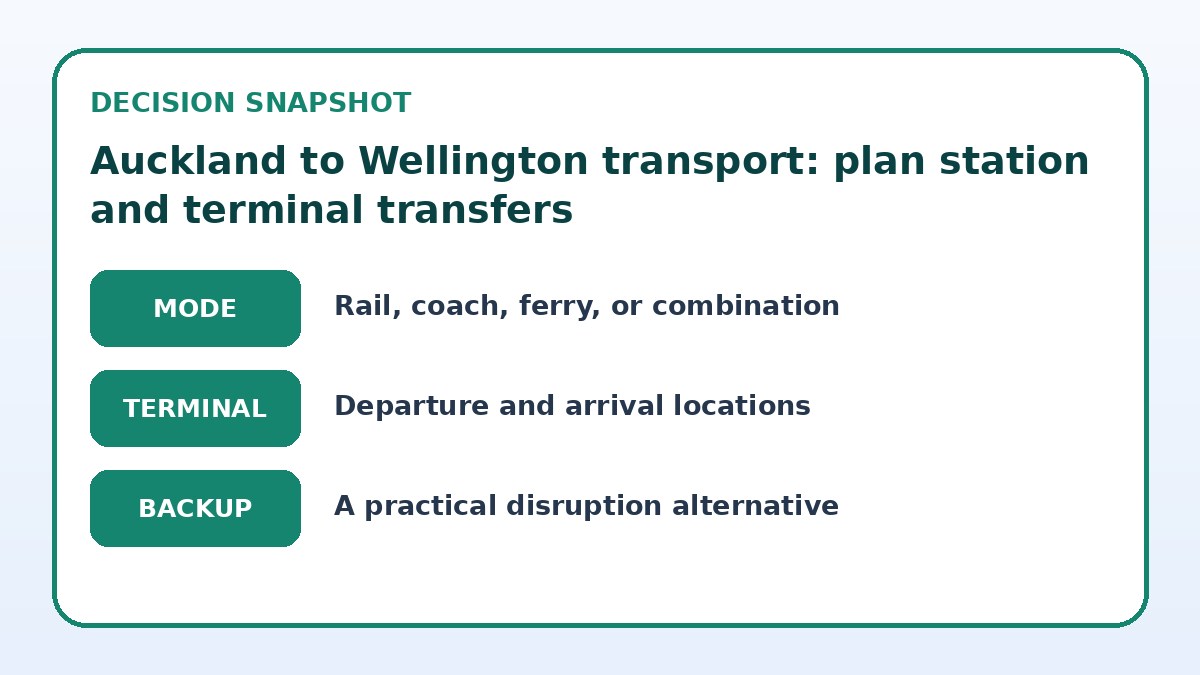
Start by aligning the transport type with your priorities. Rail tends to be comfortable for sitting with larger luggage; coaches may stop closer to suburban hubs and can offer more frequency; ferries are relevant if your chosen route requires a sea crossing or connects different terminals. For a mixed route, combine the strengths: rail for longer horizon segments and coach or taxi for last-mile station access. List your non-negotiables—luggage handling, schedule flexibility, scenic value—and discard options that force multiple heavy bag handoffs or long urban transfers.
Next, map end points rather than assuming modes are interchangeable. A train might arrive at a central station within walking distance of your Wellington hotel, while a coach or ferry may land at a different terminal requiring a transfer. That socket-level view — where each service deposits you in each city — determines whether a single transfer or multiple cross-city moves are needed. If you must change terminals, estimate transfer time realistically by checking public transport links, taxi ranks, and pedestrian routes between those terminals.
Choose the end-to-end journey plan
| Journey approach | Best for | Friction to check |
|---|---|---|
| Single-mode rail or coach (no transfers) | Travelers prioritizing fewer handoffs and simpler luggage handling. | May require longer door-to-door time or less convenient terminal proximity to your final address. |
| Mixed-mode (rail + coach or ferry) | Those who value speed or need a specific terminal match for arrival/departure. | Adds transfer friction and requires careful timing and luggage planning between legs. |
| Coach-heavy itinerary with local drop-offs | Visitors needing closer access to suburban stops or lower-walking transfers at each end. | Coaches may be more affected by road traffic, so allow extra buffer time for connections. |
| Flexible open-ticket approach | Travelers who want the ability to change departure times on short notice. | Flexibility can cost more or require checking multiple providers’ availability before switching. |
Check live intercity options
Look beyond the ride itself and compare terminals, transfers, luggage, and arrival fit.
Terminal fit and luggage/transfer friction
Terminal fit means the physical and logistical ease of moving between vehicles and onward connections. Look at platform layouts, the distance between arrival points and taxi or bus stops, covered walkways, and the presence of elevators or escalators if you have heavy suitcases. If a segment uses a ferry or requires a pedestrian transfer, count the steps and potential kerbside gaps. Travellers with bulky luggage or mobility needs should prioritize routes that minimize stairs and long uncovered walks and should confirm elevator access on provider pages before booking.
Consider luggage policies and practical handling: some intercity coaches have checked baggage bays while trains may allow you to keep bags on board, and ferries will have distinct storage areas. If a transfer requires a short-term hold, research station left-luggage options or ask your accommodation about early check-in or baggage drop. When planning mixed-mode transfers, rehearse the sequence mentally: disembark, collect bags, navigate to the next terminal, and board. Each added step multiplies friction, so aim to minimize handoffs when possible.
Timing flexibility and realistic scheduling
Work backward from the time you need to be in Wellington or Auckland. Allow buffer time for urban traffic or slower-than-expected transfers between terminals. If you have a fixed appointment, choose a schedule that gives you a comfortable margin rather than the tightest connection. For leisure travellers, flexibility lets you choose off-peak departures that reduce the stress of rushing between stations and minimize crowding during baggage transfers.
When comparing options, include transfer walking times, minimum recommended connection windows, and the potential for delays such as road congestion or unexpected ferry docking changes. If your itinerary includes last-mile public transport, check typical frequencies for the times of day you plan to travel. Keep in mind that some connections are seasonal or vary by weekday; confirm operating days and current timetables on the providers’ booking pages before committing to a ticket.
Compare the practical alternatives
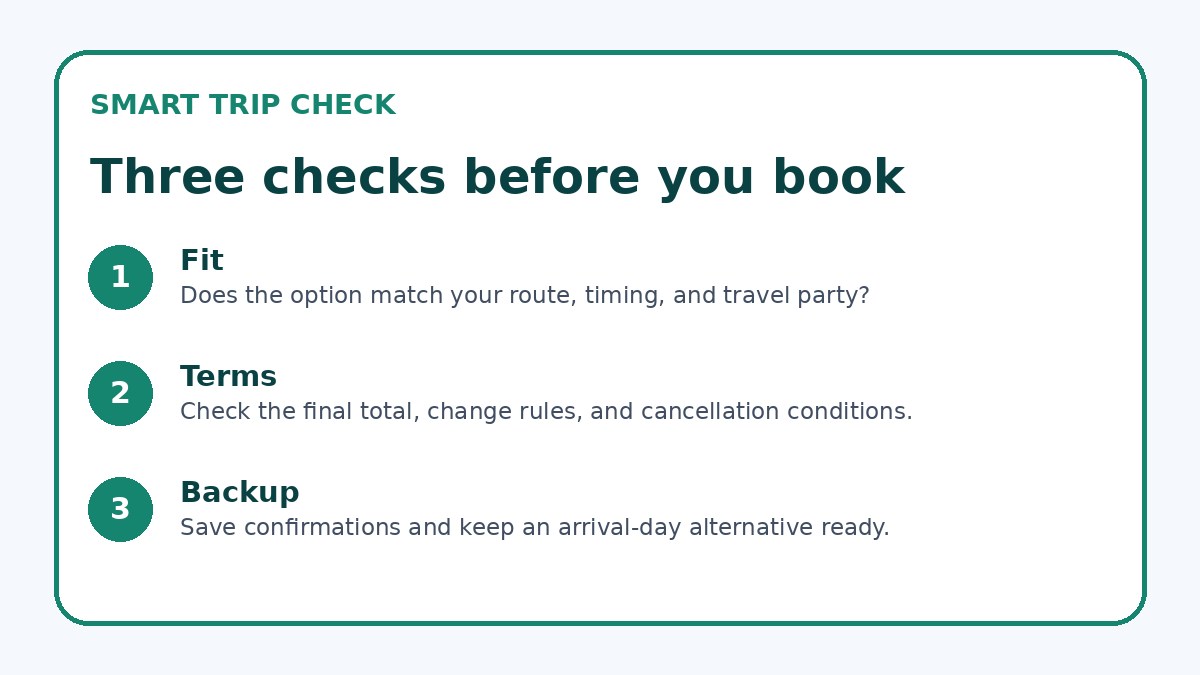
Use the final page to confirm what is actually offered on your dates and save a workable fallback.
Intercity travel checklist
- Map each operator’s arrival terminal in both Auckland and Wellington on a city map and note the walking, taxi, or transit options between terminal and final address.
- Confirm luggage allowances and on-board storage policies on the provider’s final booking page, and plan for any short-term left-luggage needs.
- Allow an explicit buffer of time for transfers—add at least 30–60 minutes for urban terminal changes or when crossing by ferry.
- Save offline copies of terminal maps and local transit routes on your phone and screenshot booking confirmations and key contacts.
- Identify one realistic backup operator or later departure and know how to book that option quickly if your original connection fails.
- Pack a small essentials bag for short delays (chargers, medications, water) and keep it with you during all transfers for immediate access.
Disruption backup and day-of plans
Create a simple backup plan before travel: pick an alternate departure time or an alternative mode (coach vs. train) and know where to buy that ticket on short notice. Save contact details and the maps of terminal-to-terminal routes on your phone for offline access. If you face a cancellation or major delay, having pre-identified alternate operators, or a taxi rank that can bridge the gap, keeps options actionable instead of reactive.
On travel day, monitor the operator’s booking page and local transport alerts for updates, and allow yourself a communication strategy—share your revised arrival time with anyone meeting you and keep a portable charger and a small amount of local currency for unexpected taxis. If you rely on third-party aggregators like Trip.com to compare availability, always verify the final fare, terminal, and conditions on the provider’s booking page before confirming, because details can change.
Rail & Intercity Transport questions travelers ask
Can I rely on a single ticket to cover mixed-mode transfers between Auckland and Wellington?
Tickets that cover multiple modes and operators do exist in some networks, but they are not universal. Before assuming a through-ticket, check the provider’s booking conditions and the final purchase page to confirm whether separate legs require separate tickets. If separate tickets are needed, plan extra time between services and verify baggage transfer rules. When you need convenience, weigh the tradeoff between buying a through-ticket (if available) and the potential flexibility of separate bookings.
What is the best way to handle luggage during terminal-to-terminal transfers?
Minimize handoffs: choose services that allow you to keep luggage with you where practical, or select operators with checked baggage options that reduce carrying. If you must move luggage between terminals, use wheeled suitcases, plan elevator routes, and check for station left-luggage services ahead of travel. For fragile or bulky items, arrange door-to-door taxi or rideshare for that segment to avoid repeated lifting; always verify terminal pickup/drop-off points on the booking page beforehand.
How far in advance should I build buffers for unexpected disruptions en route?
Buffers depend on your tolerance for risk and whether you face road or sea segments. For city-to-city transfers that include road sections or ferry connections, a practical buffer is at least 30–60 minutes beyond scheduled minimum connection times; for tight appointments, add more. If your trip includes possible seasonal delays, or you are travelling during busy periods, increase the buffer. Have a named alternate service and know where to check live updates on the provider’s official site or aggregator pages.
Final decision note
For first-time visitors planning Auckland to Wellington transport, the most useful decision is the one that minimizes unnecessary transfers while matching your luggage and timing needs. Map terminal locations, compare door-to-door practicalities, and choose a route that reduces steps between arrival and your final address. Always verify terminal details, luggage policies, and real-time schedules on the provider’s booking page before you commit, and keep a simple backup plan with alternate departures or operators. With a little pre-trip mapping and time buffering, you’ll avoid the common friction points that make intercity travel feel more complicated than the ride itself.
Continue planning
Check current options and final conditions
Use the provider page to confirm live availability, the final total, cancellation terms, and every condition that matters to your trip.
This evergreen planning guide was created with AI-assisted drafting and a structured quality review. It does not display live prices, schedules, availability, visa guidance, or provider rankings. Verify current details before booking. Some links are affiliate links; we may earn a commission at no additional cost to you.