If you and your partner are deciding between a direct Seoul to Tokyo flight and one with a connection, the core tradeoff is simple: time and convenience versus potential savings and schedule flexibility. For couples, that balance also includes comfort, baggage handling, and the stress of transfers. Start by deciding whether a shorter door-to-door time and fewer moving parts matter more than shaving money off the ticket or opening more departure times. Also consider your tolerance for airport layovers, the need for checked luggage, and the precise arrival airport in Tokyo — different airports change onward travel plans and the couple’s mood on arrival. Before you search, gather exact travel dates, preferred departure windows, total luggage, and whether you need refundable fares or seat choice; these details change which option is genuinely better for your trip.
See live routes for your exact travel day
Compare direct and connecting choices with the same baggage and traveler details.
Routing: which airports and connections to compare
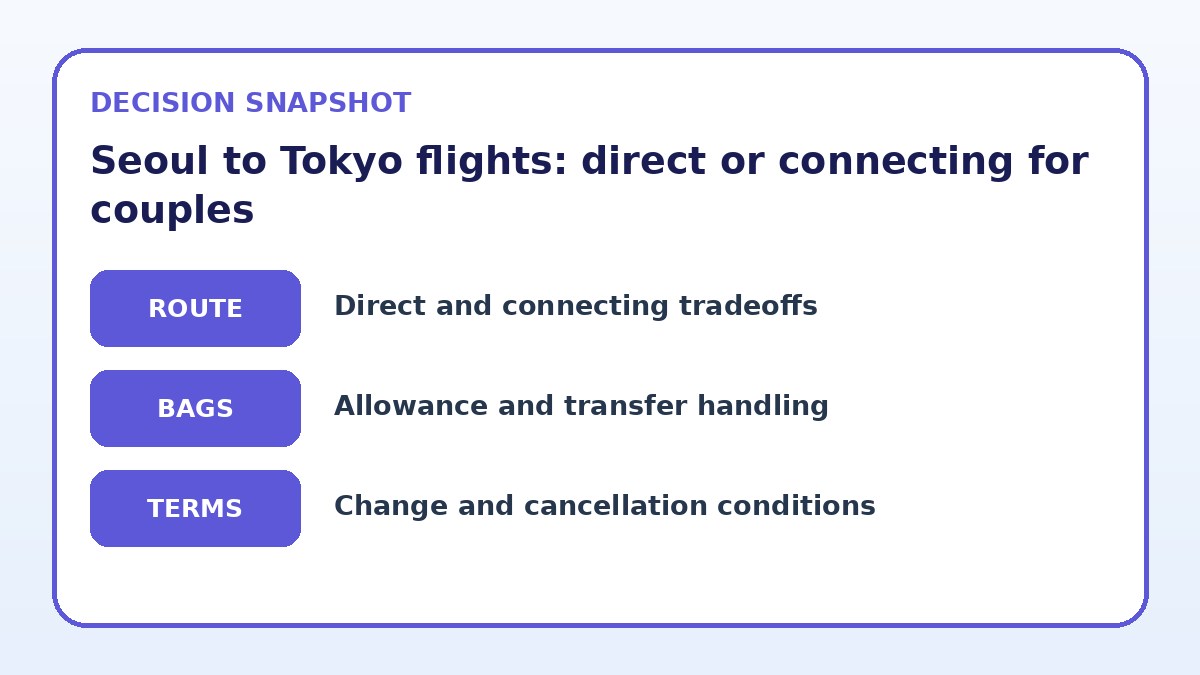
Seoul to Tokyo travel commonly involves departures from either Seoul Incheon (ICN) or Gimpo (GMP) and arrivals into one of Tokyo’s major airports. When comparing routes, list which Seoul airport each option uses and which Tokyo airport it reaches, because airport choice affects ground transfer time and expense. Couples should also check whether a connecting itinerary promises the same through-ticket to Tokyo or requires separate tickets; through-ticket connections usually include protected transfers, while separate tickets make you responsible for moving between terminals or airports.
When you search, filter results by total door-to-door time rather than just airborne time. A connecting flight with a short layover might look fast on paper but can be risky if gates are far apart or if you must clear immigration. Equally, a slightly longer connection can provide buffer time, a meal break, or a chance to switch to a preferred cabin class, which can be valuable for couples traveling with children or lots of luggage.
Baggage and connection risk: how to protect your trip
Baggage rules and how checked bags are handled are decisive for couples. If your itinerary is a single booking that includes a connection, checked bags are often transferred automatically to the final Tokyo flight. But if you piece together separate tickets, plan to reclaim and recheck bags through immigration — which can add significant time and stress. Verify on the airline or booking agent’s final page whether bags are through-checked and what the airline’s missed-connection policy is so you can decide if a lower fare is worth the added handling.
Also assess the minimum connection time and historical on-time performance for the carriers involved. For couples who prefer certainty, prioritize itineraries with longer scheduled transfer windows and clearly stated missed-connection protections. If one partner is anxious about tight transfers, choose an option with generous layover time or a direct flight. Always note whether transfers require moving terminals or even airports; those logistics change how much buffer time you should book.
Compare flight-selection strategies
| Flight strategy | Best for | Risk to check |
|---|---|---|
| Direct nonstop flight | Couples prioritizing speed, minimal transfers, and predictable arrival time. | Usually fewer departure times and potentially higher base fare; limited options if you need specific scheduling or lower cost. |
| Single-ticket connection (same booking) | Couples wanting cheaper or more flexible departure windows while keeping protection for missed connections. | Longer total travel time and more time in airports, but baggage is typically through-checked and protections may apply. |
| Separate-ticket connection (different bookings) | Travelers seeking the lowest fare or unusual timing by mixing carriers and schedules. | Higher risk: you must reclaim and recheck bags, and missed connections are usually not covered by either carrier. |
| Multi-day stopover connection | Couples who want to break the trip, add a short city visit, or avoid tiring long-haul segments. | Adds planning complexity and potential lodging costs, but can turn travel time into an extra mini-trip together. |
Recheck the complete itinerary
Confirm airports, connection handling, baggage, and change conditions before deciding.
Schedule fit and comfort for couples
Think about what time of day you want to travel together. Direct flights often depart at peak times and can get you into Tokyo earlier, which is useful if you have a check-in window at a hotel or plans that afternoon. Conversely, connecting flights open up off-peak departures that might better match evening plans or lower daytime prices. Consider how airline departure times align with your preferred sleep and activity patterns — a late-night direct flight might appeal to couples who want to maximize sightseeing, while a daytime connection could break the journey and reduce fatigue.
Comfort factors should also influence your choice: seat selection, ability to sit together, and cabin class availability can vary between direct and connecting options. A connecting itinerary that offers more available seats together in a preferred cabin could be better than a cramped direct flight. If either partner needs aisle access, bulkhead space, or specific meal options, check those amenities on each segment and confirm they are honored across the full itinerary.
Flight details to verify
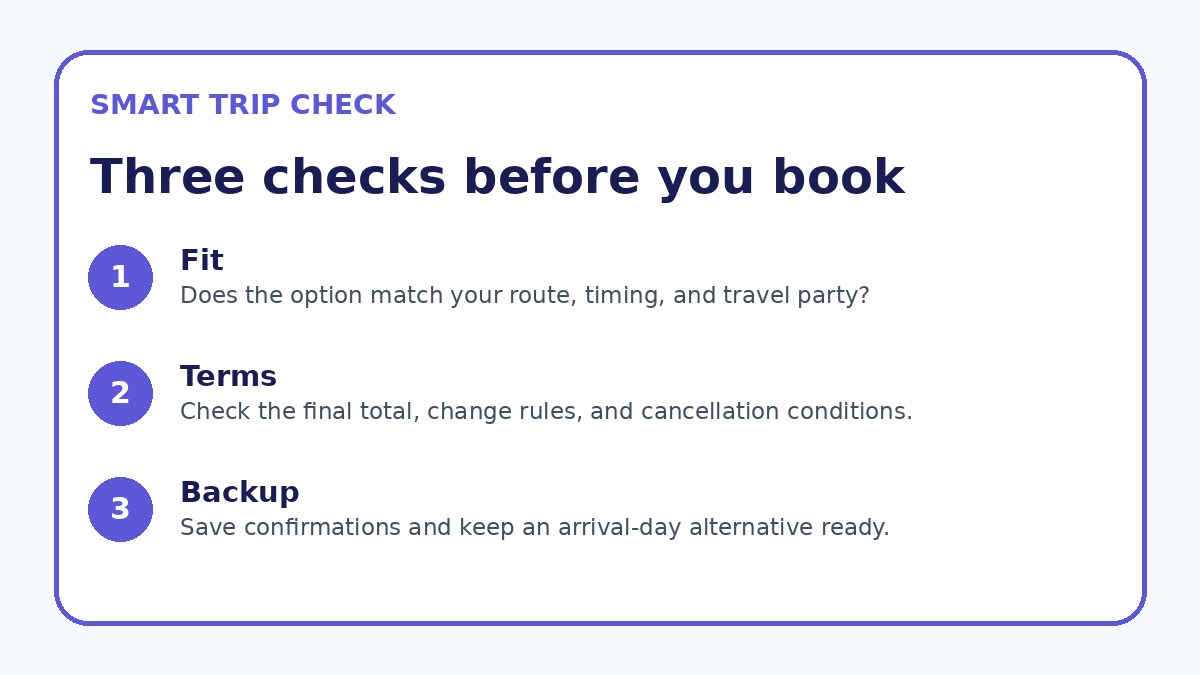
- Gather exact travel dates, full traveler names as on passports, and preferred departure/arrival time windows before searching.
- Confirm which Seoul airport and which Tokyo airport each itinerary uses and estimate ground transfer time for each airport pair.
- Check the booking page to verify whether checked baggage is through-checked to Tokyo or must be reclaimed during a transfer.
- Read the fare conditions: change and cancellation rules, fees for seat selection, and whether a single ticket covers all segments.
- For connecting itineraries, verify minimum connection times, terminal transfer requirements, and missed-connection protection from the carrier.
- Have a backup plan: know later flights on your chosen route, and keep contact details for the operating carrier accessible in case disruptions occur.
Fare conditions and what to verify before booking
Fare rules — change and cancellation policies, baggage allowances, and seat selection fees — can swing the decision. Always read the fare conditions on the booking page: see what applies to refunds, date changes, and no-show penalties. For couples who want flexibility, a refundable or changeable fare might cost more but reduce anxiety if plans shift. If you’re comparing connecting options across carriers, verify whether a single ticket covers all segments; if not, separate fare rules will apply and could complicate changes or refunds.
When comparing prices, factor in all extra costs: ground transfers between airports, rechecking bags, seat selection fees, and any required overnight stays if a long layover forces a stop. Before clicking purchase, confirm the final price and rules on the airline or agent’s page, check whether baggage is included, and verify how to contact customer service if a connection is missed. You can use Trip.com as one option to compare live availability and conditions, but always confirm specifics with the carrier that will operate your flights.
Flight Guide questions travelers ask
Is a direct flight always the better choice for couples traveling between Seoul and Tokyo?
Not always. Direct flights reduce transfers and the chance of luggage or connection problems, which many couples value for stress-free arrival. However, connecting itineraries can offer more departure times that match your schedule or lower base fares. If budget flexibility, preferred departure windows, or seat availability matters, a well-timed connection could be preferable. Decide based on your priorities — time and predictability versus potential savings and schedule options — and confirm baggage rules and fare protections before booking.
How much layover time should couples allow when choosing a connecting flight?
Aim for a buffer that matches the airport layout and whether you must clear immigration or change terminals. For single-ticket connections on the same airline or alliance, a standard connection window that airlines sell often suffices; still, allow extra time if either of you prefers a relaxed pace. If you must transfer between terminals or reclaim luggage on separate tickets, plan for a substantially longer layover to avoid rushing. Check the airline’s minimum connection time guidance and add realistic padding for security lines and gate changes.
What should we check about baggage rules before selecting a fare for Seoul to Tokyo?
Confirm whether checked baggage is included in the fare and whether it will be through-checked to your final Tokyo airport for connecting itineraries. If fares are on separate tickets, prepare to reclaim and recheck bags and factor in the time and potential fees. Also verify carry-on allowances, weight limits for checked pieces, and any excess-baggage fees on the booking page. If you have special items like strollers or sports equipment, check handling rules and whether you need to notify the airline in advance.
Final decision note
For couples flying Seoul to Tokyo, the practical choice comes down to whether you value a simpler, faster journey or are willing to accept extra steps for possible savings or schedule flexibility. Direct flights reduce complexity and baggage handoffs, making arrival smoother and often more pleasant, especially after a long day of travel. Connecting itineraries can broaden departure options and sometimes lower cost, but they require more careful attention to baggage policies, connection windows, and terminal logistics. Before booking, assemble exact travel dates and traveler names, confirm airport pairs, read fare rules on the carrier’s final page, and compare total door-to-door time rather than just flight time. These steps will help you pick the option that fits your couple’s comfort level and schedule.
Continue planning
Check current options and final conditions
Use the provider page to confirm live availability, the final total, cancellation terms, and every condition that matters to your trip.
This evergreen planning guide was created with AI-assisted drafting and a structured quality review. It does not display live prices, schedules, availability, visa guidance, or provider rankings. Verify current details before booking. Some links are affiliate links; we may earn a commission at no additional cost to you.