Practical choice first: for solo travelers, pick the option that minimizes luggage handling and transfer friction end-to-end. If you value few handoffs and simple door-to-door logistics, a coach or private transfer that allows luggage stored under the vehicle or loaded by a driver will usually be easier than multiple short hops. If you prioritize comfort and space to keep bags with you, choose services with guaranteed luggage storage onboard (double-deck coaches or ferries with cabins) and verify weight or size rules before booking. This article explains how to compare coach, rail-plus-coach combinations, ferries, and mixed itineraries for the Singapore to Penang corridor, focusing on terminal fit, transfer effort, timing flexibility, and what to do if plans unravel. Read on for decision checkpoints, a quick comparison, an actionable packing and transfer checklist, and clear backup strategies that solo travelers can use to keep a smooth journey from door to door.
Choose by terminal fit and last-mile practicality
Start by mapping where each service arrives and departs in both Singapore and Penang. A ride that looks faster on paper can become a logistics headache if the arrival point is a suburban terminal requiring an extra taxi with your bags. For solo travelers, shorter and cheaper last-mile rides matter less than the number of times you have to move heavy or awkward luggage. Prefer services that use central bus stations or ferry terminals with straightforward connections to taxis, rideshares, or rail, and note whether terminals have luggage trolleys and sheltered loading areas to ease handling in wet weather.
Consider where you start and end in each city. If you can book a coach or transfer that collects you near your accommodation and drops you near your Penang hotel, the convenience often outweighs a slightly longer ride. Conversely, if you're staying close to a train station offering a direct onward connection, the train-plus-coach option could reduce street transfers. Always verify exact terminal names and addresses on the operator's final booking page, and plan the last-mile on a map so you can estimate walking distances and the likely cost and time of any taxi or rideshare legs.
Choose the end-to-end journey plan
| Journey approach | Best for | Friction to check |
|---|---|---|
| Direct coach or express bus | Solo travelers wanting minimal handling and straightforward door-to-door logistics | May mean fewer departure times and less cabin space for valuables you want to keep with you |
| Train plus coach combination | Those preferring a spacious train leg with a shorter road transfer | Requires a terminal transfer where you must manage luggage between vehicles |
| Ferry-inclusive route (coach + ferry) | Travelers who value cabin space or who want a less bumpy, scenic sea segment | Adds an extra transfer point at piers and often stricter luggage rules for the vessel |
| Mixed flexible plan (multiple local legs) | Budget-focused solo travelers willing to handle luggage more often for lower fares | More handoffs increase hassle, time unpredictability, and risk of missed connections |
Check live intercity options
Look beyond the ride itself and compare terminals, transfers, luggage, and arrival fit.
Luggage and transfer friction: what to verify
Before booking, confirm each provider's luggage policy: maximum dimensions, weight limits, number of pieces allowed, and whether bags travel in a hold, undercarriage, or with you in the cabin. Solo travelers often prefer keeping valuables with them, so check if small suitcases or backpacks are permitted onboard. Ask whether staff load and unload luggage at stops or if you'll be expected to manage everything yourself—some cross-border coaches stop quickly for immigration and can leave you juggling bags without help.
Also check whether transfers between segments are timed to allow comfortable movement with luggage. If your itinerary requires switching vehicles or terminals, ensure there is reasonable connection slack—especially when crossing borders or changing from a land route to a ferry. On mixed routes, verify how long it takes to move between the pier and the bus station, whether luggage must be rechecked, and whether you can keep one carry item with you. Put the provider's luggage notes on your booking confirmation for quick reference on travel day.
Timing flexibility and comfort tradeoffs
If your schedule is rigid, choose fewer, direct legs even if those options are less comfortable; minimizing transfers reduces the chance of a missed connection. If you have flexibility, compare departures by time of day: overnight or early-morning services might be less crowded, easing luggage storage and giving you a full day on arrival, while midday departures can be simpler for daylight transfers. Comfort considerations include seat space for a carry bag, aisle width to lift items into overhead areas, and whether on-board restrooms or refreshment breaks are available during long stretches.
Cost and comfort often trade against each other. A coach with generous storage and fewer stops might be marginally pricier than hopping multiple cheap segments, but it saves you the repeated lift-and-carry work. If you need to sleep en route, choose options offering reclining seats, berths, or small ferry cabins where you can keep luggage secure beside you. Whatever you choose, build at least 60–90 minutes of buffer for immigration or customs procedures when crossing the Malaysia–Singapore land border or transferring to a ferry, and re-check provider details at booking.
Compare the practical alternatives
Use the final page to confirm what is actually offered on your dates and save a workable fallback.
Intercity travel checklist
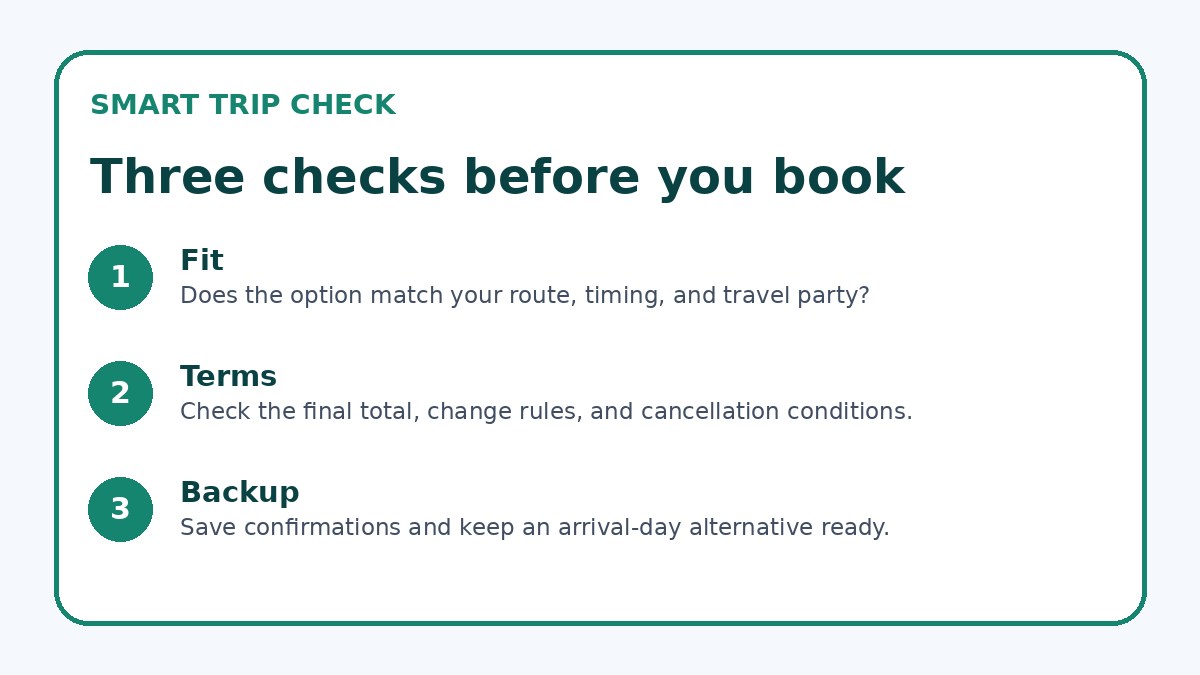
- Map exact departure and arrival terminal addresses and identify the shortest taxi or rideshare route at both ends.
- Confirm luggage allowances, piece/weight limits, and where bags will be stored on each booked segment.
- Allow at least 60–90 minutes buffer for border checks and transfers when switching modes or operators.
- Pack valuables and travel documents in a compact day bag you can carry on your person at all times.
- Save screenshots of bookings and luggage notes, and have provider contact details ready for rapid rebooking.
- Choose one backup operator that uses the same terminal and know its typical departure windows before travel day.
Disruption backups and practical contingencies
Create a simple, reachable backup for the most likely disruptions: delays, missed connections, or unexpected luggage restrictions. Pick an alternate operator or a different mode that uses the same terminal so you can rebook quickly without a long transfer. Keep digital copies of your booking and emergency contact details accessible, and note which nearby hotels or storage options accept same-day drop-offs if you need to stash a bag temporarily. For cross-border journeys, have your documents and any immigration paperwork ready in a single folder to speed through checks if a later service will leave you short on time.
Prepare for the worst reasonable-case scenario: if a segment is canceled late, know whether refund or rebooking is immediate on the operator's final booking page and whether you can transfer your reservation to the next service. Have a small amount of local currency and a working mobile payment option for taxis or short-notice transfers, and consider travel insurance that covers delays and missed connections. When traveling solo, inform someone at your destination of your revised plan if you need to change services unexpectedly.
Rail & Intercity Transport questions travelers ask
How do I decide between a direct coach and a mixed route when I have a lot of luggage?
If you have heavy or multiple large bags, prioritize direct coaches or services that explicitly store luggage in an undercarriage or dedicated hold with staff assistance. Mixed routes require moving bags between vehicles and possibly across terminals, which increases physical effort and the possibility of delay. Check the operator's baggage handling policies on the final booking page to confirm staff assistance and dimensions allowed. If any leg requires short taxi transfers, factor the cost and effort of loading/unloading there into your decision.
What should I pack in my carry-on to make transfers easier on my own?
Put passports, boarding confirmations, some local currency, medications, a power bank, and basic toiletries in a compact carry-on or daypack you can sling on and keep with you at all times. Include a lightweight padlock and a small plastic bag for wet items. Arrange items so you can reach travel documents without opening your main suitcase. If you might need to sleep on board, pack an eye mask and compact travel pillow. This reduces the need to access the main luggage during short stops or security checks.
If my booked service is delayed or canceled, what immediate steps should I take as a solo traveler with luggage?
First, confirm the operator's rebooking or refund policy on your booking confirmation or final booking page. If immediate rebooking is allowed, move to the counter or use the operator's app to secure the next departure that accommodates your luggage. If not, locate another provider operating from the same terminal to avoid an extra transfer. Keep essentials with you and consider short-term luggage storage only if it saves you a critical connection; otherwise, aim for a single alternate that minimizes additional handling.
Final decision note
Choosing how to travel from Singapore to Penang as a solo traveler with luggage is a balance between minimizing handoffs and matching comfort to the length of the journey. Start by prioritizing the number of transfers and terminal locations, then verify luggage rules on the operator's final booking page to avoid surprises. Pack smartly so essentials stay with you and select a backup operator that uses the same terminal for quick rebooking. With a mapped last-mile, clear luggage plan, and one simple contingency, you can reduce physical strain and make a cross-border trip that feels controlled rather than chaotic.
Continue planning
Check current options and final conditions
Use the provider page to confirm live availability, the final total, cancellation terms, and every condition that matters to your trip.
This evergreen planning guide was created with AI-assisted drafting and a structured quality review. It does not display live prices, schedules, availability, visa guidance, or provider rankings. Verify current details before booking. Some links are affiliate links; we may earn a commission at no additional cost to you.