For families deciding how to travel between Los Angeles and San Francisco, the practical choice hinges on more than seat comfort: consider where each mode drops you, how much handling your luggage and kids need, and what happens if plans derail. Trains offer relaxed space and scenic stretches, coaches usually undercut complexity and can have flexible boarding, ferries add a novelty factor if combined with a coastal ferry segment, and driving or mixed modes give door-to-door control. The right decision balances terminal fit, transfer friction, travel-time flexibility, and a simple disruption backup that keeps children fed and rested. This guide walks through those criteria, shows the tradeoffs for each approach, and gives an actionable checklist families can use when booking.
Terminal fit and door-to-door practicality
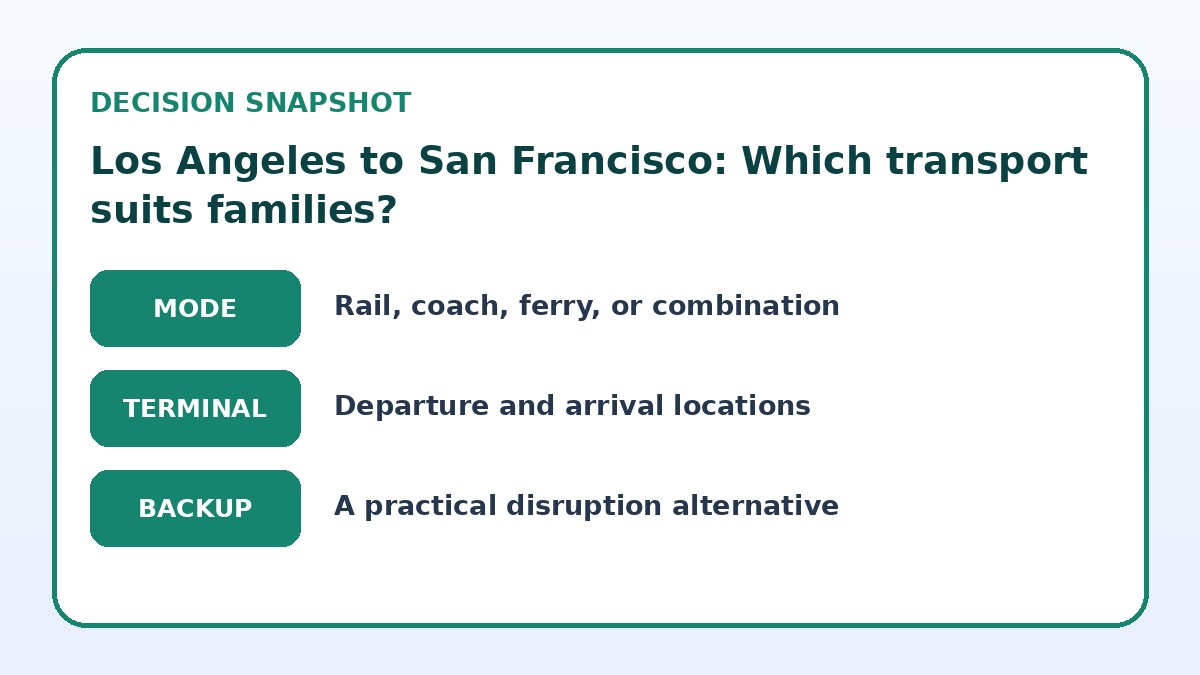
Terminal location often decides a family trip before you compare seat types. Urban stations and coach terminals differ from ferry docks and highway exits: a train station in central downtown can be a win if it shortens transit from your hotel, while a coach terminal outside the core might add a taxi or shuttle leg. Driving offers the best door-to-door control but brings parking, tolls, and the need to focus on the road. Map the start and end points of your chosen mode against where you actually need to be—daycare dropoffs, attractions, or rental housing—and calculate the total door-to-door time, not just the ride.
Also consider pick-up and drop-off convenience: trains and coaches often have dedicated curbs and loading zones, while ferries and park-and-ride lots may need longer walks or shuttle transfers. If your family travels with a stroller, car seat, or several suitcases, check how easy it is to move between modes—are elevators common at stations? Is there curbside assistance or baggage handling? These small frictions add up and can be the difference between a calm trip and a stressful one with tired kids.
Choose the end-to-end journey plan
| Journey approach | Best for | Friction to check |
|---|---|---|
| Single-mode train journey | Families wanting more space, onboard restroom access, and a predictable seated environment. | Station locations and schedules may require extra local transfers or last-mile transport. |
| Coach or bus-only trip | Families prioritizing simple, often frequent departures and the fewest planning steps. | Less personal space and luggage handling can be awkward with multiple bags or bulky child gear. |
| Mixed ferry plus land segments | Families seeking a scenic, memorable route and willing to handle extra transfers. | Ferries add transfer complexity and can require longer walks or shuttle connections with luggage. |
| Drive or car-based door-to-door | Families needing ultimate timing control, flexibility for stops, and full luggage access. | Driver fatigue, parking logistics, and variable traffic make the journey less predictable. |
Check live intercity options
Look beyond the ride itself and compare terminals, transfers, luggage, and arrival fit.
Luggage, transfers and on-the-go needs
Families should inventory what they’ll carry: car seats, strollers, luggage, a cooler, or sports gear. Trains typically give more personal space and room to stow items near your seat, while coaches can have underfloor bays but require lifting into racks. Ferries may mean moving luggage over gangways and walking longer distances. If you need frequent access to snacks, diapers or entertainment, choose a layout that lets you keep a small bag at your feet rather than locked in hold.
Transfers matter—every change of vehicle is a mini-activity that needs managing. Evaluate how many transfers each itinerary requires and the expected transfer distance. Allow generous connection time when booking, especially when transferring with children. When in doubt, prefer a single-seat or single-transfer itinerary even if the running time is longer. Also confirm whether stations or terminals have family restrooms, changing facilities, or nearby cafes where you can regroup before continuing.
Timing flexibility and travel-day routines
Consider how the journey fits your family’s daily rhythm. Early departures can avoid traffic and give you a full day at the destination but might be tough for young children who need morning routines. Midday travel can match nap schedules but risks peak traffic for driving. Trains often run multiple times per day and may have a broader window to match nap cycles; coaches can offer very frequent departures but sometimes from less convenient locations. Driving gives total timing control but depends on road conditions and driver fatigue management.
Think about the predictability of travel time. Road trips are subject to variable traffic delays; rail and ferry journeys usually have more consistent running times, but they can still be affected by operational issues. Build buffer time for restroom breaks, playground stops, and meals. Pack a small travel kit with familiar snacks, a lightweight blanket, and printable or downloaded entertainment that doesn’t rely on continuous internet, because Wi‑Fi availability and reliability vary by mode and operator.
Compare the practical alternatives
Use the final page to confirm what is actually offered on your dates and save a workable fallback.
Intercity travel checklist
- Map the exact station, terminal, dock, or parking location against your start and end addresses to calculate true door-to-door time.
- List every item you’ll carry on the trip and test whether it fits a single carry bag or requires baggage transfers.
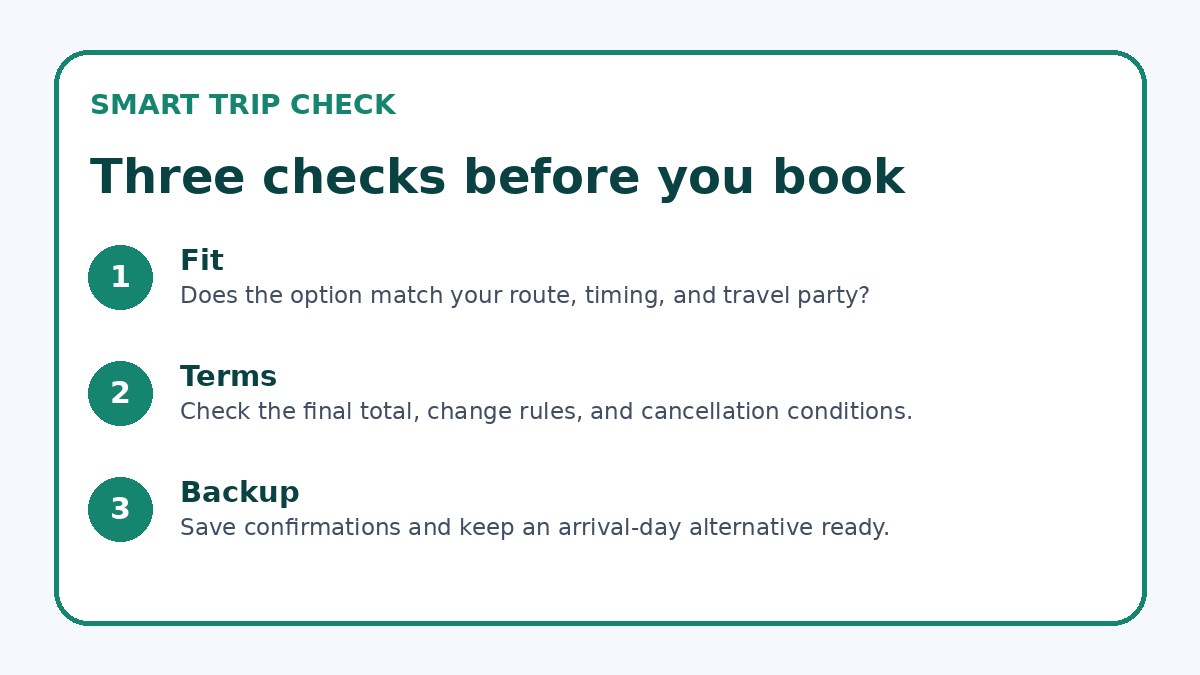
- Check change and cancellation policies on the operator’s official booking page before you commit to tickets.
- Build at least one realistic alternate plan for delays: another departure, a rideshare route, or an overnight stop.
- Pack a family travel kit with snacks, medication, chargers, entertainment, and a spare outfit for each child in your carry-on.
- Confirm availability of family amenities at terminals—restrooms, nursing rooms, elevators—and factor them into transfer plans.
Disruption planning and easy backups
A simple disruption plan reduces stress: identify one realistic alternative for each leg—another train or coach in the same terminal, a rideshare or local taxi, or a short hotel stay if delays are long. Keep emergency contacts, medication, and an extra set of clothes in your carry-on so you can handle unexpected waits. When booking, verify change and cancellation policies on the provider’s final booking page and consider options that allow same-day changes if your plans are uncertain.
Also map local resources along the route: larger stations usually have customer service desks and family amenities; rural stops may not. If you plan a mixed-mode trip—train to a coastal town then ferry or car—confirm connection windows and whether ferries accept walk-on families with luggage. Use one reliable comparison site for live availability checks—Trip.com can be used as a reference for schedules and availability—but always confirm specifics, baggage rules, and boarding requirements on the operator’s official page before you finalize bookings.
Rail & Intercity Transport questions travelers ask
Is taking the train between Los Angeles and San Francisco practical for families with young children?
Yes, trains can be practical because they generally offer more space to move, onboard restrooms, and seating that lets small children spread out. However, practicality depends on station locations and how many transfers are needed to reach your final destination. If the train departs from or arrives at stations far from where you need to be, the last-mile transfer could outweigh onboard comfort. Before booking, check station access, elevator availability for strollers, and how luggage is handled; verify those operational details on the train operator’s official site.
What are the key advantages of a coach or bus trip for a family?
Coaches typically provide frequent departures and straightforward point-to-point routing, which reduces planning complexity. They can be a good match for families who prefer a single booking, fewer decisions, and often lower handling of connections. On the flip side, coaches can have tighter seating and require lifting luggage into bays. If considering a coach, confirm boarding procedures, luggage allowances, and whether there are family-priority seats or early boarding options on the operator’s booking page.
Can combining modes—like driving to a ferry or train—make the trip easier for families?
Combining modes often gives the best balance of comfort and door-to-door practicality: driving to a convenient station or park-and-ride can cut local transfers, while taking a ferry or train for the long portion reduces driving fatigue. The tradeoff is coordinating schedules and ensuring connection windows are generous, especially with children. When planning mixed-mode travel, allow extra buffer time between legs, verify luggage rules for each operator, and check ferry or train boarding requirements on their official pages before finalizing the plan.
Final decision note
Choosing between train, coach, ferry, or driving for a family trip from Los Angeles to San Francisco comes down to door-to-door convenience, how many hands-on transfers you want, and how flexible your travel day must be. Map terminals against your actual start and end points, inventory luggage and child gear, and set a clear disruption backup. If you need live schedules or to compare availability, Trip.com can be a quick reference, but always confirm baggage rules, station access, and change policies on the provider’s official site before booking. The best family choice minimizes transfers, fits your routine, and keeps a simple plan ready if plans change.
Continue planning
Check current options and final conditions
Use the provider page to confirm live availability, the final total, cancellation terms, and every condition that matters to your trip.
This evergreen planning guide was created with AI-assisted drafting and a structured quality review. It does not display live prices, schedules, availability, visa guidance, or provider rankings. Verify current details before booking. Some links are affiliate links; we may earn a commission at no additional cost to you.