For couples deciding between convenience and schedule flexibility on the Bangkok to Phuket route, the practical starting point is deciding how rigid your travel dates and daily schedule are. If you need a specific arrival time for a resort check-in, honeymoon dinner, or connecting ferry, prioritize shorter travel time and direct routing even if it costs more. If you value cheaper fares or the ability to change plans without penalty, prioritize flexible conditions, longer connection windows, or refundable fares. This article helps you balance those priorities by explaining routing options, baggage and connection risks, schedule fit for typical couple itineraries, and fare-condition tradeoffs. Before you search, gather exact travel dates, preferred time windows, baggage needs, and whether you want refundable or changeable tickets—those details narrow practical choices and reveal the real cost of flexibility versus convenience.

See live routes for your exact travel day
Compare direct and connecting choices with the same baggage and traveler details.
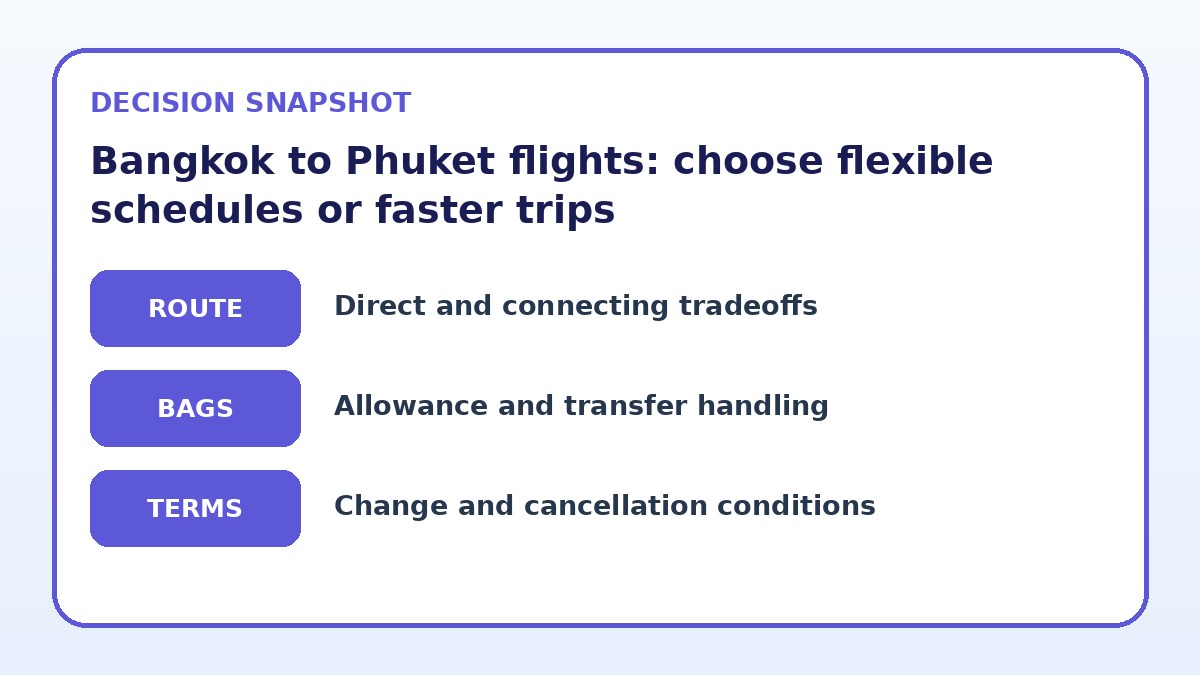
Routing: direct versus connecting options
On the Bangkok–Phuket route you'll typically see options that differ by routing: direct flights that go straight between the two airports, and alternatives that include one or more stops. For couples, the main practical difference is time versus options. A direct flight shortens travel time and reduces the number of moments you need to coordinate or rebook; connecting itineraries can open up cheaper fares or better departure times but increase the points of failure—delays, missed connections, and more baggage handling. When comparing options, line up the total travel time, the number and length of connections, and whether ground transfers are required at either end.
To choose, list the exact times you want to leave and arrive, then compare available routings that meet those windows. If both of you value minimizing stress and maximizing time at your Phuket accommodation, lean to direct routing even if the fare is higher. If you can be flexible on arrival time to save money or to visit a stopover on the way, a connecting itinerary may be worth it. Always verify whether each candidate itinerary is a single ticket (one contract) or separate legs you must manage independently; that affects baggage handling and responsibility for missed connections.
Baggage and connection risk: what couples should factor in
Baggage rules and the risk of missed connections often determine whether a lower fare is actually cheaper. On itineraries sold as a single ticket, the airline typically moves checked baggage through to the final airport and handles missed connections per its policy. If you’re booking separate carriers or separate one-way tickets yourself, you may need to collect and recheck bags during a connection—something that adds time, stress, and potential fees. For couples, coordinating baggage and getting through terminals together matters; prioritize through-checked baggage and simpler transfers if avoiding logistical hassles is important.
When comparing fares, read the carrier’s baggage allowance and transfer policy on the booking page. Check minimum connection times for the airports involved, but accept that real-world buffer needs can be larger if you have checked luggage or want a stress-free transfer. If one partner prefers to travel light and the other needs checked bags, consider booking the same fare class with baggage included to avoid splitting responsibilities mid-journey. If you must change planes with separate tickets, add at least an extra hour to typical minimums and verify whether immigration or re-security checks apply.
Compare flight-selection strategies
| Flight strategy | Best for | Risk to check |
|---|---|---|
| Direct, nonrefundable fare with baggage included | Couples prioritizing convenience and shortest travel time | Less flexible for date changes and typically higher rebooking costs if plans shift |
| Connecting itinerary on a single ticket with standard fare | Couples wanting lower fares while keeping luggage and missed-connection protection | Longer travel time and more chance of delays, but airline handles transfers on the same ticket |
| Separate cheap one-way tickets for each leg | Highly price-sensitive couples willing to accept higher connection risk | No protection for missed connections and possible extra baggage handling and fees |
| Flexible/refundable fares or bundled flexibility add-ons | Couples who value the ability to change plans with minimal cost | Higher upfront cost that may be worth it depending on likelihood of itinerary changes |
Recheck the complete itinerary
Confirm airports, connection handling, baggage, and change conditions before deciding.
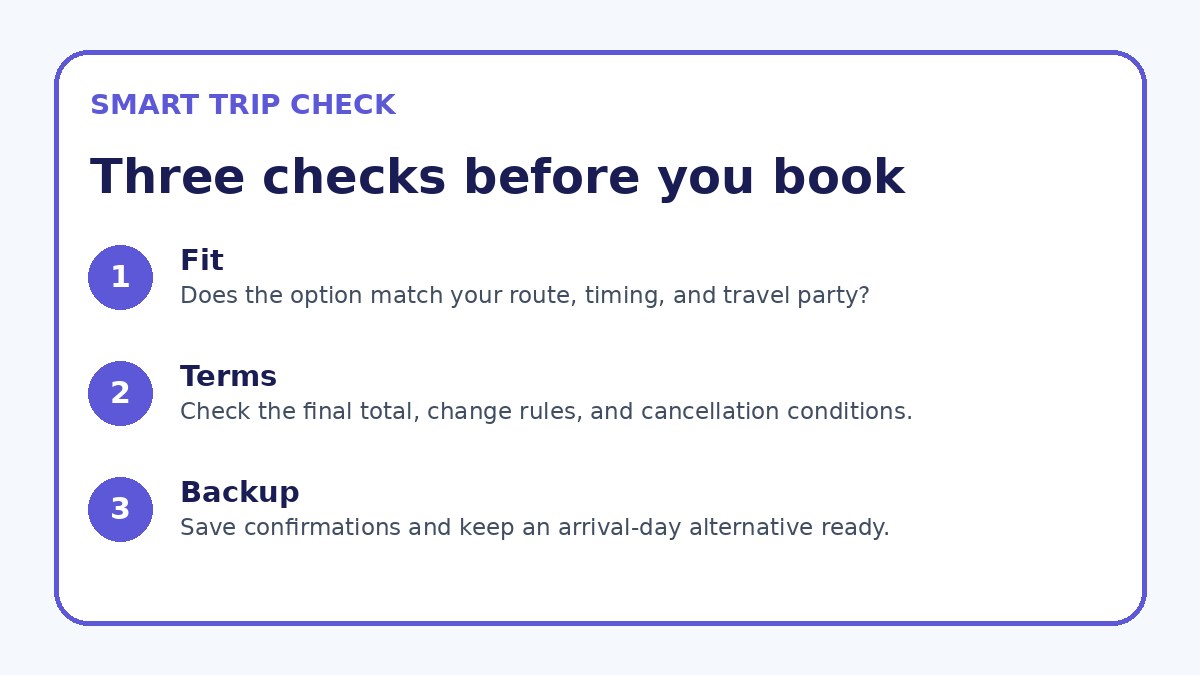
Schedule fit: timing your travel to couple needs
Couples often travel with synced plans: dinner reservations, tours, or hotel check-in times. Translate those commitments into concrete arrival and departure windows before you search. Ask: do you need to arrive in Phuket before an evening reservation? Would a late-night arrival be acceptable? Flights that fit your windows might cost more but remove the risk of missing a booked experience together. If you’re flexible on which day activities occur, you can choose cheaper or more flexible fare classes that allow date or time changes without heavy penalties.
Also consider how travel timing affects energy and togetherness. Early morning departures can be efficient but require an early wake-up and rushed transfers from Bangkok accommodations; late flights may eat into your first evening but let you sleep in and travel relaxed. Couples who prefer to start exploring immediately may accept earlier arrivals; others who want a relaxed transit will value comfortable connection times or a daytime direct flight. Match the flight times to the rhythm you want when you land, and prioritize seats or fare options that let you sit together and keep the trip enjoyable from the start.
Flight details to verify
- Confirm exact travel dates and preferred departure/arrival time windows for both travelers before searching.
- Decide whether through-checked baggage is a priority and filter fares accordingly on the booking page.
- Compare total door-to-door time, including airport transfers and minimum connection buffers for your chosen airports.
- Read the fare rules on the provider’s final booking page for change fees, refundability, and baggage inclusion.
- If booking separate tickets, allow extra buffer time for baggage recheck and factor in potential rebooking costs.
- Reserve seats together or verify seat assignment policies before finalizing purchase to ensure you sit side-by-side.
Fare conditions: rules that protect flexibility and convenience
Fare conditions—change and cancellation policies, baggage inclusion, seat assignment rules, and refundability—define how flexible your booking really is. Cheaper fares often restrict changes or make them costly; flexible fares allow date or time changes with low fees or show a straightforward refund process. For couples, the ability to change plans without penalty is useful: one partner’s schedule can shift, or an unexpected weather delay can make you change arrival days. When you compare flights, read the fine print on the provider’s final booking page for the exact change fees, whether fare differences apply, and whether the fare includes checked bags and pre-assigned seats.
If the airline or booking platform lets you add a flexible bundle—hold options, refundable tickets, or flexible date credits—calculate the total cost if you expect changes. Also verify whether seat selection together is available at booking or requires a paid upgrade later. Keep in mind that loyalty program rules and third-party bookings can change reimbursement terms; confirm on the seller’s final checkout page whether the fare you choose covers the protections you need, and save screenshots of the fare rules for both travelers.
Flight Guide questions travelers ask
Should couples always pick direct flights between Bangkok and Phuket?
Not always. Direct flights minimize transfer hassle and total travel time, which many couples value for stress-free arrival and immediate enjoyment in Phuket. However, if your travel dates are flexible and you want to save money or fit a specific departure time that only shows up in a connecting itinerary, a connection can be acceptable. Choose direct flights when your arrival time is fixed, when you have checked baggage, or when convenience and time with your partner are the highest priorities; opt for connections only after accounting for added transfer time and the potential for delay-related complications.
How much buffer time should couples leave between connections or onward plans?
For single-ticket itineraries, follow the airline’s published minimum plus a practical buffer—typically at least 45–90 extra minutes beyond official minimums if you have checked baggage or evening arrivals. For separate tickets, add substantially more time because you may need to collect and recheck bags, clear security or immigration, and potentially move between terminals. Also factor in travel to your accommodation and hotel check-in times; if you have a fixed evening reservation or tour, choose arrival times that give you a relaxed margin rather than a tight squeeze.
What exactly should couples verify on the booking page before paying?
On the seller’s final booking page, verify the fare rules for changes and refunds, included baggage allowance, seat assignment options, and whether the itinerary is protected as a single ticket. Confirm the carrier operating each leg if codeshares are involved, any required transits through separate terminals, and the total price inclusive of taxes and baggage fees. If you plan to add flexibility bundles or seat selection, check the incremental cost before purchase. Keep or screenshot the fare rules and the booking confirmation so you can refer back if plans change.
Final decision note
For couples traveling Bangkok to Phuket, the decision comes down to which costs more to you: time and simplicity, or price and flexibility. If your itinerary hinges on a specific arrival time or you prefer minimal handling of luggage and transfers, prioritize direct routing and fares that include baggage and seat assignments. If you can be flexible on timing and want to minimize upfront cost, connecting options and flexible tickets can be balanced—just read fare rules carefully and build realistic buffers. Prepare exact dates, preferred time windows, and baggage needs before searching and verify change and refund terms on the final booking page. That preparation turns abstract tradeoffs into a concrete choice that keeps both partners aligned and minimizes surprises.
Continue planning
Check current options and final conditions
Use the provider page to confirm live availability, the final total, cancellation terms, and every condition that matters to your trip.
This evergreen planning guide was created with AI-assisted drafting and a structured quality review. It does not display live prices, schedules, availability, visa guidance, or provider rankings. Verify current details before booking. Some links are affiliate links; we may earn a commission at no additional cost to you.