If you need a practical Paris to Amsterdam transport plan for a family, start by picking the overall approach—rail, coach, self-drive, or a blend—and design your day from door to door. For families the ride itself is only part of the decision: where you start in Paris, how you get to the terminal, whether luggage and strollers are handled conveniently, and how you’ll cope if schedules change are all crucial. This guide gives a direct recommendation up front: prioritize a rail-first plan if you want fewer transfers and easier luggage flow between central stations, but keep a flexible backup (coach or car) in your back pocket for late-night or budget-sensitive legs. Read on for step-by-step decision checks, terminal fit and transfer friction, practical packing and timing tips, and a compact disruption backup plan you can implement without refreshing schedules on travel day.
Choose the right mode: how to weigh rail, coach, car or a mix
Begin by listing what matters most to your family: few transfers, minimal walking with luggage, the ability to spread out, or lowest outlay. Rail often scores highly for central-to-central travel because major stations are embedded in city transit networks and trains usually allow you to keep luggage with you, reducing the need for extra transfers. Coaches can be cheaper and might permit more bags, but stops are often outside city centers and can add a transfer leg that’s harder with kids and strollers. Self-driving removes schedule pressure and offers scenic detours, yet imposes parking, tolls, and child-seat requirements you must resolve before departure.
Consider mixing modes to get the best of each: a short rail leg followed by a coach for a later segment, or driving to a nearby regional station to catch a fast train. Mixed plans are practical when you need to coordinate with sleep schedules or want a flexible sightseeing stop en route. When planning a mix, map every transfer step—door-to-transport node, node-to-platform, and platform-to-final accommodation—to spot friction points and calculate realistic transfer times with children and luggage in mind.
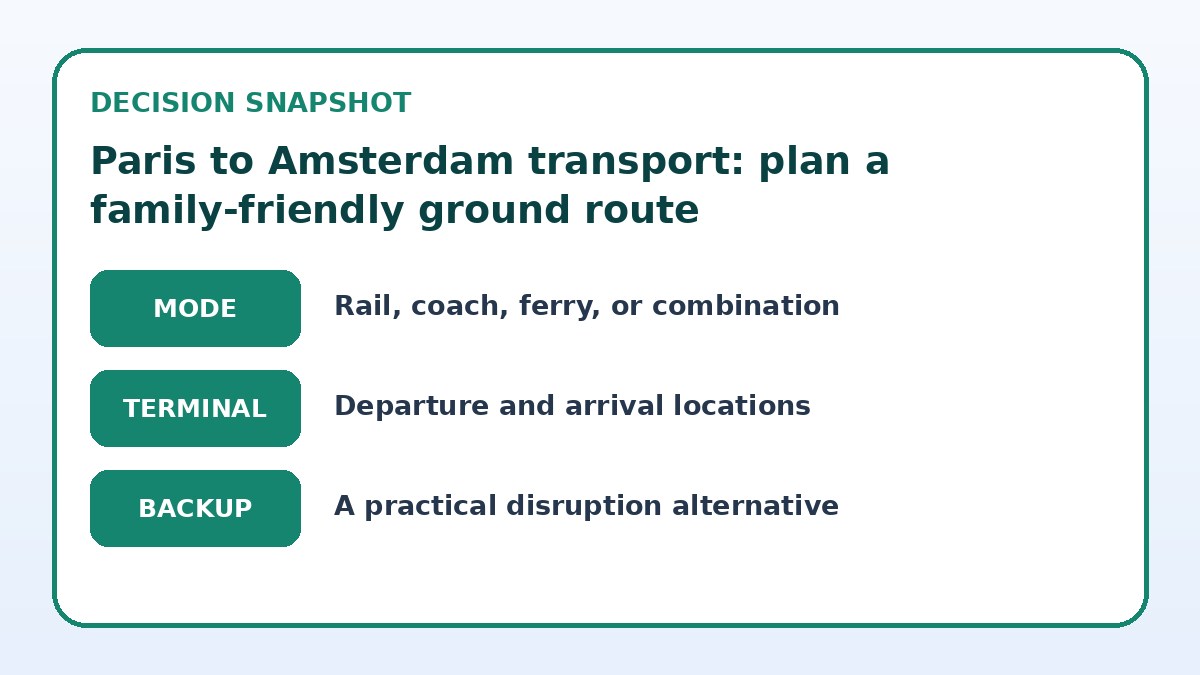
Choose the end-to-end journey plan
| Journey approach | Best for | Friction to check |
|---|---|---|
| Rail-first (central stations, fewer transfers) | Families valuing minimal transfers and easy public-transport access. | May be pricier or require earlier seat reservations; verify luggage rules and platform accessibility. |
| Coach-first (lower base cost, more luggage allowance) | Budget-conscious families comfortable with longer walks or extra transfers. | Stops may be outside city centers and require additional local transfers with children. |
| Self-drive (door-to-door control and flexibility) | Families wanting scenic stops, flexible timing, and private space. | You must manage parking, child-seat rules and potentially complex urban drop-offs in both cities. |
| Hybrid (combine rail, coach or short drives) | Families needing the balance of speed, cost, and flexible sightseeing. | Requires careful mapping of transfers and contingency choices to avoid cumulative friction. |
Check live intercity options
Look beyond the ride itself and compare terminals, transfers, luggage, and arrival fit.
Terminal fit and luggage: sizing stations for family needs
Evaluate the terminals you’ll use for how family-friendly they actually are. Look for elevators and ramps, wide gates, staffed information desks, and convenient public-transport links so you aren’t carrying heavy bags or lifting strollers down stairs. If a terminal lacks lifts or requires long walks between platforms, that changes the equation entirely for a family with small children. Before booking, review station maps on official operator sites and verify luggage policies—some services restrict large suitcases, while others welcome them. Also check whether you need to reserve spaces for bikes or prams.
Plan how many bags you’ll truly need on the day and whether you can consolidate items in soft-sided bags easier to stow. Bring a compact stroller that folds quickly, and practice collapsing it so transfers are smoother. If you expect to use luggage storage or left-luggage services before or after your main leg, confirm opening hours and drop-off rules on the provider’s page. Finally, identify where taxis and ride-share pick-up points are located at each terminal so you can minimize walking at the arrival end.
Timing flexibility: build realistic windows and buffer time
Create a timing plan that starts at the family’s slowest pace: include time to gather everyone, navigate local transit or parking, and handle any pre-departure needs like bathroom breaks and snacks. Avoid basing decisions on the shortest possible connection; instead choose realistic minimum transfer times that you and your children can meet without rushing. When comparing options, favor departures that leave a cushion on both ends—arriving in Amsterdam with time to check into your accommodation or reach childcare facilities reduces stress. Also check late afternoon and evening options for flexibility in case of delayed starts.
If your schedule includes sightseeing en route, slot an extended break with parking or reliable drop-off options that won’t add extra transfers. For rail-first plans, aim for stations with frequent services so missing a single departure doesn’t break your day. For road travel, plan rest stops every hour or two and identify safe places to stretch. Finally, assemble a simple printable schedule for each travel day showing departure windows, connection times, and emergency contact numbers so all adults can act quickly if plans change.
Compare the practical alternatives
Use the final page to confirm what is actually offered on your dates and save a workable fallback.
Intercity travel checklist
- Map every door-to-door leg including local transit, station entrances, platform access, and final drop-off address.
- Verify elevator and ramp locations at departure and arrival terminals using official station maps or operator pages.
- Decide and pack one compact stroller and consolidate luggage into easily carried bags for quick transfers.
- Allocate at least 30–60 minutes buffer per major transfer and longer if traveling with infants or very young children.
- Save contact details and pickup addresses for two alternate services (train, coach, taxi) and a family meeting point.
- Confirm payment methods and keep a printed copy of reservation references, emergency numbers, and children’s details.
Disruption backup: practical alternatives and who does what
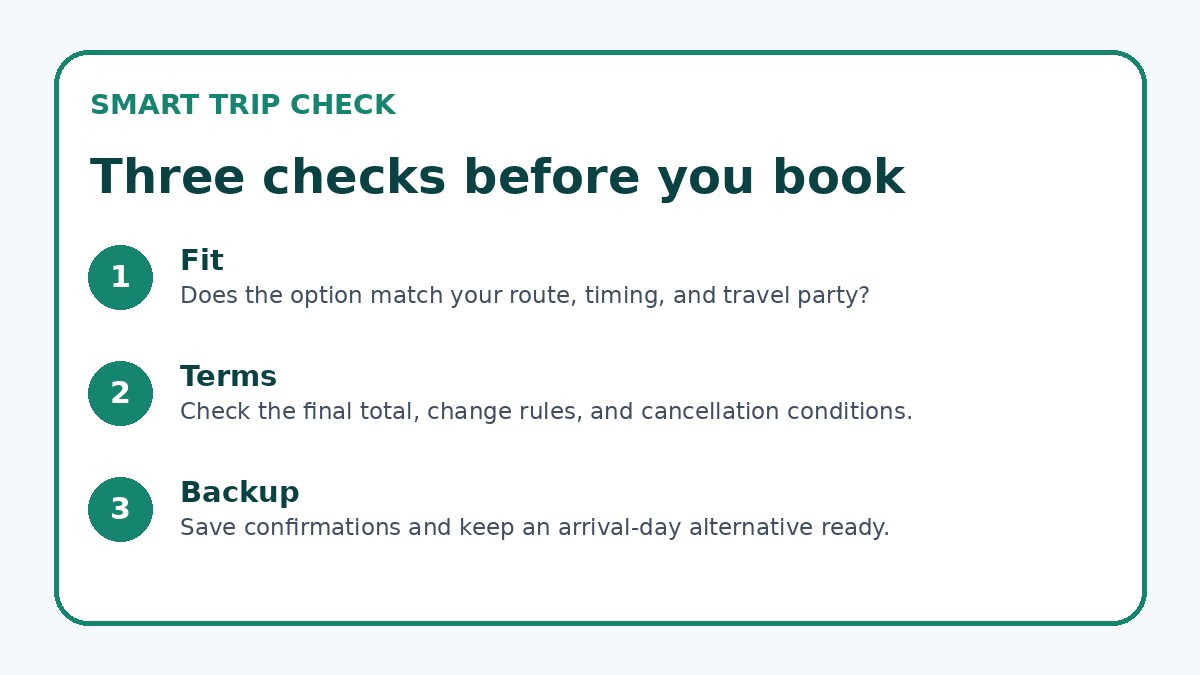
A good disruption backup is short, executable, and shared with everyone traveling. Pick two viable alternates before you leave: a nearby later train, a coach from a specific terminal, and a local taxi or ride-hail service you’ll use if public options fail. Note the addresses and standard pickup points for each alternative and who in your group is responsible for checking availability and making reservations. Keep payment methods ready—an authorized card, mobile payment or local cash—so you can act quickly without hunting for banking info.
Add a simple family reunion plan if a member is separated during a disruption: a predetermined meeting spot at the arrival terminal and a time window to wait before advancing with Plan B. Also identify local help resources such as station staff, tourist information counters, or your accommodation’s front desk to assist with rebooking or storing luggage. If you use booking sites to compare live availability, verify all change and cancellation terms on the provider’s final booking page; as a convenience option, you can check Trip.com for current availability but confirm details with the operator before committing.
Rail & Intercity Transport questions travelers ask
Is taking the train between Paris and Amsterdam the easiest option for families?
Many families find trains easier because central stations link directly to city transit and reduce the number of road transfers. The onboard space for luggage and the ability to move around can help with young children. That said, ease depends on your specific start and end points, how much luggage you have, and whether your departure times align with family routines. Before you book, check station accessibility, luggage rules, and whether you need to reserve seats; verify those details on the operator’s booking page so you have the exact terminal and boarding instructions.
How should I plan transfers if a coach stop is outside the city center?
If your chosen coach stops away from central transit, plan the transfer step-by-step: the walking distance to the local transit stop, available bus or tram lines, and taxi pickup points. Identify whether the coach terminal has covered waiting areas and luggage assistance to make the transfer with children easier. If public transit connections look complex, estimate taxi fares and travel time and keep that as a backup option. Confirm coach stop locations and pickup instructions on the carrier’s final booking page before travel.
What’s a simple disruption plan I can use without internet access?
Prepare an offline disruption kit: printed copies of your primary and two alternate itineraries with addresses, a pen, a local taxi number, and a meeting spot at each terminal. Assign one adult to handle rebooking and another to manage children so roles are clear. Also carry small local currency or a prepaid card for immediate taxis. If possible, download station maps and a PDF of your booking confirmations to your phone for offline viewing, and tell family members the contingency meeting time and place in case someone is separated.
Final decision note
Planning Paris to Amsterdam transport for a family is about sequencing practical choices, not finding a single perfect option. Start by choosing a mode that matches your tolerance for transfers and your luggage needs, then map every door-to-door step, check terminal accessibility, and build timing buffers that reflect how your family actually moves. Prepare a short, executable disruption backup—two alternates, a meet-up point, and ready payment methods—and confirm critical details on the operator’s booking pages before you finalize. With those preparations you’ll reduce stress on travel day and keep options open should plans change.
Continue planning
Check current options and final conditions
Use the provider page to confirm live availability, the final total, cancellation terms, and every condition that matters to your trip.
This evergreen planning guide was created with AI-assisted drafting and a structured quality review. It does not display live prices, schedules, availability, visa guidance, or provider rankings. Verify current details before booking. Some links are affiliate links; we may earn a commission at no additional cost to you.