Practical answer first: before you click Book, add up the full trip cost on like-for-like dates and passenger numbers, then compare what each package includes and how flexible those items are. For a business trip to Abu Dhabi that might mean comparing corporate fares plus baggage and change fees, daily transport to meeting locations, breakfast versus per diem impacts, and whether airport transfers or flexible cancellation are included. A package can save time but may lock you into times or services that increase out-of-pocket spending or create schedule friction. Conversely, mixing separate flight, hotel, and ground transport bookings can give control and potentially lower ancillary charges, but it adds complexity and paperwork. This guide shows what to compare, how to value traveler-specific inclusions, and the final terms you must verify on a supplier’s booking page before confirming.

Test package value fairly
| Booking approach | Best for | Tradeoff to check |
|---|---|---|
| All‑in package (flight + hotel + transfers) | Saves time on booking and centralises support for straightforward itineraries | May lock in schedules and exclude specific corporate fare benefits or preferred hotels |
| Flight + hotel separately booked | Better control over airfare class and hotel choice suited to meetings | Requires more admin and can miss bundled transfer or breakfast savings |
| Flights on corporate or negotiated fares, hotels via local booking | Keeps corporate air policy benefits while tailoring ground arrangements locally | Split invoices and supplier points of contact increase reconciliation work |
| Custom corporate travel agency or TMC bundle | Supports invoicing, reporting, and duty‑of‑care with managed approvals | Agency service fees or minimums can outweigh simple DIY savings for short trips |
Check current package and separate options
Use identical dates, travelers, room needs, baggage, and flexibility so the comparison stays meaningful.
Inclusions: list every line item the package covers
Start by building a simple side‑by‑side list: flights, seat selection, checked baggage, airport transfers, hotel nights, breakfast, business‑class lounge access, local transport or chauffeur, and any meeting or event arrangements. For each package, note whether an item is included, optional for a fee, or excluded — providers sometimes bundle hotels and transfers but exclude baggage or seat assignments, which are common extra charges for business travelers. Use the exact dates, number of travellers, and room types you need; a bundle that looks cheap for double occupancy can be more expensive when you need single rooms or extra nights.
Also consider indirect inclusions that affect productivity and expenses: reliable hotel wi‑fi, a breakfast window that suits early meetings, proximity to conference venues to avoid taxi time, and the presence of business facilities such as meeting rooms and printing. These matter because if a cheap hotel forces daily long taxi rides or costly co‑working space rentals, the package’s apparent savings disappear. When details are vague, plan to verify the supplier’s booking page or contract clause describing each inclusion to avoid assumptions.
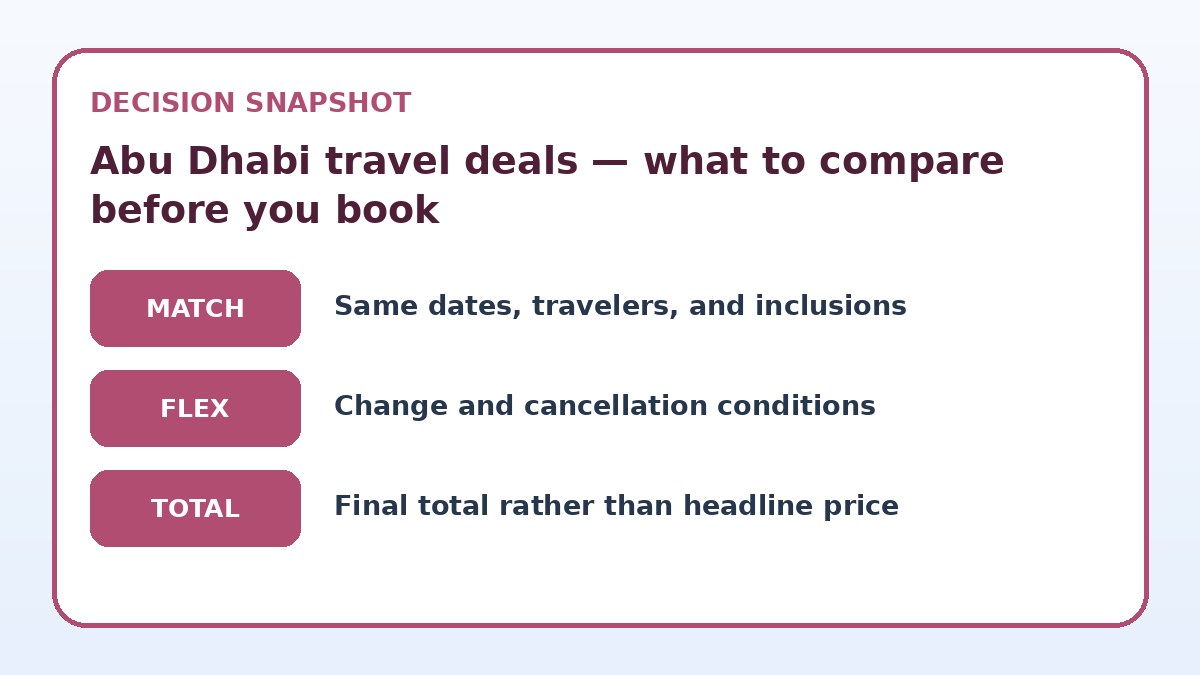
Flexibility: how changes, cancellations and rebooking are handled
Business plans change. Compare change and cancellation rules across options and translate those rules into expected cost exposure. A low fare combined with a strict non‑refundable hotel rate might cost far more if a meeting shifts. Look for clear language on deadline times for fee‑free changes, whether refunds are offered as cash or travel credit, and how name changes or date swaps are processed. If you need invoiceable or corporate billing, confirm the invoicing and payment timing to ensure you meet your organisation’s accounting requirements.
When the supplier’s summary is brief, navigate to the provider’s final booking page and read the full terms and conditions for flights and accommodation. Verify the applied fees for same‑day changes, missed check‑ins, or reissuing airline tickets. Also check who handles refunds and support: is it the consolidator, the hotel, or the airline? Knowing the support channel affects resolution time when urgent changes happen during a business trip.
Look past the headline total
Compare inclusions and change conditions before deciding whether a package is genuinely useful for this trip.
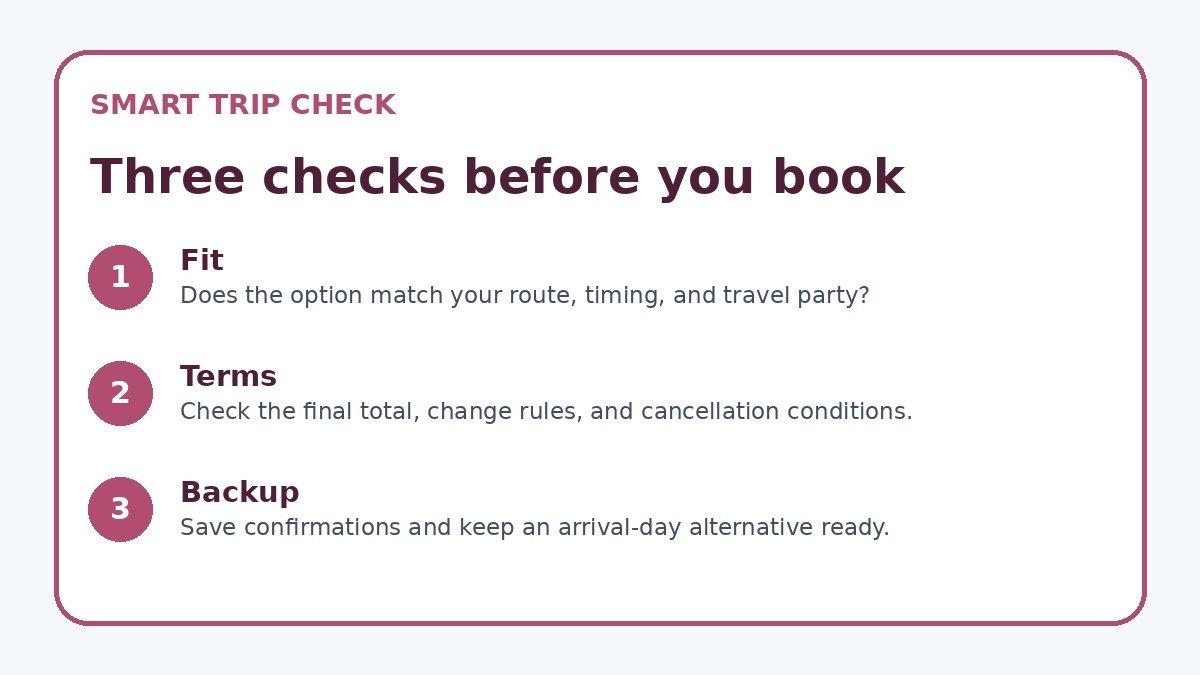
Deal comparison checklist
- Match identical travel dates, number of travellers, and room types across all quotes before comparing totals.
- Add baggage, seat selection, airport transfers, and local transport to headline prices to get a landed cost.
- Read the full cancellation and change rules on the supplier’s booking page and calculate likely penalty scenarios.
- Confirm invoice requirements and payment timing to ensure company finance will process the booking.
- Compare total door‑to‑door travel time and likely transit costs, not just flight duration or hotel distance.
- Document supplier contact details and dispute/ refund procedures before you finalise the booking.
Traveler-specific value: what matters for business travelers
For business travellers, value is more than the headline price. Ask whether included elements save time (airport transfer that avoids a taxi queue), reduce admin (direct billing to company), or maintain productivity (hotel near the meeting venue with strong desk and power options). Consider travel‑policy alignment: will your finance team accept the vendor’s invoice? Does the booking approach earn or block company travel approvals or loyalty credit? These operational factors influence whether you actually save money when including internal processing costs.
Screen for hidden productivity costs. A cheaper hotel with poor wi‑fi or a late breakfast start might force early morning work in the lobby or expensive co‑working passes. If you frequently change meetings, choose options that allow fee‑free name or date changes, or pick refundable hotel nights and flexible fares even if the headline rate is higher. Compare different scenarios (meeting delayed, extra night required, or flight rebooked) and calculate out‑of‑pocket expenses under each booking approach to see which one holds up under realistic business disruptions.
Final terms: what to verify on the provider’s booking page
Never rely solely on a summary page or a headline deal. Before booking, open the provider’s final booking page and confirm the full price breakdown, cancellation and change penalties, payment schedule, invoice details, and who to contact for support in Abu Dhabi. Verify baggage allowances on the exact fare class, whether transfers are private or shared, and if airport taxes are included or added at payment. If your company requires pre‑approval, capture the cancellation policy as evidence that you matched policy needs.
Also confirm identity and documentation rules: whether the hotel requires the cardholder on arrival, what ID is accepted, and any check‑in deposit rules. For flights, compare layover times and the total door‑to‑door travel time rather than assuming a single flight is fastest. If you use a corporate travel platform or travel manager, forward the full booking terms so they can flag policy conflicts. Trip.com can be used as one place to compare current availability and conditions, but always verify final terms on the supplier’s actual booking screen.
Travel Deals & Booking Strategy questions travelers ask
How do I compare a package’s value against booking flights and hotels separately for Abu Dhabi?
Start by creating a single spreadsheet or note with identical dates, traveller counts, cabin and room classes, and required extras such as baggage and transfers. For each option, list every fee the supplier shows on the final booking page — taxes, service charges, transfer type, and any mandatory resort or city fees. Translate non‑monetary inclusions into cost or time savings (for example, a private transfer might save an hour and a taxi cost). Finally, factor in business needs such as corporate invoicing, loyalty accrual, and change flexibility to decide which approach reduces your overall company cost and operational friction.
What specific terms should I check for flights and hotels to avoid surprises on a business trip?
For flights, verify the fare class, baggage allowance, seat assignment rules, change fees, and refund mechanism (cash or travel credit). For hotels, check cancellation deadlines, check‑in and check‑out times, deposit requirements, whether invoicing to a company account is supported, and the exact inclusions like breakfast and Wi‑Fi. Also confirm whether the hotel enforces the cardholder’s presence at check‑in and whether incidental holds apply. Always open the provider’s final booking page to capture the precise wording of these terms and save screenshots or PDFs for your travel approver.
Is it safer to book refundable fares and flexible hotels for business travel to Abu Dhabi?
Refundable fares and flexible hotel rates reduce financial risk when meetings change, but they often cost more upfront. To decide, estimate the probability of change for your trip and compare the incremental cost of flexibility against potential penalty fees for likely changes. For high‑uncertainty trips or senior traveller itineraries where schedule shifts are common, flexible options can save money and stress. For highly predictable trips, a mix of non‑refundable basics and a few flexible elements (like refundable hotel nights for the first and last nights) can strike a balance between control and cost.
Final decision note
When planning Abu Dhabi travel deals for business trips, the useful booking decision comes from clear comparisons of the same dates, passenger counts, and inclusions. A package can reduce coordination and centralise support, but its real value depends on the specifics: which items are included, how changes and refunds are handled, and how well the selections align with company policy and meeting locations. Build a quick comparison sheet, verify full terms on the supplier’s booking page, and translate non‑monetary perks into time or monetary value. That disciplined check prevents costly surprises and helps you choose the approach that keeps the trip productive, compliant, and predictable.
Continue planning
Check current options and final conditions
Use the provider page to confirm live availability, the final total, cancellation terms, and every condition that matters to your trip.
This evergreen planning guide was created with AI-assisted drafting and a structured quality review. It does not display live prices, schedules, availability, visa guidance, or provider rankings. Verify current details before booking. Some links are affiliate links; we may earn a commission at no additional cost to you.