For couples deciding between Singapore to Bangkok flights, the central tradeoff is simple: do you prioritize schedule flexibility (changeable tickets, refundable fares) or convenience (shorter total travel time, fewer transfers)? That decision shapes everything else — the routing you accept, how much baggage you bring, the connection cushion you need, and the fare conditions you’re willing to pay for. Start by picking exact travel dates, traveler ages, passport nationalities, and baggage needs before you search; those details change available fares and rules. When you compare options, look side-by-side at total door-to-door time, number of transfer points, minimum connection times, and the fare’s change/cancellation policy. Verify baggage allowance, connection handling, and any seat-selection or meal fees on the airline or booking page. You can use Trip.com as one place to compare live availability and conditions, but always confirm final terms on the provider’s booking page before paying.
See live routes for your exact travel day
Compare direct and connecting choices with the same baggage and traveler details.
Routing: direct vs connecting and how it affects your couple’s trip
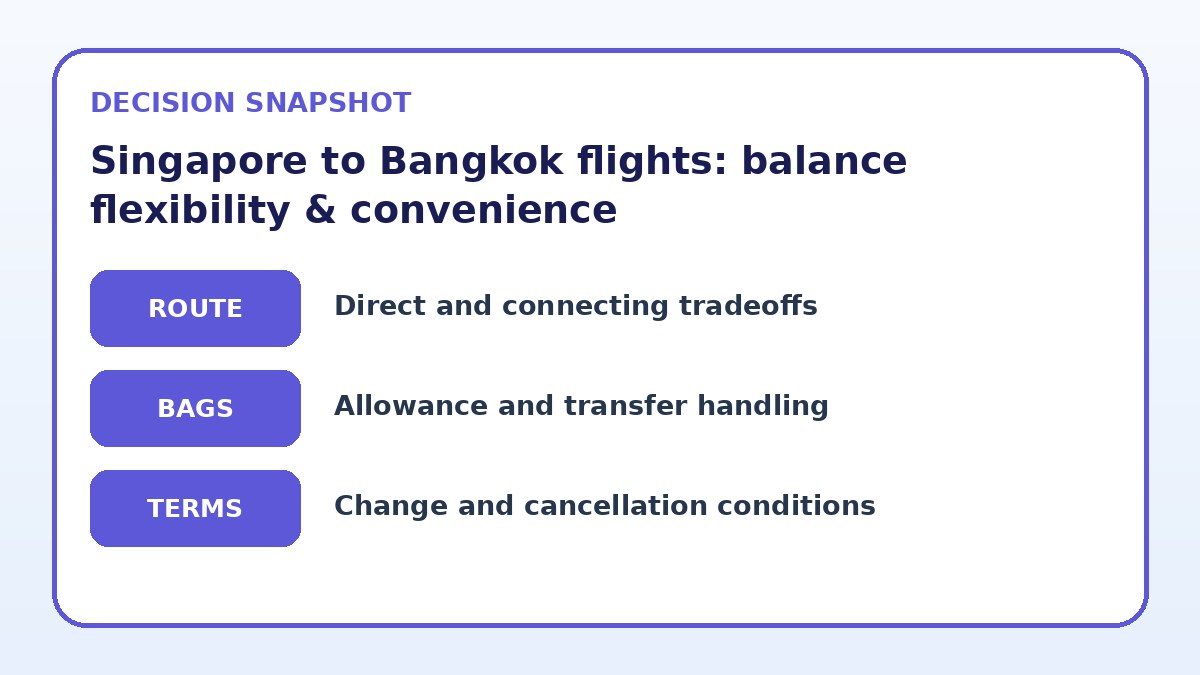
Routing choices are where the flexibility-versus-convenience debate becomes concrete. A direct routing often looks more convenient because it reduces the number of touchpoints — fewer boarding processes, less time changing terminals, and less chance of missed connections. However, direct options may have less flexible fare classes or limited seats in flexible buckets, so you’ll need to decide whether saving time is worth tighter change rules. For couples who value time together and want a simpler travel day, a single-connection or nonstop plan usually feels calmer and more predictable.
Connecting options can deliver lower base fares or open up departure times that better match your schedule, but they require planning for baggage transfer risk and potential delays. If you accept connections, aim for realistic minimums: give yourself enough buffer to clear immigration, re-check bags if required, and move between gates or terminals. Also think about the airport layout and whether the connection is through the same carrier or an interline partner; same-carrier connections typically reduce baggage risk. Before booking, write down your exact travel dates and passenger details and check the carrier’s published minimum connection time and baggage transfer policy on the booking page.
Baggage and connection risk: what to factor into the fare decision
Checked baggage and how it’s handled during connections can turn a low fare into a hassle. Low-cost or basic economy-style fares often exclude checked bags or assign them separate fees, which adds cost and complexity if you need to re-check luggage at a connection. For couples traveling with a week’s worth of clothes, gifts, or gear, compare the total cost of the fare plus any checked baggage fees against a higher fare that includes baggage; sometimes the more flexible ticket gives peace of mind and fewer transfer headaches.
When you choose a routing with a connection, confirm whether bags are through-checked to your final destination on the provider’s booking page. If bags are not automatically transferred, factor in extra time and the stress of retrieving and re-checking them. For travel insurance or add-on protections, check whether policies cover missed connections causing lost bags or additional nights. Note and save the carrier’s baggage allowance rules and whether seat selection, priority boarding, or other conveniences are included or sold separately — those small differences shape the real convenience you’ll feel at the airport.
Compare flight-selection strategies
| Flight strategy | Best for | Risk to check |
|---|---|---|
| Flexible refundable fare with liberal change terms | Couples who want maximum schedule flexibility and low stress if plans shift | Higher upfront cost and often fewer promotional seats available |
| Lowest base fare with add-on ancillaries as needed | Price-sensitive couples who can accept tighter change rules and small inconveniences | Extra fees for bags, seats, and changes can add up and complicate connections |
| Short itinerary with one reliable connection | Couples prioritizing travel time and convenience over the cheapest fare | May have limited flexible fare availability and stricter change penalties |
| Multiple daily departures on a mix of carriers | Couples who value many schedule options and can switch plans day-of | Requires active management of tickets and careful checking of interline baggage rules |
Recheck the complete itinerary
Confirm airports, connection handling, baggage, and change conditions before deciding.
Schedule fit: choosing departure and arrival times that work for couples
Schedule fit is more than flight duration; it’s how the timing integrates with your plans at both ends. Couples should consider arrival time in Bangkok relative to hotel check-in, evening plans, public transit hours or airport transfer options, and whether you prefer to land early to maximize sightseeing or arrive later to avoid a rushed morning. Flexible fares allow changes if your plans shift, but if convenience is the priority choose departure and arrival windows that minimize stress — for example, flights that avoid late-night arrivals or very early departures that require a pre-trip hotel night.
Also compare the frequency of flights on your chosen dates. More departure options give you wiggle room for delays without paying change fees, which is a form of practical flexibility. If you have fixed events like anniversaries or tours, a calmer choice is a flight with a better on-time reputation and a comfortable connection buffer. Before booking, confirm airport transfer options and estimated travel time from the arrival airport to your first destination in Bangkok on provider pages or the airport’s official site; don’t rely only on scheduled flight times.
Flight details to verify
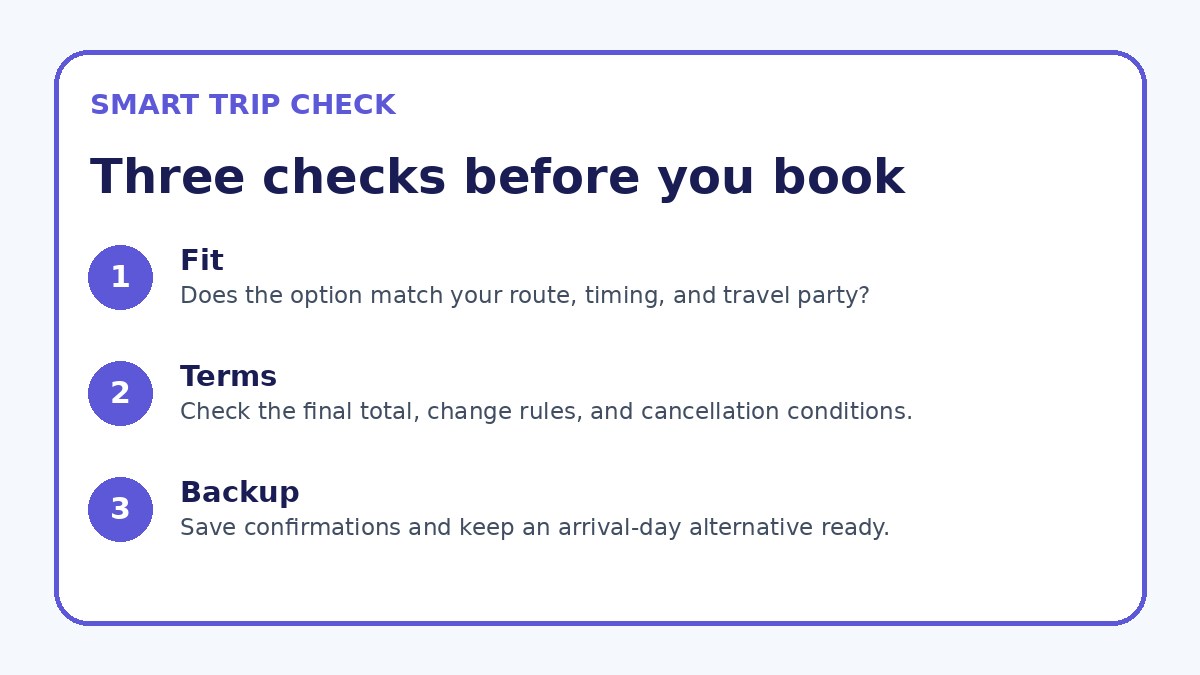
- Confirm exact travel dates, passenger full names as on passports, passport nationalities, and ages before searching fares.
- Open and save the airline’s final fare rules page; screenshot sections on changes, cancellations, baggage, and seat policies.
- Decide in advance whether checked baggage or seat selection is essential and add those to the price comparison.
- For any connection, write down minimum connection times and whether baggage is through-checked; allow extra buffer for immigration.
- Compare total door-to-door time including airport transfers, not just airborne time, and choose departures that match your first-day plans.
- If you use an online agent like Trip.com, verify every fare condition on the airline’s own booking page before purchase.
Fare conditions: reading the fine print before you commit
Fare conditions are where flexibility is explicitly bought or withheld. Look for clear statements on change fees, refundable vs. non-refundable status, same-day change options, and whether the fare allows name corrections or itinerary changes without full penalties. Some fares permit free changes within a restricted window, others impose steep penalties or only provide travel credit. Before completing a purchase, open the fare rules on the airline or booking provider’s final booking page and read the sections on cancellations, refunds, and fee structure so you know what a change would cost.
Also check ancillary terms that affect convenience: whether seat selection is included, if priority boarding is available, and how upgrades or extra legroom work for that fare class. Couples who value a stress-free airport experience might pay a premium for included seats together and priority boarding, while more budget-focused travelers may accept separate seats or have to pay to sit together. Keep screenshots or PDFs of the fare rules and the final booking invoice; they’ll be the authoritative reference if anything needs to be disputed later.
Flight Guide questions travelers ask
Should couples choose the cheapest ticket or pay more for flexibility?
Choosing between a cheap ticket and a flexible one depends on how likely plans are to change and how much inconvenience you can accept. If your travel dates are fixed and you’re comfortable with non-refundable fares, the cheapest option can work if you add necessary ancillaries like baggage or seat selection. If there’s any chance you’ll change dates, or you value less stress on travel day, a more flexible fare that permits changes or refunds with reasonable fees is often worth the premium. Always review the specific change and refund terms on the carrier’s booking page before deciding.
How much connection time should couples allow when routing through another city?
Allow connection time based on the type of connection: same-terminal, cross-terminal, or requiring immigration and baggage re-check. For same-terminal connections on one carrier, a shorter buffer may be acceptable; for crossing terminals or re-clearing immigration, plan significantly more time. Also factor in taxi or shuttle transfer time between terminals and potential delays. Because airports and carriers handle connections differently, check the provider’s published minimum connection time and add a personal buffer — couples with checked baggage or tight timelines should err on the conservative side.
What details must be verified on the booking page before paying?
On the provider’s final booking page verify the exact fare rules for changes and cancellations, baggage allowance (including size and weight limits), seat assignment policy, carry-on rules, and any add-on fees for meals or priority boarding. Confirm whether bags will be through-checked on connections and whether the fare includes seat selection for two passengers to sit together. Also check passport name matching rules, visa or entry requirements notification (if provided), and the refund process. Save or screenshot the booking terms and the final invoice for reference.
Final decision note
For couples traveling Singapore to Bangkok, the right flight balances how much flexibility you need against the convenience of fewer transfers and shorter travel time. Start by locking in exact travel dates and passenger details, then compare total door-to-door time, baggage handling policies, and the explicit change/cancellation terms on the carrier’s booking page. If you prize peace of mind and predictable plans, a more flexible fare that includes baggage or allows easy changes is usually worth the premium; if you’re comfortable managing ancillaries and potential schedule risk, the lowest fare plus add-ons can work. Whatever you choose, verify all fare conditions, baggage rules, and connection handling before completing the purchase and keep saved copies of the fare rules and your booking confirmation.
Continue planning
Check current options and final conditions
Use the provider page to confirm live availability, the final total, cancellation terms, and every condition that matters to your trip.
This evergreen planning guide was created with AI-assisted drafting and a structured quality review. It does not display live prices, schedules, availability, visa guidance, or provider rankings. Verify current details before booking. Some links are affiliate links; we may earn a commission at no additional cost to you.