The straightforward practical answer: compare door-to-door time, number of transfers, luggage handling, and disruption resilience before choosing between rail, coach, ferry, or a mixed route for London to Paris travel. For most families, a direct high-speed rail leg from central London to central Paris reduces transfers and leaves less to manage at either end; coaches and ferries can be cheaper per seat but often add walking, transfers, or extra time with children. A mixed plan—local train to a coastal port, ferry crossing, then coach or rail onward—can be pleasant if you want a ferry break or are connecting from another UK city. Start by mapping your family’s exact start and end addresses, then test a few door-to-door itineraries that show total time, transfers, and luggage moves. Use those criteria to pick the approach that minimizes stress and keeps the family on schedule.
How to choose between rail, coach, ferry, or a combination
Begin by comparing end-to-end practicality rather than only the headline ride time. Pull door-to-door itineraries using your exact home or hotel addresses and the intended Paris arrival address. Note total travel time, transfers, walking distances, and where luggage must be handled. For families, a single direct move from central-to-central locations often beats a nominally faster route that requires long walks, multiple terminal changes, or tight connection windows. Also consider movement windows for small children—midday travel versus evening departures can alter how manageable a transfer feels.
Next, weigh comfort needs: on-board space for children, stroller storage, restroom access, and the ability to move around on longer legs. Coaches may be economical and offer seat belts and onboard toilets but often require bus-station transfers or curbside boarding that can be awkward with suitcases and small children. Ferries provide a restful break but add port transfers and security/boarding lines. Trains typically score highest for simple, predictable transfers between city centers, but verify station step-free access and whether you need to change at an intermediate hub.
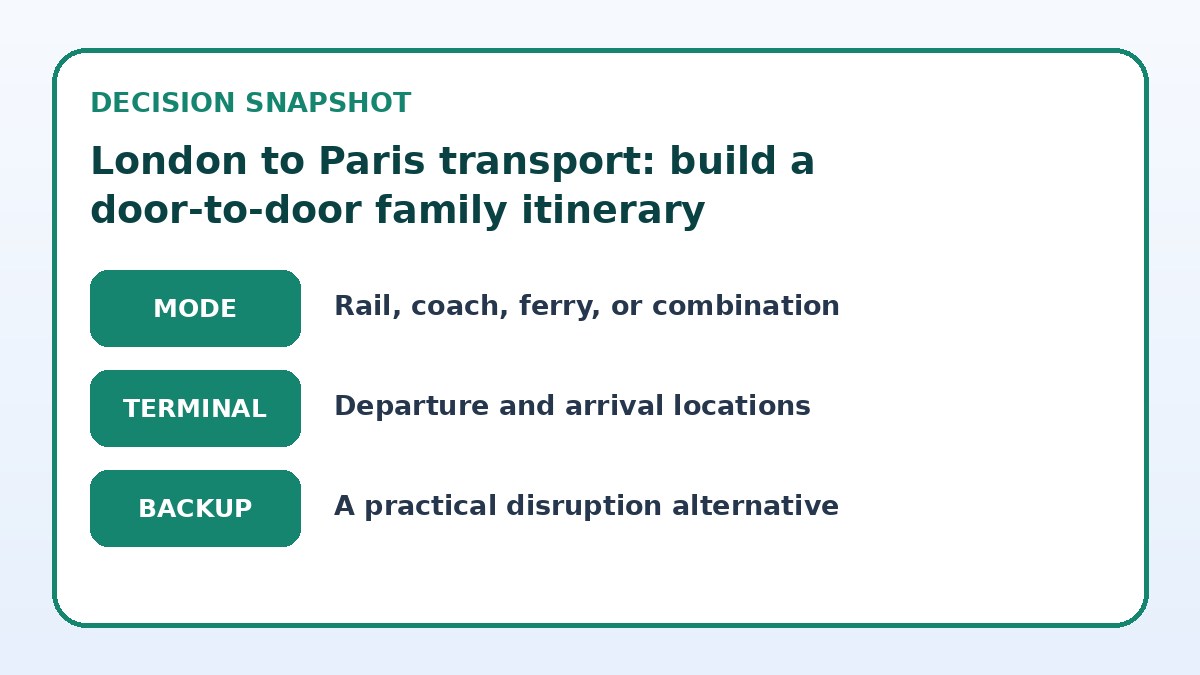
Choose the end-to-end journey plan
| Journey approach | Best for | Friction to check |
|---|---|---|
| Single direct rail leg (central station to central station) | Families prioritizing minimal transfers, quick door-to-door time, and predictable station facilities. | May cost more upfront and requires central-to-central access; verify step-free access and seat reservations for family groups. |
| Coach/coach-hybrid journey | Families seeking a cost-conscious option with simple seating arrangements and fewer transfers between modes. | Longer on-road time, boarding at peripheral terminals, and potentially more luggage handling at curbside. |
| Ferry plus regional rail or coach | Families wanting a leisure break during travel or connecting from coastal origins where ferry removes driving stress. | Adds port transfers and boarding lines; requires careful timing and more active luggage management at terminals. |
| Mixed plan with local transfers (regional train + ferry/coach + high-speed rail) | Families combining multiple nearby stops or sightseeing who prefer flexible routing rather than a single direct leg. | More transfers and higher potential for disruption; demands strict timing and contingency planning to stay practical. |
Check live intercity options
Look beyond the ride itself and compare terminals, transfers, luggage, and arrival fit.
Terminal fit, luggage handling, and transfer friction
Assess terminals for step-free access, stroller-friendly paths, family restrooms, and luggage trolleys. A short taxi or metro from home to a large station might be less tiring than a longer drive to a peripheral coach terminal. For each route option, list where you must carry luggage up/down stairs, cross platforms, or queue through security. Those friction points are where stress concentrates: a 15-minute walk carrying a stroller is more impactful than an extra 20 minutes on a comfortable seat.
At booking time, check provider pages for luggage allowances, stroller policies, and whether you can reserve adjacent seats. For mixed-mode plans, confirm the distance and ease of connection between arrival and departure points—some ports and terminals require shuttle transfers. If you need assistance with children or bulky items, find contact details for station assistance and reserve help if available. If the provider information is unclear, verify details on the final booking page and save screenshots of any promised assistance.
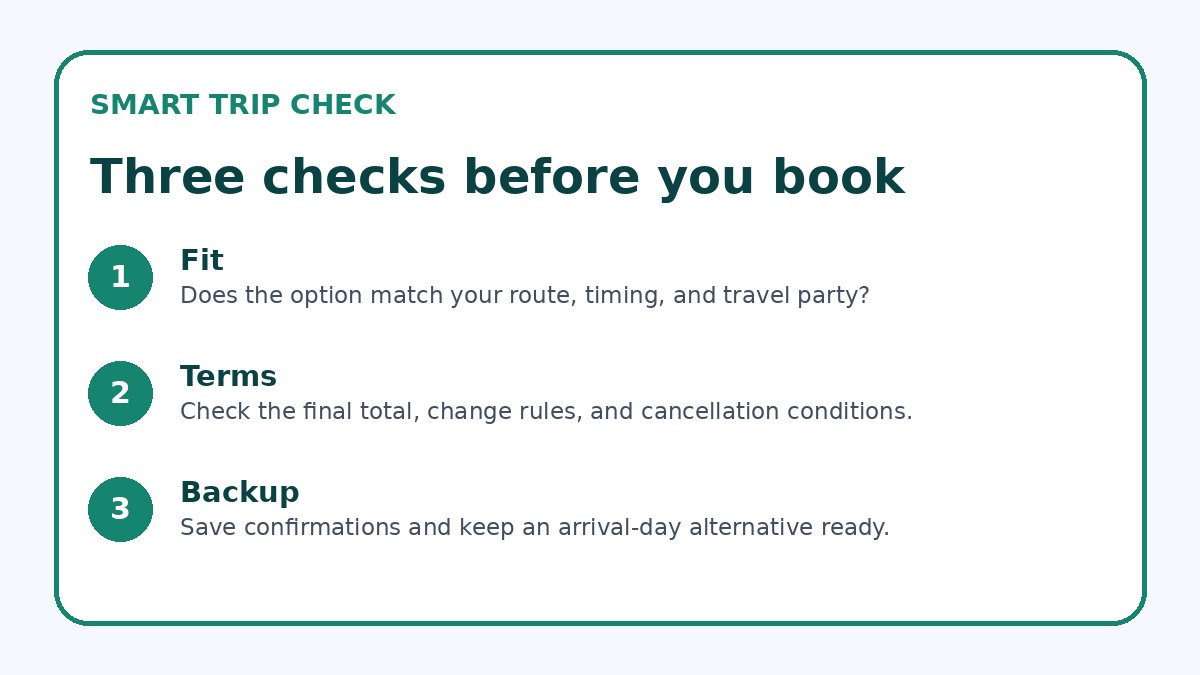
Timing flexibility and building a family-friendly schedule
Families need time cushions. When comparing options, aim for at least a 45–60 minute buffer on critical connections or transfers, and longer if you’re traveling with toddlers or lots of luggage. Early morning or midday departures can be easier than evening runs, which risk overtired children. Consider the natural rhythm of your family—nap times, meal times, and peak traffic windows—and plan the longest or busiest leg for when children are most likely to be calm or asleep.
If you are assembling a multi-city itinerary—say, London to a UK port by regional train, ferry crossing, then onward coach or rail—you’ll want scheduled gaps that account for boarding, security, and potential slowdowns. Build in contingencies: extra time for restroom breaks, snack stops, and quick playtime to burn energy before confinement. When possible, book flexible or changeable tickets for at least one leg so you can shift if the day’s rhythm requires it.
Compare the practical alternatives
Use the final page to confirm what is actually offered on your dates and save a workable fallback.
Intercity travel checklist
- Map door-to-door itineraries from your exact start address to your Paris arrival address and compare total time and number of transfers.
- Check step-free access, stroller policies, and seat reservation options on each provider’s final booking page before you commit.
- Allow at least a 45–60 minute buffer for critical connections when traveling with children and luggage.
- Prepare an emergency kit with spare clothes, basic medications, snacks, and small activities for each child.
- Save contact details for station assistance, local taxi services, and relevant provider customer service numbers on your phone and as a printed copy.
- Build one alternate route into your plan and identify nearby accommodation options in case you must delay overnight.
Disruption backups and practical contingency planning
Prepare a simple backup plan in advance: one alternate route and at least one contact for local help. For instance, if your primary plan is a direct rail service, identify a coach alternative and a mixed-route option that uses a different corridor. Store local taxi numbers, station assistance contacts, and nearby hotel options for unexpected overnight needs. Keep digital and printed copies of all booking references so you can switch plans quickly if a leg is cancelled or delayed.
Also plan for small, likely disruptions: late connections, lost luggage, or a sick child. Pack a compact emergency kit with spare clothes, medication, snack portions, and basic entertainment to reduce the urgency of finding shops or pharmacies during a transfer. If you rely on connections operated by different companies, check each provider’s rebooking or refund policy on their official booking pages when you finalize plans; if information is unclear, confirm directly before purchase. You can compare current availability and conditions on Trip.com as one optional place to check, but verify details on the provider’s own site before booking.
Rail & Intercity Transport questions travelers ask
Is taking the train from London to Paris always the easiest option for families?
Often the train is the easiest because it typically links central London and central Paris with fewer transfers, reducing door-to-door complexity. Trains generally allow easier movement with strollers, offer more space to stand and walk, and remove the need for port transfers. However, 'easiest' depends on your precise origin, luggage amount, and family needs—if you live far from the main station or need the lowest upfront fare, a coach or mixed-route might be more practical. Always compare door-to-door itineraries and check station access and seat reservation options before booking.
How much connection time should families leave between different legs of a multi-city ground journey?
Aim for at least 45–60 minutes for typical connections when traveling with young children or bulky luggage; choose longer buffers when transfers involve different transport companies, ferry boarding, or shuttle transfers. If the connection requires switching terminals, clearing security, or walking with a stroller, add additional time. When possible, plan one flexible leg or a refundable/adjustable ticket so you can reschedule without major penalty if delays cascade.
What should families verify on providers’ pages before booking multi-mode itineraries?
Confirm luggage allowances and stroller policies, seat reservation procedures, whether assistance (step-free access) can be pre-booked, and the exact boarding/arrival locations including platform or terminal names. For mixed-mode trips, verify transfer distances and whether shuttles are required between terminals. Check cancellation and rebooking terms for each leg, and keep screenshots of any promised assistance or special arrangements. If any detail is unclear, contact the provider directly to avoid surprises on travel day.
Final decision note
Building a family-friendly London to Paris ground-transport plan means prioritizing door-to-door practicality: map exact origins and destinations, minimize transfers, and choose the mode that reduces luggage handling and stress. Direct rail often simplifies the journey, but coaches and ferries can be sensible depending on your starting point, budget, and desire for a break during travel. Whatever route you pick, verify terminal access, luggage rules, and assistance options on the official booking pages, add healthy time buffers, and prepare a clear backup route so small disruptions don’t become travel emergencies. With a few deliberate checks and one realistic contingency, the trip can be manageable and even enjoyable for the whole family.
Continue planning
Check current options and final conditions
Use the provider page to confirm live availability, the final total, cancellation terms, and every condition that matters to your trip.
This evergreen planning guide was created with AI-assisted drafting and a structured quality review. It does not display live prices, schedules, availability, visa guidance, or provider rankings. Verify current details before booking. Some links are affiliate links; we may earn a commission at no additional cost to you.