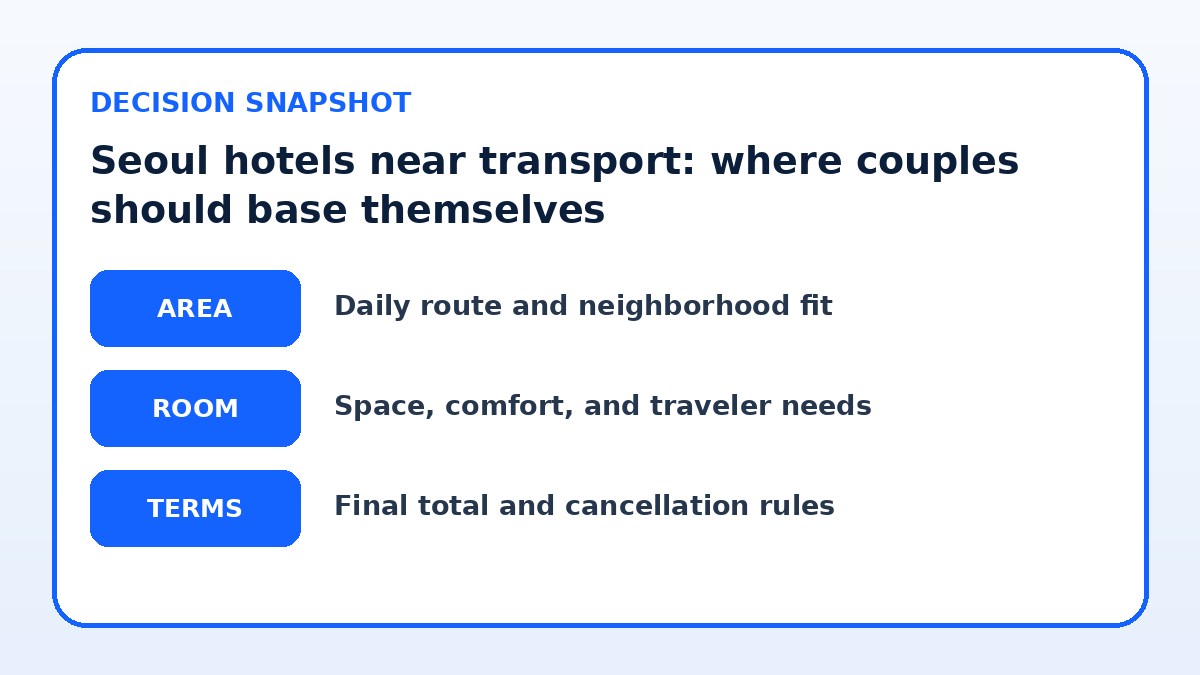
Practical answer first: pick a neighborhood that minimizes daily friction for the activities you plan — business hours you’ll keep, evening plans, and where you’ll eat and shop. For most couples, that means targeting one of Seoul’s centrally connected neighborhoods (e.g., areas with multiple subway lines or a strong bus network) rather than a single cheap hotel on a peripheral line. This reduces time lost on transfers and lets evenings feel relaxed instead of rushed. Before you open booking sites, list your must-do items (attraction, restaurant, show, friend’s address) and map them to subway lines or major bus corridors. Use that map to shortlist 2–3 neighborhoods, then compare room types, check-in flexibility, and cancellation terms. If you want to check live availability after narrowing areas, you can compare options on Trip.com or the hotel’s official page — but verify final cancellation and check-in policies on the provider’s booking page.

Check live stays in the areas that fit
Use your dates and party size to compare current rooms after you narrow the neighborhood fit.
Neighborhood fit: balance romance, convenience, and vibe
Start by pairing your trip goals with a neighborhood vibe. If you want romantic walks, river views, and easy evening dining, look for areas near parks, riverside promenades, or atmospheric side streets with dining clusters. If you plan heavy sightseeing, choose a neighborhood where the subway network gives you direct or one-transfer access to major attractions you’ll visit repeatedly. Couples who value nightlife should map late-night transit options — some lines or services run later than others — and factor distance from noisy streets when selecting a specific hotel block.
Consider how you like to start your day and end your evening. A neighborhood with a good morning coffee scene and quiet breakfast options helps days start gently; proximity to 24-hour convenience stores and late-night eateries makes evenings practical. Also look for pedestrian-friendly blocks if you enjoy wandering after dinner. Ultimately, match neighborhood energy to your shared preferences, then use transit connections as the tiebreaker between similarly appealing areas.
Choose an area-selection strategy
| Area approach | Best for | Tradeoff to check |
|---|---|---|
| Central-transfer hub (multiple subway lines) | Couples planning varied daily routes who value short transfer options and evening flexibility. | Can be busier and noisier; rooms may be smaller or pricier for the location. |
| Single-line convenience (one direct line to main sites) | Couples who prefer simple, predictable journeys and minimal transfers. | Less flexibility for destinations on other lines; may require longer taxi rides for some activities. |
| Residential neighborhood (quiet, apartment-style stays) | Longer-stay couples wanting space, local markets, and a relaxed rhythm. | Fewer hotels and longer commutes to tourist hotspots or nightlife areas. |
| Nightlife-adjacent area (close to evening dining and bars) | Couples who prioritize late dinners, shows, and nightlife without relying on late transit. | Higher noise levels at night and potentially limited daytime charm or green space. |
Daily-route friction: mapping transfers, arrivals, and returns
Make a short route map before searching hotels: pin your top three daytime destinations and top three evening plans, then note required subway lines and transfer counts. Transfers multiply friction — stair climbs, elevator waits, and boarding time add up. Couples who tolerate short walking legs can gain flexibility by staying near a transfer hub with multiple line options; those who prefer simpler journeys may want a hotel on a single line that covers most of their places of interest without transfers.
Also account for arrival and departure logistics. If you’ll arrive late or early, check how easy it is to get from the airport or main train stations to your shortlisted neighborhoods using direct trains or single transfers. For nights when one partner returns earlier, prefer a hotel that offers a straightforward route home. Finally, consider physical accessibility: if either of you carries heavy luggage or has mobility needs, prioritize hotels with step-free access to the nearest subway entrance or short taxi rides instead of long stair-dependent transfers.
Now compare like with like
Keep the same dates, guests, room needs, and cancellation preferences while you compare the final choices.
Room and party needs: choose the right unit for couples
Decide the room features that matter most to your partnership: separate beds or one large bed, a larger bathroom, a sitting area for relaxed mornings, or a kitchenette for simple breakfasts. Neighborhood selection affects available room types — central commercial districts tend to offer a wide range of hotel categories and smaller boutique rooms, while residential areas often have apartment-style stays with more living space. Think about how much time you’ll spend in the room: if you want an intimate retreat for extended mornings or late afternoons, favor listings that clearly show room layouts and square footage.
Also check policies and practicalities: some hotels have later check-in times or limited front-desk hours, while others provide 24-hour service or keycard access. Couples with late flights will appreciate flexible late check-in options or luggage storage. If privacy is a priority, verify room-floor layouts and whether rooms face busy streets. Ask the hotel for a quiet room or higher floor if street noise matters. Confirm all these details on the booking page or by contacting the property directly, rather than relying on third-party summaries.

Hotel booking check before payment
- List your three must-see daytime sites and three evening plans, then mark which subway lines serve each location.
- Shortlist two neighborhoods that minimize average transfers between your pinned locations.
- Check room layouts and bed configurations to ensure the bed type and space suit your couple’s needs.
- Confirm cancellation, prepayment, and check-in times on the hotel’s official booking page before reserving.
- Ask the property about late check-in, luggage storage, and quiet-room requests if arrival or privacy is important.
- Compare taxi or airport/train transfer complexity for each neighborhood, especially for early arrivals or late departures.
Booking terms: what to verify before you click reserve
Before booking, confirm cancellation terms, check-in and check-out times, and whether the rate includes extras that matter to you (breakfast, room upgrades, or early check-in). Cancellation policies and prepayment requirements vary widely; if your plans might shift, prefer a rate with a flexible cancellation window. If a special occasion is part of the trip, check whether the property accepts requests for room setup or upgrades and whether those services carry additional fees — always verify these specifics on the hotel’s final booking page or by calling the front desk.
Also review practical arrival details: whether the hotel will hold luggage for early arrivals, if there’s a chargeable or complimentary shuttle, and the easiest taxi drop-off point for late-night returns. If accessibility or specific amenities (like a bathtub or a quiet courtyard) are non-negotiable, request confirmation in writing. Use the booking page screenshots or saved confirmation emails for your records. If you want to compare live inventory and policies after narrowing neighborhoods, Trip.com can be a quick place to view options — but verify final terms directly with the provider.
Hotel Guide questions travelers ask
Which Seoul neighborhoods are best for minimizing transit time between attractions?
Pick neighborhoods that are transfer hubs or sit on major intersecting subway lines; these reduce the number of transfers for varied daily plans. To decide, map your planned attractions and check how many transfers each route needs from candidate neighborhoods. If most routes require zero or one transfer, the neighborhood will likely save you time. For specific transit links and schedules, verify current line maps and first/last service times on official transit websites or the hotel’s arrival instructions because those operational details can change.
Should couples prefer hotels near subway stations or quieter side streets?
That depends on what you value: being next to a subway entrance saves walking and makes quick returns easy, but it can be noisier and less romantic in the evenings. Quieter side streets provide a more intimate atmosphere, better for slow breakfasts and privacy, but often require a short walk to the nearest station. If you’re sensitive to noise, request a higher floor or rooms facing a courtyard. Always confirm room orientation and noise policies with the hotel before booking.
How do we check whether a hotel’s listed amenities and policies are accurate?
First, read the property’s official booking page for amenity lists and policy wording. If an amenity or policy is crucial — like late check-in, kitchen access, or accessibility features — contact the hotel directly and request written confirmation. Screenshots of the booking page and email confirmations can help resolve discrepancies. You can also compare listings on a third-party site such as Trip.com to view multiple offers, but use the hotel’s official page or a direct email as the final authority for terms and service.
Final decision note
For couples planning in Seoul, the clearest shortcut to stress-free days is choosing an area that matches your shared daily routes and personal rhythms. Start by plotting your key daytime and evening destinations, then prioritize neighborhoods that limit transfers and simplify returns. Balance room needs and hotel policies against neighborhood vibe: sometimes a slightly farther but quieter residential block beats a noisy city center for romance. Before booking, verify room layout, cancellation rules, and arrival logistics on the hotel’s final booking page. With a mapped shortlist of two or three neighborhoods, you’ll be ready to compare specific listings confidently and pick the hotel that keeps your trip relaxed and connected.
Continue planning
Check current options and final conditions
Use the provider page to confirm live availability, the final total, cancellation terms, and every condition that matters to your trip.
This evergreen planning guide was created with AI-assisted drafting and a structured quality review. It does not display live prices, schedules, availability, visa guidance, or provider rankings. Verify current details before booking. Some links are affiliate links; we may earn a commission at no additional cost to you.