If you need to travel from Tokyo to Osaka for business, the most practical choice for most professionals is a direct high-speed rail itinerary that minimizes transfers and door-to-door time. Rail typically wins because it connects central Tokyo and central Osaka with frequent departures, predictable travel environment, and relatively low transfer friction for luggage and meetings. But ‘practical’ can mean different things: lowest risk of delay, lowest total travel time from office to hotel, or lowest chance that luggage handling will interfere with an evening meeting. This article gives a clear recommendation up front, then walks through terminal fit, luggage and transfer friction, timing flexibility, and what to do if networks are disrupted, so you can pick the approach that best fits your calendar and the company’s tolerance for schedule risk.
Terminal fit and door-to-door practicality
Begin your decision with where you start and where you end. For business travelers the critical metric isn’t just the ride time but the total door-to-door time between your office, hotel, or meeting venue in Tokyo and Osaka. Major rail terminals in both cities sit in central business districts, reducing the need for expensive or slow transfers. Coaches and some flights depart from peripheral bus terminals or airports that add taxi or rail transfer time. When comparing options, map actual transfer routes, typical traffic patterns, and the location of your first meeting or hotel so you can quantify total travel time rather than rely on published intercity travel durations.
Terminal fit also affects convenience for luggage and short-notice meeting changes. Central train stations often offer baggage forwarding, luggage storage, and frequent onward public transit; airports can offer these too but usually require an extra transfer. If your endpoint is near a station, a rail itinerary commonly saves last-mile hassle and reduces the number of handoffs for suitcases or electronics. For companies that value time over cost, prioritize options with minimal transfers between terminals and final meeting locations to keep contingency buffers manageable and allow travel time to serve as usable work time.
Choose the end-to-end journey plan
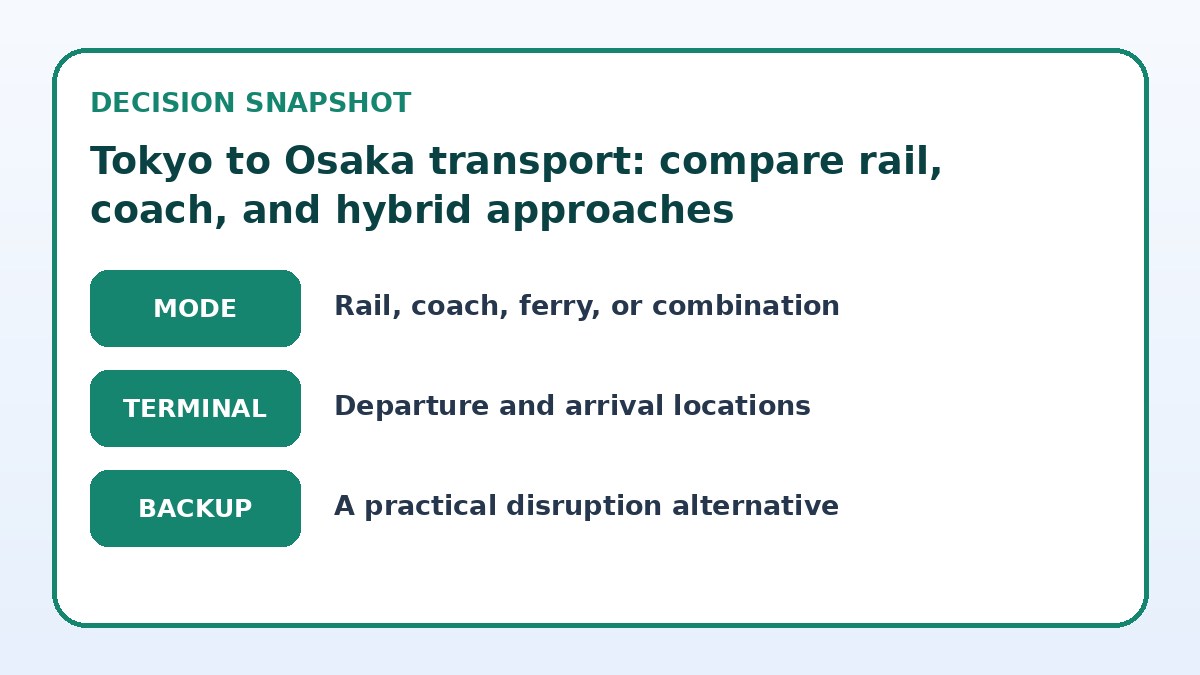
| Journey approach | Best for | Friction to check |
|---|---|---|
| Direct high-speed rail (single booking, minimal transfers) | Travelers who prioritize predictable door-to-door time and minimal last-mile friction | Can be costlier than coaches and requires central-terminal arrival and departure planning |
| Express coach (departure from bus terminals or park-and-ride) | Those prioritizing lower stress boarding and possible savings if central transfers are acceptable | Longer in-motion time and fewer departure windows increase vulnerability to traffic delays |
| Flight plus rail/transfer (hybrid for specific origin/destination fits) | Passengers whose start or end points are closer to airports than main stations | Adds security and transfer steps; more handoffs increase luggage and schedule risk |
| Staggered or mixed itinerary (overnight break or split travel) | When meetings are spaced or when disruption risk needs to be managed with an overnight buffer | Longer total trip time and extra accommodation planning, but reduces the impact of single-day disruptions |
Check live intercity options
Look beyond the ride itself and compare terminals, transfers, luggage, and arrival fit.
Luggage, transfers, and friction for business travelers
Luggage handling is where small details create outsized friction. Carry-on-only travelers who can work on a laptop, take calls, or step into meetings directly after arrival will find trains the least intrusive: boarding is straightforward, storage is nearby, and you can disembark quickly. If you travel with larger cases, check the availability and reliability of luggage forwarding services, station locker capacity, or porter services at each terminal. Also factor in how often you’ll need secure storage during the day, or whether you’ll rely on a hotel to receive bags before check-in; these micro-decisions shape whether an option that looks faster on paper will actually be faster in practice.
Transfers between modes — from an airport terminal to city center, or from a long-distance coach stop to a corporate office — are where schedules often unravel. Count the number of mode changes in a full itinerary and assign realistic buffer time to each: walking between platforms, customs or security at airports, or waiting for last-mile taxis. For a business traveler, the practical choice usually minimizes mode changes even if the in-motion time is slightly longer. Reducing handoffs lowers the chance that luggage, devices, or critical documents are delayed, which in turn preserves professional appearance and reduces stress before meetings.
Timing flexibility: frequency, windows, and booking posture
Frequency of departures matters for business travelers with uncertain meeting schedules. If your agenda might shift, choose an option with frequent departures so you can change plans without rebooking or losing a day. Trains between Tokyo and Osaka typically run often throughout the day, offering multiple seats and more flexibility to move between times. Coaches and flights may have fewer daily departures; confirm options and check change/cancellation policies before booking. If your business requires same-day return, prioritize services that offer both high frequency and predictable punctuality to avoid missing evening commitments.
Your booking posture—how far in advance you lock in seat and how you handle schedule changes—should align with the departure profile. For frequent, flexible travelers who anticipate last-minute changes, opt for tickets with flexible transfer or easy exchange conditions and keep a standby alternative in your calendar. For fixed appointments with significant penalties for delay, reserve earlier departures and build in additional buffer time on either side of the intercity segment. Always verify final booking terms on the provider’s page so you know whether exchanges, refunds, or name changes are permitted and what fees may apply.
Compare the practical alternatives
Use the final page to confirm what is actually offered on your dates and save a workable fallback.
Intercity travel checklist
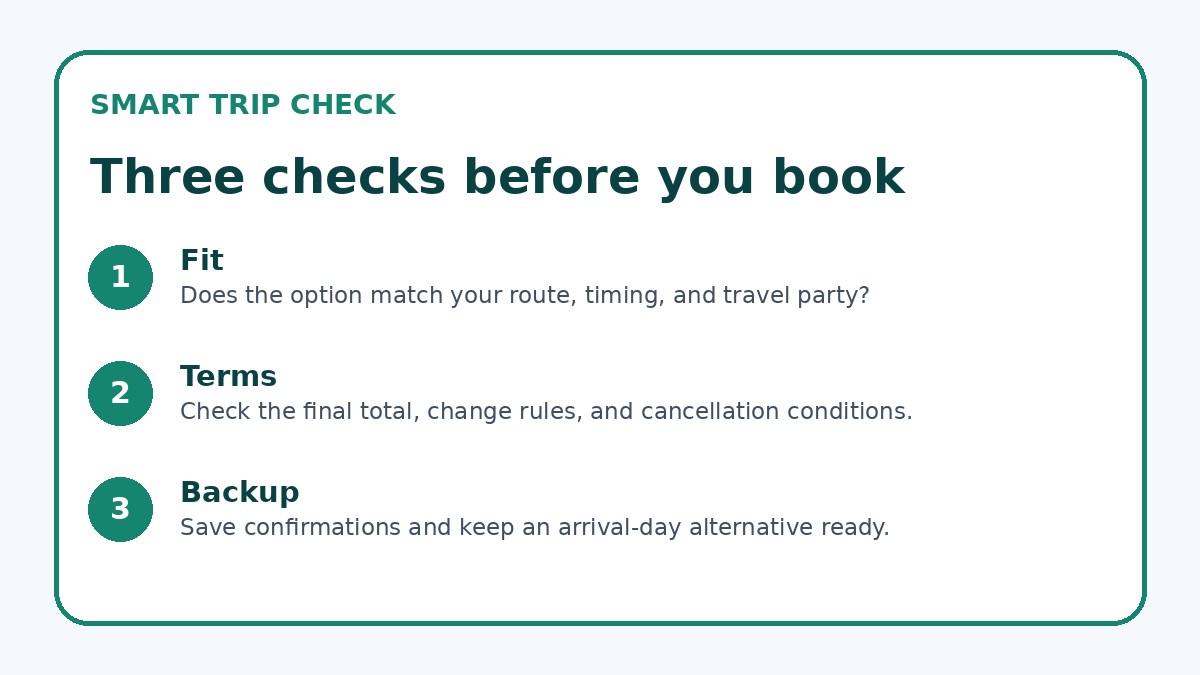
- Map door-to-door time: calculate travel time from your office to departure terminal, in-motion duration, and onward transfer to the meeting or hotel.
- Confirm luggage options: verify on the provider page whether large suitcases are allowed, station lockers exist, or a forwarding service is available.
- Build a disruption buffer: pick a backup departure and note the exact change or cancellation policy shown on the booking site.
- Prioritize frequency: choose services with multiple daily departures if your schedule could shift, and reserve an earlier option to add cushion.
- Prepare digital copies: save meeting materials and identity documents in the cloud so you can continue work if luggage is delayed.
- Communicate plans: share your itinerary and the chosen backup with colleagues or a travel coordinator and leave contingency arrival times.
Disruption backup: practical contingency planning
Even with the most reliable provider, disruptions happen. A practical plan names a single, reliable backup option and practices using it. For many business travelers between Tokyo and Osaka that backup is another rail departure within the same day or a coach that follows a similar corridor. Identify the nearest inbound and outbound terminals you could use in a disruption, how to get there quickly from your origin or current location, and how long re-routing would add to your trip. Keep contact numbers, the provider’s refund or exchange guidance, and a second booking app or agent at hand.
Also create a simple decision tree for common problems: if the booked service is delayed more than X minutes, switch to an alternate train; if it’s canceled, take the next coach or break the trip with a local overnight stay. Communicate this contingency plan to your assistant, travel arranger, or colleagues who might need to adjust meeting times. When provider-specific facts could change—schedules, service advisories, or booking rules—check the provider’s final booking page or a current comparison tool such as Trip.com to confirm the exact options and conditions before you finalize arrangements.
Rail & Intercity Transport questions travelers ask
Is high-speed rail usually faster door-to-door than flying between Tokyo and Osaka?
High-speed rail often beats flying on door-to-door time for business travelers because major stations are centrally located, avoiding airport transfers and security wait times. The rail environment also reduces transfer friction for luggage and allows continuous productivity. However, whether rail is faster depends on your exact start and end points, connection times to and from airports, and the specific schedules available that day. Before booking, compare complete door-to-door itineraries—station or airport transfer times included—and verify departure options on the providers’ booking pages.
What should I verify on a booking page before I finalize a business travel reservation?
Always confirm departure and arrival terminals, allowed luggage dimensions and weight, change and cancellation policies, exact departure times, and the number of permitted changes or refunds. Check whether seats are reserved and if you can select them, and note any transfer instructions or required check-in time. For hybrid itineraries, verify connection minimums and whether the provider offers protective rebooking in case of delays. If you use a corporate booking tool, ensure policy compliance and keep receipts for expense reporting.
How do I choose between a direct train and a staggered itinerary with an overnight stop?
Choose a direct train when meetings are tightly scheduled and you need to minimize total trip time and transfers. Opt for a staggered itinerary with an overnight stop if your schedule is flexible, if there’s a high disruption risk on the travel day, or if splitting the trip reduces stress and chance of missed commitments. Consider cost, the impact of added accommodation on the trip’s timeline, and whether staying overnight creates a more reliable buffer for crucial meetings. Always evaluate door-to-door impact, not only the intercity segment duration.
Final decision note
For business travelers between Tokyo and Osaka the practical default is a direct high-speed rail itinerary that minimizes transfers and preserves reliable, usable time en route. But the right choice depends on where you start and end, how much luggage you carry, how many mode changes you can tolerate, and whether your schedule needs the extra flexibility of more frequent departures. Use door-to-door mapping as your primary comparison metric, pick a single clear backup, and verify luggage rules and exchange policies on the provider’s booking page before committing. With those steps you’ll choose an option that keeps meetings on schedule and reduces travel friction.
Continue planning
Check current options and final conditions
Use the provider page to confirm live availability, the final total, cancellation terms, and every condition that matters to your trip.
This evergreen planning guide was created with AI-assisted drafting and a structured quality review. It does not display live prices, schedules, availability, visa guidance, or provider rankings. Verify current details before booking. Some links are affiliate links; we may earn a commission at no additional cost to you.