If you and your partner can bend your travel dates by a few days, you can often find better options in Seoul—more convenient flight times, room types, or package combinations—without chasing price magic. The practical move is simple: compare identical travel parameters across different date pairs and booking approaches, then judge which trade-offs (change fees, inclusions, cancellation terms, traveler-specific perks) matter most to you. Start by locking down who’s traveling, how many nights you want in Seoul, and what neighborhood priorities you have. Then run side-by-side checks across package bundles and separate bookings on the exact same dates and traveler counts. That comparison keeps you from falling for apparent savings that evaporate once you include baggage, transfers, or change penalties.

Test package value fairly
| Booking approach | Best for | Tradeoff to check |
|---|---|---|
| All-in-one package (flight + hotel + transfer) | Couples who prioritize convenience and want a single point of contact for the whole trip. | May include nonrefundable elements and higher upfront cost versus building separately; verify final change and refund rules. |
| Package with add-ons (flight + hotel, optional transfer/activities) | Couples who want a baseline bundle but the option to customize and avoid paying for extras they don’t use. | Can deliver flexibility if add-ons are optional, but check how add-on cancellations are handled and final total pricing. |
| Separate bookings (book flights and hotels independently) | Couples who want to shop specific airlines or hotels and control each cancellation policy individually. | Often lower headline cost but requires more legwork and attention to align schedules and include baggage or transfers. |
| Mixed approach (book flights separately, buy local transfers/activities as a package) | Couples seeking the best flights while outsourcing ground logistics and experiences to a local operator. | Combines flight flexibility with packaged convenience, but mix-ups can occur if providers’ change policies don’t sync. |
Check current package and separate options
Use identical dates, travelers, room needs, baggage, and flexibility so the comparison stays meaningful.
What to compare before judging a package
Before you decide whether a bundled Seoul package is worth it, establish a baseline: identical traveler count and traveler types (adult, child), the exact room category and bed configuration you’ll accept, and the same outbound and inbound time preferences. Don’t let headline prices lure you; bundle quotes often hide conditional extras—baggage allowances, seat selection, or local taxes—that change the true out-the-door cost. Make two parallel searches: one for the package and one building the trip from separate components using the same dates and traveler details. This reveals whether the bundle adds convenience that justifies any price premium or whether separate bookings genuinely deliver better value.
Also verify operational and booking conditions that affect flexibility. Look for the provider’s change and cancellation windows, how refunds are handled, and whether names or passenger details can be amended without fees. For hotels, compare whether the quoted room is refundable and whether breakfast or other amenities are included; for flights, confirm the baggage allowance and how seat selection is handled in the price you’re comparing. When provider-specific facts could change, go to the supplier’s final booking page and read the exact fare rules, hotel conditions, and transfer terms before you commit.
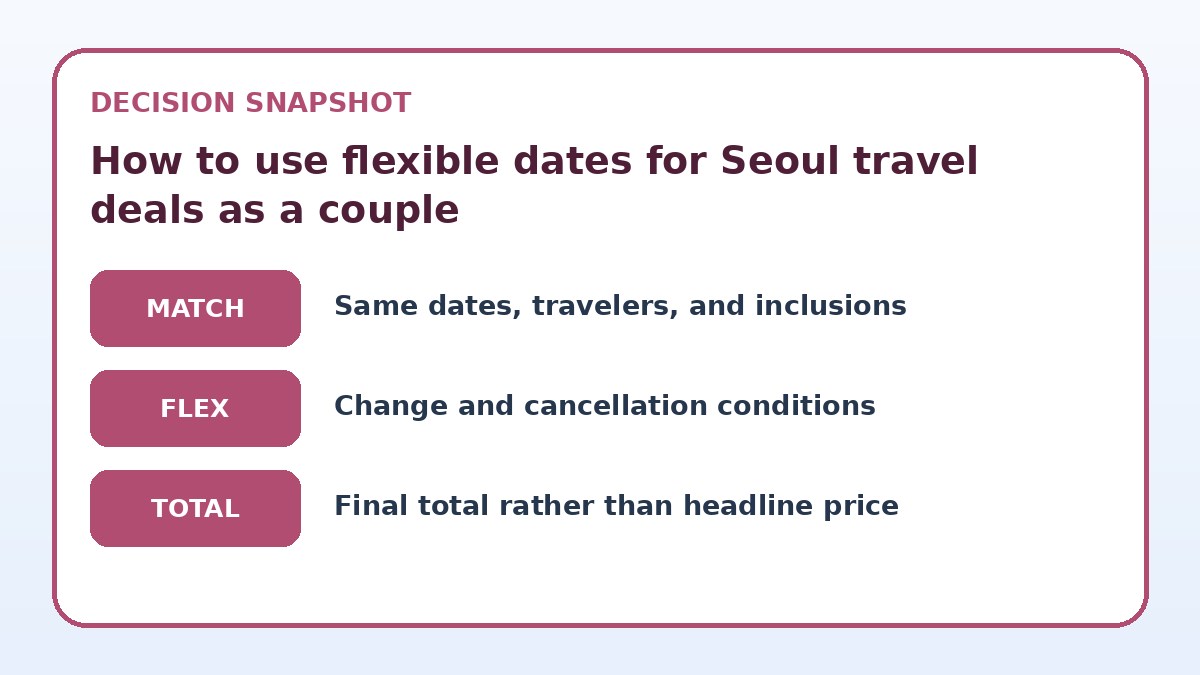
How flexible dates change the deal math
Shifting your Seoul arrival or departure by a couple of days can affect multiple cost elements: airfare class availability, weekend hotel rates, and the need for a paid transfer. Flexible-date searches reveal patterns—weekday arrivals may mean lower flight fares and cheaper hotels, while avoiding festival dates can spare both price spikes and sold-out rooms. But don’t optimize price in isolation: a cheaper flight with a long overnight connection or a hotel far from the subway could cost you time and comfort that matter more on a short couple’s trip. Balance price with convenience and your shared travel priorities.
When you find a lower fare on alternate dates, rebuild the full itinerary for those dates and compare inclusions. A cheaper flight might be basic-economy without baggage; a lower hotel rate might be for a nonrefundable room. Add the cost of baggage, transfers, and any required upgrades to see the true total. Also consider soft-value items for couples—late checkout, room view, or easier arrival times—that can be worth a modest premium if they materially improve your experience in Seoul.
Look past the headline total
Compare inclusions and change conditions before deciding whether a package is genuinely useful for this trip.
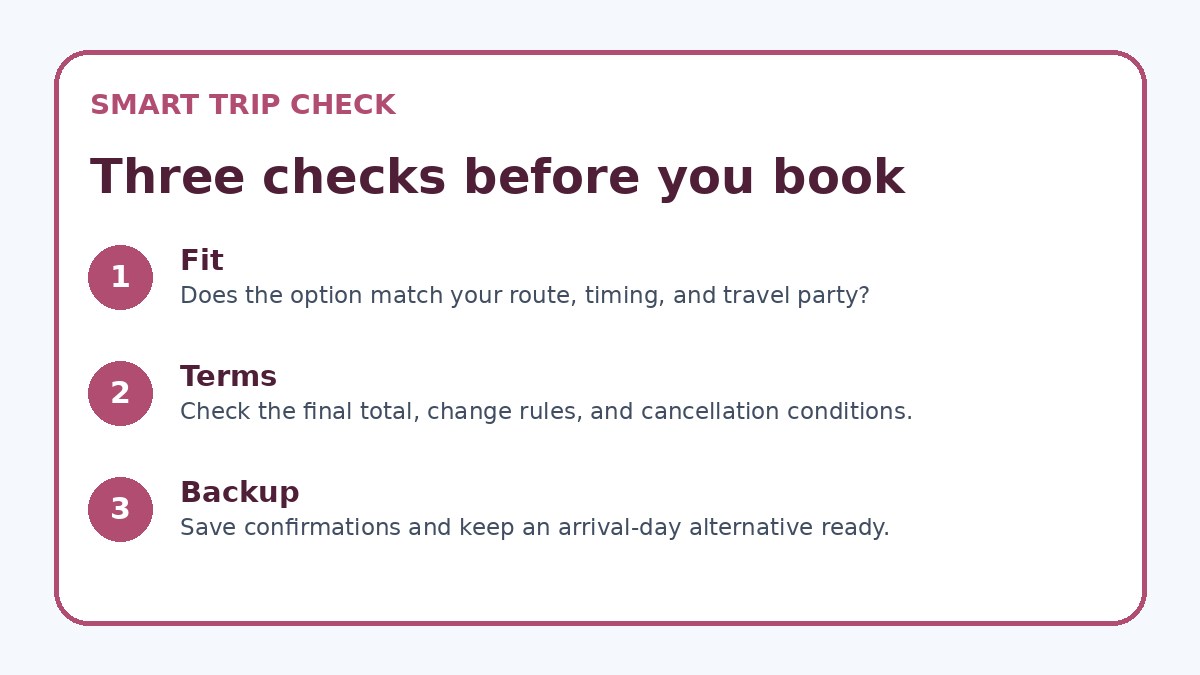
Deal comparison checklist
- Lock in the exact traveler count and room/seat type before running any package-versus-separate comparisons.
- Use flexible-date search tools to map price ranges across a five- to seven-day window around your target dates.
- Recreate the same itinerary on identical dates—same flights, room category, and traveler details—when testing package value.
- Read the supplier’s final booking page for change, cancellation, and baggage rules before committing to a purchase.
- Add mandatory extras (baggage, transfers, city taxes) into the total to compare true out-the-door costs.
- Confirm who handles refunds and customer service (agency vs. supplier) and save contact details in case plans change.
Traveler-specific value: what couples should prioritize
Couples often value convenience, privacy, and memorable experiences over squeezing out the last won of savings. For Seoul, that typically means prioritizing an efficient arrival (short transfer or logical airport train connections), accommodation near a neighborhood you want to explore together, and room configurations that allow a quiet evening in. When comparing package versus separate bookings, quantify the value of included extras such as private transfers, breakfast, or a seat upgrade, especially if those extras reduce friction on arrival or free up time for dates and activities.
Also factor in flexibility preferences for both travelers. If one partner needs to remain certain of return dates for work, prefer refundable or changeable fares even if more expensive; if both can be flexible, choose the lower-cost dates and accept stricter change rules. For experiences—reservations at popular restaurants, guided walks, or K-pop-related tours—check whether the package secures spots that would otherwise require advance booking; that convenience can tip the balance for couples with tight itineraries.
Final terms and avoiding false savings
The final terms are where good-sounding deals can unravel. Before you book anything labeled as a Seoul package, confirm: exact baggage rules, who issues refunds, how name changes or cancellations are handled, and whether transfers or activities are refundable. Pay particular attention to whether a travel agent or marketplace is reselling a supplier’s product—if so, verify the supplier’s cancellation and change policies on their own booking page because third-party protections vary. If the package price depends on nonrefundable components, make sure you’re comfortable with that risk.
To avoid false savings, recreate the booking exactly—same flights, same room type, same dates, same traveler count—using separate bookings and a package quote. Compare the final totals including all mandatory fees. If the package still wins on convenience or total cost, confirm who to contact for changes and how refunds are processed. Trip.com is an optional place to compare current availability and conditions, but always verify critical policy details on the provider’s final booking page before you commit.
Travel Deals & Booking Strategy questions travelers ask
How many days of date flexibility usually makes a difference for Seoul flights and hotels?
Shifting by two to four days often produces the most noticeable change in flight fares and hotel rates, particularly if you can move from a weekend to a weekday. For couples, test moving both arrival and departure by a few days independently: sometimes leaving a day earlier lowers flight cost without altering hotel value, or a later return reduces fare by avoiding weekday business travel. Use a flexible calendar search to visualize the patterns, then rebuild the exact itinerary to check total costs and any changes in connections or room availability.
If a package looks cheaper, what hidden costs should couples check before booking?
Confirm baggage allowances and seat selection on the quoted flights, whether the hotel rate is refundable and includes bed configuration you need, and if transfers or activities are truly included or only available as paid upgrades. Also review taxes, resort or city fees, and the vendor’s cancellation and change fees. Recreate the booking separately with the same specifications to ensure the package isn’t transferring costs into nonrefundable or hard-to-change components that remove your flexibility.
Can flexible dates help secure better experiences or activities for couples in Seoul?
Yes. Traveling slightly off-peak can improve availability for popular restaurants, guided tours, and cultural experiences that book up on festival weekends or holiday periods. If an included activity is a priority, check whether the package reserves slots or simply provides a voucher, and whether those reservations are changeable. Couples should weigh the convenience of guaranteed activity bookings in a package against the ability to pick precise time slots when building the trip themselves.
Final decision note
For couples planning Seoul travel, flexible dates are a practical lever to improve both price and quality of experience—but only if you compare apples-to-apples. Start by fixing traveler details and room/seat types, use flexible-date tools to identify candidate windows, and then recreate the booking on identical dates to reveal true costs and limitations. Prioritize the inclusions that matter to you—arrival convenience, refundable fares, or guaranteed experiences—and verify final terms on the supplier’s booking page. When a package keeps you both more relaxed and doesn’t hide change penalties, it’s worth it; when separate bookings give the same trip for less and with acceptable flexibility, choose control.
Continue planning
Check current options and final conditions
Use the provider page to confirm live availability, the final total, cancellation terms, and every condition that matters to your trip.
This evergreen planning guide was created with AI-assisted drafting and a structured quality review. It does not display live prices, schedules, availability, visa guidance, or provider rankings. Verify current details before booking. Some links are affiliate links; we may earn a commission at no additional cost to you.