If your trip to Melbourne is about meetings and productive downtime, start by picking the right stay-area before browsing rooms. Choose a neighborhood that shrinks your daily commute to the handful of places you’ll visit most, then select a room that supports focused work and reliable rest. For many business travelers that means trading off a shorter tram ride for a quieter suite, or prioritizing a CBD location for evening networking. This guide gives the practical answer up front—which area to target for common business patterns—then walks through the tradeoffs, daily-route friction, room-and-party needs, and final booking checks so you can shortlist one or two areas and open live inventory with confidence.
Check live stays in the areas that fit
Use your dates and party size to compare current rooms after you narrow the neighborhood fit.
Neighborhood fit: map your daily hubs first
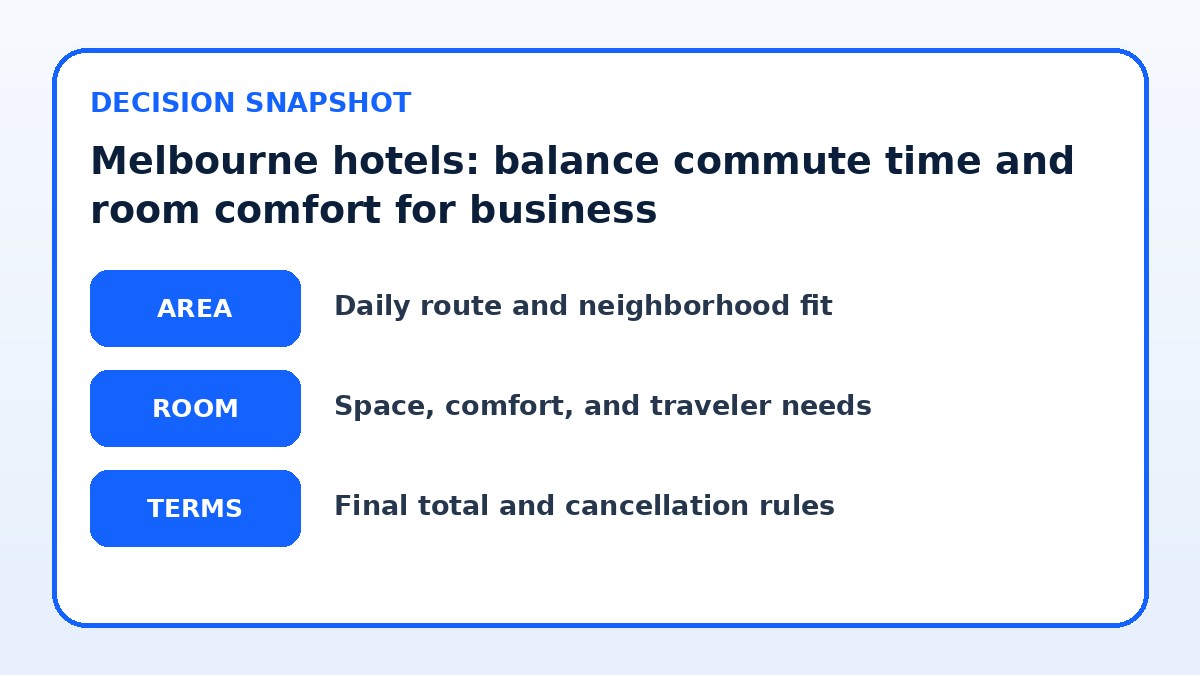
Start by listing the three locations you'll be at most: main office, client sites, and evening venues. Melbourne’s central business district (CBD) concentrates corporate offices, hotels, and trams, making it the most time-efficient base for dense meeting schedules. Southbank sits across the river with similar access plus riverside restaurants and conference options. Docklands is quieter at night but closer to the convention center and waterfront attractions. If your appointments scatter to Prahran, Richmond, or St Kilda, staying in an inner-suburb hotel can cut last-mile walking and give easier evening options.
Use tram and train stops as anchors when choosing an area; Melbourne’s tram network radiates from the CBD and inner suburbs, while train stations suit longer commutes. Identify the nearest major stop to each hub and estimate the number of transfers, typical walking segments, and whether you’d rather take a taxi after late meetings. For executive travelers with unfamiliar schedules, a location with 24-hour transport options or easy taxi access reduces stress. Shortlisting three areas by mapped commute time helps you decide whether location or in-room comfort should win.
Choose an area-selection strategy
| Area approach | Best for | Tradeoff to check |
|---|---|---|
| Central CBD base | Dense daytime meetings and minimal transfers | Smaller rooms, more street noise; may lack boutique dining nearby at night. |
| Southbank or riverside | Client dinners and conference access with scenic walks | Slightly longer walks to some office blocks and variable tram timings. |
| Inner-suburbs (South Yarra, Richmond) | Evening dining, shared-team stays, and access to trains | Longer commute into the CBD during peak hours for morning meetings. |
| Docklands and convention precinct | Convention attendees and quieter nights near waterfront venues | Fewer evening restaurant options and less tram coverage after hours. |
Daily-route friction: convert distance into decision points
Don’t just measure kilometers—translate distance into real friction: transfers, wait time, and the walk from stop to meeting. A 10–15 minute tram ride through the CBD is often faster than a 5–10 minute walk combined with a 10–15 minute transfer. Consider peak-hour congestion around Flinders Street, Spencer Street, and Collins Street and whether you’ll be rushing between back-to-back appointments. If your meetings cluster in the eastern suburbs, a hotel near Richmond or South Yarra train stations will cut transfer stress and reduce the chance of lateness.
Also account for pre- and post-meeting routines that add friction: grabbing coffee, printing documents, or freshening up between appointments. Hotels with business centres, 24-hour lobbies, or in-room kettles and desks convert minutes into usable time. Evening commitments affect the choice differently—if you expect dinners in high-demand restaurant neighborhoods, staying close to those dining pockets prevents long rides home. Balance commute predictability with the small conveniences that save time during a packed workday.
Now compare like with like
Keep the same dates, guests, room needs, and cancellation preferences while you compare the final choices.
Room and party needs: pick the layout that supports work and rest
Decide whether you need a quiet single room, a suite with separate work area, or a serviced apartment for longer stays or shared occupancy. Single travelers who value minimal transit often accept a smaller CBD room with a reliable desk and good blackout curtains. If you expect video calls or need space for an assistant, request a room with a dedicated work nook or pay for an upgrade to a one-bedroom suite. For team travel, serviced apartments or interconnecting rooms give space to meet privately and spread out documents and luggage.
Pay attention to room features that affect productivity: high-speed wired or reliable business-grade Wi‑Fi, adequate desk lighting and power outlets near the workspace, and soundproofing if you’ll be on calls. Also consider non-room hotel features that reduce friction: early breakfast options, late checkout policies, luggage storage, and a business centre. When booking, confirm on the hotel’s final page whether the room type includes the amenities you need—don’t assume photos or standard descriptions guarantee workspace quality or quiet.
Hotel booking check before payment
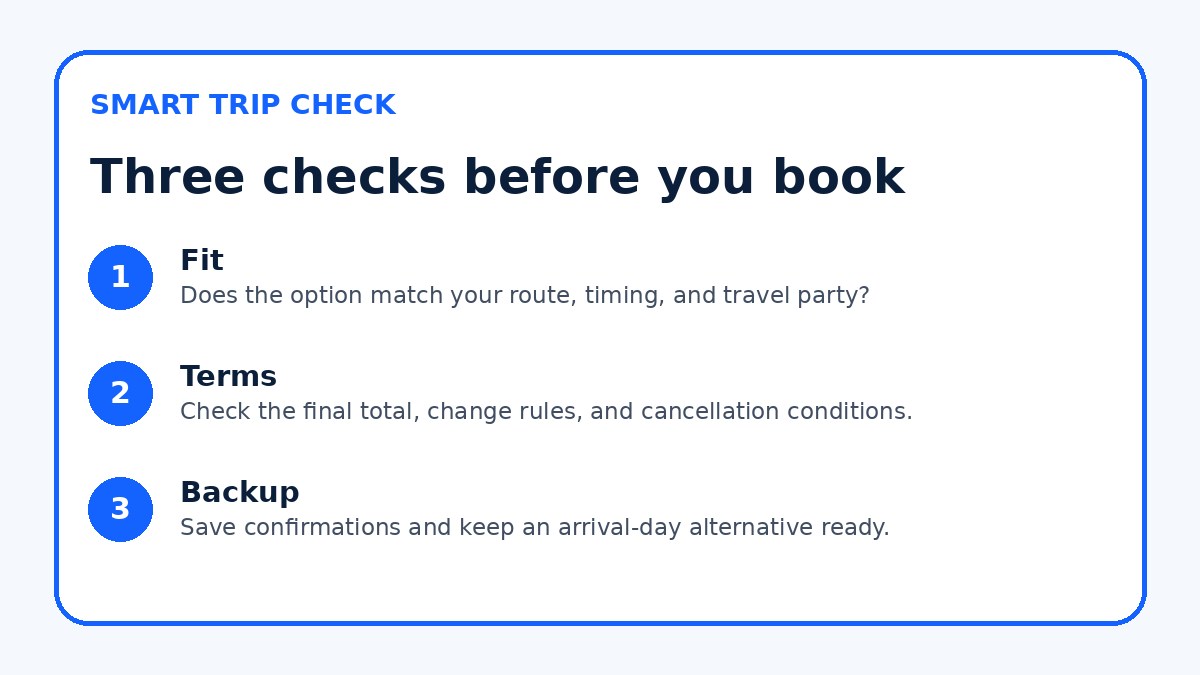
- Map your three highest-priority daily hubs and note the nearest tram or train stop to each.
- Shortlist two neighborhoods that minimize transfers and calculate typical door-to-door commute times.
- Choose a room type based on call frequency: desk-only for light calls, separate suite for regular video meetings.
- Confirm Wi‑Fi speed and business services on the booking page or by emailing the hotel directly.
- Check cancellation, change, and invoice terms before you commit—save screenshots of the final booking page.
- Plan arrival logistics: early check-in, luggage hold, and nearby taxi ranks or airport transfer options.
Final booking terms: questions to resolve before you reserve
Before you finalize a booking, confirm three contractual basics on the hotel’s booking page: the cancellation and change policy, whether breakfast and Wi‑Fi are included, and the exact room type and bed configuration. Cancellation flexibility matters more than price when flights or meetings remain tentative. If your agenda could shift, look for a rate that allows changes without heavy penalties. Also verify what “breakfast included” covers and whether business services (printing, meeting rooms) carry additional fees—ask the property directly if the booking page is unclear.
Check arrival logistics that affect the first and last day: guaranteed early check-in or late checkout options, luggage hold policies, and whether the property offers airport transfer or a simple taxi rank nearby. For corporate billing, confirm invoice options and whether VAT or local taxes are itemized. When provider-specific facts could change, verify them on the hotel’s final booking page and with the property. You can compare availability on Trip.com as one option, but always treat that as an inventory snapshot, not a permanent guarantee.
Hotel Guide questions travelers ask
How do I decide between staying in the CBD and an inner suburb like South Yarra?
Compare your morning and evening priorities: if most meetings are inside the CBD and you need to minimize travel time and transfers, a CBD hotel reduces friction and shortens walk distances. If your evenings will be client dinners, networking, or off-site events in restaurant-heavy neighborhoods, an inner suburb such as South Yarra or Richmond offers better dining options and often quieter rooms at night. Map your schedule to see whether you take more value from shaving minutes off daytime commutes or from being within easy reach of evening venues; that will usually tip the balance.
What room features should I insist on for reliable work-from-hotel conditions?
Prioritize a dedicated workspace, preferably with a real desk, ergonomic chair, and multiple power outlets within reach. Confirm the availability and reliability of high-speed internet—ask if wired connections are offered for more stable calls. Check for blackout curtains and soundproofing if you need uninterrupted sleep between meetings. If you host in-room meetings or need space to spread documents, upgrade to a suite or book a serviced apartment. Always verify these specifics on the hotel’s booking page or by contacting the property directly rather than relying solely on photos.
How can I verify booking details that often change after I reserve?
Save and double-check the final confirmation page and the emailed booking receipt; these show the rate rules, cancellation policy, and inclusions at the time of booking. If anything is ambiguous—such as breakfast hours, internet speed, or early check-in—email or call the hotel and request written confirmation. For corporate billing or invoiced stays, confirm VAT/tax handling and invoice details before arrival. You may compare current availability on Trip.com, but always verify the hotel-specific terms on the property’s official booking page to ensure they match what you were told.
Final decision note
Balancing location and room comfort in Melbourne is a practical tradeoff, not a gut decision. Start with the geography of your schedule: pick the neighborhood that minimizes transfers and late-night hassles for your most frequent appointments. Then choose a room layout that supports how you work—desk and wired internet for calls, suites for private space, or serviced apartments for shared stays. Before you book, confirm cancellation rules, included amenities, and arrival logistics on the hotel’s final booking page or directly with the property. With those checks done you can confidently shortlist one or two areas and open live inventory to find the right Melbourne hotel for your trip.
Continue planning
Check current options and final conditions
Use the provider page to confirm live availability, the final total, cancellation terms, and every condition that matters to your trip.
This evergreen planning guide was created with AI-assisted drafting and a structured quality review. It does not display live prices, schedules, availability, visa guidance, or provider rankings. Verify current details before booking. Some links are affiliate links; we may earn a commission at no additional cost to you.