Practical answer first: for most solo visitors based in central Sydney, driving is optional—public transport, rideshares and short ferries handle inner-city and coastal sightseeing efficiently. Choose to rent only if your itinerary needs flexible day trips (Blue Mountains, Southern Highlands, remote coastal lookouts) or you value door-to-door control with luggage. If you rent, the single biggest planning task is understanding the insurance wording on the rental contract and the offered cover options. Ambiguous phrases such as “partial damage waiver,” “excess,” “loss of use,” or “third-party liability” hide real cost and responsibility at the counter. This guide helps you decide whether driving adds value, explains the specific insurance wording to check on the final booking page, flags pickup and return friction, and outlines practical non-driving fallbacks so you can book confidently.
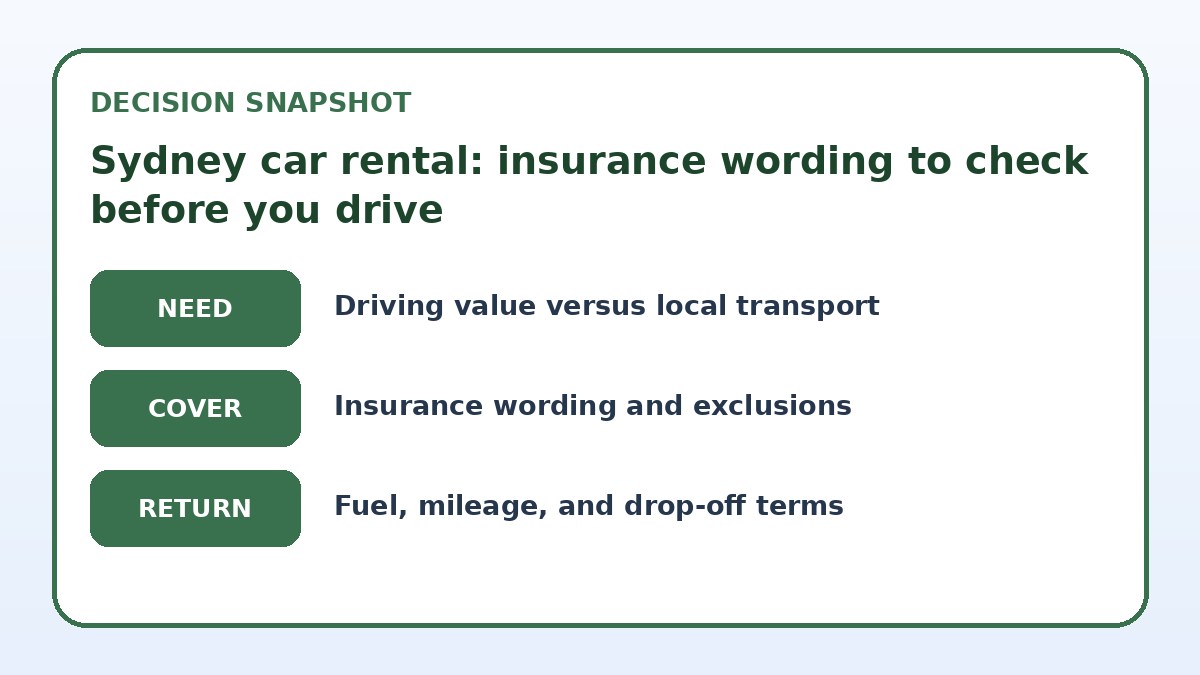
Does driving genuinely improve a solo Sydney itinerary?
Start by mapping each day: list destinations, how early you need to start, and whether public transport runs at the times you plan. Central Sydney — the CBD, circular Quay, Bondi, Manly and inner eastern suburbs — are well served by trains, buses, ferries and rideshares, so driving adds little time savings and can introduce parking hassles and costs. Driving is most beneficial when your plan includes multiple distant stops in a day, remote lookouts or rural drives where scheduled services are infrequent, or when you carry bulky gear such as surfboards, photography equipment or camping kit.
For solo travelers who value flexibility on scenic coastal or mountain routes, a rental can turn a crowded day into an unhurried one. Balance that against the stress of navigating unfamiliar roads, paying parking fees, and potential city traffic. Also factor in the extra time at pickup and return related to insurance and damage checks; these interactions can add 20–60 minutes each way if there’s a dispute or paperwork complexity. If your itinerary can be reshaped around regional transport schedules, you might save money and hassle by not driving.
Decide whether driving earns its place
| Mobility strategy | Best for | Cost or friction to check |
|---|---|---|
| Full rental with optional excess reduction | Solo travelers needing full-day regional flexibility and luggage capacity | Higher upfront holds and time dealing with insurance wording and claims at pickup/return |
| Public transport plus occasional rideshare | City-based explorers and short coastal trips without heavy gear | Less flexibility for remote stops and potential longer door-to-door times |
| Organized day tours or private driver | Those who want local knowledge and zero vehicle insurance fuss | Fixed schedules and potentially higher per-day cost compared with driving yourself |
| One-way hires or split renting (short local rental days) | Travelers who need intermittent access to a vehicle without long-term rental responsibilities | More planning to arrange pickups and possibly higher per-day rental rates |
Check live rental choices only after the route test
Use the exact driver, dates, pickup point, and return plan to compare current conditions.
Insurance wording: the specific phrases to read and what they mean
On the final booking page and the rental contract, hunt for clear definitions of these terms: excess (or deductible), liability limit, collision damage waiver (CDW) versus supplementals, loss of use, and exclusions (tyres, windscreen, undercarriage, off-road). The excess is the maximum you would pay if the car is damaged; some wording presents a headline ‘excess reduced to $X’ only if you buy an additional waiver. 'Loss of use' can be billed separately while the car is being repaired. If the contract mentions 'third-party liability' without a limit, ask for the monetary cap — Australian law sets minimums, but rental policies often add extra commercial provisions.
Watch for conditional language like 'may be excluded' or 'subject to inspection' — those phrases shift interpretation at the counter. Pay attention to exactly which cover options are offered at online checkout versus at the desk; some insurers require you to accept a verbal waiver or sign forms that change coverage. If a page references an insurer or a partner company, check their policy wording or ask for a policy number you can read before you accept. When provider-specific facts could change, verify the excess, inclusions, and cancellation/adjustment terms on the final booking page and the printed rental agreement before you sign.
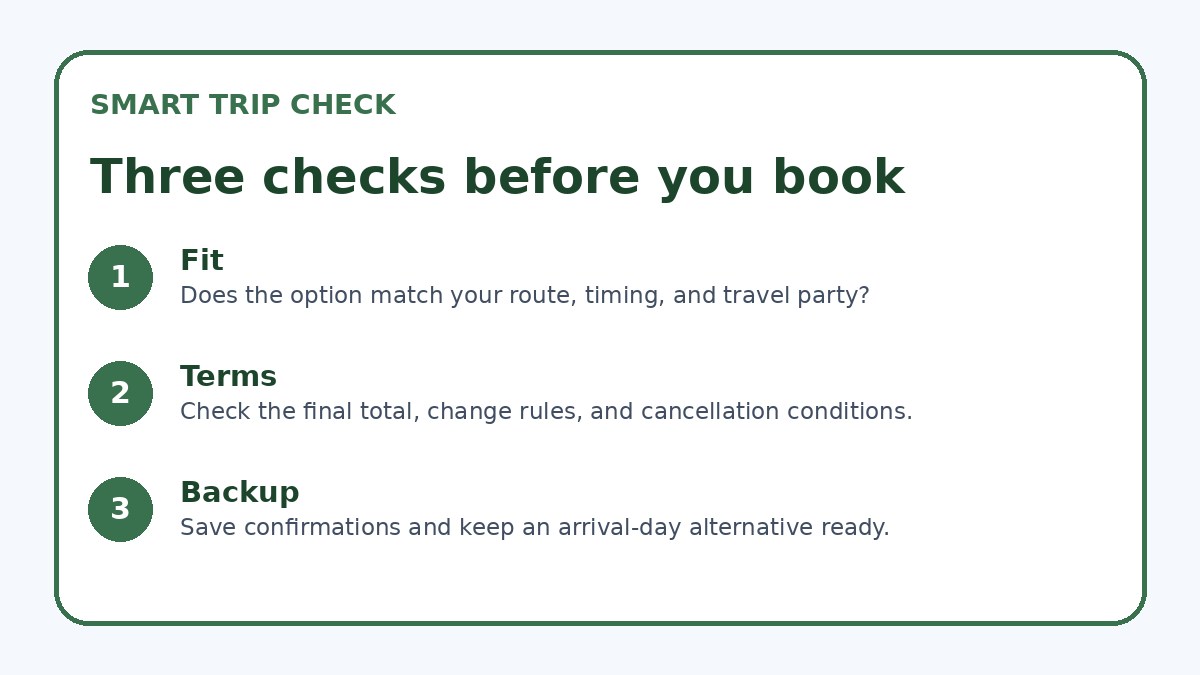
Compare the full rental conditions
Confirm insurance wording, exclusions, deposit, fuel, mileage, and return terms on the final page.
Pickup and return friction: practical checks and expectations
At pickup, expect a credit-card hold or pre-authorisation equal to the excess plus estimated charges. The rental agent may offer optional waivers that reduce the excess; these should be documented on your rental agreement. Inspect the car together with staff, take time-stamped photos of all sides, and note existing damage on the contract; if the agent delays inspection or pushes for a signature without documenting dents, ask to record the condition before you take the keys. Confirm mileage limits, fuel policy, and any cross-border restrictions if you plan to stray beyond New South Wales.
On return, allow at least 20 minutes for inspection and processing. If staff identify new damage, request a written damage report and a copy of any invoices or supplier estimates before agreeing to charges. Keep all receipts and take photos of the car at handover. If you purchased coverage through a third party (credit card or independent insurer), have your policy number and emergency contact ready; the rental company will still process the initial claim, but your insurer may reimburse you later. Verify dispute and appeals contacts on the final rental invoice.
Car rental terms to verify
- Confirm the exact excess amount and whether any optional waiver reduces it; save the online confirmation that lists both figures.
- Verify the policy wording for exclusions (tyres, windscreens, undercarriage, off-road) on the final booking page or in the rental agreement.
- Check payment method requirements and the expected credit-card hold amount on the rental provider’s booking page.
- Take time-stamped photos of all vehicle sides and interior before leaving the lot and request a signed condition report.
- Have third-party or credit-card insurance policy numbers ready and a contact for claims processing when you pick up the vehicle.
- On return, ask for a written damage report for any disputed charges and keep all receipts and the rental invoice.
Non-driving fallbacks: how to cover the same ground without renting
Trains and regional buses are reliable for many common day trips from Sydney: the Blue Mountains and Wollongong have frequent services and dedicated shuttle options from major stations. Organized day tours provide door-to-door transfer and a guide, removing navigation and parking worries—compare total time, pick-up points and cancellation rules before booking. For shorter coastal routes or late-night returns, rideshares and taxis add convenience for solo travelers who prefer not to drive; they can be cost-effective when shared across multiple passengers or when public transport requires long detours.
If you need flexibility but want to avoid full rental responsibilities, consider one-way transfers, shuttle services, or hiring a local driver for a single day. For extended regional exploration, combine public transport with short local hires (bike, scooter, or a single-day car rental) to limit insurance exposure and credit-card holds. When weighing fallbacks, calculate door-to-door time, total cost with luggage or gear, and whether the option requires advance booking; these practical details decide whether driving is truly necessary.
Car Rental & Road Trip questions travelers ask
How much is the typical excess and can I avoid it when renting in Sydney?
Excess amounts vary by company and car category and are specified on the booking page and the rental agreement. You can reduce or remove the excess by purchasing an optional waiver from the rental company or by using third-party insurance that covers the excess. Before buying anything, compare the rental company’s waiver wording with your credit-card coverage or an independent insurer; check whether the waiver excludes specific damage (like tyres or windscreen) and verify the refund process and waiting period for any claims on the provider’s final booking page.
Will my credit card's car rental insurance cover rentals in Australia?
Many credit cards offer secondary or primary rental insurance, but coverage differs by issuer and card level and often excludes certain vehicle types and countries. To rely on card coverage, review the card issuer’s policy wording for Australia specifically, note whether it covers excess, theft, and third-party liability, and see if any registration or activation steps are required before pickup. Always print or download the card policy, note claim contacts, and confirm with the rental company that their required proof of insurance is acceptable at the counter.
If the rental company finds damage after I return the car, what should I do?
Request a written damage report and copies of any estimates or invoices before paying. If you bought a waiver or used third-party insurance, notify that insurer immediately and follow their claims process. Keep your time-stamped photos and the original signed return inspection document; these are key evidence for disputes. Also, ask the rental company to explain any 'loss of use' or admin fees they intend to charge and where those amounts are calculated. If necessary, use consumer complaint channels listed on the rental invoice and keep all correspondence.
Final decision note
For solo travelers in Sydney, the core decision is practical: if your days stay within the city and nearby beaches, public transport and short rideshares usually beat driving once you factor in parking and insurance fuss. Rent a car when your itinerary includes remote or multiple regional stops where public transport is slow or infrequent, and be obsessive about reading insurance wording on the final booking page. Confirm excess amounts, exclusions, payment holds and exact waiver language before you sign. At pickup and return, document the vehicle thoroughly and keep all paperwork and photos. If you prefer to avoid rental responsibilities entirely, combine trains, buses, day tours and rideshares to cover most routes without the insurance complexity.
Continue planning
Check current options and final conditions
Use the provider page to confirm live availability, the final total, cancellation terms, and every condition that matters to your trip.
This evergreen planning guide was created with AI-assisted drafting and a structured quality review. It does not display live prices, schedules, availability, visa guidance, or provider rankings. Verify current details before booking. Some links are affiliate links; we may earn a commission at no additional cost to you.