If you and your partner are planning to travel between Florence and Milan, choose the travel mode that matches how much your plans might change and how much hassle you’re willing to accept. For most couples the practical choice comes down to: high-speed train for fast, flexible trips with easy city-centre access; regional train or coach for lower-cost but less-flexible options; or driving for door-to-door control if you need a flexible schedule and luggage space. This article gives the plain answer up front: prioritize ticket flexibility when your dates, arrival times or activities are uncertain — pick refundable or exchangeable train tickets, or plan a driving itinerary with flexible car-rental terms. Below you’ll find how to compare terminal fit, luggage and transfer friction, timing flexibility, and a disruption backup that keeps a weekend or mini-break on track.
Terminal fit: where you start and end matters
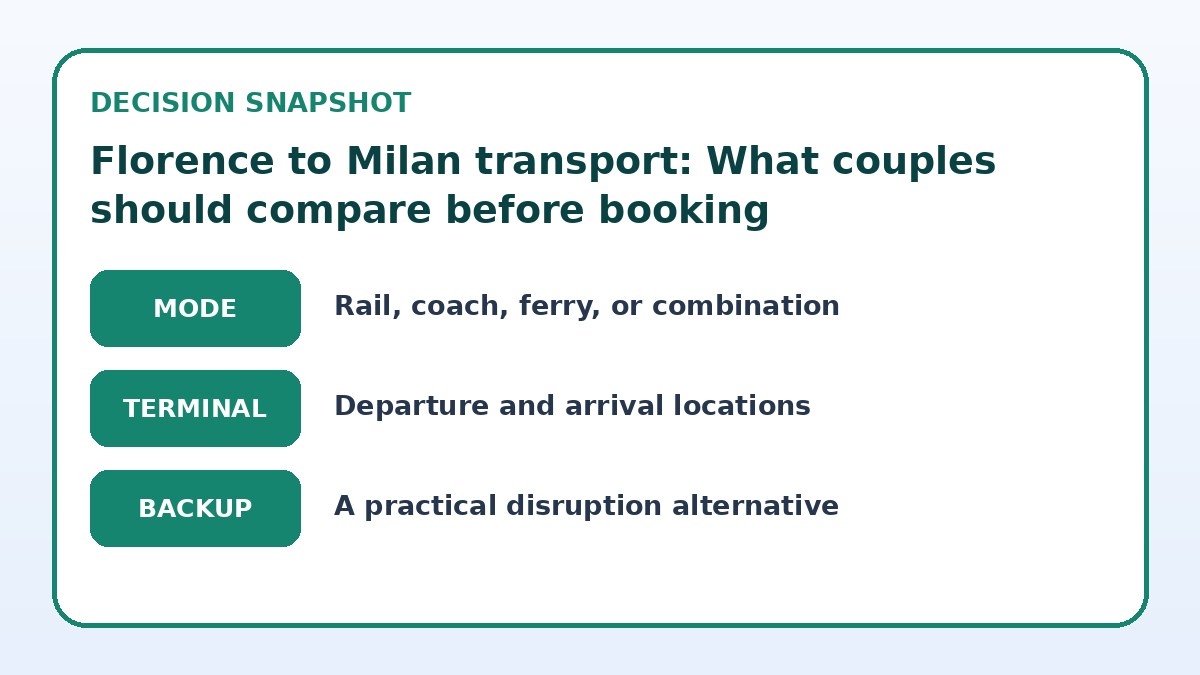
For couples, terminal location changes the whole door-to-door calculation. Florence’s main rail station sits close to the historic centre, which makes boarding fast for city-centre accommodations. Milan’s major stations are also centrally located, which reduces taxi or transit time on arrival. Coaches typically use highway-adjacent terminals that can add transfer time and a taxi cost at either end; driving removes the need to transfer but often requires parking considerations near your destination.
When evaluating ticket flexibility, look at how terminal location affects your tolerance for changes. A refundable train ticket that arrives at Milan Centrale keeps things simple because you won’t need an extra transfer if plans shift. By contrast, a cheap coach ticket to an out-of-centre coach terminal can feel inflexible if you suddenly need to get to a different neighbourhood. For couples who value convenience and low transfer friction, central stations with flexible ticket options usually win.
Choose the end-to-end journey plan
| Journey approach | Best for | Friction to check |
|---|---|---|
| Flexible refundable or exchangeable train fares | Couples who value minimal transfer friction and the ability to change plans without heavy penalties. | Higher upfront cost and the need to check fare conditions on the provider’s booking page for change windows and fees. |
| Advance non-refundable train or coach fares | Couples with fixed schedules prioritizing lower cost over the ability to change travel times. | Very limited or no change options; missed departures can force payment for a new fare or last-minute alternatives. |
| Driving with a flexible car-rental agreement | Couples seeking door-to-door control, easy luggage handling, and flexible on-the-ground schedules. | Must manage rental policy details and potential drop-off location fees; parking and city driving add complexity. |
| Mixed approach (train to city + short rental or rideshare) | Couples who want central arrival but need flexibility for day trips, late departures, or luggage-heavy transfers. | More bookings to coordinate; verify each provider’s change and cancellation rules before committing to avoid fees. |
Check live intercity options
Look beyond the ride itself and compare terminals, transfers, luggage, and arrival fit.
Luggage and transfer friction: packing, carrying and switching
Couples often travel with more luggage or shared items; consider how each mode handles bags. Trains generally offer generous luggage space and the freedom to keep bags by your seat, which is comfortable for two people. Coaches can have large underfloor bays but require loading and waiting at stops; this is less flexible if you expect last-minute boarding changes. Driving gives ultimate luggage control and the ability to store items in the boot, but you must factor in check-in for rental, fuel stops and parking at your arrival point.
Ticket flexibility intersects with luggage friction: refundable train tickets absorb the stress of rebooking when plans change, so you don’t have to rush with bags. If choosing a non-refundable coach fare to save money, build extra time to manage luggage shifts or consider booking a service with easy-change policies. When renting, confirm the rental company’s policy for changing pick-up/drop-off locations, as extra fees or administrative steps can convert a flexible itinerary into a logistical headache for couples.
Timing flexibility: how to value changeable plans
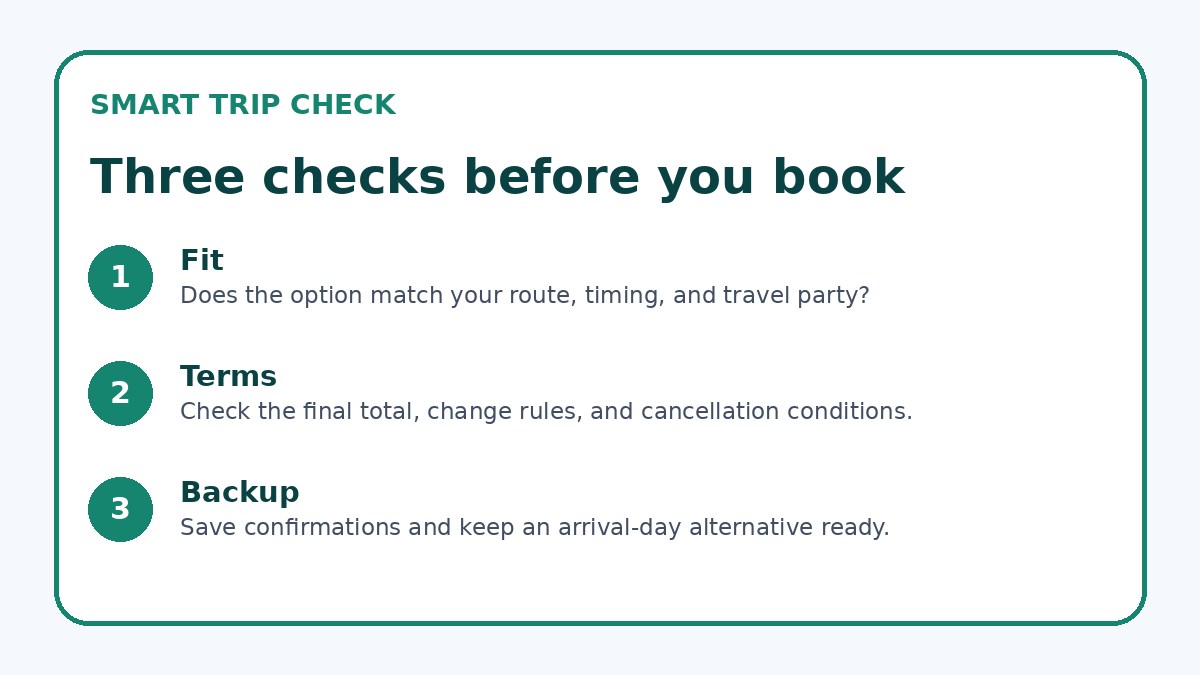
Think about how likely your travel times will change. If you and your partner anticipate late check-outs, extended breakfasts, or events that might run long, choose a ticketing approach that tolerates shifting departure times. Flexible train fares or those that allow same-day exchanges are valuable for couples who want peace of mind. Cheaper, advance-only fares lock you to a specific departure and can force hurried transfers or missed connections if plans overrun.
When comparing options, ask whether the provider allows free date changes, paid exchanges, or full refunds. For trains, verify on the provider’s final booking page whether your selected fare permits exchanges, how many free changes are allowed, and any time windows for doing so. For coaches and car rentals, check change and cancellation rules and whether alternate departures or return locations can be accommodated without heavy penalties; this is the best way to match timing flexibility to the real unpredictability of your trip.
Compare the practical alternatives
Use the final page to confirm what is actually offered on your dates and save a workable fallback.
Intercity travel checklist
- Confirm whether your chosen train fare allows free exchanges, partial refunds, or only paid rebooking on the provider’s final booking page.
- If booking a coach, check the terminal address and plan an alternative transfer to central Milan in case your coach is delayed or rerouted.
- When renting a car, verify amendment fees, one-way drop-off options, and the process for extending the hire if your schedule shifts.
- Note at least two later departures on the same day and a realistic road route as a backup before you finalize non-refundable tickets.
- Compare door-to-door travel time by adding likely taxi or transit transfer minutes at both ends to each option’s advertised station arrival.
- Save booking references, supplier contact numbers, and screenshot change/cancellation policy language so you can act quickly during disruptions.
Disruption backup: realistic alternatives if plans change
A simple backup plan protects your trip without overpaying for maximum flexibility. For couples, identify at least two later departures (train or coach) and a plausible road option before you book. Take note of local taxi or rideshare availability at both ends, and identify nearby stations that might offer an alternate route. If you rent a car, make sure you can change drop-off location or extend the hire period quickly; if not, note rail or coach alternatives that connect in case driving becomes impractical.
Also prepare documentation and contact points: have your booking reference, supplier contact, and local customer service numbers handy on the day you travel. If your preferred provider allows day-of changes, confirm the cut-off and procedure on its final booking page. Finally, for high-stress disruptions like strikes or severe weather, decide ahead whether you’ll wait for the next service, switch modes, or head straight to the nearest airport or station for alternate routing — that rapid decision-making prevents an otherwise enjoyable couple’s trip from turning into logistical frustration.
Rail & Intercity Transport questions travelers ask
Should couples always choose refundable train tickets between Florence and Milan?
Not always. Refundable train tickets give flexibility that’s useful when dates or arrival times might shift, which is great for couples with uncertain plans. But if your schedule is fixed — for example, firm event times or a return booked around a committed activity — a cheaper advance non-refundable fare can be sensible. The right choice balances the cost difference against how disruptive a forced rebooking would be; check the provider’s final booking page to see exact exchange windows, refund conditions, and any administrative fees before deciding.
How do I judge whether to rent a car versus taking the train?
Decide by comparing door-to-door convenience, luggage needs, and flexibility. A car gives you control over departure times and simplifies carrying extra bags, but you must factor in rental amendment rules, parking at your destinations, and potential city driving stress. Trains minimize transfer time in both cities and reduce parking and driving worries; refundable or flexible fares can mimic car-like adaptability. Verify rental change and drop-off policies and read train fare conditions on the booking page to make a practical choice for your couple’s priorities.
What’s the best disruption backup for a couple traveling this route?
A layered backup works well: identify at least two later train or coach departures and one reasonable driving option. Also check taxi and rideshare coverage at both stations so you can bridge the last mile quickly. Keep contact details and booking references handy, and know the provider’s change-cutoff times from their final booking page. For peace of mind, pick one flexible fare or a travel credit option that can be used if you need to rebook — that reduces stress and keeps your plans moving without an all-or-nothing choice.
Final decision note
For couples traveling between Florence and Milan, ticket flexibility is a practical decision that affects time, stress and out-of-pocket risk. If you expect schedule changes, opt for refundable or exchangeable train fares and confirm the supplier’s exact change rules on the final booking page. If your plans are fixed, a cheaper non-refundable ticket can be acceptable if you build realistic backups and allow buffer time for transfers. Driving or a mixed approach gives extra control but requires careful review of rental terms and parking logistics. Ultimately, compare door-to-door transfer time, luggage handling, and the provider’s change policy to match the trip to how you actually travel together.
Continue planning
Check current options and final conditions
Use the provider page to confirm live availability, the final total, cancellation terms, and every condition that matters to your trip.
This evergreen planning guide was created with AI-assisted drafting and a structured quality review. It does not display live prices, schedules, availability, visa guidance, or provider rankings. Verify current details before booking. Some links are affiliate links; we may earn a commission at no additional cost to you.