Practical answer first: for most first-time visitors taking Seoul to Bangkok flights, Incheon International (ICN) is usually the most practical departure if you prioritize reliability, clearer international connections, and more customer services; Gimpo (GMP) can be simpler and faster if you are already in western Seoul and the flight is direct. That said, the best choice depends on your exact dates, whether you value a nonstop versus a cheaper connecting itinerary, how much checked baggage you have, and how much time you want to allow at the airport. Before you search, prepare exact travel dates, the number and ages of travelers, checked-bag needs, and any tight onward connections in Bangkok. With those details in hand, you can compare schedules, flight durations, total door-to-door time, and fare conditions to pick the departure airport that minimizes stress and unexpected costs.
See live routes for your exact travel day
Compare direct and connecting choices with the same baggage and traveler details.
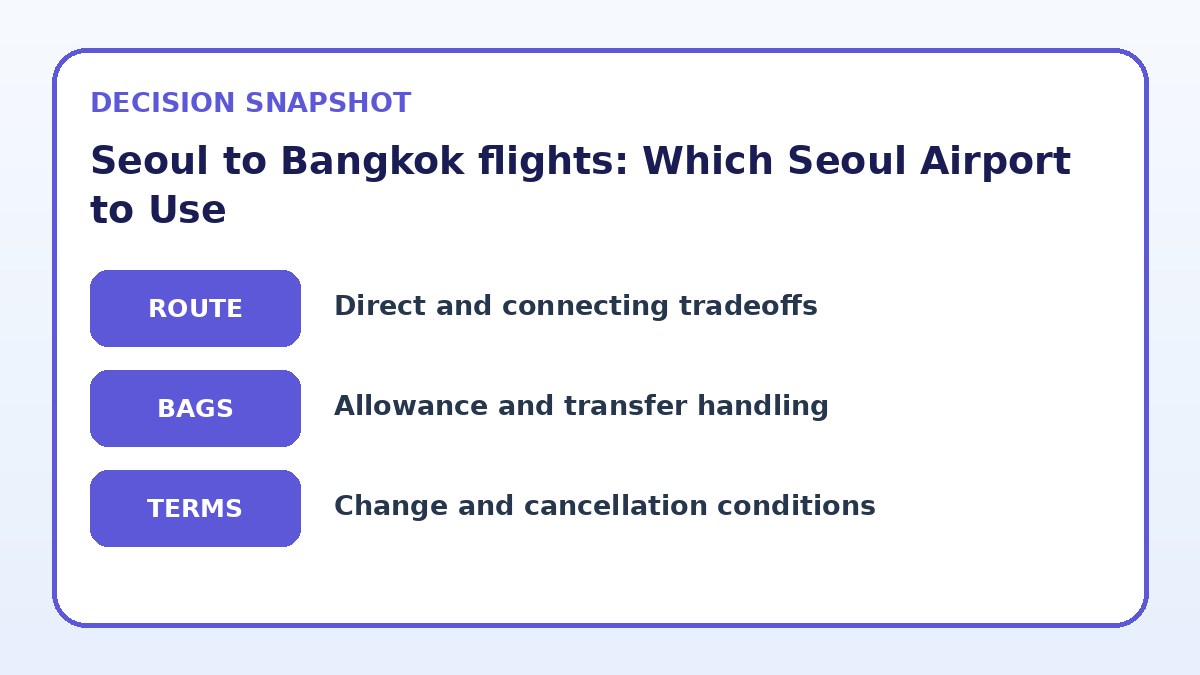
Routing: nonstop versus connecting options
When choosing between Seoul airports for a trip to Bangkok, focus on the routing offered for your specific dates. Nonstop flights reduce variables—no transfer between carriers, lower missed-connection risk, and simpler baggage handling. If both Incheon and Gimpo list nonstop services on your dates, compare scheduled block time and departure convenience relative to where you will be staying in Seoul. If a nonstop from Gimpo fits your schedule and location, it can save surface travel time despite fewer services than Incheon.
Connecting itineraries can appear cheaper but add layers of complexity. A connecting flight from a domestic or regional carrier may require separate tickets, extra layover time, or different terminals, which increases baggage transfer and misconnection risk. If you find a connecting option at a lower fare, check the total layover, the transfer procedure at the connection point, and whether the carrier offers protected connections. Always compare the total expected travel time and the number of itinerary legs, not just the headline price.
Baggage and connection risk: what to verify
Before booking, confirm baggage rules and how checked bags are handled on your chosen routing. Low-cost carriers or mixed-carrier itineraries often have strict size, weight, and fee rules; sometimes separate tickets mean you must collect and re-check luggage during a connection. Verify on the final booking page whether bags are through-checked to Bangkok or if you'll need to reclaim and re-drop them at a transit airport. If you’re carrying fragile items, sports equipment, or oversized bags, factor potential manual transfers and extra handling into your airport choice.
Connections raise the risk of delays turning into missed flights—especially when switching carriers or ticket types. Longer minimum connection times reduce risk but increase total travel time; very short connections are tempting on paper but can be stressful in practice. If you prefer to minimize this risk, choose a departure and airline combination that offers a nonstop or a single-carrier connection with protected transfers. Where you can, pay attention to guaranteed transfer policies on the carrier’s booking page and add insurance or flexible fare options for peace of mind.
Compare flight-selection strategies
| Flight strategy | Best for | Risk to check |
|---|---|---|
| Fly nonstop from Incheon (ICN) | Travelers who prioritize reliability, airport services, and international connections | May require longer transit from parts of Seoul; typically fewer domestic convenience benefits |
| Fly nonstop from Gimpo (GMP) | Travelers based in western Seoul seeking shorter surface travel and a quick airport experience | Fewer services and international options than Incheon; limited late-night departures sometimes |
| Choose a connecting itinerary for a lower headline fare | Price-sensitive travelers willing to accept longer travel time and added connection risk | Higher chance of baggage transfer issues and missed connections unless on one ticket |
| Book single-carrier connections through Incheon | Travelers needing a balance of lower cost than nonstop but reduced connection risk | Longer total travel time and possibly less flexibility in surface transport timing |
Recheck the complete itinerary
Confirm airports, connection handling, baggage, and change conditions before deciding.
Schedule fit: door-to-door planning
A flight that looks fast on paper can lose its advantage once you add time for getting to the airport, check-in, security, and immigration. For first-time visitors, leave generous buffer time: account for rush-hour traffic to Gimpo or Incheon, the time you’ll need for international check-in and security, and potential queues. If you are staying near central Seoul, Gimpo may be quicker to reach; if staying near eastern or southern neighborhoods, Incheon’s airport express and ground transport options might be more convenient despite longer transit.
Also consider arrival time in Bangkok and onward plans. An arrival late at night could complicate transfers to further destinations and influence your choice of departure airport—sometimes a slightly later or earlier Seoul departure from one airport gives a better arrival window in Bangkok. Compare flight windows alongside local transport options on both ends of the journey and prioritize overall door-to-door travel time and convenience rather than the scheduled air time alone.
Flight details to verify
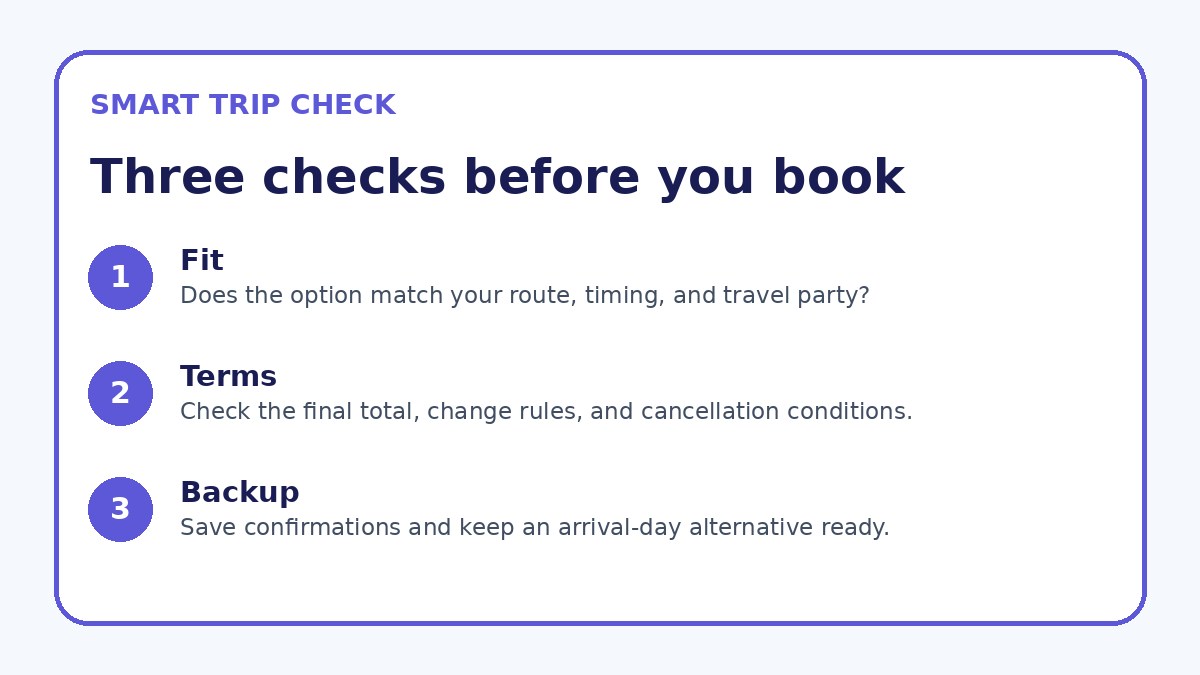
- Note your exact travel dates, number of passengers, and whether any traveler needs special assistance before searching flights.
- Decide how much checked baggage you will bring and verify the allowance on each candidate fare’s final booking page.
- Compare door-to-door time: add estimated transit time to each airport plus recommended pre-departure arrival buffer.
- Check whether the itinerary is on one ticket or requires separate tickets; prefer through-ticketing for connections.
- Read the fare conditions for change, cancellation, and refund rules on the airline’s booking page before purchase.
- Confirm arrival time in Bangkok and onward transport options to ensure the flight arrival window fits your ground plans.
Fare conditions and what to inspect on booking pages
Fare differences between flights from Incheon and Gimpo may reflect carrier, schedule, and service level rather than airport alone. When you find options, examine the fare conditions carefully on the airline or booking page: look for change and cancellation fees, how refunds are handled, baggage inclusions, and whether seat selection is included. These terms often explain the real cost differences—an initially low fare can become more expensive once baggage and change fees are added.
Also check whether the fare includes a protection for missed connections or if you’re buying separate tickets that leave you responsible for missed legs. Verify the exact permitted carry-on and checked baggage allowances, whether family seating is assured, and what check-in cutoffs apply. Where provider-specific facts might change, confirm those precise rules and fees on the carrier’s final booking page before purchase. You can use Trip.com to compare live availability and conditions, but always validate policy details with the airline or ticket seller.
Flight Guide questions travelers ask
Is Incheon always the better airport for flights to Bangkok?
Incheon is often the better choice for travelers prioritizing international connectivity and airport facilities, but it isn’t always the best for everyone. If you are located close to Gimpo and a direct flight is available there, Gimpo can save surface travel time and be more convenient. The right choice depends on your hotel location in Seoul, exact flight schedules on your dates, baggage needs, and whether you prefer nonstop service or can accept a connection. Check both airports’ options for your specific travel dates and compare total door-to-door time and fare conditions on the airline’s booking page.
How much buffer time should first-time visitors allow at Seoul airports before an international flight?
First-time visitors should include extra buffer time to account for unfamiliar procedures and possible queues. As a baseline, plan to arrive early enough for international check-in and security, then add additional time if you expect heavy traffic to the airport, need to purchase or check baggage, or travel during peak hours. If you’re unsure how long local transit will take, test the route in advance or use conservative transit estimates. The precise recommended arrival will depend on the airline’s stated check-in cutoff and whether you have bags to check—verify times on the carrier’s final booking instructions.
If I find a cheaper connecting flight, how do I assess whether the savings are worth the risk?
Start by calculating total travel time and the number of connections. Then verify whether both legs are on the same ticket (safer) or separate tickets (riskier). Check connection duration, whether you must change terminals, and baggage transfer policy on the booking page. Consider the value of your time, the cost to rebook a missed connection, and whether you can absorb additional accommodation or transfer costs if delays occur. If the potential savings are small relative to these risks, a nonstop or single-carrier connection may be preferable.
Final decision note
Choosing the most practical departure airport for Seoul to Bangkok flights comes down to matching your priorities to concrete itinerary details: prefer Incheon for broader international connectivity and services, consider Gimpo if it offers a direct flight that fits your location and schedule, and treat connecting itineraries with caution unless they’re on one ticket. Before you book, gather exact dates, traveler details, and baggage requirements; compare total door-to-door time, check fare conditions on the carrier’s booking page, and verify whether bags are through-checked. These steps will help you select the airport and flight that minimize stress and unexpected costs for your first trip to Bangkok.
Continue planning
Check current options and final conditions
Use the provider page to confirm live availability, the final total, cancellation terms, and every condition that matters to your trip.
This evergreen planning guide was created with AI-assisted drafting and a structured quality review. It does not display live prices, schedules, availability, visa guidance, or provider rankings. Verify current details before booking. Some links are affiliate links; we may earn a commission at no additional cost to you.