If you are in Singapore for meetings, pitching, or site visits, asking whether to rent a car comes down to route value and the fine print around fuel and mileage. Practically: most central business districts, major hotel clusters, and public transport links are compact and efficient, so a car is only worth it if your schedule includes early-morning or late-night site runs, multiple client addresses across the island, or direct trips to industrial areas and some offshore crossings where door-to-door time matters. Before you book, focus on the rental agreement’s fuel policy (full-to-full versus prepaid), per-day or per-kilometre mileage limits and how excess is charged, and the wording of insurance and liability for fuel-related incidents. This guide gives the quick decision, explains the tradeoffs, covers pickup and return friction, insurance wording to watch for, and a non-driving fallback to keep your schedule reliable.
Route value: when a rental actually helps your business day
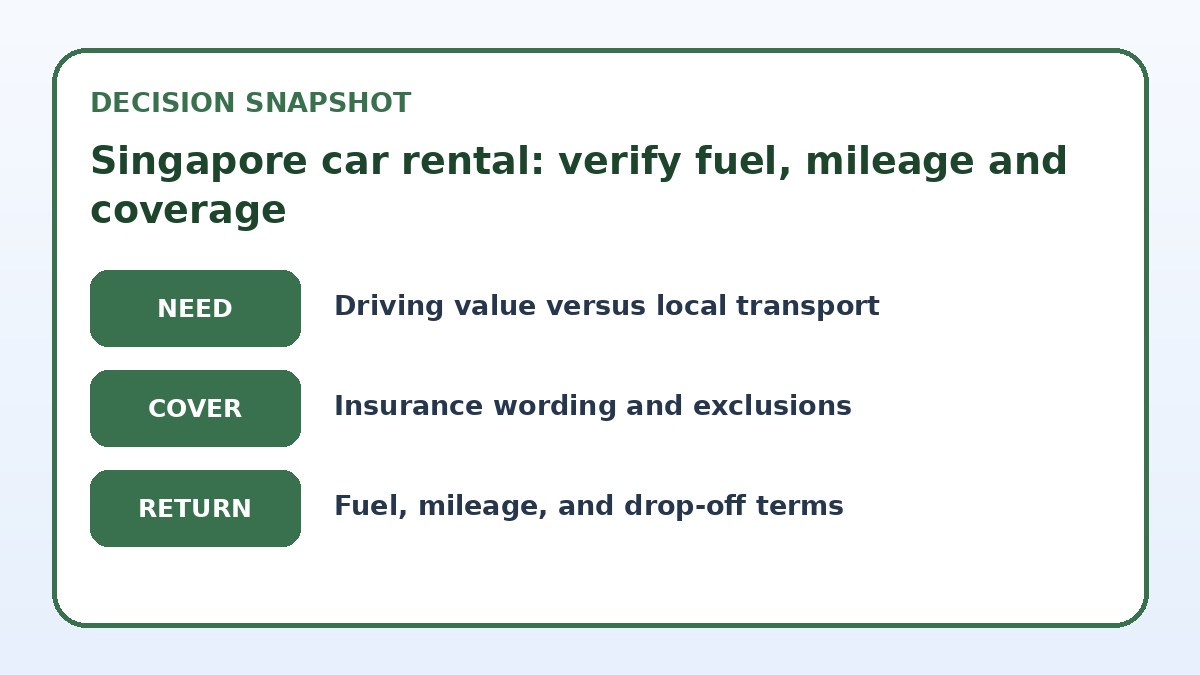
Driving in Singapore only improves a business itinerary when it saves meaningful time or simplifies a complex sequence of stops. Evaluate the locations you must reach: if all meetings sit inside the central business district, Marina Bay area, or close to major MRT lines, public transport plus short taxis often match door-to-door time during regular hours and remove parking hassles. Conversely, if you have multiple early starts before regular taxis are available, late finishes, heavy equipment to move, or sites in industrial areas like Tuas or the eastern suburbs, a rental can cut surface-transfer time and give you flexible luggage storage.
Also weigh parking availability and charges at each stop: central hotels and client offices may offer valet or paid bays, but industrial estates and some business parks have limited short-term visitor parking. Workflows that involve frequent between-meeting repositioning, carrying samples or demo kit, or immediate transfers to Changi cargo areas generally gain the most. If your schedule includes the Causeway to Johor Bahru or island operations, verify whether the rental firm permits cross-border travel and how mileage and fuel rules apply for trips that extend beyond Singapore.
Decide whether driving earns its place
| Mobility strategy | Best for | Cost or friction to check |
|---|---|---|
| Self-drive rental (compact/standard car) | Short day trips with multiple early starts or equipment to transport. | You must manage fuel top-ups, mileage limits, parking fees, and detailed insurance wording yourself. |
| Rideshares and taxis | Central-city appointments where parking and congestion make driving slow or costly. | Potentially higher per-trip cost and unpredictability during peak demand, but no fuel or mileage admin. |
| Chauffeured vehicle or hired driver | Complex multi-stop days needing local navigation and no administrative overhead. | Higher hourly cost but transfers fuel, mileage and insurance liability to the operator. |
| Public transit plus occasional taxi | Dense downtown schedules where MRT/Bus networks cover most destinations reliably. | Less privacy and luggage limits; requires planning around transit timetables for early/late meetings. |
Check live rental choices only after the route test
Use the exact driver, dates, pickup point, and return plan to compare current conditions.
Insurance wording to scrutinise: what business travelers must check
Insurance descriptions in booking summaries can be high level; read the actual rental contract or policy PDF before you finalize. Look for explicit limits on the collision damage waiver (CDW) and whether it comes with an excess (the amount you must pay before coverage kicks in). Verify whether the quoted cover is conditional—for example, voided if the driver is under a specific age, if certain roads are used, or if the car is used for business purposes beyond simple client visits. Many standard waivers exclude damage from running out of fuel, towing costs, or damage to tyres, windscreens and undercarriage unless specific extra cover is bought.
Also confirm whether theft protection is full or partial, and how claims are handled if the vehicle is damaged while parked and unattended. For company-paid rentals, check if your corporate card or corporate travel policy provides additional protection or if the rental company’s policy supersedes it. If you rely on credit-card insurance, compare the card’s terms with the rental contract and make sure the rental firm’s staff acknowledge acceptance of that coverage in writing on the final booking page or agency receipt.
Compare the full rental conditions
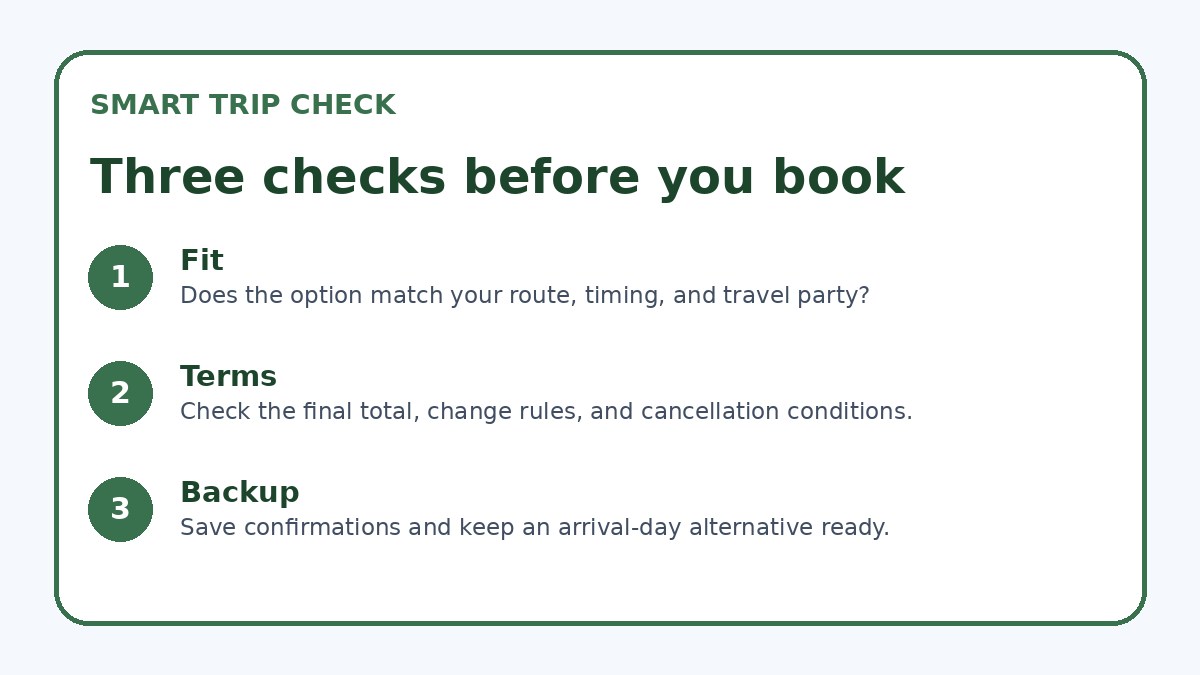
Confirm insurance wording, exclusions, deposit, fuel, mileage, and return terms on the final page.
Pickup, return and fuel friction: practical steps to avoid surprise charges
Pickup and return are frequent friction points where fuel and mileage rules lead to disputes. Confirm whether the rental uses a physical odometer reading at handover and return or an electronic record; take time-stamped photos of the odometer and fuel gauge both at pickup and drop-off. If the firm offers a prepaid fuel option, understand how they calculate unused fuel refunds, whether administrative fees apply, and whether fuel top-ups at the company’s rate are higher than local pump prices. Full-to-full is clearer but requires you to refill to the same level; document the refueling receipt to avoid disagreements.
Find out the rental company’s drop-off window and late-return penalties, and whether there is an out-of-hours return process. If you plan to return at or near the airport, check whether the company charges airport shuttle or handling fees and whether the fuel policy changes for airport returns. For business travelers on tight schedules, arrange a quick handover process and a specific contact for any post-return disputes so you can carry on with your day while the firm resolves billing questions.
Car rental terms to verify
- Confirm the rental’s fuel policy wording on the final booking page—specify full-to-full, prepaid, or company top-up and how refunds are calculated.
- Verify the mileage allowance (daily or total), the per-kilometre excess charge, and whether business or cross-border travel is restricted.
- Ask for the rental contract or insurance PDF and read the CDW excess details, tyre/glass exclusions, and any age or usage conditions.
- Photograph the odometer and fuel gauge at pickup and drop-off, keep fuel receipts, and email photos to the rental company for record.
- Check whether your company card or corporate travel policy provides supplemental cover and get written acceptance from the rental firm if required.
- Note pickup/return hours, out-of-hours procedures, airport handling fees, and the exact contact for post-return disputes before you drive away.
Non-driving fallback: alternatives that protect your schedule
Plan a reliable non-driving option before you book the rental so last-minute cancellations or disputes don’t derail your day. For most central business itineraries, a combination of MRT for predictable travel corridors and metered taxis or rideshares for off-line stops reduces administrative overhead and removes fuel/mileage concerns. Pre-booked meet-and-greet airport transfers or hotel concierge-arranged taxi blocks can be charged to the company and provide receipts for expense reports, while local chauffeur services can be arranged by the hour if you need a driver but not the liability of a rental.
For multi-stop industrial or suburban visits where you still need vehicle space, consider booking a van with a professional driver through a business mobility provider; this shifts fuel and insurance responsibility to the operator and reduces your paperwork. Keep the non-driving fallback contact numbers, estimated travel times, and a rough cost comparison in your calendar so switching mid-trip is straightforward. If you plan to use rideshares, confirm corporate account settings, receipt delivery, and whether surge pricing is acceptable under your travel policy.
Car Rental & Road Trip questions travelers ask
How does a full-to-full fuel policy work and why prefer it?
A full-to-full policy means you pick up the car with a full tank and must return it full; you pay only for the fuel you use. It avoids the company estimating usage and charging inflated refuelling fees, which often include service charges. For business travelers, full-to-full keeps billing transparent: keep the petrol receipt if you refuel before return and take time-stamped photos of the fuel gauge. If you cannot return full because of timing, check the firm’s documented prepaid or top-up options and the administrative fees on the booking page.
What wording in the insurance policy signals extra fuel-related liability?
Look for clauses stating exclusions for running out of fuel, damage from fuel contamination, or towing costs if the car stops due to empty tanks. Also watch for language that excludes cover for certain parts (tyres, windscreen, underside) unless additional protections are purchased. If the policy mentions a deductible or excess, note the amount and whether it applies per incident or per rental. Your safest path is to request a copy of the full rental contract and highlight fuel-related sections; ask the agent to confirm the company’s official handling method in writing on the final booking confirmation.
Can I rely on corporate card or company travel insurance to cover rental disputes?
Many corporate cards and company travel policies offer supplemental rental insurance, but their coverage varies and often requires specific declarations at the time of rental. Before declining the rental firm’s offered protections, compare the card’s terms against the rental contract: the card issuer may exclude certain incidents (like fuel-related damage or cross-border travel) or require that you pay and submit a claim after the fact. Get written confirmation from both your corporate card provider and the rental firm that the card’s coverage is accepted, and retain the rental agreement page that records this acceptance as proof for any subsequent claim.
Final decision note
For most business travelers in Singapore, the default should be to avoid the paperwork and risks of self-driving unless your itinerary clearly needs flexibility, early/late hours, equipment transport, or multiple out-of-centre visits. If you choose to rent, make fuel and mileage checks the central part of your decision: prefer clear full-to-full terms, document odometer and gauge readings, and confirm insurance wording and corporate-card acceptance on the final booking page. Keep a non-driving fallback—pre-arranged taxis, a chauffeured vehicle, or a public-transit plan—so a rental hiccup doesn’t derail meetings. Finally, before you click Book, verify fuel policy, mileage limits, excess charges, and insurance exclusions directly on the provider’s contract page (you may also compare current availability on Trip.com).
Continue planning
Check current options and final conditions
Use the provider page to confirm live availability, the final total, cancellation terms, and every condition that matters to your trip.
This evergreen planning guide was created with AI-assisted drafting and a structured quality review. It does not display live prices, schedules, availability, visa guidance, or provider rankings. Verify current details before booking. Some links are affiliate links; we may earn a commission at no additional cost to you.